
With feminism to the fore this week following International Women’s Day, Expedia held a private screening of Code: Debugging the Gender Gap, a documentary which served to portray how gender issues are evolving as we delve deeper into the world of technology.
Both the film and the panel discussion that followed highlighted some of the critical reasons behind the lack of female engineers, software developers, programmers, and (to use the umbrella term) ‘coders’ in the work force. One myth that was immediately put to rest, it was that women lack the interest, talent, or both in the field.
The documentary exposed the institutional and cultural barriers and biases that pervade society… exposing the specific but subtle ways in which gender roles have served to discourage women from pursuing careers in technology-related fields. And if visually savvy statistics are always a handy way to shock audiences with frankly unsurprising data to drive their central point home, then Code used this tactic to full effect.
With the rate of progress in digital technology, computer programming and coding is rapidly becoming an essential skill. However, our inventions are adapting and changing faster than our social attitudes can keep up. We are currently not well-equipped enough yet to address the growing demand for talent in the world of tech, as a currently male-dominated profession. Despite documentaries like Code that reveals the capability of the female workforce is (and more importantly, how it has always been this way), and fostering the attitude that the world of tech does indeed need more women, our systematic biases are getting in the way of real progress.

The world of tech does indeed need more women, but our systematic biases are getting in the way of real progress.
In the same way you cannot fix a website without combing through the complex series of html codes that serves as its infrastructure, we need to tackle the issues that construct the gender gap by addressing the problems at their source. Unfortunately, and again in the same way as a computer, finding the ‘bug’ in our machine (as Grace Hopper once put it) is never as easy or as simple as we’d like to think.
As Code makes clear, the solution to the gap is unfortunately not as straightforward as filling diversity quotas and declaring all human beings equal. If the messages we send through our use of the media, or even in something as seemingly banal as our conversational interactions, continue to perpetuate the fixed roles that sustain the gap, then we can only go so far.
The documentary largely focuses on different characters (mainly other women) actively working to make information technology courses accessible to girls and women of all racial and socioeconomic backgrounds. It is a relief to see so many young girls flock towards these opportunities with enthusiasm and I do honestly feel that we’re getting somewhere.
However, even when efforts like these succeed, it is not too long before we find another glitch. Software engineering is at present a male-dominated culture, and it is not instantly perceived as a female-friendly working environment, making women hesitant to enter the professional field. One segment that truly reflected this was Julie Ann Horvath’s experience at GitHub. Horvath, then the only woman in her department at GitHub, resigned after having cited her experiences of harassment, sexism and bullying. While some applauded her bravery, more seemed infuriated that she stood up for herself and had a tirade of attacks including public defamation and even sexual threats launched against her. It exposes one of the many glitches that still hold women back.
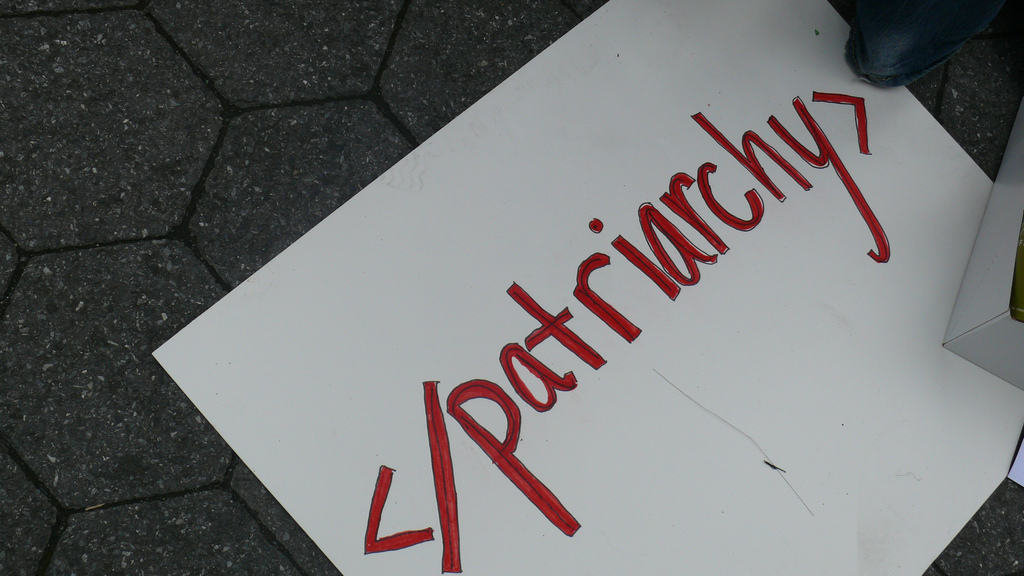
While female empowerment is out in full force, unless we succeed in getting men to support our cause, it is a futile fight.
While female empowerment is out in full force, encouraging women that dare to tread in fields previously reserved for the testosterone-fuelled ‘brogrammer’, or to command leadership positions without fear of being labelled ‘bossy’ and ‘entitled’, unless we succeed in getting men to support our cause, it is a futile fight. As much as we need to empower women, we also need to help men become more receptive to this change.
It is bizarre that finding men that can openly say ‘I am a feminist’ without having to verify their own operative definition, is still a rarity. Shockingly, we haven’t even gotten all women on board yet. Struggling to address day-to-day instances of sexism remains a challenge; whether it is a tendency to perceive men as generally better suited for a role, through insidiously undermining a woman’s qualifications for the way she is dressed, or even failing to see the detriment in seemingly harmless acts like calling a colleague ‘sweetie’. While we are encouraged as women to speak out and defend our rights, we find that instead of getting the support we need, we are left only to be accused of being a ‘feminazi’, and feeling even more vulnerable than before.
A close friend of mine very recently had a colleague that would actively make her uneasy by calling her derogatory ‘pet names’, ramping up his efforts when she asked him to stop, before resorting to insult – a behaviour that warranted zero tolerance. She consulted me for advice and even rehearsed a speech in her head so that she wouldn’t get flustered when she finally found the courage to tell her boss. Yet instead of finding support, her boss defended her harasser’s behaviour, deeming it a ‘norm’ in the workplace and one that she ‘best get used to’, going as far as to directly accuse her of being too ‘entitled’ for seeking the respect she deserved.
I am hopeful that cases like these are rapidly becoming the exception rather than the rule. It was a relief to see a relatively balanced male to female ratio in the audience when the panel discussion commenced, showing that men are indeed taking part in the conversation. Women were speaking up, men were listening and vice versa. It feels like a step forward.
Inclusivity and diversity clauses to develop work cultures that are deliberately shaped to be more receptive to women are a definite start. As aptly said in Code, “new ability enables perspectives”, and generating conversations in the workplace that invite a plethora of different voices to be sufficiently heard will only do positive things.
However, this doesn’t quite solve everything. If we’re going to do anything, we need to start at the beginning, with ourselves. Unlike in the digital sphere, we cannot simply delete the code that the world has tapped into us from the moment we were born. Though we can edit, and we can control the script from here on out. And in the same way every line of programming language translates to something new on screen, actively reflecting on our actions, choices, and their implications, creates an opportunity for change, redefining the bigger picture.