Setting up an entire operation like St. Jerome’s Laneway Festival bears surprisingly many similarities to the travel industry, as I discovered after a brief chat with the festival’s operations director, Matthew Lazarus-Hall (managing director, Uncommon Cord).
It involves the conversion of a static space into something dynamic and with character. There’s a certain threshold of service expected, in the form of food, beverage, comfort and security. There is also an inherent ambition to give people memorable experiences that they simply wouldn’t find elsewhere.
Lazarus-Hall recounted the festival’s origins in a literal laneway in Melbourne, Australia back in 2004. It began as a summer series, with up and coming bands playing live within the narrow sidestreet to intimate audiences. Then, as word spread and its popularity grew, the first Laneway Festival took place with an intimate but respectable crowd of 1400 people.
Now, audience numbers have grown considerably, but Lazarus-Hall points out, “we’re not trying to be a 40,000 person festival. We call ourselves ‘the world’s biggest smallest festival’… our biggest is 15,000 people.”
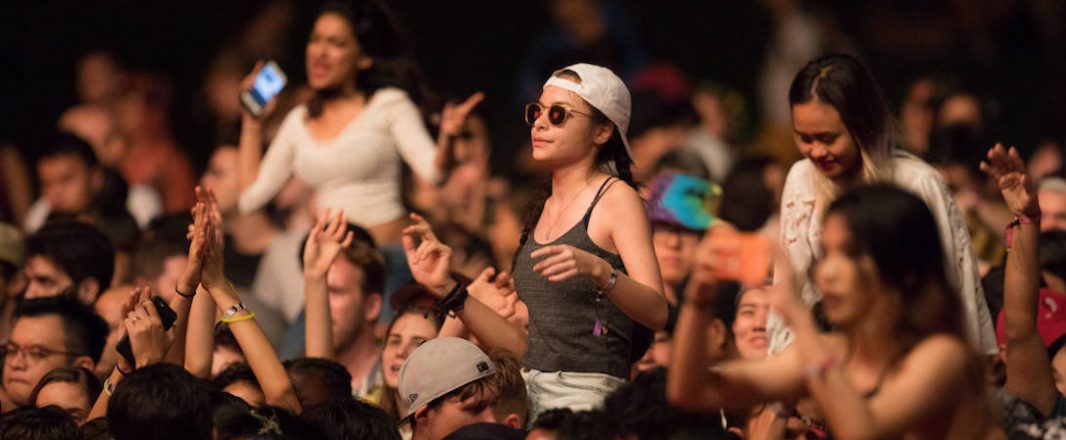
While relatively small compared to others, handling crowds of 10,000-15,000 is still no Sunday picnic. While its greatest ambition is to cultivate a like-minded community of music fans, the logistics of handling and catering for impressive volumes of people in finite space present more immediate challenges, on both an experiential and safety front.
“In reality, it’s a psychological experiment. Get 10,000 people from all walks of life; throw them into an area; expect them all to behave in a particular way,” says Lazarus-Hall.
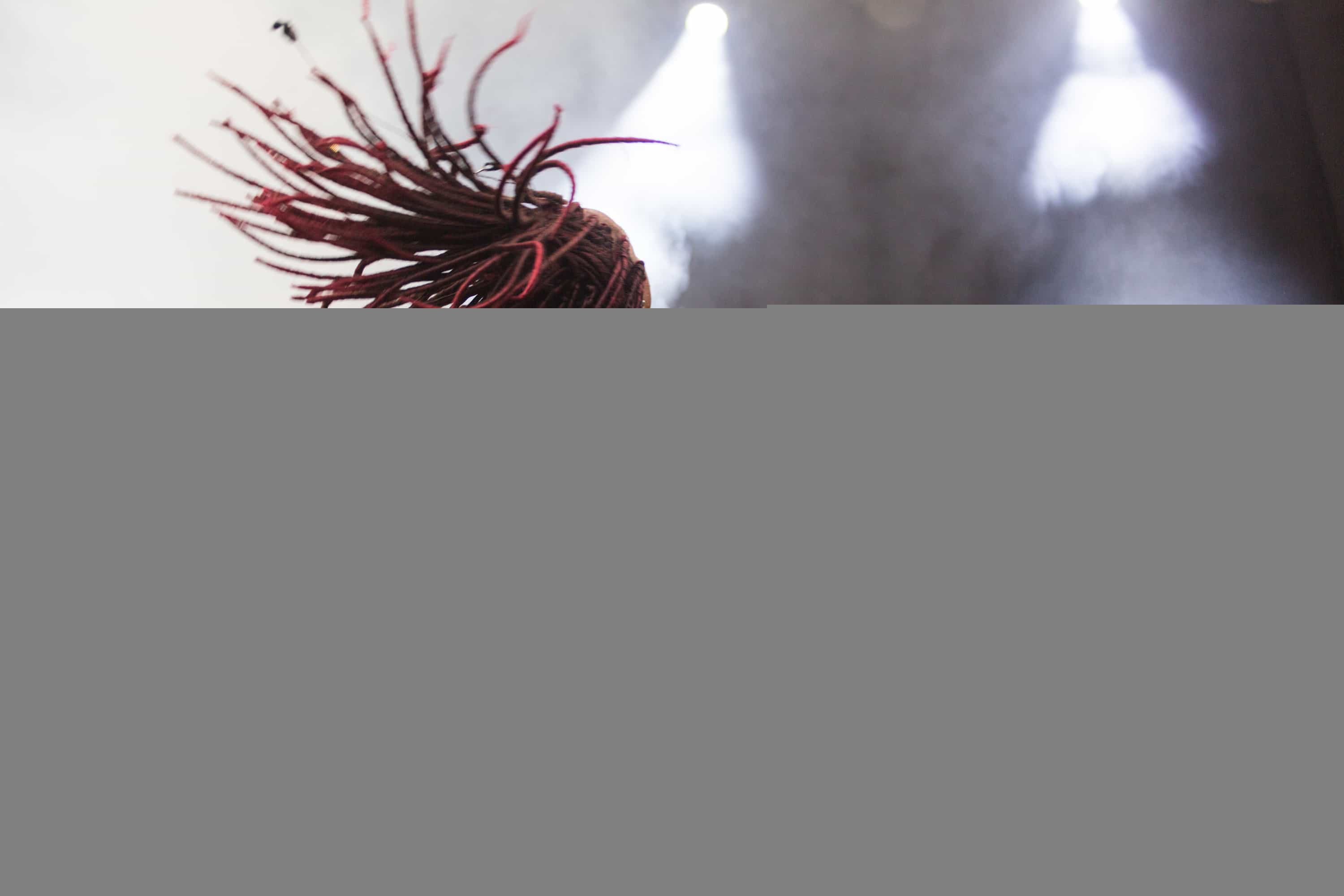
Nao (image: Cliff Yeo / Laneway Festival Singapore)
In the world of accommodation, you could argue the challenges aren’t all that different, especially for larger chain hotels. It begs similar questions.
How do you cater for the individual and unique needs of thousands of guests while staying distinctly true to your brand? How do you deliver an almost ‘boutique’ experience, en masse, without compromising on people’s freedom to enjoy it the way they want?
It bubbles down to the simple mantra of maintaining a crystal clear understanding of the underlying philosophy behind the entire spectacle, and letting the rest naturally follow.
“We’ve spent a lot of time on developing the over-arching brand – what does Laneway mean? It has a heartbeat, it has a soul, it has a reason. We have that in our minds with every decision that we make – whether that’s artistic, business or even what tables we use. We don’t do anything randomly.”
Yet there are limits when it comes to a creative process. Lazarus-Hall points out the crucial importance of balancing between being open to new ideas to being discriminating in its selection.
Creativity and suggestions are always welcome (for example, as the team brainstorms prospective bands for the following year’s line-up). Yet, he strongly argues that sometimes, a more prescriptive leadership style is necessary, in order to maintain focus.
“The way programming works – its not a democracy, it’s a dictatorship. We can all input but someone makes a decision and that decision is final.”
In the world of social media trends and viral marketing campaigns, brands all too commonly lose sight of their unique focus… favouring volume of creativity over building an unshakeable identity.
In the same way hotels and airlines vie for customer loyalty, an annual music festival must understand how to maintain a degree of familiarity to encourage people to return every year. Simultaneously, it must manage to deliver a totally novel experience so that familiarity doesn’t devolve into monotony.
On top of that, it needs to avoid the herd mentality of much larger festivals, where the sheer volume of people often mitigates any real personalised experience.
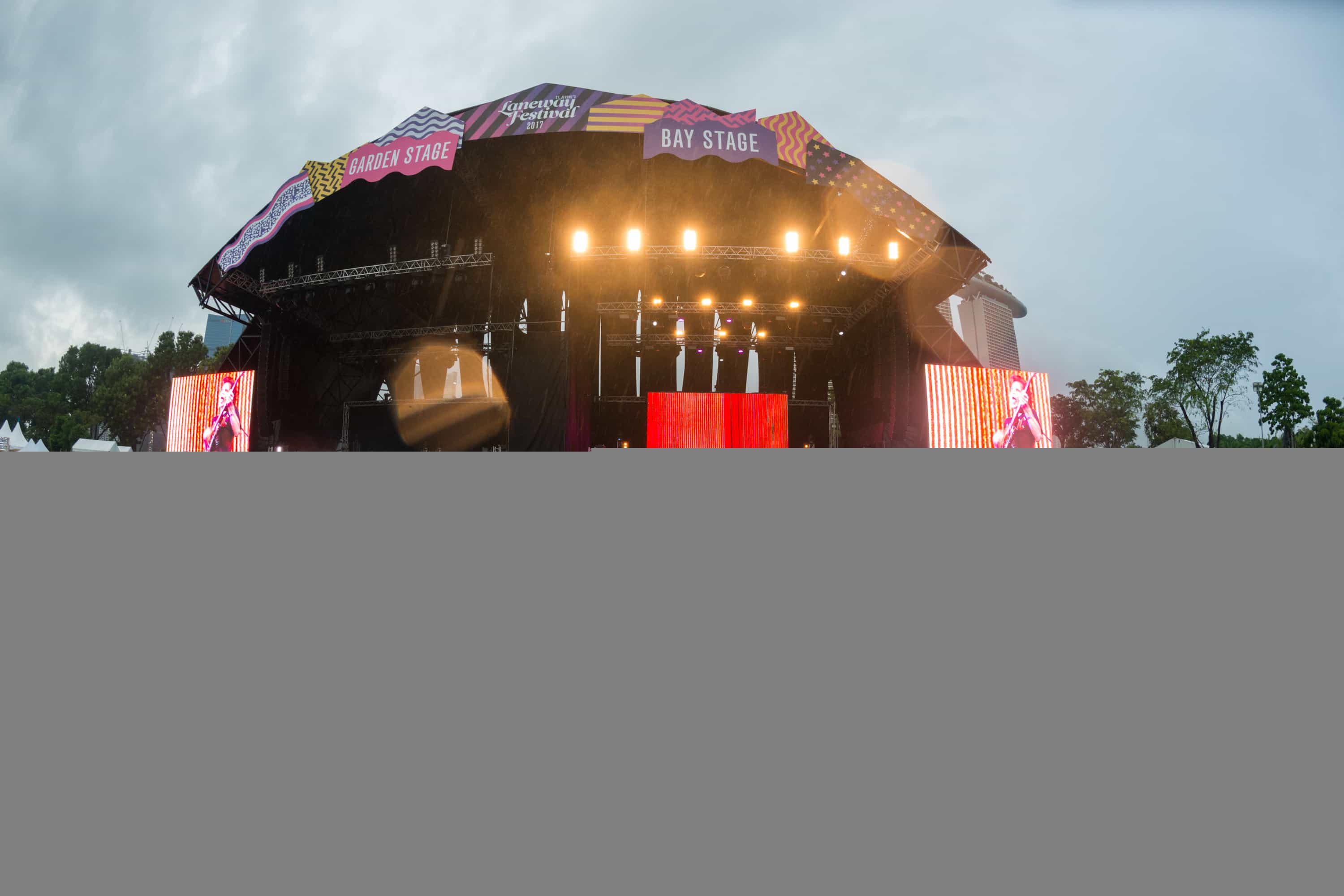
The rain poured throughout the afternoon and well into the night (image: Laneway Festival Singapore)
With Laneway, “we make a million decisions at the festival and 999,000 we got right but we need to analyse the 1,000 we need to work on.”
It is the constant ‘test, fail, learn’ process that drives virtually any business, within the hospitality industry and beyond. Nevertheless, simply solving past problems just won’t cut it if the festival is to build its reputation as a leading event.
“We can’t assume that the 999,000 decisions we got right this year could be used again next year… If you do that, you become a formula. If you become a formula, you become blasé and the minute that this audience realise it, they’ll leave.”
“It’s all about evolution. You have to evolve with the audience – paying attention to food, changing musical tastes, even what people are wearing… but they still need the reassurance that its going to be safe, well-organised, with quality food and beverage.”
“The reason we make changes all the time is because we love to challenge ourselves. We don’t try and be a leader. We want to just be the festival that people love and people trust.”
The organisers definitely faced hardships from the get-go this year as a relentless downpour of rain threatened to drown the morale and spirit of festivalgoers.
It frankly could have been absolutely miserable. Festival staff handed out ponchos to a lucky few thousand, but many were left to mourn the loss of their festival fashion choices – sandals soaked in mud and flower headdresses left wilting on wet foreheads.
Many sought shelter in the various sponsor tents, huddling like penguins but still laughing and having a good time. Others got creative, fashioning ponchos out of large black bin bags sourced from food stalls. Many simply didn’t care and danced through the rain, confident they could stand up to Mother Nature.
It was testament to the faith people held in Laneway. Despite the circumstances, the spirits of the crowd rose above the weather’s best efforts to dampen them.
It was not simply about listening to live music in an open field and possibly discovering a new band. It was that despite having attended a Laneway festival two years ago and knowing what to expect, I went home with an entirely different set of memories and stories to tell.
Lead image courtesy of Laneway Festival Singapore