
Having just spent three months based in its Asia offices, Sebastien Gibergues, Head of Leisure and Online Travel at Amadeus, is better able to appreciate the different way the Asia online travel market is developing compared to Europe and the US.
“I also spent a lot of time in the US previously and then the US was driving dynamics of the business but over the past two to three years, a lot of innovation has developed in APAC.”

Sebastian Gibergues: Travel marketplaces do not exist outside Asia, Ctrip and Skyscanner will bring this merged model to the global market.
Gibergues and I were discussing the Amadeus latest market report on Online Travel 2020: Evolve, Expand or Expire which calls out four trends – The rise of Mega Online Travel Retailers; Introducing Digital Tour Operators; The rise of more sophisticated Mobile Travel Retailers; and The new Travel Marketplace.
We started our conversation with the fourth trend because this is where Asia has led the way.
- The New Travel Marketplace – Asia leads the way and Skyscanner is preaching the Chinese innovation
“Asia has leapfrogged in this trend and it’s creating these truly merged marketplaces which didn’t exist before. Ctrip is probably the first of these travel marketplaces and then you had these e-commerce players setting up travel verticals – Fliggy (formerly Alitrip), Rakuten (Japan) and Tmon (South Korea) are examples. And now you have Paytm in India entering travel.
“They are not meta-search, not OTA. It doesn’t exist outside Asia. Alibaba’s investment in Paytm – that’s bringing these models outside China.
“My bet is Ctrip and Skyscanner will bring this merged marketplace to the global market.”
In a recently-released White Paper, Skyscanner set out its vision for the future of airline distribution and the changing role of metasearch within this. The paper, authored by the metasearch engine’s CEO and Co-Founder Gareth Williams, sets out Skyscanner’s intention to transition towards becoming a marketplace in which travellers can shop for a rich array of air fares with a seamless process from start to finish across any device.
Williams argues that the evolving technology landscape, with the increasing consumer preference for mobile, and evolving click-tap platforms such as chat bots, has blurred the lines between what can be considered a ‘direct’ air ticket purchase.

Skyscanner’s vision of the airline storefront
In this evolving environment, the former line between direct and third party intermediaries has blurred while the need for a frictionless shopping experience and for rich and dynamic airline products to stand out has increased.
“This storefront idea,” said Gibergues, “has existed in Asia the last 3-5 years and Skyscanner, now that it’s owned by Ctrip, is preaching the Chinese innovation – the new storefront. “This will be the most disruptive move that will place over the next few years in online travel.”
Williams’ vision is to deliver its version of the supplier-managed marketplace to travellers worldwide. “We want to bring airline products on our site as close to the direct experience as possible with carriers controlling their products and brand while benefitting from our traffic and audience across a range of devices. This means offering a form of airline storefront. “For travellers, the experience on Skyscanner is then virtually indistinguishable from the experience on airline.com – yet has the advantage of being available on desktop, app or any device. Airlines must have the opportunity to stand out in the next generation of distribution.”
- The rise of more sophisticated Mobile Travel Retailers – from chats to payments, Asia setting the pace
The evolution of the Indian online travel market is being driven by this trend, said Gibergues. All the Indian OTA players are mobile-first and mobile payments (Paytm) have created the first ecosystem for developing the travel vertical.

WeChat, the Swiss army knife of apps that keeps users within its eco-system
“Mobile gives rise to opportunities for e-commerce players like Alibaba and Amazon, no doubt, will come back. Chat services, especially in Asia with WeChat leading the way globally, are building platforms to integrate eco-systems.”
While travel is not the easiest vertical to penetrate, they have the ability to make people stay within their eco-system more than travel-specific platforms.
Gibergues said other social media platforms such as Facebook have invested in travel. “They are delivering new hotel products, they have huge audiences but are not fully ecommerce-enabled.
“We have meta-search to marketplace, existing e-commerce players and social and chat players – all are moving towards marketplace models.”
Travel though still offers high barriers to entry and meta-searches will find it hard to migrate to marketplace models. “Until now, the easiest path to travel was meta-search – there’s little depth, they unified search and that made brands like KAYAK, Skyscanner and Trivago successful. To start building a marketplace, they need to go deeper, transactions, fulfilment, payments. TripAdvisor moving from a referral model to instant booking – that carried a lot of implications.”
Since its “pivot”, TripAdvisor has taken a knock on its earnings in 2016. Profit for the full year fell by 39% to $120 million over 2015 as revenue declined by 1% to almost $1.5 billion. But during the release of its fourth quarter 2016 results, CFO Ernst Teunissen said, “In 2017, we are prioritising revenue growth as well as making the investments necessary to drive monetisation, growth and profitability on our platform.”
So are the days of the true meta-search over? “The true media model is over, there’s already morphing to hybrid and now they have to get into the complexities of booking,” noted Gibergues.
What about Google, I asked? They dominate at the top end of the funnel and with Google Trips, getting into the in-destination experience. “Their biggest asset is their advertising business and they could be most disruptive if they leveraged their advertising assets into the travel space – no other online player has that resource. But their challenge, same with TRIP, is balancing their own travel vertical with their existing customers in traffic acquisition.”
• Digital Tour Operators – Europe leading the way, need for packaging technology to be brought to Asia
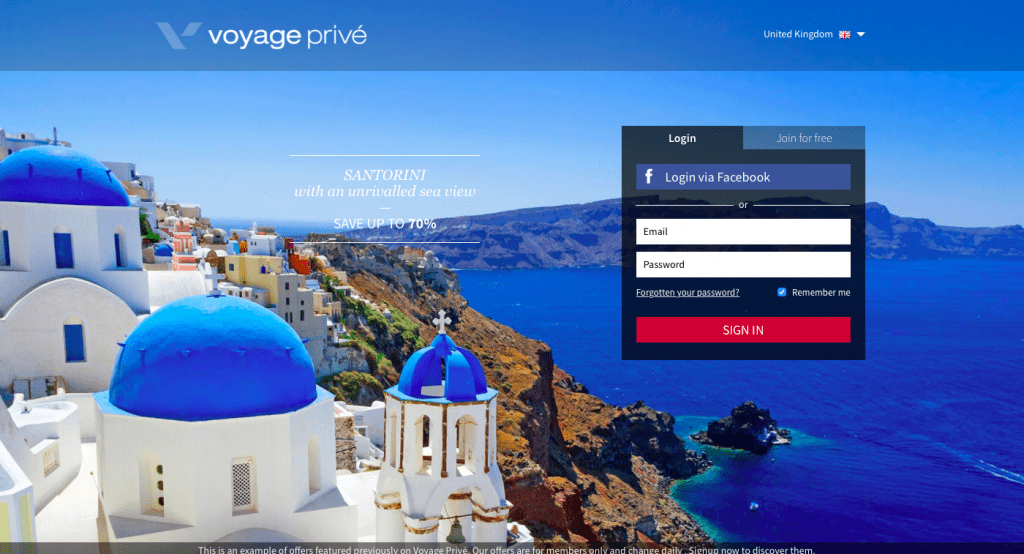
Voyage Prive: An example of a niche brand that’s emerged out of the online travel evolution
“We always assumed online travel is point-to-point but there’s still a need in the market for true travel specialists – people with the knowledge and relationships but haven’t fully embraced digital. But traditional travel experts and niche players are becoming online-enabled, and they will create a value proposition beyond what marketplaces or what Google can do.
“It’s still hard to transact a full holiday. Europe is the most dynamic region when it comes to tour operator technology and there is a need for that technology to be brought to other regions like Europe or the US.”
Amadeus will bring some of that packaging technology to Asia to enable more expert travel retailers, he said. “Tour operators in Asia need to counter some of the big trends and adapt to build a new value proposition. We can take lessons from models in Europe. Voyage Prive has created a pure online packaging business and created specific destination deals.
“The question is where traditional players will move online or if new online niche players will emerge?”
- Beyond Air – bus and rail
One area Amadeus has also been preaching about is rail. “Being a European GDS, we have a lot of rail experience and we will be bringing our rail technology to Asia – it’s not a question of if, but when, rail will become huge in Asia but there’s still a lot of government-driven policies behind it.
“Then there’s buses – we announced our venture investment in Betterrez – and we will be building an inventory system for buses and a global booking system. This ground transportation network complements flights and needs to be brought online.”
- Destination Content – the next fragmented frontier
This is the next frontier, said Gibergues, with brands like Google and Airbnb now getting into it. “This is the last remaining fragmented content, way more fragmented than hotels. How do you bring all of that into a mobile device, that’s even harder that flights or hotels?”
What’s clear at the end of our conversation is how complex the online travel world is and how much more complex and fragmented it will become. For a company like Amadeus whose job is to enable travel providers with technology to meet the challenges of the new dawn, it has to pick its bets carefully on where to invest.
The four trends outlined in its market report offer clues as to where its resources will go.
Geographically it is clear that Asia is a top priority market for its leisure and online travel. It has expanded its team in the region, it has a new hire in Chris Lee, formerly from Booking.com, who will now head the Asia development.
“Across all geographies in Asia, the middle class is coming into the travel space. There’s massive opportunity. It’s still a brand business in Asia and we have strong local players – Traveloka took some of us by surprise, DeNA Travel in Japan came out of gaming – there are still opportunities for niche players and brands to be created in Asia, and there is the emergence of new business models driven by the big players. Then there’s the startup space. We are a community model and we offer our technology to power big boys and small players. Our Amadeus NEXT programme for startups is about making our technology more accessible to smaller payer