You could call it a coming of age for Rome2rio – the seven-year-old Melbourne startup has finally left the co-working space it called home for several years to move into its own offices.
Having grown from 10 to 40 staff in the last 18 months, it was deemed necessary to get its own space. “They also wanted us to go because we were taking over the culture of the space,” laughed COO Kirsteene Phelan.
“I suppose you could say we have graduated, we were in co-working for a really long time, and we transitioned from a B2B to B2C model in a protected environment. Now it’s an opportunity to think more about what Rome2rio will go in the next 18-24 months. It’s an interesting time to build our brand as the first and foremost place to come to when you’re searching for international end to end travel.”
Rome2rio started out as a B2C model, pivoted to B2B when it was felt it was necessary first to build the business through industry partnerships and it returned to a consumer proposition four years ago – “to fish where the fishes are”, said Phelan.
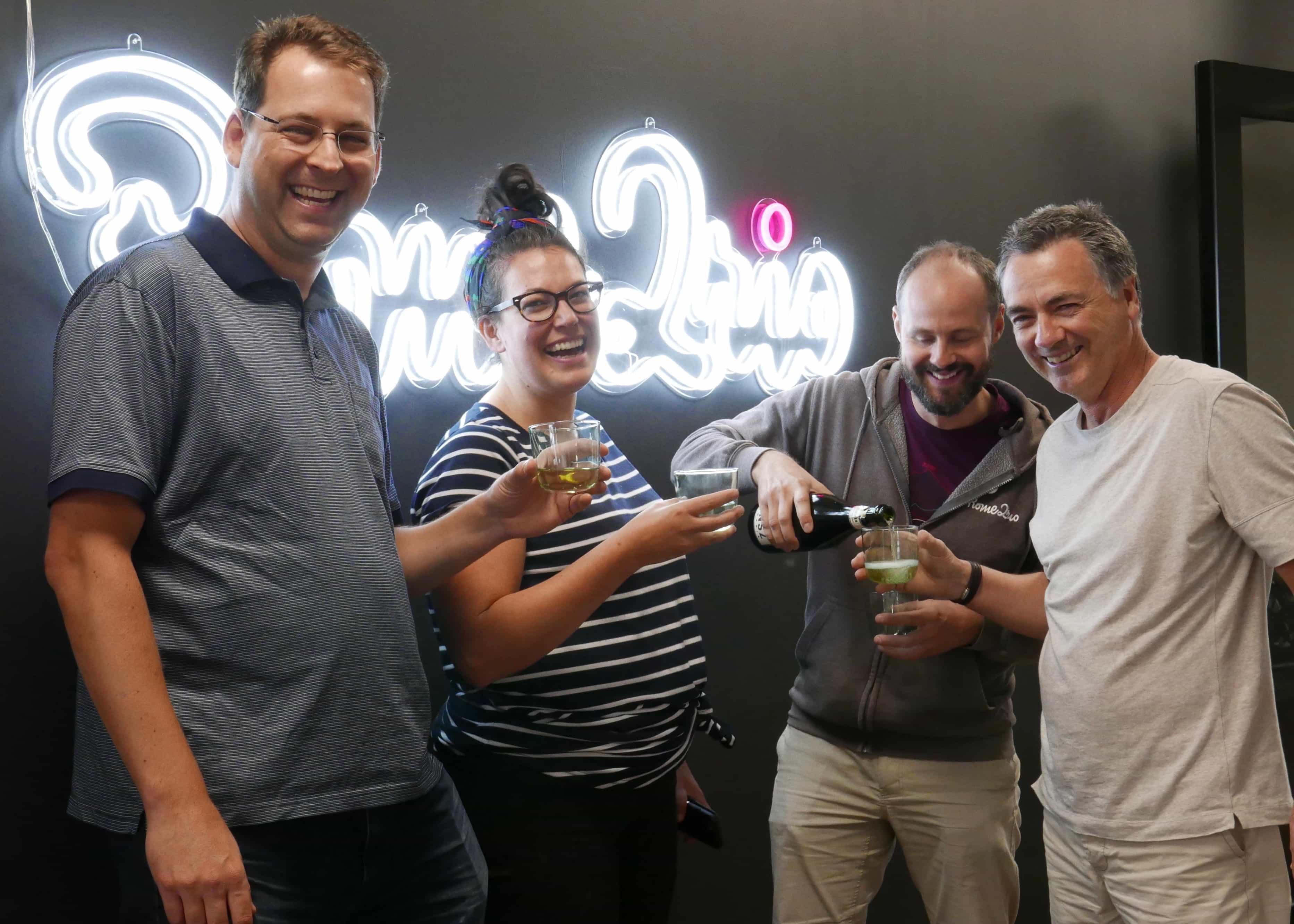
From left, co-founder and CEO Dr Michael Cameron, COO Kirsteene Phelan; co-founder and chief architect Bernhard Tschirren; and chairman Rod Cuthbert – celebrating the graduation into new offices
Swimming with the sharks
Unfortunately where the fishes are is also where the big sharks are and it’s become increasingly difficult and expensive to build a consumer brand but chairman Rod Cuthbert is optimistic Rome2rio has a unique enough proposition to build brand awareness and stickiness with consumers.
“We had the highest traffic in July 2017, which was the European summer, as the tool of choice for people travelling on multi-complex itineraries,” he said.
Considering that companies like Momondo and Skyscanner took between 15 and 17 years to build their brands before they were acquired by Priceline and Ctrip respectively, Cuthbert said, “We are seven years into our journey, we are not tracking too badly.”
He said it wants to be known as the go-to brand for travel from A to B, and everything that is encompassed in between. “We want to build complete trip planning with booking capabilities.”
Utility vs inspiration
Aware of how ironic that sounds given he was such a critic of trip planning startups when he was judging startup competitions, Cuthbert said, “Ours is not in the inspiration space – that’s earlier on in the trip planning process. We are about the nitty gritty of travel – book a flight, catch a train, catch a bus or ferry – utility vs inspiration.”
One of the things it prides itself on is how it has built traffic to the site without spending a cent on search – through smart use of SEO and data – but now that it’s moving into the big ocean, it is aware it needs other tools to acquire direct customers and one of the things it is trying is having freelancers create unique content to drive its results in Google.
“That bus on the side of the road in that little town in Thailand – we will have the human element backing up the public data,” said Phelan.
Blending structured data with unique content, written by humans
Rome2rio is set to launch a new series of content called Transit Guides, which are “written pieces to unravel the complexity of travel in different areas such as the Italian lakes. It will not only have practical information but also contextual content”.
The question is, would this add complexity to the user experience which Rome2rio is known for? “Our goal is to have simple results presented, with links to the articles. We want to build trust and authority by adding the human element and bridge structured data with travel guides,” said Phelan.
Cuthbert is aware of the competition from Google. “A lot of our traffic coms from Google which wants to establish itself as a brand for travel but in the areas of transport and pricing information, that’s the space we are doing a better job in.”
Specialists like Rome2rio can boast product integrity, he said. “We have a really great product targeting the tight user whether they are infrequent leisure travellers or business travellers; there’s the general network effect.”
Phelan said it would first look at investing in one market and do above the line branding work. Its focus is Europe first where its content and traffic is particularly strong.
Unlike its competitors which have lots more money to spend, Cuthbert said Rome2rio would have to be creative in brand building. “We don’t have lots of cash to spend.”
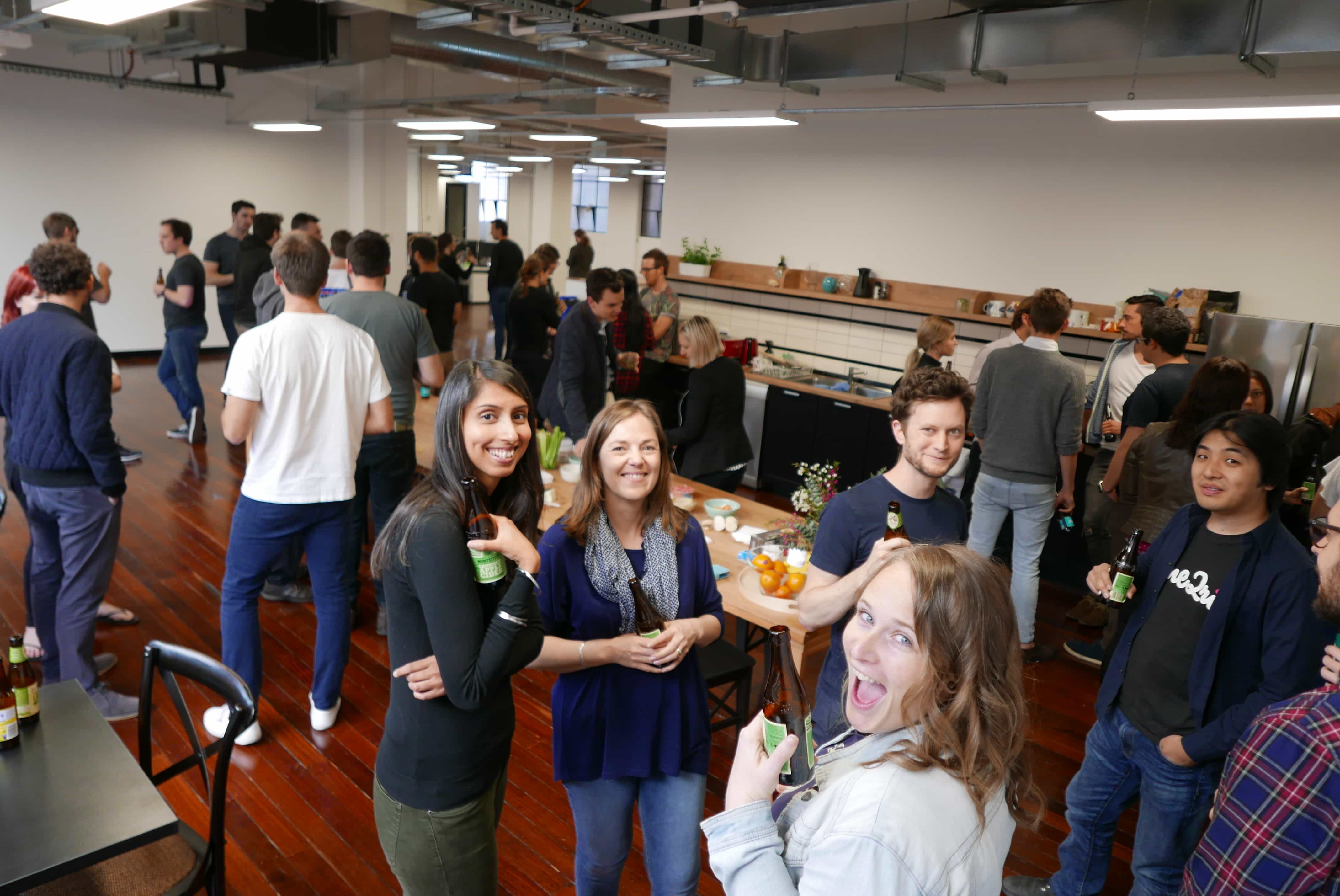
The team – a 100% buy-in into the share allocation programme
Building a business for the team, not investors
Asked if moving to its own offices meant shedding its “cockroach startup label”, Cuthbert said, “We are building a sustainable business. In the tech industry, that’s something we should be proud of. There are so many unsustainable businesses spending lots of money, which are unprofitable that you end up with people who are growing businesses and making money for investors.
“For us, the longterm result is our entire team should win.”
This year, it launched an employee share programme which, until 2015, had been challenging to do for tax reasons. Said Phelan, “Now we have share allocations for fulltime staff. We gave them an opportunity to invest in the product through a salary or share trade-in and we have 100% take-up. Every single one of our team – 40 in Melbourne – now have shares in our business.
“It made them think about it – do I believe in this business? It’s a great validation.”
Living in interesting times in metasearch and ground transportation
It does prepare the business for the competitive arena they are getting into. “We’re living in interesting times in metasearch and ground transportation – a lot of consolidation going on, Google consistently saying they want to give the best user experience and becoming more dominant in search results,” said Cuthbert.
All the rail companies are opening up APIs, including the French-run SNCF. “Even the French have come around, they need to be in the marketplace. There’s a flurry of activities,” said Cuthbert.
Like most businesses born in the West in a desktop world. Rome2rio also has to adjust to a mobile-only world. Added Phelan, “We need to get better at the on-the-road experience, we need to design our UX right. Apps open up lots of opportunities that we haven’t had before.”
Cuthbert, who moderated the “Time to Get Rail” panel at WIT, said the session was eye-opening in terms of the opportunities in India, Indonesia and Japan. “India is our fifth market now and we’re doing more there. I always knew the numbers were big but I never appreciated how big until Aloke Bajpal (ixigo) said Indian Railways sells 1.4m train tickets a day. With that bad website, one wonders how many bookings get abandoned?
“I also learnt from Gaery (Undarsa of tiket.com, Indonesia) that they get only $1 per ticket but it gives them 400,000 new customers who book hotels, so it’s a great alternative customer acquisition channel.”
So while its first priority is Europe, it also sees big opportunities in Asia. “Asia is coming on faster than we expected, it’s happening really quickly and I don’t know if we can be as relaxed about it. The challenge is we are a small company with limited resource with so many projects,” said Phelan.
It’s a dilemma facing most Australia-based companies trying to build global businesses. With only three percent of its traffic coming from Australia, Rome2rio’s fortunes lie beyond Australia and most companies have tended to look to Europe first for historical reasons before Asia, which is right on its doorstep.
It will be interesting to see if this graduated-from-cockroach startup status into aspiring global brand for travellers makes the great leap from down under.