Latin America’s superapp, Rappi, launched its travel vertical in February, which is either bad timing or good, depending how you look at it.
For Guido Becher, head of Rappi Travel, it was good because it meant the company didn’t have to deal with the chaos that ensued with the breakout of the coronavirus pandemic. “We didn’t have to deal with the mess of cancellations that other OTAs had to,” he said.
Plus, it hadn’t hired any additional staff yet and existing employees were redeployed to work across other verticals. “This is great training because now they will be more prepared to work in high stress conditions,” said Becher.
While Colombia is still under some form of stay-home restrictions, the government’s decision to allow the sale of airline tickets from June means that Rappi Travel is beginning to see bookings of air tickets for flights from September onwards. “It is taking off a little bit,” Becher said cautiously. “The fares are so good people can’t resist and they are tired of staying at home.”
While travel has been suppressed demand for Rappi’s other services – food delivery and groceries – has grown. According to Becher, it saw huge growths in customer base, including a new demographic, the 65 and over. “My father is 83 years old and he never used Rappi before, now he uses it frequently.”

Rappi, launched five years ago, reached unicorn status when it raised $1 billion in 2018, backed by names such as Softbank and Sequoia. It started as a delivery service but now looks more like China’s WeChat, combining a messenger service, social media, online shopping and payment, with more than 4.2 weekly app openings per active user.
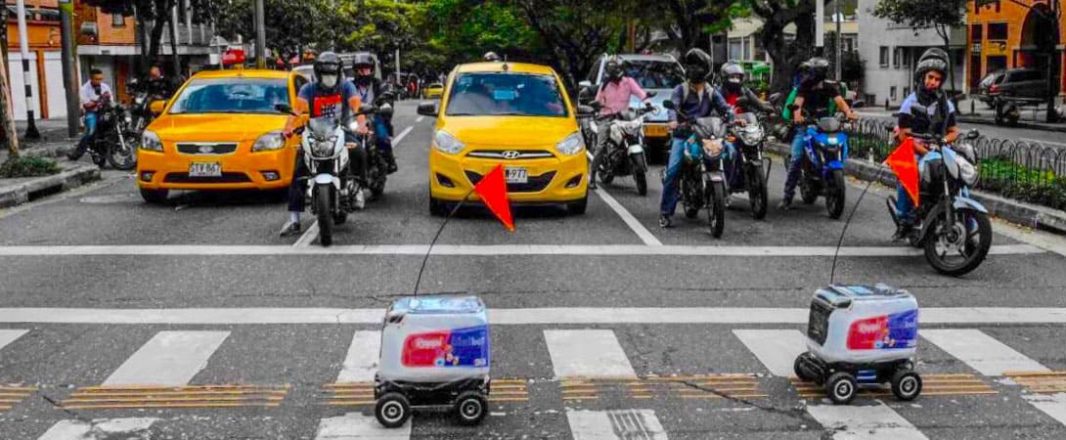
It has also not been spared the impact of Covid-19 – in January, Reuters reported that it had laid off 6% of its 5,000-strong workforce. In Medellín, the company piloted deliveries by robots as a safe way of getting food to people at home. Rappi, which has around 200,000 distributors across nine Latin American countries, reported a year-on-year 30% rise in deliveries during the first two months of 2020, before the lockdown began.
This week, Billboard reported that it will begin hosting live performances, starting with a concert by Colombian singer/songwriter Manuel Medrano on June 19. Medrano’s one-hour show will be accessible live, for a small “entrance” fee, to Rappi’s 25 million registered users, spread across its home base of Colombia (5 million registered users), Argentina, Brazil, Chile, Costa Rica, Ecuador, Mexico, Peru and Uruguay.
Rappi’s travel team is headed by Becher, who came from Netatica. His team includes Frederico Umana, head of strategy and finance (ex-Avianca); Laura Martinez, head of air partnerships (ex-despegar) and Sergio Patino, head of non-air partnerships (ex-Booking.com)
In the downtime, Becher and his team have been developing new products and services to bolster its travel services. “We have invested a lot in product development, put together great deals to get people travelling again. Customers want more flexibility now so we will have a product called price freeze insurance where you pay to freeze the price for a certain period.”
It is also partnering with airline frequent flyer programmes and other loyalty schemes to allow their customers to convert their points to Rappi credits. That covers almost 60m customers, said Becher.
“We want to stay focused on the travel vertical and look for related sectors where we can help suppliers sell more of their services within our platform,” said Becher.
According to Rappi, ecommerce penetration is still low in Latin America – 3% vs China’s 25%. It estimates a total market size of over $1 trillion, across four main categories – pharma, food & beverage, groceries and retail.
Meanwhile, Indonesia’s ride-hailing unicorn Gojek named Facebook and PayPal as new investors in its latest funding round. Existing investors Google and Tencent, who first made investments in the company in 2018, also made a comeback in this undisclosed funding round.
The investment is in line with Facebook’s goal to “create opportunities” for businesses in Indonesia, particularly through its WhatsApp platform. It will also see the integration of PayPal service onto the GoJek platform, and enable access for GoPay users to PayPal’s network of 25 million global merchants.
It is also interesting to see that GoPlay, GoJek’s on-demand video platform, raised an undisclosed amount of independent funding this week. The round was led by ZWC Partners and Golden Gate Ventures, along with Openspace Ventures, Ideosource Entertainment and Redbadge Pacific.
The streaming service plans to use the cash to enhance its technology to help Indonesian filmmakers introduce and distribute their work to a larger audience, positioning itself as a medium of high quality locally produced movies and series.
Note: Guido Becher will be one of the speakers joining our round-the-world Virtual Summit on June 24. Check out the event here.