
The Wrap is a round-up of news in the travel and technology industries, and to keep track of developments in these sectors as the green shoots of recovery slowly take root
OTA 12Go boosts European rail content in new distribution pact with Amadeus

Customers of 12Go will have access to European rail content as part of the distribution agreement the South-east Asian online travel agency (OTA) recently inked with Amadeus.
With the implementation of Amadeus Web Services 12Go can start selling rail content from all major European carriers including Renfe (Spain), SNCF (France), Eurostar (France and England) and Thalys (Europe). Its customers can search and book rail tickets from these carriers in their own language and currency.
Amadeus said that although travel restrictions due to the pandemic has limited travel from Asia to Europe the partnership “will put the South-east Asian startup in a great position to support inter-regional travel within Europe when international travel levels pick-up in the future.”
Additionally, 12Go will benefit from Amadeus Value Rail business model that includes one single connection, as well as one contract versus multiple links and contracts with individual railways. This enable multinational customers to find global rail routes and fares via a dedicated portal
“Our partnership with Amadeus is integral to our expansion strategy for rail across Asia Pacific and into Europe. By having all rail content integrated into one platform we can better serve our individual customers’ needs and explore new markets,” commented Elena Kozmenko, senior business development manager at 12Go, on the collaboration.
Mirja Sickel, Amadeus’ executive vice president rail & ground travel, is optimistic said that although rail travel has been impacted by Covid-19 the sector will pivot to meet new traveller demands “against the backdrop of growing awareness of climate change and increased investment in rail infrastructure and innovation.”
12Go, incorporated in Singapore in 2012 with its main operational offices in Bangkok, serves multinational customers with its transportation services. It is the first OTA customer for Amadeus Rail in Singapore and Thailand. The technology company has also signed a rail distribution partnership with Chinese travel agency Ctrip in March 2019.
Taiwan is top wishlist destination as travellers dream of hitting foreign shores again

With gradual drop in infected coronavirus cases and lifting of social restrictions many people are able to travel again, albeit domestically, and dreaming of hitting foreign shores again.
Search data from Agoda.com revealed Taiwan, Thailand and Japan as the top searched destinations for travel until the end of the year.
Taiwan leads the travel escape among all different traveller groups – from couples to solo travellers, family and groups – knocking out last year’s “champion” Thailand to second place as the most popular searched destination. Making up the top 10 (in order) are Japan, Vietnam, South Korea, US, Australia, Hong Kong, Malaysia and Indonesia.
The search data shows distinctions between destinations searched by type of travellers. Japan and Thailand are in second and third spots for solo travellers, while families are searching for deals in Thailand ahead of Vietnam. However, for group travellers Vietnam is in the second place ahead of Thailand.
According to Agoda, in 2019 there was a clear mix of international search destinations across the Asia Pacific region, but now with fewer markets for international travellers open Taiwan is receiving the bulk of searches – by both domestic and international travellers.
The data shows Taiwan is a key destination in the second half of 2020, dominating the list with seven of the most popular destinations in the top 10 – Hualien#1, Yilan #2, Taipei #3, Kenting #4, Taitung #6, Nantou #8 and Taichung #10.
“This marks a dramatic change from 2019, which featured a more diverse set of travel choices from across Asia,” added Agoda.
On the destination wishlist of couples for this year are Hualien, Taipei, Bangkok (Thailand), Yilan and Jeju Island (South Korea). In 2019 the searches were for Bangkok (Thailand), Tokyo (Japan), Pattaya (Thailand), Bali (Indonesia) and Taipei.
Group travellers have shifted their searches to countryside destinations of Hualien, Yilan, Nantou, Taitung and Kenting for travel in the remaining of 2020. This a noticeable departure from beach destinations like Batangas (Philippines), Pattaya, Okinawa Island (Japan) that featured as the top three searches last year.
For solo travellers Tokyo, Bangkok and Taipei hold their spots as the top searched cities in both 2019 and 2020, with Hualian at #7, Jeju Island #8, and Okinawa island making a debut this year at #9. However, Singapore, Bali and London that were solo travellers’ most searched destinations in 2019 are missing from this year’s wish list.
The search trend shows people, after being house bound after months of lockdown, are moving away from well-known tourist destinations to lesser-known places and opting for nature and beaches instead of cities.
“While Agoda’s search data has seen a shift toward domestic destinations as regulations are being eased for domestic travel, people are still dreaming about international travel adventures,” remarked Timothy Hughes, Agoda’s vice president of corporate development.
“What Agoda’s data is showing us is there is still a hunger to travel, people are enjoying exploring their own countries whether alone, with family or with friends. But most importantly, they still have hope that travel corridors will open later this year to some key markets where Covid has been more contained, and are looking out for great deals for when they do.”
Mumbai airport introduces contactless check-in with mobile devices
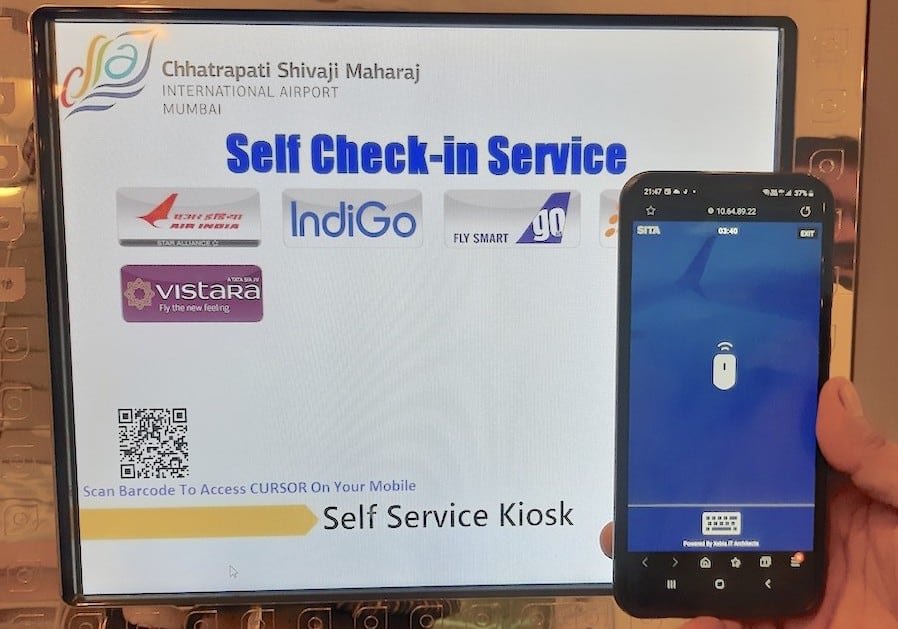
Passengers at Mumbai’s Chhatrapati Shivaji Maharaj International Airport can now check-in for flights with their mobile device in line with Covid-19 requirements.
The airport has installed about 50 SITA’s mobile-enabled kiosks, making it one of the first airports in India to deliver a completely contactless way for passengers to check-in for their flight.
SITA said the contactless technology, developed in response to the changing passenger requirements due to the pandemic, allows passengers to use their mobile device to interact with kiosks. It reduces the need to touch surfaces in the airport and meets the Ministry of Civil Aviation’s new passenger processing guidelines aimed at reducing the risk of spreading infections.
Travellers passing through Terminal 2 of the airport can now simply scan a QR code on their mobile phone or tablet to operate the kiosks. They then can use their mobile device as a trackpad to control check-in and self-bag drop kiosks to print their boarding passes and bag tags.
According to SITA, the solution leverages existing common-use kiosks and does not require changes or modifications to airlines’ existing IATA CUSS standard check-in applications. .
• Featured image credit: Marc Scruton/Getty Images