With transactions higher than pre-pandemic, Korean startup invests in five companies, bets on families, longstays and co-working
DONGGUN Lee will always remember September 23, 2022 – that was the day he and his team at MyRealTrip jumped for joy when South Korea announced the full reopening of its borders.
Between 2015 and 2019, this startup, founded in 2012 with a focus on tours and activities, had been seeing three times annual growth and monthly transactions of $40 million, all around South Koreans travelling overseas and enjoying experiences around the world. In that time, MyRealTrip too had evolved from tours and activities to a full OTA, offering flights and accommodation.

Donggun Lee: “Instead of considering Covid-19 as a crisis to endure, we defined it as a new opportunity.”
The pandemic put paid to the outbound market, causing a 97% decrease in the monthly transaction levels, recalled the CEO and founder of MyRealTrip.
When the realisation sank in that this was not a short-term blip, Lee spent the next three months trying to secure a financial lifeline. In July 2020, it raised US$35 million, led by existing investor Altos Ventures along with IMM Investment and Smilegate Investment. There were also new investors including state-lender Korea Development Bank, Singapore-based Axiom Asia Private Capital, France-based Partech Partners, and US-based Tekton Ventures among others. To date, the company has raised $68.6 million.
With funding secured, the company immediately pivoted to domestic. “We expected the demand for domestic travel to maintain, since consumers’ desire for travel had not ceased. Based on our belief, we began to seek for new business opportunities in the domestic travel market,” he told the audience at WiT Seoul.
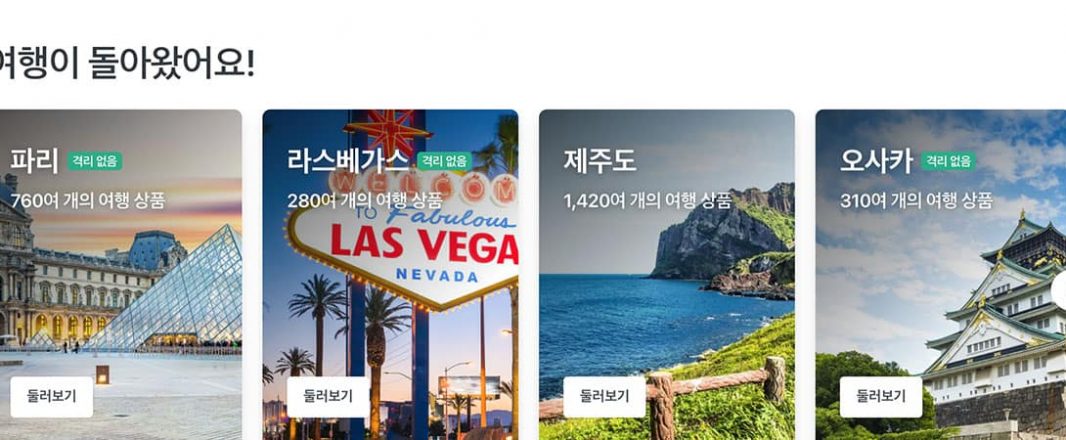
It decided to focus on one destination, Jeju. “This is a destination that gets 30 million visits a year, more than the 28m outbound trips,” he said. “We launched a new rental car reservation service where consumers can check the reviews and ratings per rental car operator, solving inconveniences for Jeju travellers. This service has contributed to a record of 30% cross-selling rates from flight tickets to rental cars.”
Sensing that travellers would want to pick “comfortable and safe places” to stay, it launched a Staycation(호캉스) service around smaller home-style accommodation. “We achieved more than 200,000 room nights during the pandemic.”
Lee anticipates that the strides it has made into the domestic market will hold it in good stead for the future. “Instead of considering Covid-19 as a crisis to endure, we defined it as a new opportunity to expand the business area which was primarily focused on overseas travel, and made active moves to seek for new business ideas.
“We have identified new business opportunities by thoroughly focusing on customer needs. Once a large opportunity was identified, we concentrate our company-wide resources to launch a service that can solve actual customer problems.”
To this end, it has acquired or invested in five startups – acquisitions include Iwatrip (currently MyRealTrip Kids), focusing on family trips with kids and Startrip, a travel curation service based on K-Content, while it has invested in O-peace, a co-working space in holiday destinations.
In line with its new vision of ‘Travel Everyday’, it launched a ‘Longstay’ vertical to solve the problems of long-stay travellers. “Currently, we are focusing on providing accommodation offerings that are suitable for +14 days stays, and will strengthen recommendations for tour and activity products necessary for long-term stays,” said Lee.
Its bold and rapid execution during the pandemic has clearly paid off. As of October 2022, MyRealTrip recorded a monthly transaction of $70 million, nearly doubling in numbers compared to the pre-pandemic peak in January 2020.
“Even in terms of overseas travel business alone, MyRealTrip has achieved $50 million of monthly transactions, reaching more than 20% growth compared to 2019 levels while the number of outbound Korean travellers has only recovered by 30% compared to 2019 level.”
In terms of travel trends, Lee said immediate travel recovery would centre on short-distance destinations. “Overseas travel to short-distance destinations such as Japan, Vietnam, and Thailand are recovering first due to high oil prices and exchange rates.”
Another sector of growth is long stays, he said. “Due to the growth of remote work during the pandemic, a trend of extended travel periods and a combination of work and travelling is emerging.”