



Singapore from zero to hero, “people will always travel to cities,” says Jon Owen
Let’s face it. The tours and activities sector is blazing hot again. GetYourGuide’s latest fund raise of $194 million of equity and debt financing, valuing it at nearly $2 billion, was the talk of the town at Phocuswright Europe.
At an investors roundtable at the conference, Rod Cuthbert, founder of Viator, shook his head, saying, “We worked for 19 years before we sold Viator to TripAdvisor for $200 million (in 2014). It’s crazy.”
And to top that came news that Australian online booking platform Rezdy was sold to a US private equity firm in a deal worth $100 million – with founder Simon Lenoir speaking to the Australian media about the deal.
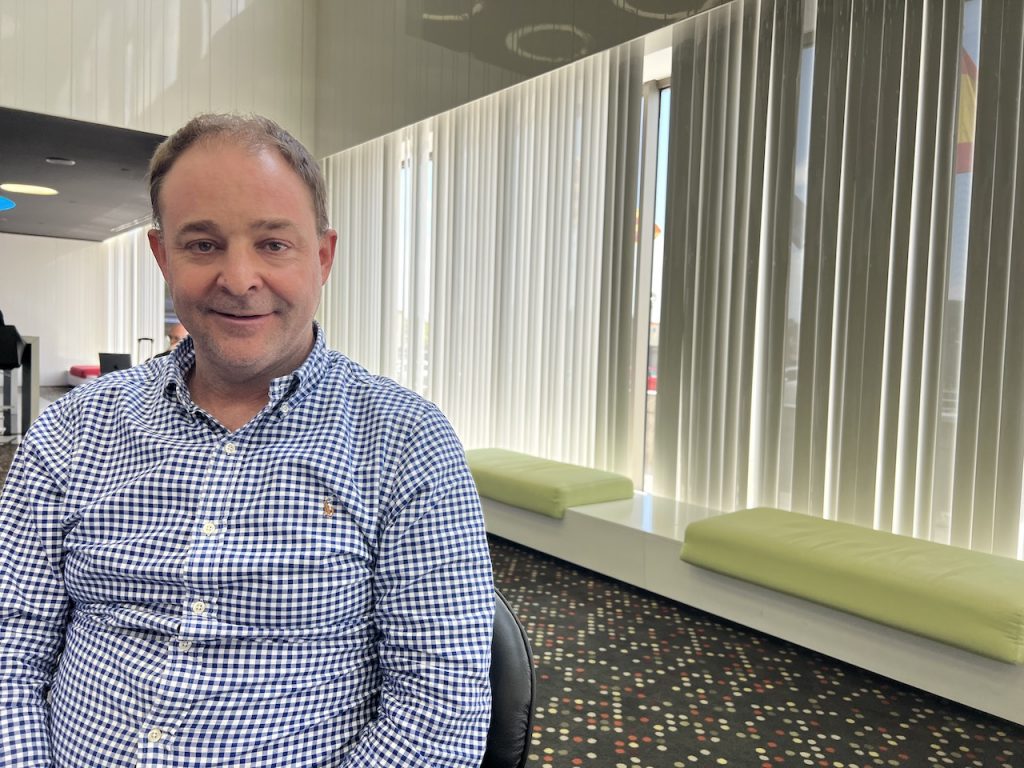
Jon Owen: “Cash generative business and we don’t need rounds of funding.”
“This is all good news for the sector,” said Jon Owen, CEO of Go City, the global attractions pass company. “Investment appetite is returning, and there’s a constant struggle between the value of sales growth and profitability, and second guessing what investors want.”
For Go City, the path is clear though – “continuation of profitability”.
“We are seeing 50% topline growth and we have always been profitable. That’s our economic model – 15-20% CAAG business with strong unit economics and profitability.”
Go City is private equity backed. “We have patient medium-term owners. We are a cash generative business and we don’t need rounds of funding.”
Business couldn’t be stronger, coming out of the pandemic, with travellers’ appetite for tours and activities strengthened. And cities are back on top, said Owen, calling out Singapore as the star destination.
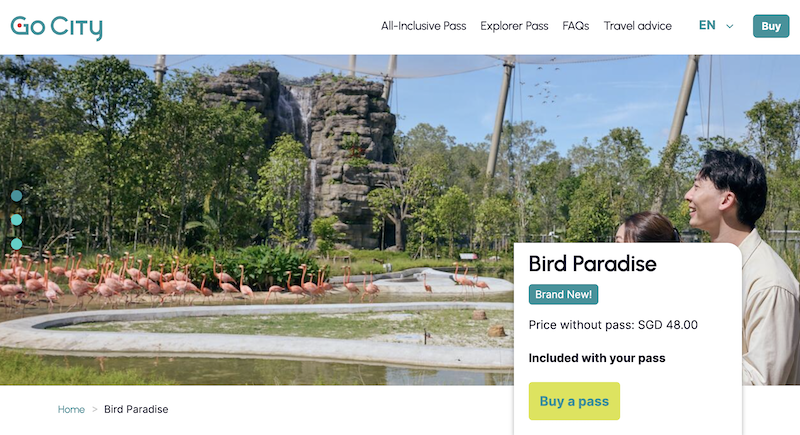
Go City’s Singapore Pass includes the new attraction, Bird Paradise.
Singapore, a new entry into its global pass network, has gone from nothing to top 8, he said. “Las Vegas is a lot bigger but that’s also our maturity in the market as well as destination. Amsterdam and Barcelona are not as big as Singapore, but they are three times bigger than in 2019.
“We are excited about Seoul and Hong Kong – it takes 10-18 months for markets to get up to speed. We have just started sale on Bangkok, there were challenges because a lot of the attractions are small businesses but this has been fixed through our partnership with GlobalTix,” he said.
Beyond growing inbound sales, the Asia Pacific team is also developing the region, particularly South Korea, China and India as source markets for its global portfolio of passes which cover 32 cities, six of which are in APAC. “We are launching our WeChat mini programme in August,” said Owen.
Asked if Go City would go beyond cities, he said resort-destinations such as Cancun offer interesting opportunities for an explorer pass, for example. “For our model, that intense sightseeing is our sweet spot. People will always go to cities.”
One reason why Owen loves the tours and activities space is how different the destinations are – the river attractions of Bangkok versus the urban scapes of Singapore – and how different the e-commerce environments are.
“In the West, there is a clear distinction between direct sales and third parties. In Asia, you have superapps, and trade partners/sales and channels, and things are a bit more blurred. You have competitors working together to generate business.”
Asked why it’s not in Tokyo, one of APAC’s biggest inbound destinations, he said, “There is a cultural thing about doing business in Japan and there is less flexibility about new models.”
As for what he thinks about subscription models, he said they were “potentially interesting”. “You could see different models – off-peak product which you can sell at cheaper prices for quieter times and super premium times for platinum members.”
The one thing he’d like to crack in destination experiences – food tours and cooking classes. “It still needs a little bit of explanation and curation. People love to travel for food – I’d love to see more food options in our passes, if we can work with local businesses.”


