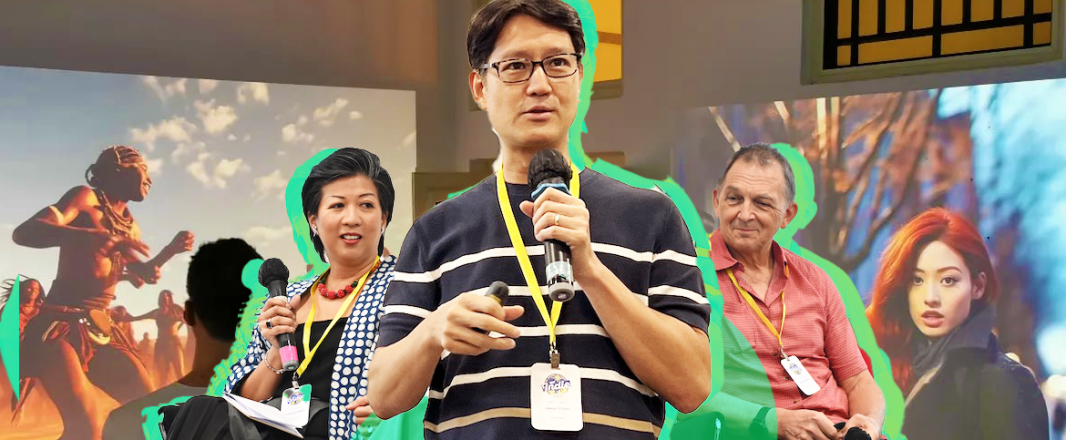
Indie travel businesses grapple with possibilities in the age of generative AI
On the night before WiT Indie, the edition of Web in Travel dedicated to creatives and independents, opened in Penang, Cinewav, the Singapore startup that offers “Event Audio in your Pocket”, held a first-time immersive experience of “human travel stories brought to life by AI”.
The second floor of a shophouse-turned-bistro, Middle House, was transformed into a gallery with three screens projecting short movies of stories about people whose lives have been changed by travel, originally captured in my “A Life in Travel” podcast series.
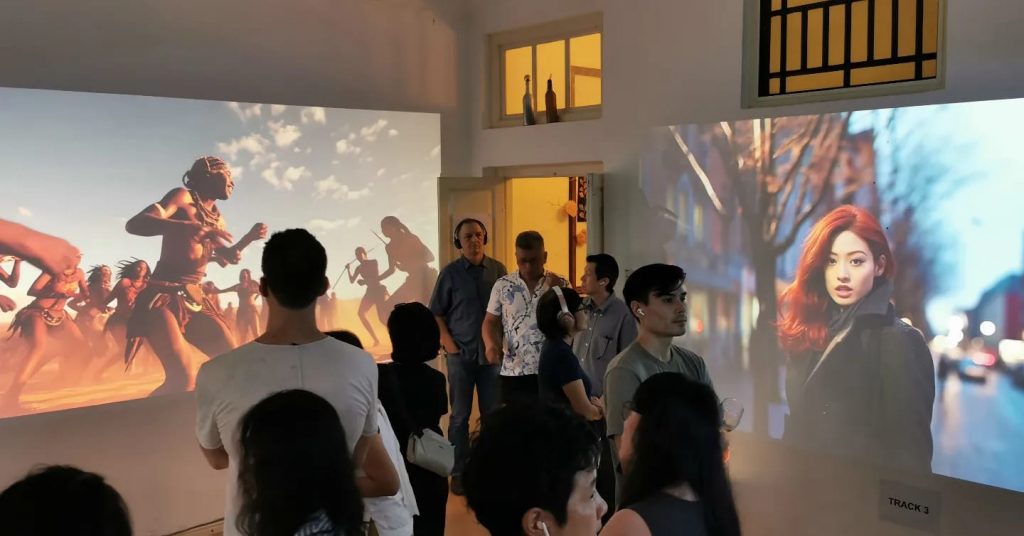
The Cinewav experience of “A Life in Travel” held as part of WiT Indie in Penang.
In this reimagination of the podcast series, which ran for two seasons, Cinewav’s co-founder Jason Chan brought the content to life with AI and during the event, guests were able to walk through the gallery, with their earphones, and watch each story unfold, while mingling and chatting with fellow viewers, and sipping their cocktails and wines.
“It was interesting,” said Andrew Dixon, owner of Nikoi/Cempedak islands, “we were all in one room, but everyone was watching and listening to different things, and yet we were able to talk to each other if we wanted to.”
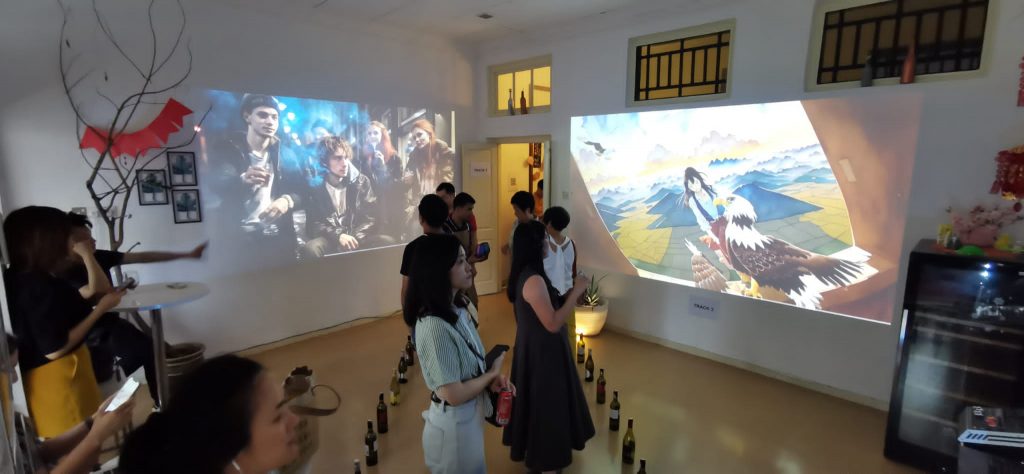
Bringing human stories to life with AI.
What was more interesting to me was the reaction from the viewers when they realised the videos had all been AI-generated and that no humans had been involved in the generation of the graphics and images. The only human element was in the storyboarding, audio narrative and, of course, the production.
Eric Chong of Green Acres, a durian orchard and farm stay in Penang, shook his head in disbelief. “I think I should come out of my jungle every now and then to see what’s going on in the world. The AI and ChatGPT are eye-openers for me. I will have to see how we can use it to further our sustainable farming project.”
A graphic designer was visibly shaken. “I think I need to find another job,” she said, quaffing down a glass of wine.
To talk about AI is one thing but to see what it can actually do in the right hands is another. I asked Cinewav’s Jason Chan, who’s also a film maker, what it was like to work with AI to produce the videos.
“I was excited but also a little nervous about delving into the world of AI for an immersive gallery experience. Although a little confronting at first the potential became obvious and any fears I might have had turned into elation as I found AI was going to empower us to create anything we can imagine.
“Then being able to launch a gallery experience with three separate pieces of audio visual art in the same room using Cinewav (personalised, immersive audio) was really quite historic. I had to pinch myself when we realised this was a first – to be able to have 30+ people in a room listening to different art pieces on the walls totally in sync.”
For a startup like Cinewav, AI now gives it the tools to not only deliver and distribute content, but also create original works affordably at scale, which it can later transform into immersive experiences, by working with venues.
Indeed, one key thread of discussion throughout WiT Indie was how tools like AI could transform indie travel – how independents and creatives with access to these new tools could inspire new generations of travellers looking for unique, authentic experiences in the places they visit.
Of course, there was also talk about how it would affect jobs – what jobs would disappear and what new jobs would be created – but the over-riding message was that entrepreneurs should embrace them boldly.
In opening WiT Indie, executive director of the Penang Institute, Datuk Dr Ong Kee Beng, said, “It is time for us to be optimistic, to be pro-active, to be bold again, and to leave behind the sneaking fears that the pandemic left in all of us, and to realise more than ever that healthy cultural progress within a technology-based word depends on the curiosity, imagination and boldness of individuals, of entrepreneurs, of people who dare to see what is not there yet.”
The fact that WiT Indie was held on the day he and his family were going off on a “much-anticipated road trip to Southern Thailand”, made it even more poignant as he declared, “In the age of technology, what better way to make this move into a positive mind space than with the help of technology. Thus, technology-inspired travel is key at this point in humanity’s history.”
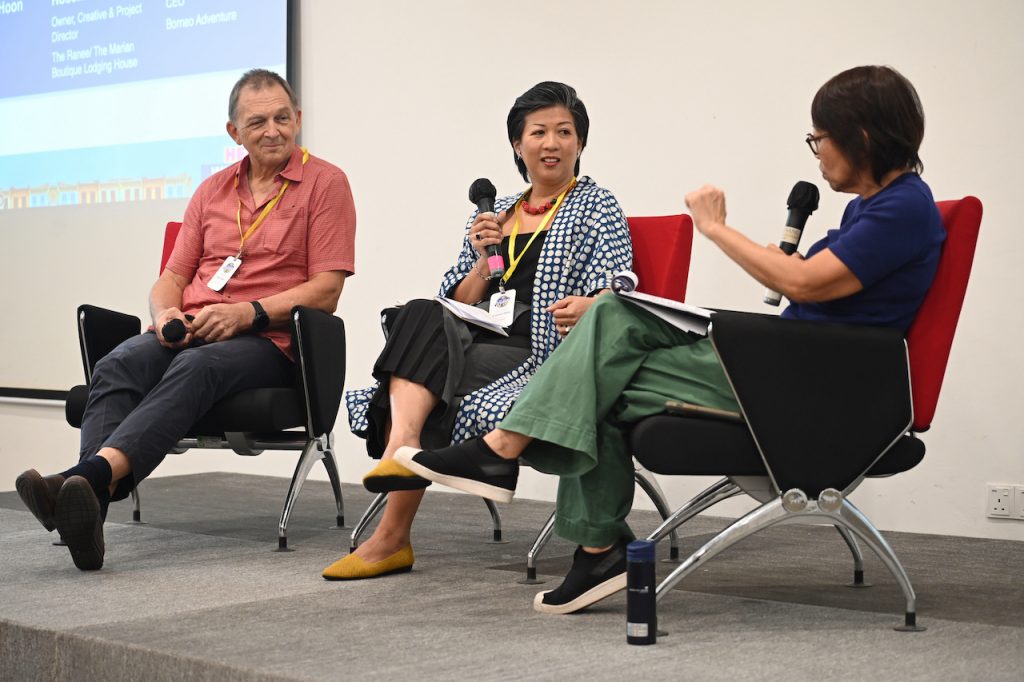
Robert Basiuk, Borneo Adventure, and Rosemarie Wong, The Ranee – two established indie businesses that have adapted well to changing times.
There are those who find the prospect of AI terrifying – such as Robert Basiuk, managing director of Borneo Adventure, Sarawak – but he’s no stranger to what technology can do to destination management companies like his.
Founded 36 years ago, Basiuk still recalls doing business via telex and faxes and when the world wide web arrived, he quipped, “We went, world wide what? Web? Spider web? Inter-what? We thought we should hire a 13-year-old to help us out.”
Basiuk, who first came to Sarawak in 1983 to work as a biologist with the National Parks and Wildlife Office, is of course being modest. Today, Borneo Adventure has successfully adapted its business so that almost 30% of its bookings now come via its direct website, rather than through traditional wholesalers, which means higher margins.
And now comes the age of AI which in the opinion of Vikram Malhi, CEO of ZUZU Hospitality Solutions, may well favour travel brands with a rich history of original content. “It’s going to change the way travellers search and those brands with history, with original content, may have the edge.”
Testing his thesis, I asked ChatGPT during the event “I want to do a rainforest experience in a place that also has good food and tribal culture. Where should I go?” and Sarawak came up immediately. I then asked it to recommend any tour operators and Borneo Adventure came out tops, much to Basiuk’s delight. Perhaps that will make him less terrified? But here’s a human fact – even after 36 years, the most popular tour sold by Borneo Adventure remains the Ulu Ai experience in which guests go for three to four days into the rainforest and stay in their Batang Ai Lodge, and commune with nature, wildlife and local tribes, a collaboration it has had for more than three decades.
Diving deeper into Sarawak, I then asked ChatGPT to recommend boutique hotels in Sarawak and Rosemarie Wong, owner of The Ranee and Marian Boutique Lodging House, was elated when Marian came up first and Ranee came in third. “My team must be doing something right,” said the entrepreneur who opened the Ranee 10 years ago and has now gone on to open The Ranee Artisan Gallery, in which she works with hundreds of local communities to produce art and craft for the gallery. “I am excited about AI and what we can do with it, as a small, creative business in a not-as-well-known destination as Sarawak.”
Chan Chee Chong, CEO and co-founder of GlobalTix, said the tours and activities businesses his company empowers are using AI to become more efficient. He’s using AI to generate copy – “no need for writers” – as well as to power chatbot services. However, he cautioned, “do not do a chatbot unless you have a human at the end of it, because it will leave your customers even more frustrated if they can’t get to speak to a person at the end of it”.
Travel tech entrepreneur Dylan Tan is striking out in a new direction with Replyr.ai – “ChatGPT that replies your customers 24/7”. The startup helps build chatbot services for small businesses, helping them handle basic customer queries, so that humans can do more important work, he said. He’s getting lots of interest and work from small businesses, particularly in f&b, and is working on a solution for a tour and activities business in Malaysia.
Dixon said he was taken by how much chatter there was about ChatGPT and AI at WiT Indie. “Three years ago, we weren’t even talking about it and now everyone’s not only talking about it, but already doing things with it.”
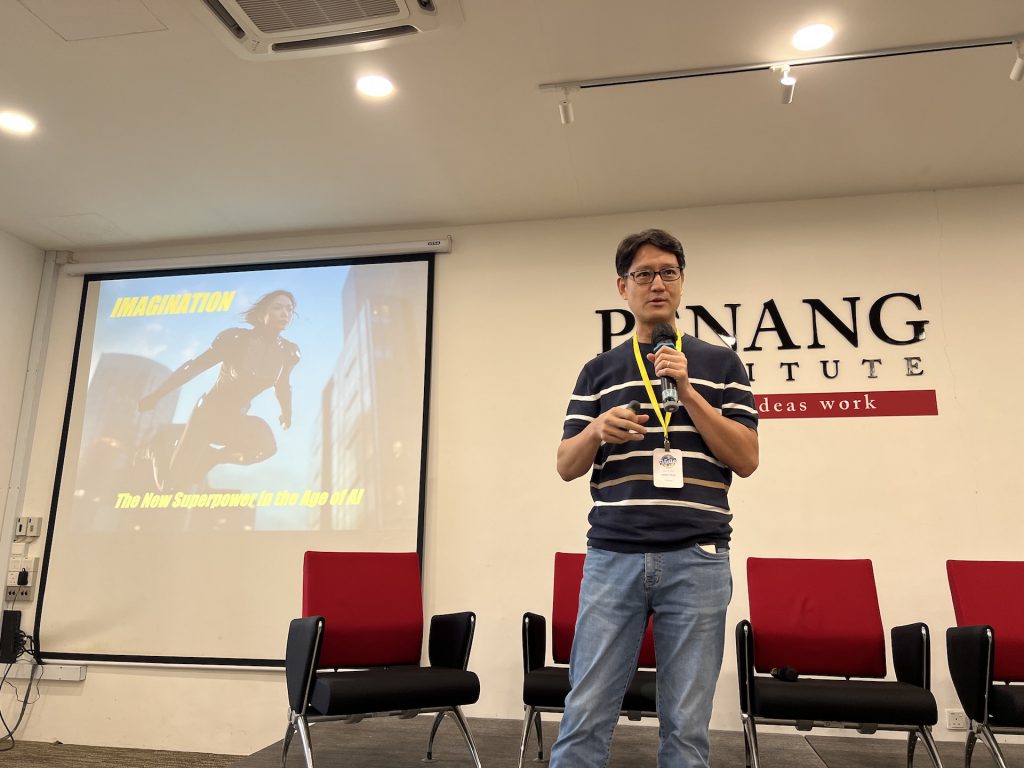
Jason Chan: “Indie businesses do things to be kind.”
In his closing talk, Cinewav’s Jason Chan challenged the notion that humans had the edge over AI when it comes to imagination. Showing the images that can be generated on AI platforms like Midjourney, he said AI was capable of imagining from scratch powerful, compelling images, “it’s frankly terrifying and it’s only going to get better”.
He cited research done by a team from University of Montana, which showed that AI can match the top one percent of human thinkers on a standard test for creativity.
He argued therefore that perhaps the only advantage that humans over AI is “kindness” because there’s one thing lacking in all AI-generated images or videos and that’s emotion.
“Indie businesses do things to be kind. You create experiences that are kind to communities, the environment and wildlife, and you are kind to your customers because you want them to have unforgettable moments with you. AI will not replace that.”