Social media becomes top inspirational tool as travellers opt for intentional exploration
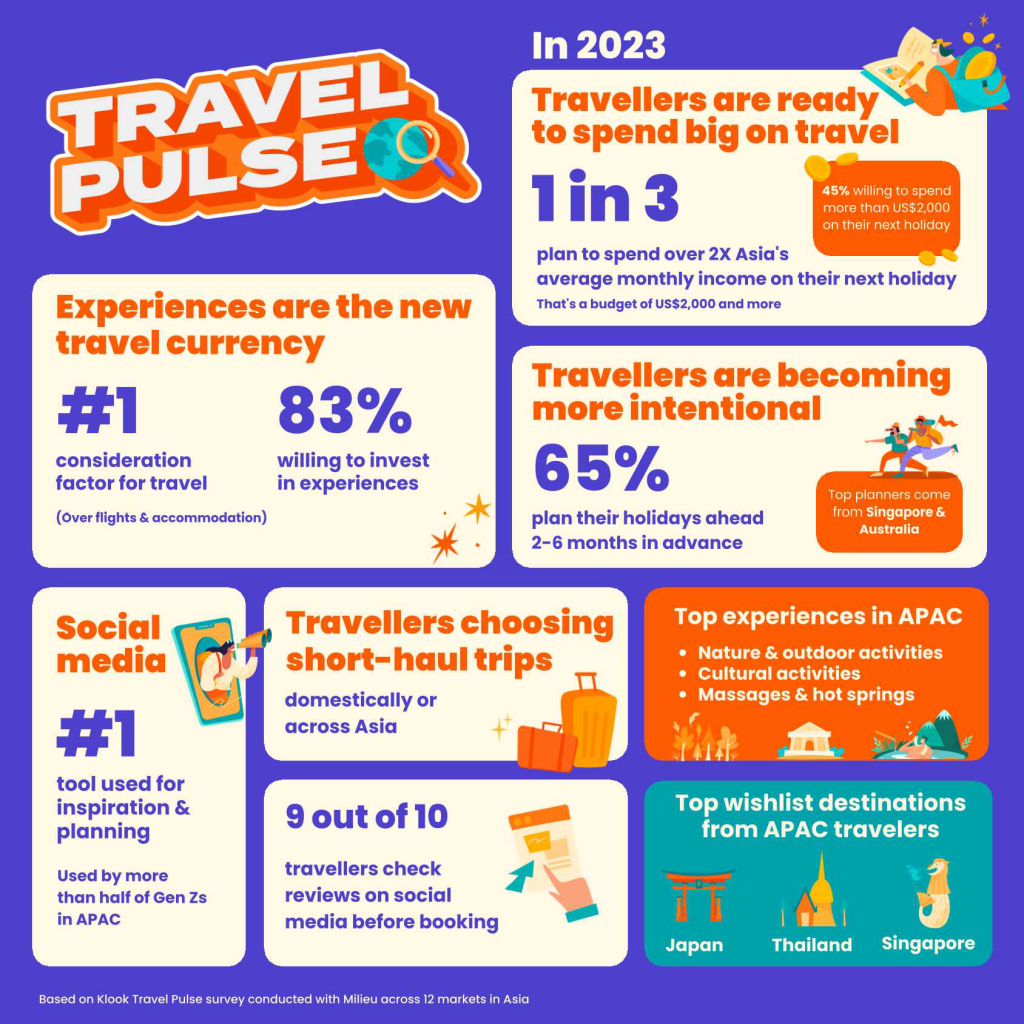
It’s not a new notion, but a study called Travel Pulse, Klook’s first regional trend report, further proves that a shift is underway in the travel preferences of Millennials and Gen Zs across the Asia Pacific region. Experiences have become the focal point of their travel plans, surpassing traditional considerations like accommodation and flights. According to the survey, a leading travel and experiences platform, these young travellers are willing to invest significantly in unique experiences, with a notable impact from social media.
Experiences take center stage for Millennials and Gen Zs
Embracing a new era of travel, the survey highlights that 63% of these relatively young travellers prioritise booking experiences before their trips, signaling a shift away from the conventional checklist-style travel. A whopping 90% of respondents express a strong desire for memorable and distinctive experiences during their journeys, with 85% indicating their willingness to allocate resources toward these endeavors.
1 in 3 Millennial and Gen Z travellers are willing to spend more than double of the average monthly income in Asia (US$1,069) on their next holiday, which amounts to US$2,000 and more. In other words, experiences are Millennials’ and Gen Zs’ new travel currency.
Notably, 83% of travellers from Singapore are willing to invest in experiences, with a strong desire to spend more on nature and outdoor experiences like nature and outdoor activities (63%), theme parks (51%), massages and hot springs (56%). Surprisingly, Gen Zs, who are just beginning to embark on their careers, are not far behind their Millennial counterparts in splurging on travel. 1 in 5 Gen Zs are willing to spend over US$3,000, slightly trailing 1 in 4 Millennials who share the same sentiment.
Social media overtakes traditional sources of inspiration
In an era marked by technological advancements, social media has emerged as the primary source of holiday inspiration for Millennials and Gen Zs. Surpassing traditional search engines and travel guides, more than half of these travellers now turn to platforms like Instagram, TikTok, and other social media channels to discover new destinations and activities. This trend underscores the interactive and visually engaging nature of short-form videos and mobile apps, offering authentic storytelling and personalised recommendations.
Eric Gnock Fah, COO and co-founder of Klook, remarks on this shift, stating, “The rise of social media as a travel inspiration and planning tool is largely due to their interactive nature, especially with short-form videos and mobile apps. It has undeniably become a powerful and dynamic source of travel inspiration among Millennials and Gen Zs.”
While Millennials still prefer to use search engines (59%), social media comes a very close second (55%) indicating its rising influence over how travellers seek out information. In fact, 9 out of 10 millennials and Gen Zs check online reviews before making their bookings and rely on travel content recommendations on social media when planning holidays. Findings show that creating social media-worthy content is of utmost importance for a large majority of travellers (87%) especially for travellers from India, the Philippines and Mainland China, and one of the main reasons for travel.
Strategic planning and regional exploration
The survey also reveals that Millennials and Gen Zs are becoming more organised and intentional in their travel planning. Approximately 65% of these travellers meticulously plan their holidays two to six months in advance, with notable peaks in strategic planning seen among Singaporean (74%) and Australian (57%) respondents.
Nearly half of travellers from Mainland China, Vietnam, and Thailand prefer to make holiday plans in less than two months. Additionally, Millennials and Gen Zs are increasingly opting to travel closer to home domestically (27%) or within Asia Pacific (52%), with the top three destinations on the travel list as Japan (41%), Malaysia (33%) and Korea (25%).
These findings indicate a rising trend of younger explorers putting focus on the desire to explore and seek new experiences over the actual destination itself.