
Heading out to the best real-life experiences
Headout has acquired the team behind start-up Dabble to help build a generation of AI-powered travel experiences for Headout users.
Dabble, founded by Neil Mathew, Prasenjit Mukherjee and Yan Ma, “sits at the intersection of AI, computer vision and new media”, said Headout CEO and co-founder, Varun Khona.
“This combination makes them perfectly placed to help accelerate our mission of getting everyone to head out to the world’s best real-life experiences,” Khona added.
Headout runs a managed marketplace where it creates and curates its experiences, upgrades the technology and delivery infrastructure for the experience providers and standardises the end service for a given experience across multiple experience providers.
Dabble, a YC-backed company built around the vision that technology can be designed to help us be “more human, not less”, will help to structure Headout’s overall efforts towards AI. It will specifically work on infusing new experiences at every stage of the customer journey, both during discovery and the in-person delivery of the experience.
Dabble products ‘dabble’ between the digital and physical worlds. They have also deployed immersive AR and VR experience at large venues across North America, building location-aware technologies.
“What made us swipe right on Headout was our shared vision that AI can transform the way people experience the physical world around them,” said Mathew, co-founder and CEO of Dabble.
Headout serves 125 cities around the world, in eight languages, and has had more than 27 million people from 196 countries head out to one of its experiences. It has raised $60 million-plus from top-tier investors and is headquartered in New York with nine global offices.
Swiipr soothes the pain points of disruption
Swiipr, a travel paytech company has secured £6million (US$7.6m) in Series A funding, led by Octopus Ventures, to help drive the company’s next phase of growth.
The world’s first airline specialised payments platform, used by 26 airlines across 70 countries, Swiipr enables airlines to digitise flight disruption payments, replacing paper vouchers, bank transfers and the often-unpopular loyalty points and future travel vouchers.
Swiipr’s integrated digital platform, including virtual and physical pre-paid compensation cards and a mobile app, give airlines the tools they need to solve disruption pain points, “whilst being fully compliant with the latest passenger rights regulations”.
For passengers, Swiipr has launched the Swiipr Compensation Card, which enables airlines to distribute funds directly to passengers at the point of disruption (such as denied boarding or lost luggage), and the Swiipr Welfare Card, which enables airlines to instantly distribute food & beverage payments when flights are delayed.
The cards offer instant, secure and compliant payouts, in a streamlined, digital format that has universal retail compatibility.
The platform also helps airlines slash fraud and processing time, boost loyalty through personalised offers and gain critical customer retail insights.
Airlines are also able to use Swiipr’s card products for operational and crisis payments for their staff and crew, during trips and delays.
TX Ventures and Solano Partners supported Octopus on the funding round.
Spotnana checks in with Emirates’ NDC
Spotnana’s Travel-as-a-Service platform now supports Emirates NDC-based offers, providing travellers access to exclusive booking classes in Emirates’ Business and Economy cabins, which will include differentiated ticket pricing, dedicated early access to promotions, and differentiated fare rules.
Travellers also benefit from exclusive access to book ancillary products like extra baggage at special rates and future Emirates ancillary offerings through NDC.
The direct NDC integration developed by Spotnana also supports self-service cancellations with automated refunds, which are not available through traditional channels, as well as the ability to hold a ticket and make self-service seat changes post-booking.
Spotnana says agents having access to the same NDC capabilities results in “seamless global service delivery and rapid resolution of traveller inquiries”.
Cathay Holidays calls in Expedia
Cathay Holidays has a new booking site powered by Expedia Group, initially available in Hong Kong, Japan, and Singapore, offering customers a streamlined experience for planning and booking their next trip.
Customers can explore 900,000 properties and 200,000 travel activities in 250,000 destinations worldwide provided by Expedia Group through the new booking site.
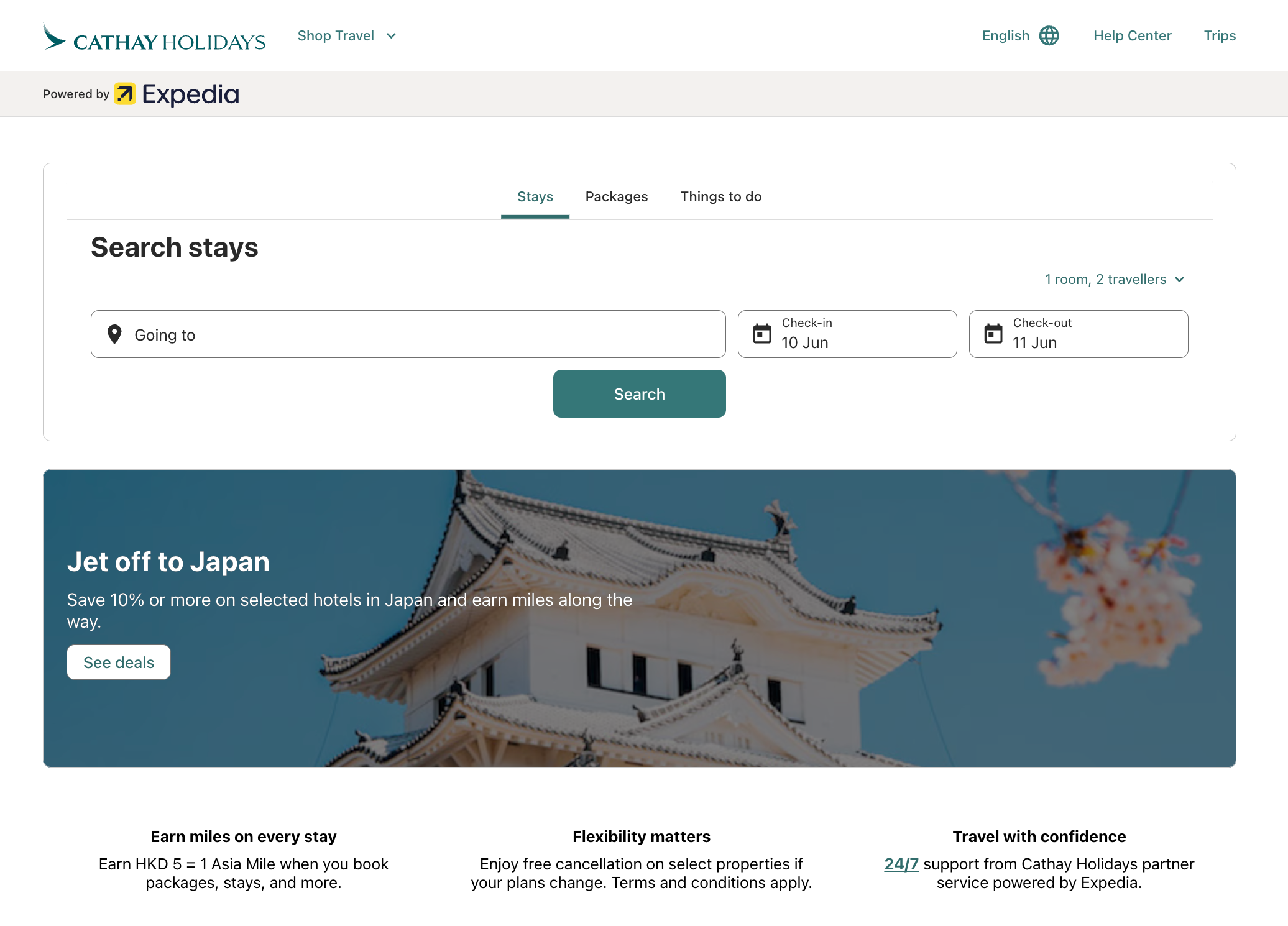
Cathay Holidays also offers an exclusive collection of travel experiences, from a secluded Michelin-star dining experience in Hong Kong to a stay in the Bukchon Hanok Village in Seoul.
Cathay members who book with Cathay Holidays can earn Asia Miles, which can be used to redeem flights, hotels, and more. Later they will be to pay for hotels and experiences with miles, cash, or a combination of both.
TAT, Traveloka in tie-up
The Tourism Authority of Thailand (TAT) and Traveloka have signed an (MoA) to enhance the travel platform’s commitment to Thailand’s tourism industry.
The MOA provides the legal framework for Traveloka to collaborate with the TAT on dual marketing campaigns, sustainability initiatives and travel insights.
The agreement also allows Traveloka to collaborate directly with the TAT head office in Bangkok and all domestic and overseas offices.
SITA goes to sea
Air transport tech specialist SITA has launched SmartSea through an agreement with Columbia Shipmanagement (CSM), the ship manager and maritime service provider.
SmartSea offers the maritime sector access to the same advanced technology that has already transformed the air transport industry. At the same time, CSM becomes the first SmartSea client to exponentially upscale its operations through this technology.
SITA said digitalisation for the maritime industry was an important step towards catching up with the automotive and aerospace industries from a technology perspective.
In a media release, SITA said it is embedding its transformative footprint into the maritime industry, “breaking boundaries and simplifying processes for more efficient and profitable operations across the entire value chain”.
Ports and ship terminals experience the same challenges and opportunities, SITA said. Vessels require turnaround and maintenance, the same as aircraft, and both need to manage crew, passengers, baggage and freight efficiently and with constrained budgets.
David Lavorel, SITA CEO, said, “This is a significant step for us and demonstrates our ability to revolutionize end-to-end travel, regardless of the mode of transport.”