From immersive wildlife experiences to tech automation and animal care, Singapore Mandai’s deputy CEO says she’s in the business of love
After 27 years of working in the corporate world, Belina Lee, Deputy CEO of Mandai Wildlife Group and CEO, Mandai X, says she’s finally found her “ikigai”.
“Ikigai” is a Japanese term that blends two words: “iki” meaning “to live,” and “gai” meaning “reason,” which translates to “a reason to live”. It’s a convergence of four primary elements – what you love (your passion), what the world needs (your mission), what you are good at (your vocation), and what you can get paid for (your profession).
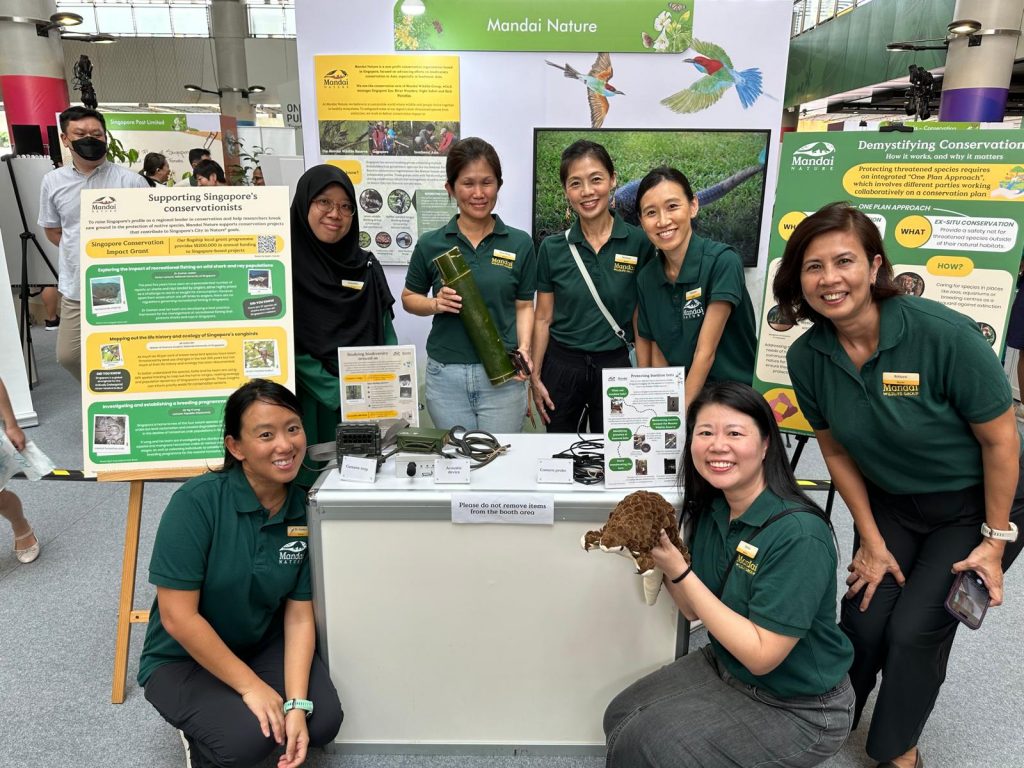
Belina Lee (bottom, right) with her team at an outreach event in Singapore, spreading the love.
“I am so lucky, I found the fourth element, purpose, in this job. The world needs more of nature, as we move towards a more tech-driven and urban world,” says Lee, who joined Singapore’s operator of four award-winning wildlife parks comprising Singapore Zoo, Bird Paradise, River Wonders and Night Safari, in 2016 after a career spent with first Singapore Airlines, and then American Express and Mastercard.
Says Lee, “Magic happens when you find it. You are more anchored, more resilient, more passionate. You don’t feel a tension, a trade-off between work and life, but see it as one integrated whole.”
On her job move eight years ago, she recalls, “I felt it was time to do something new, to give back to Singapore, something more purpose-driven. When the current Group CEO, Mike Barclay, whom I knew from our Singapore Airlines days approached me with this opportunity, I didn’t hesitate.”
And this is possibly the most exciting time in the group.
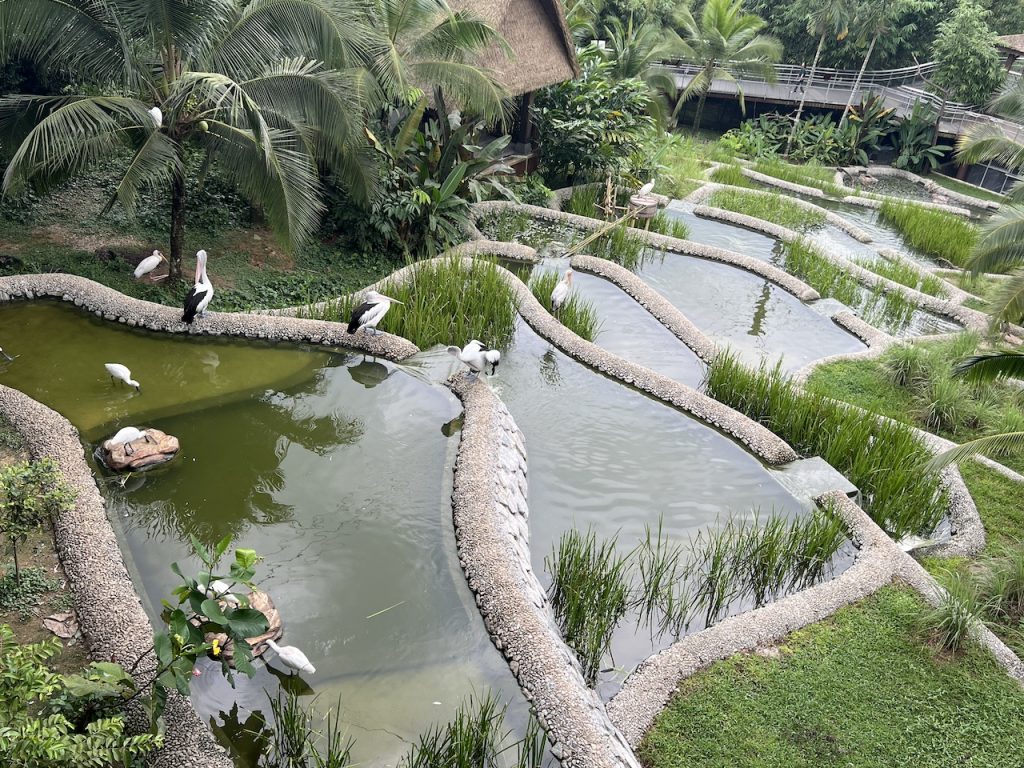
Bird Paradise: One of the four wildlife parks of Mandai Wildlife Reserve. A fifth, Rainforest Wild, is being added.
Mandai Wildlife Reserve is undergoing an ambitious rejuvenation plan to transform into the world’s first integrated nature and wildlife destination in which a fifth park, Rainforest Wild, is being added, together with two indoor attractions, all integrated with nature-based experiences and green public spaces. Its first eco-resort will also open, to be managed by Banyan Tree. Designed by WOW Architects, it will offer 338 keys in the form of family rooms, elevated cabins and treehouses in the shape of seed-pods.
Lee, wearing two hats, knows she has a big job ahead of her.
In her current role as deputy CEO of the group, she is responsible for transformation and growth and as CEO of Mandai X, she spearheads the growth and impact venture building arm, which has incubated five ventures thus far. “Our initiatives are geared towards creating a world where we empower future generations to contribute to a sustainable future where people and nature thrive in harmony. This includes an edutainment offering where we nurture children to become everyday heroes who drive positive changes for themselves, others and the world.”
Says Lee, “It’s the best job in the world – It is really very meaningful to innovate and achieve impact at the intersection of planet/people/performance . I always tell people that I am in the business of love – to expose people to nature so they appreciate it, fall in love and do their part to protect nature.”
She’s candid in saying that she’s fortunate to be working in a highly collaborative industry. “The zoological community is very small and we are united with a common purpose to protect nature and wildlife, resulting in more collaboration than competition. So, unlike other commercial businesses, we are not out to get the very last dollar from you – to buy that one more thing. Our innovation is around inspiring people to fall in love and protect wildlife through meaningful connections and experiences.”
Don’t get her wrong though. The business still has to be run profitably. “But it’s more purpose-led as we actively build a world where people and wildlife thrive together. Around 25-30% of the animal species in our parks are endangered. There are certain species that are extinct in the wild and our breeding work serve as assurance colonies. In a way, we are like a modern day Noah’s Ark.” Mandai Nature supports about 50 conservation projects across 10 countries.
Innovating with tech in customer experience and animal care – audio tours in the pipeline
For Mandai, innovation has involved experimentation in various areas – on strategic capabilities, project design and creation of experiences as well as animal care
“We did a lot of experimentation in the early years. We were the first to try the multi-media night experience where we transformed the Zoo in the night to an immersive experience called Rainforest Lumina. That’s similar technology used in the attraction, Harry Potter: A Forbidden Forest Experience that was recently in Singapore.
“We pioneered that in 2018, and then Covid hit in the third year. It took us three years to get to breakeven. As an experience, it did well but we learnt some lessons. The waiting time between day and night was too long for some visitors and an one-hour experience was too short. By year three, we learnt all these and bundled it with Night Safari.
“That’s the thing with innovation – you don’t get it right the first time. We are looking at how to bring evening experiences back in new innovative and viable ways.”
She likes the “phenomenal job Disney has done with its app and how it’s improved the experience of the guest”.
“There’s a balance between digitalisation and wildlife – as an operator of wildlife parks and when our guests are enjoying it, we want them to be appreciating the natural environment, not looking at their device. We want tech to enhance and augment the experience, and not to hijack it.”
She’s piloting audio tours with Cinewav, the Singapore audio startup, to create stories that will immerse visitors in the experience, rather than just feed them information and facts. “We are working hard to find the right balance.”
Technology is also widely used in the care of animals. “We have one of the most advanced animal hospitals in the region and, as part of the rejuvenation plan, we are upgrading it further. We are applying medical tech for humans to animals. We did the first CT scan for a fish and when one of our hornbills had cancer of the tusk, we did 3D printing to replace it.”
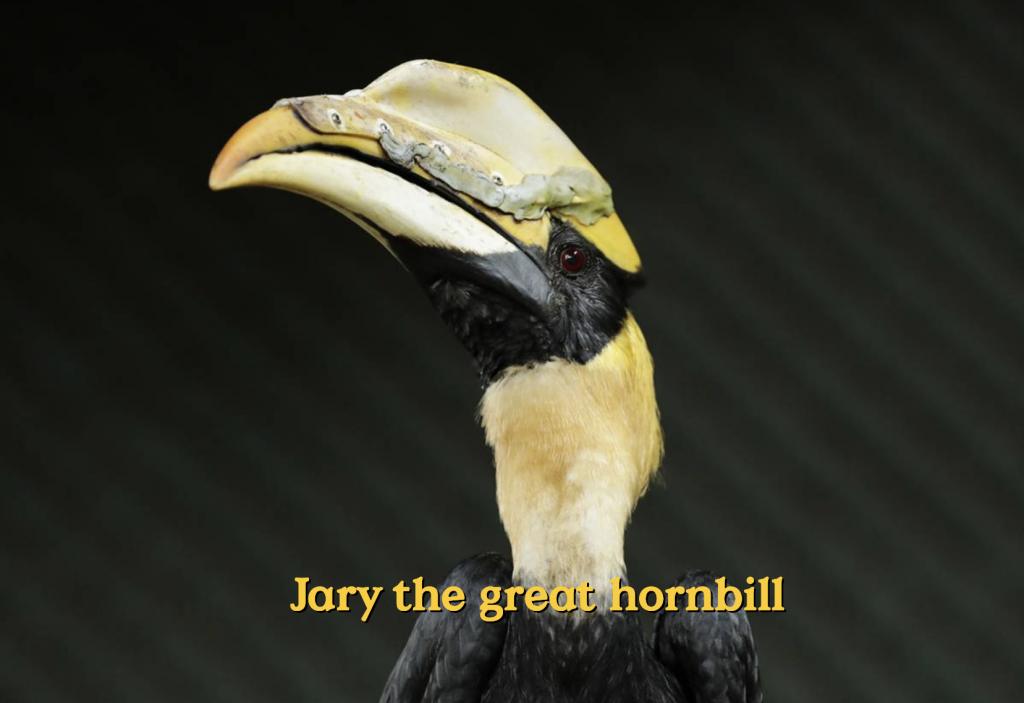
Jary, the poster hornbill child of cancer survivors.
Jary (whose name means ‘warrior with a helmet’ in ancient Norse) has since become the poster hornbill child of cancer survivors. You can follow his story here.
Adds Lee, “We have a pilot command centre fed with multiple data points about the animals’ body weight, frequency of eating, their environments to assess their health and well-being. Out of this, we are piloting smart animal care solutions to improve the animal welfare outcomes.”
Marketing in transition – focus on purpose vs just a park
When she first joined, the group had minimal marketing technology investment. “Everything was still hard coded html web pages and we had to wait three days for the agency to do anything.
“We moved to an Adobe marketing tech stack starting from 2018 which covers all the pieces from CMS, to marketing automation, social media – seven, and soon to be eight platforms. We are catching up and leapfrogging the way we reach out to the world. From park-led messaging, we have moved to experience-led messaging, to focus on purpose vs just a park.”
Even though inbound tourism to Singapore has not fully recovered to 2019 levels, Lee says the parks have met and exceeded tourist revenue targets. “We are getting higher yield traffic, the average spend is higher,” she says.
“The high prices in Singapore are a challenge,” she admits. “Inbound tourism from China and other traditional source markets have not recovered fully, so we are actively seeking alternative sources, such as longer haul markets. Our visitor mix has also evolved over the years.
“On the local front, the pandemic created a rediscovery of the love for Mandai among Singaporeans. It rekindled their pride for our Singapore Zoo which is really world class, we are rated among the top three in the world.” Local attendance has been growing steadily vs pre-Covid.
Given her background in loyalty, I asked for her thoughts on how loyalty could be applied to Mandai. Saying that “we are not an everyday brand like a supermarket, hence, the triggers are very different”, she adds, “At Mandai, we have very diverse offerings and experiences and see greater value in driving repeat visits to our precinct and our members programme supports that.”
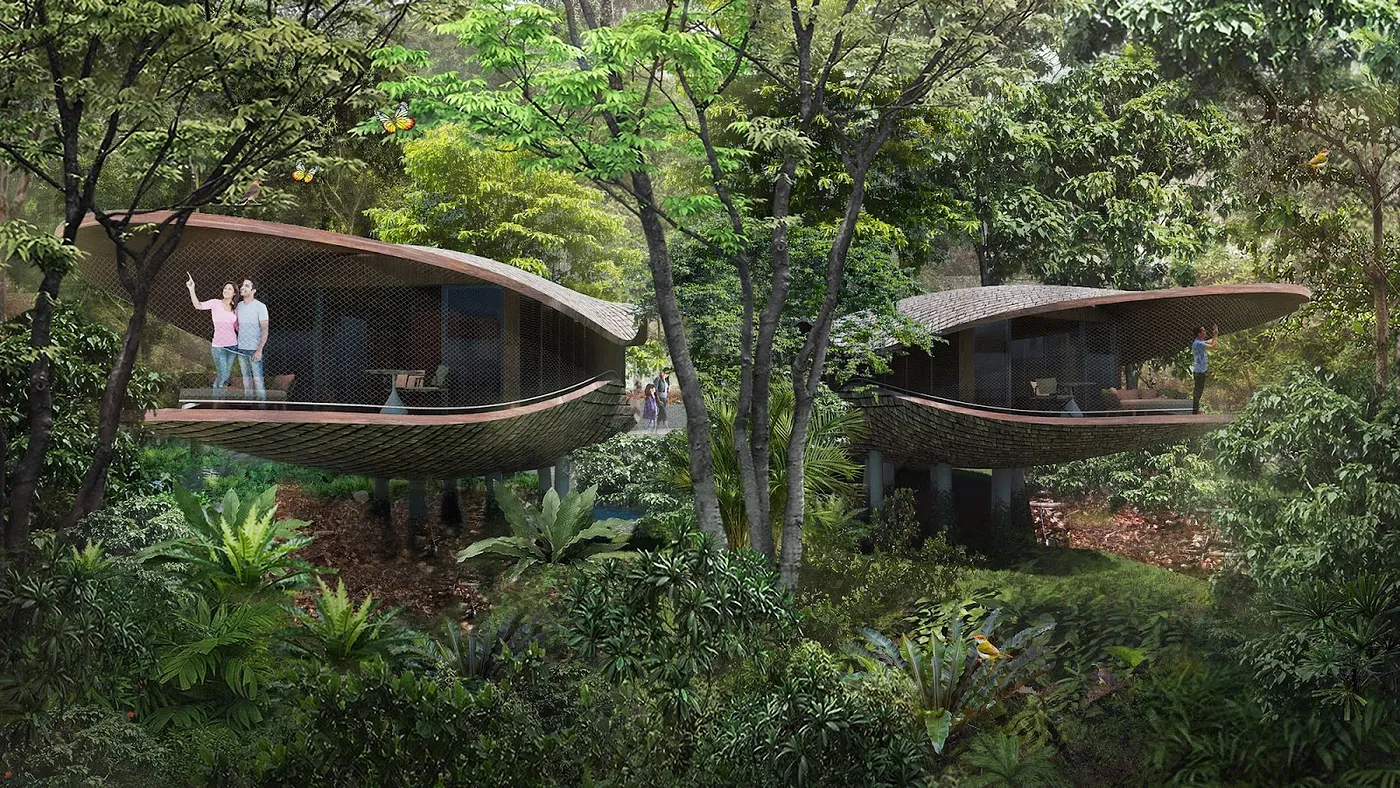
As part of Mandai Wildlife Reserve’s rejuvenation plan to transform into the world’s first integrated nature and wildlife destination, the first eco-resort will also open, to be managed by Banyan Tree. It will offer 338 keys in the form of family rooms, elevated cabins and treehouses in the shape of seed-pods.
Rainforest Wild – the next innovation to appeal to a “lost generation”
Calling Rainforest Wild “its next innovation”, Lee says the new park is meant to appeal to what she calls “the lost generation”. “Everybody grows up, loving the zoo, but when you get to 10-12 years old, the zoo is not so cool anymore. We want to appeal to the youths, teenagers, Gen Z generation and it will be different from a traditional zoo as it will be more action-oriented.”
Asked if it would be more theme park than nature park, she says, “It’s a wildlife park with adventure elements.”
Lee foresees that the role of wildlife and nature parks will become even more important in the age of generative AI and accelerated tech development.
“My own children, 14 and 16, were so caught up with digital during Covid and post-Covid. Four years on, they crave outdoors more than ever – I don’t know if it’s an age thing or their own personality, but they have a strong desire to experience the natural world.
“We have record rates of mental wellness deterioration in Singapore, and there’s a lot of spotlight on mental wellness. Nature and animals are beneficial to mental wellness. It is known that disconnection from nature causes depression so it is important to ensure the next generation has easy access to nature.
“Can nature come to them? With all the Mixed Reality innovations, the hybrid space is worth exploring. Nothing can beat the immersion in real nature, but we can certainly experiment with virtual nature,” she says.