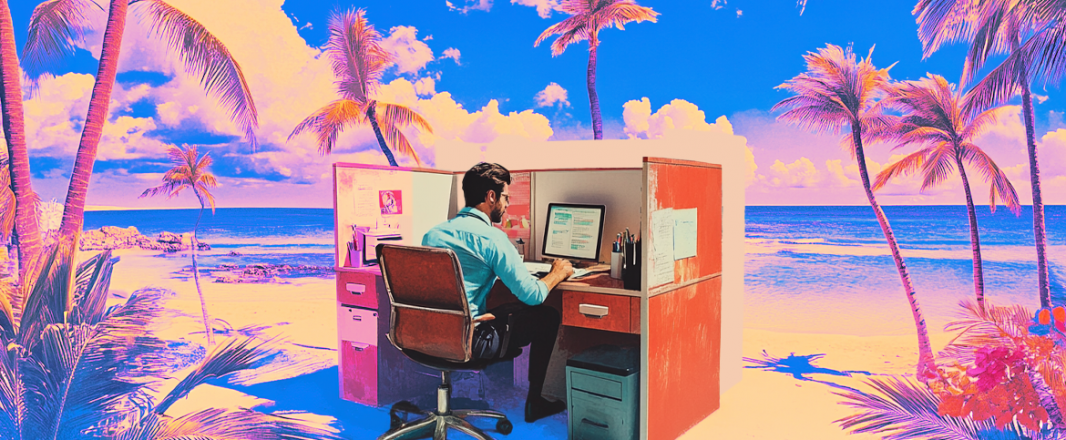
We are not going back to the office, not in the way we used to. The pandemic forced us all to re-evaluate how we live, how we work, and how we balance our lives. The forces that powered the old way of working—the service economy built around office towers and cubicles—are permanently disrupted. And this disruption isn’t just about convenience or preference. It’s a seismic shift in how we operate as a society, and this is Covid’s lasting legacy.
Does this matter to Travel? Let’s be clear about what has happened. We’ve been catapulted into this strange new world and most of us and not really affected – much. The rise of *working from home (WFH) was the big trend . But another more subtle trend has become “working from anywhere (WFA)- and it’s not a temporary blip. It’s the new norm. In the U.S., 27.6 million people were working primarily from home by 2021, tripling the pre-pandemic number. The Asia-Pacific (APAC) region was similarly affected, with 60% of workers in countries like Singapore and Australia adopting flexible working arrangements.
The pandemic’s shift
The pandemic didn’t just change where we work; it changed HOW we think about work. We’ve all seen the pictures of empty office buildings and abandoned cubicles. Once the pandemic hit, businesses scrambled to implement remote work policies. But this was more than just an emergency response—it was the start of a deeper transformation. People liked the flexibility, the autonomy, and the improved work-life balance that came with remote work. The data shows it: for Asia. In Singapore, employees have averaged up to 2.8 days working from home each week from the same study.
But here’s the kicker: while businesses adapted to this shift, many are realizing that the old ways of working aren’t worth preserving. Office towers? Cubicle farms? They’re quickly becoming relics of a bygone era. And it’s not just the employees who feel this way. 31% of U.S. employers have fully embraced remote work.
The impact on travel
Here’s where things get even more interesting—and more disruptive. With millions of people no longer commuting daily, the impact on industries that depend on business travel is profound. Conurbations—those dense urban hubs that once thrived on a steady influx of business travelers—are losing their luster. Major cities, from New York to Singapore, will likely lose source travelers, not only for leisure but more critically, for business.
Look at the trend of the “anywhere worker” – AKA the WFAer, 34% of business travelers now say they want the option to work from any location. The office-bound, city-centric worker while not quite an endangered species is diminished. An astounding 13% of workers plan to work remotely from another country for at least a month, and one in four companies is already allowing employees to work from anywhere. This is not just a fad. It’s a reality that the travel and hospitality industries need to grapple with.
And what about the anti-tourist backlash propelled in part by the post pandemic boom? While some have embraced it – for the “locals” we have seen the backlash in places like Barcelona. Armed gangs (with Water Pistols) have been seeking out tourists. And some companies – like Amazon are demanding their workers return to work or risk being fired. There is even software that can tell if you are behind your computer.
If we cannot predict travel patterns, we can at least recognize the shift. The business traveler, once the backbone of hotel chains, airlines, and urban restaurants, is now more likely to Zoom in from a tropical beach or rural Airbnb. And with that, the economic underpinnings of our major conurbations are beginning to fray. The old 45/55 split is changing. Despite numerous reports of “Biz Travel is back” it is different.
What we need to pay attention to
The real question is, what are we paying attention to? This isn’t just about people working in their pajama bottoms or companies saving on office space. It’s about a fundamental reshaping of our cities, our industries, and our global economy. The leisure and business travel that once supported the thriving centers of global finance and commerce will diminish. If we don’t adapt, we risk ignoring the shifting tides that are sweeping away the old structures of work. And make no mistake Travel IS affected. Ten years ago, Lisbon was a sleepy backwater. Today it has become home to many Americans seeking a better quality of life. And the word is out.
Covid may have caused us to pause, but the shifts it triggered are here to stay. The rise of WFA and the gradual decline of office-bound work are not just trends; they are the new rules of the game. And it’s time we all paid attention to how this will reshape not just where we work, but how we travel, how we live, and how our cities will evolve in response. Please do remember that the impact could be negative on the local community. Be respectful, all.
Note: Timothy is someone who actually embodies this. He has been a WFAer for decade. He will be speaking at WIT Singapore, October 14 – 16. Get your tickets now.