
Editor’s note: This year’s WiT Singapore had as its theme, the “Next Generation”. So what it is that travel’s next generation leadership thinks most about – and what big problems will it solve next? In the first of his series of stories from the show, we sent CP5 co-founder Luke Clark along to find out.
Many who famously shout about their age when they’re young, regret it later. Musician Pete Townsend, who penned the 1965 breakaway hit ‘My Generation’ for British rock band The Who, is surely one of those.
While his unforgettable song delivered The Who its first creative identifier, Townsend’s most famous line in the song, also proved its most ominous: “Things they do look awful cold / I hope I die before I get old.”
That rebellious line, plus the song’s relentless momentum, was an early expression of an attitude we’d later identify as punk. Yet Townsend explained recently that his inflammatory lyric was never meant to be taken literally.
“Hell is doing the same thing over and over and over again until you turn to dust,” the rock legend clarified. The opposite of that ‘stuck’ feeling, he explained is “to defy atrophy, to allow your consciousness to grow.”
In Townsend’s mind, ‘My Generation’ is a call to be brave, and express who you really are – no matter who might disagree. Rather than being an age thing, as the rocker declared in the interview, it is about maintaining your expression of freedom: “Young is what the heart and the soul is.”
A riot of colour and light
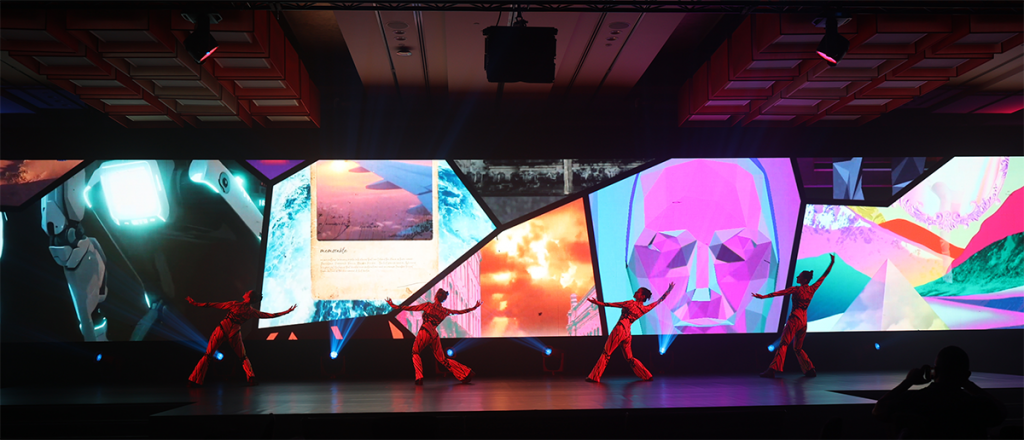
To adopt this Townsendian logic then, despite the fact that Web in Travel turned 19 this year, it remains a show that feels forever young. Walk into its Marina Bay Sands Main Stage during the show, and wild expressions of travel’s youthful “heart and soul” spirit are everywhere.
Sit down to three full days of WiT sessions, as I did, and you will, in time, be wowed by the show’s anarchic pallete. Here is a riot of sound, colour, music and light that feels anything but safe, and far from grownup. One minute, you’re visiting the ancient monuments in Saudi Arabia. The next, you’re at New York’s disco mecca, Studio 54. Spin around again, and there’s a session offering you a balloon ride to outer space.

WiT Singapore is a “riot of sound, colour, music and light that feels anything but safe, and far from grownup.” Delegates, alongside Yeoh Siew Hoon (Founder, WiT) joined a K-Pop dance crew on stage at the Closing Party
The show is an expression of WiT founder Yeoh Siew Hoon’s inner world. If the Penang-born content creator had her time again, she would surely be helming a rock band, like a real-life Daisy Jones & The Six. Instead, she names her beloved pet dogs after rock stars – and each year, turns the volume up another notch with the Web In Travel global road show.
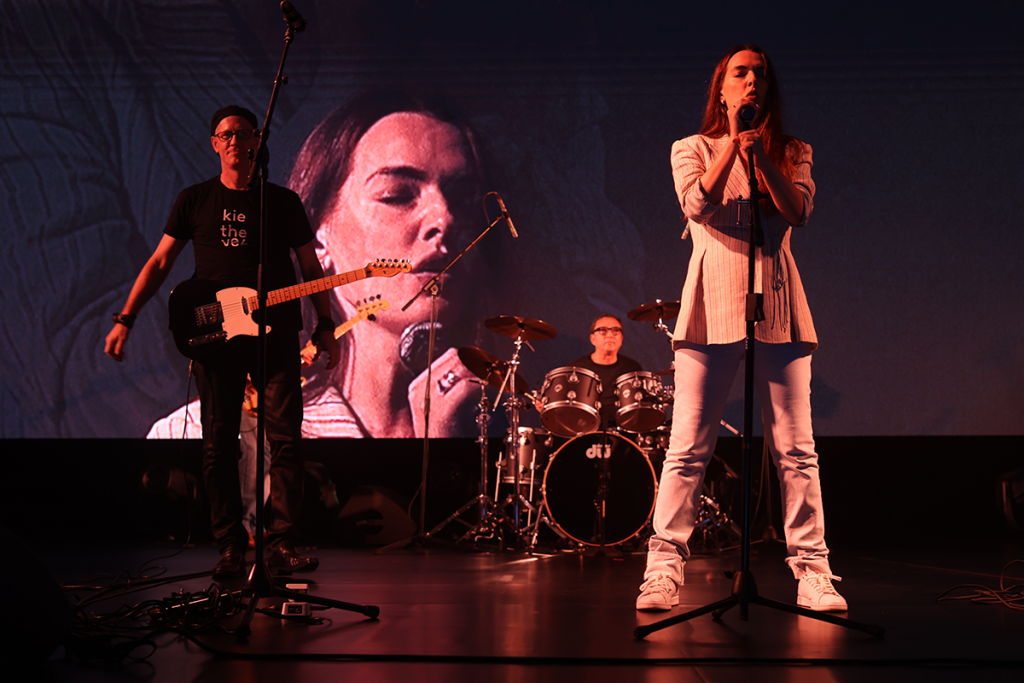
Resident band, WiT The Funk, belting out covers of timeless rock anthems at the Closing Party
As she quipped to me after WiT Singapore had concluded with its raucous auction and party: “I like it that people are finally calling us a charity rock concert.”
So as CP5, in partnership with WiT Singapore, sat down to the full three-day extravaganza, we first asked this. What are travel’s Next Generation leaders actually talking about? Where is travel’s heart and soul taking us next? And what might the postcards home look like?
Solve real-world problems with the best solutions
No better place to start than day one, and the product head for a company whose early life was boosted a decade ago, when it won the WiT startup pitch. As David Liu, Chief Customer Experiences Officer at Klook affirms, while many OTAs set out with a technology-driven zeal, there are often more solutions than problems – while some companies can even lose their way by creating solutions that are looking for a problem.
As Liu notes, a new-generation leader is one that is firmly focused on leaning into the customer need as its primary focus. “In terms of the approach, I would always look at the customer angle first, because we’re here to solve the customer’s problems,” he noted. “Maybe it’s in the business model, or the technical support of our foundations? But if we always take the customer and go and look for their problems, it becomes our problem for the industry to solve.”
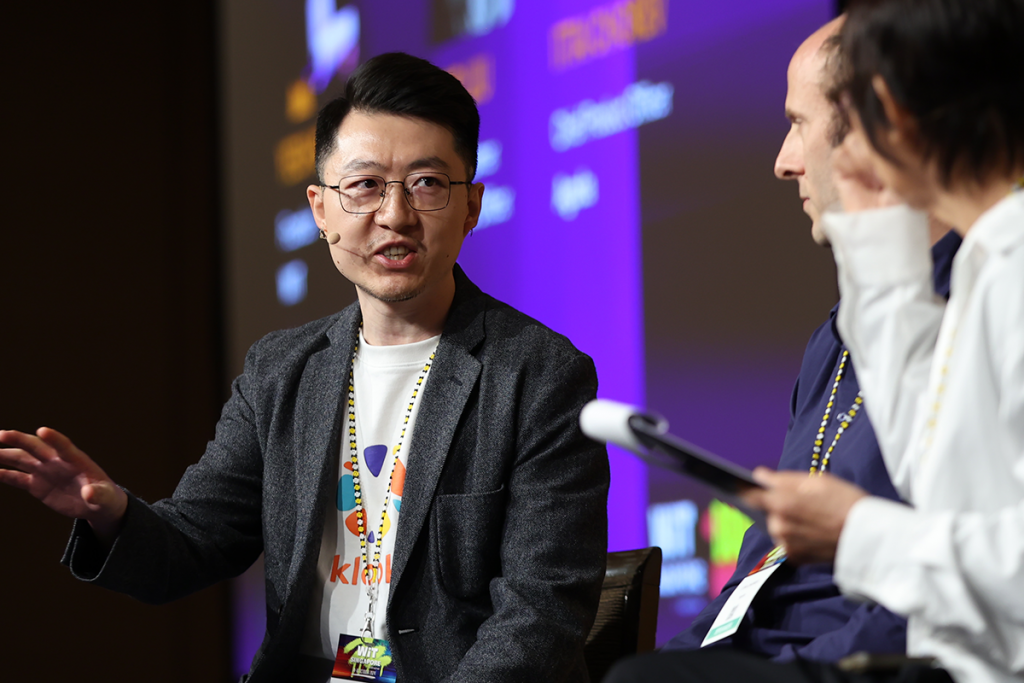
As David Liu, Chief Customer Experiences Officer at Klook affirms, while many OTAs set out with a technology-driven zeal, there are often more solutions than problems
In a world where the industry’s best talent expects that they will play a meaningful part in the change process, companies must also ensure that they have bosses who are willing to be proven wrong by their product teams. Ittai Chorev, Chief Product Officer at Agoda, recalls having conversations with a former boss, who at first disliked a notion being posed by his developers.
“But then he said, ‘Okay, let’s define the measurement. What’s the problem you’re trying to solve, and how do we know if you’re solving it correctly? What are the results you’re going to achieve?’ Because when it comes to a solution, nobody knows what the right one is,” Chorev noted.
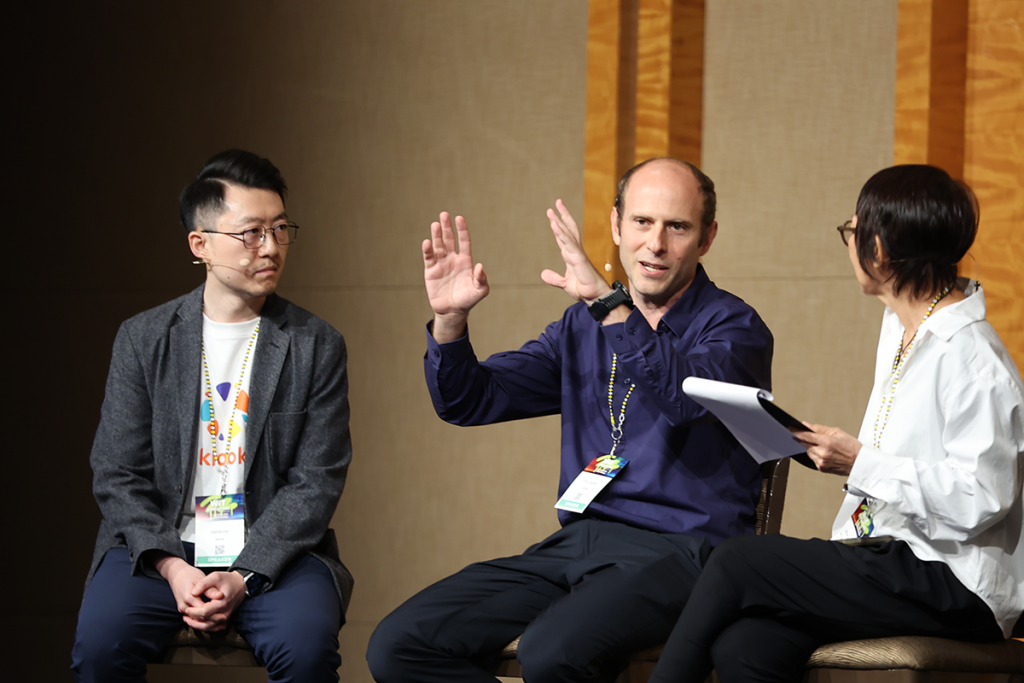
Ittai Chorev, Chief Product Officer at Agoda, recalled a conversation he had with his former boss. “He said, ‘Okay, let’s define the measurement. What’s the problem you’re trying to solve, and how do we know if you’re solving it correctly? What are the results you’re going to achieve?’ Because when it comes to a solution, nobody knows what the right one is.”
For the process to be effective, he stressed that suitable time and iteration must go into the process: “It’s about velocity of trying solutions, rather than just picking the right solution. And the good bosses realise that they don’t yet know the solution.”
Lead with empathy, then add AI for personal flavour
If she seems like a cool customer, that’s because Adrienne Enggist knows how to cope with the heat of a professional kitchen. Now Senior Director, Product – Customer Experience & Platforms for Booking.com, Enggist joined Booking in 2010, having previously worked as a professional chef in her home state of Virginia, in the United States.
If youthful thinking is about engaging the heart and soul, Enggist seems like someone who brings a new generation eye to whatever she does – whether that means soaking up future coding advice in the late 1980s from futurist Timothy Leary, or busily tracking down the best bak kwa, her Asian food snack weakness, each time she’s in Singapore.
While cooking up the recipe for customer love at Booking.com, Enggist says that everything must first start with understanding the customer intent: “You take empathy, and then put a big layer of data over the top of it,” she describes. Next, understand the unintended consequences of the decision that you make on behalf of your customer.
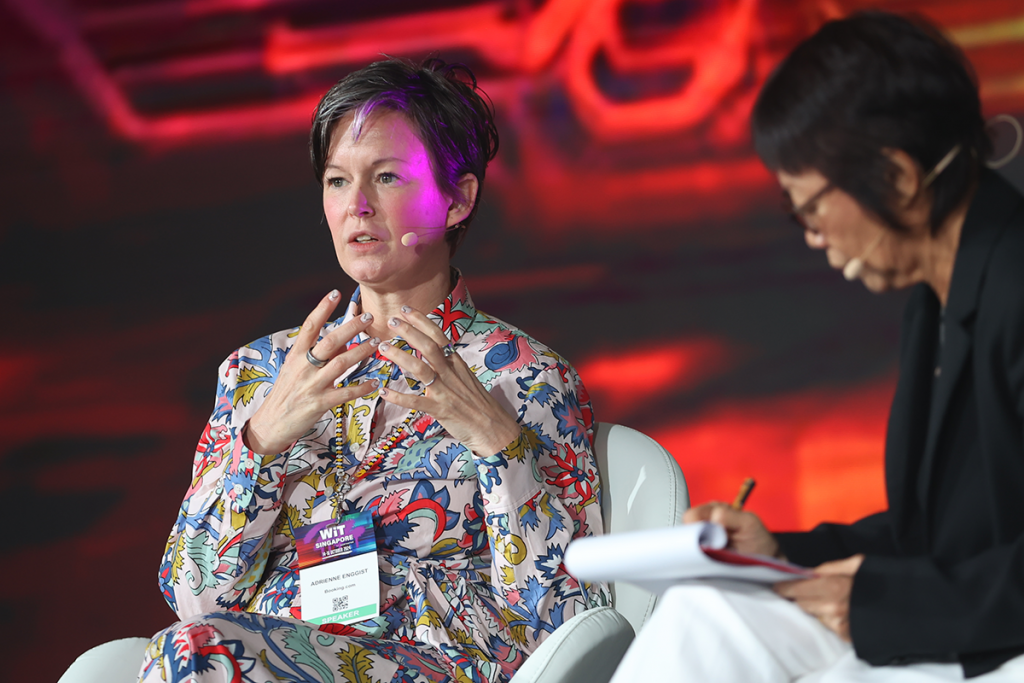
Booking.com’s Adrienne Enggist says, “You take empathy, and then put a big layer of data over the top of it.”
Once a technology like AI is added, the ‘firehose of customer intent’ could turn your travel dish into a Michelin-star winner, or make it into a big mess. “Fundamentally, AI is going to change how product folks need to think about the work that they’re doing – because when you have intent coming in at this rate and breadth, following the same path that we’ve taken on rails for product development, doesn’t make sense any longer.”
As an example, changing the way that customers search on Booking.com, by bringing in more semantic signals and introducing a deeper understanding of natural language search, comes with its own brave new world: “If someone comes in and writes a paragraph and tells us their feelings and the emotions that they want to have, we need to do something with that to match that expectation,” she underlines.
“So in developing products, it comes down to understanding that the user experience you create, is going to heavily influence what kind of result you’re able to produce.”
Personalisation plus stress reduction equals customer loyalty
For Idan Zalzberg, Chief Technology Officer at Agoda, new generation thinking in travel is about using your technology to make the customer’s experience simple, and more seamless. Of course, when you’re based in Asia and dealing with many different cultures, that’s far from easy. Plus, it can change in a month. “What always surprises me is how fast consumer expectations rise,” he notes.
Increasingly, this means that customers will expect their OTAs to be able to handle specific and personalised tasks, and do so rapidly. “They’ll say to us, ‘Don’t shower me with information that’s not interesting. Don’t waste my time. Show me what I need to see, help me make a decision, then let’s move on.’”
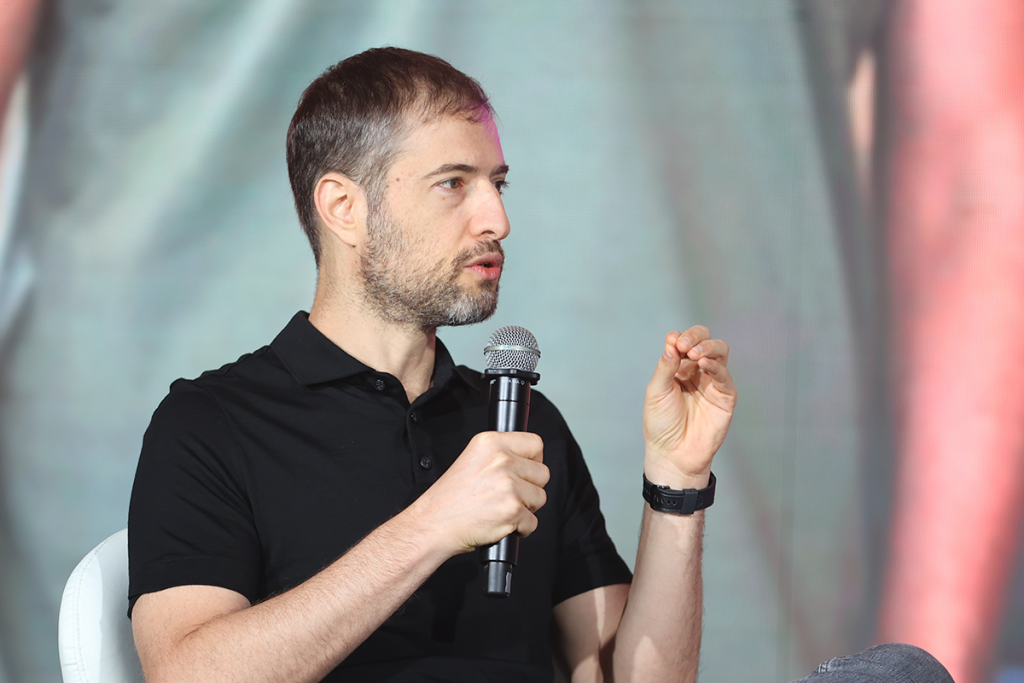
For Agoda’s Idan Zalzberg, new generation thinking in travel is about using your technology to make the customer’s experience simple, and more seamless.
The next level of requirement, he notes, will be to have the ability to provide the sort of in-trip support, that accommodates a whole travel journey, including catering to a customer’s need, in the event of an emergency.
“Travel can be a very stressful thing,” Zalzberg notes. “You’re out of your comfort zone by definition – you’re in a foreign place. Many times, bad things happen.”
Yet with our Pete Townsend paradigm in mind, if new generation thinking means making youthful approaches that generate ‘heart and soul’ innovation, surely we are now approaching such a conversation. Having your future ‘travel buddy’ service in-trip that can literally protect our customers from harm in real-time, could really be a golden ticket that delivers incremental spend and lasting brand loyalty.
“We want to be there for our customers,” Zalzberg underlines. “And I think our customers will expect us to be there, in zero latency time, full of solutions and giving them the control.”