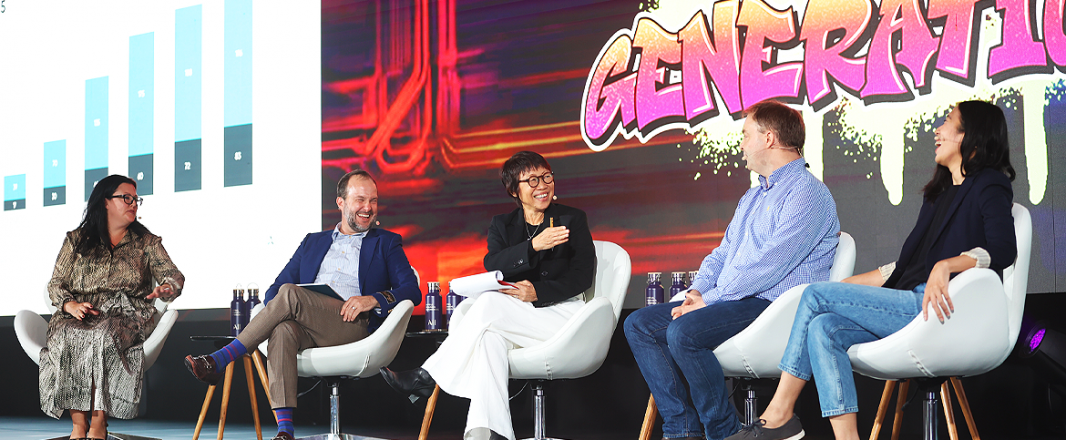
Editor’s Note: Remember back when we used to plan a decade ahead? Luke Clark does: and thanks to some WiT enabled rose-tinted glasses, he takes a look at some of the trends driving tours and activities into the next decade and beyond.
Bill Gates is believed to be responsible for the truism that “most people overestimate what they can do in one year, and underestimate what they can do in 10 years.” The quote refers to the intriguing notion that our brains are wired more to the short-term than medium- or long-term. The slight irony is, nobody seems to quite know when Gates actually made the quote.
What seems crystal clear though, is that Bill was speaking before the Covid pandemic hit us in 2020. We’ve since emerged from an event which not only cost us more than seven million lives globally, but it also had such a “Year Zero” effect on businesses and mindsets, that any semblance of predictability suddenly looked positively outdated.
Add to this a dizzying rollercoaster of recent megatrends hitting our airwaves: from Generative-AI and the call for global climate action, to a newfound bout of war and other severe geopolitical disruptions. Suddenly, talk of ‘the next decade’ feels pleasingly retro.
Yet at Web In Travel, the rule is to ‘Take Your Mind to New Places’. Which sounds particularly good right now – especially where the focus is on an excellent array of gathered experts in the world of tours & activities.
Make sure you’re connected
As panel head and WiT founder Yeoh Siew Hoon told the WiT audience, Austin Sheppard has spent a lot of time lately making sure we get connected. Specifically, the Senior Vice President, Trips (Interim) for Booking.com has been working on helping the OTA giant to embrace the connected trip.
“In Booking Holdings’ second quarter results, it said that connected transactions increased by 45%,” noted Siew Hoon. Did this mean that today’s Booking.com customer is now buying into the notion of the connected trip?
“They are,” affirmed Sheppard, clarifying that Booking’s ‘connected trip’ is more than just multiple verticals beyond flight and hotel – such as car rentals, taxis, attractions, activities and insurance – but also supply partners as well.
“We see that about 20% of customers that book a flight on Booking.com are actually net new customers to us,” he affirmed. “Most of those flight customers then go on to book other verticals as well – such as accommodations and attractions. So, we’re filling a customer need and promoting the awareness that we are able to connect.”
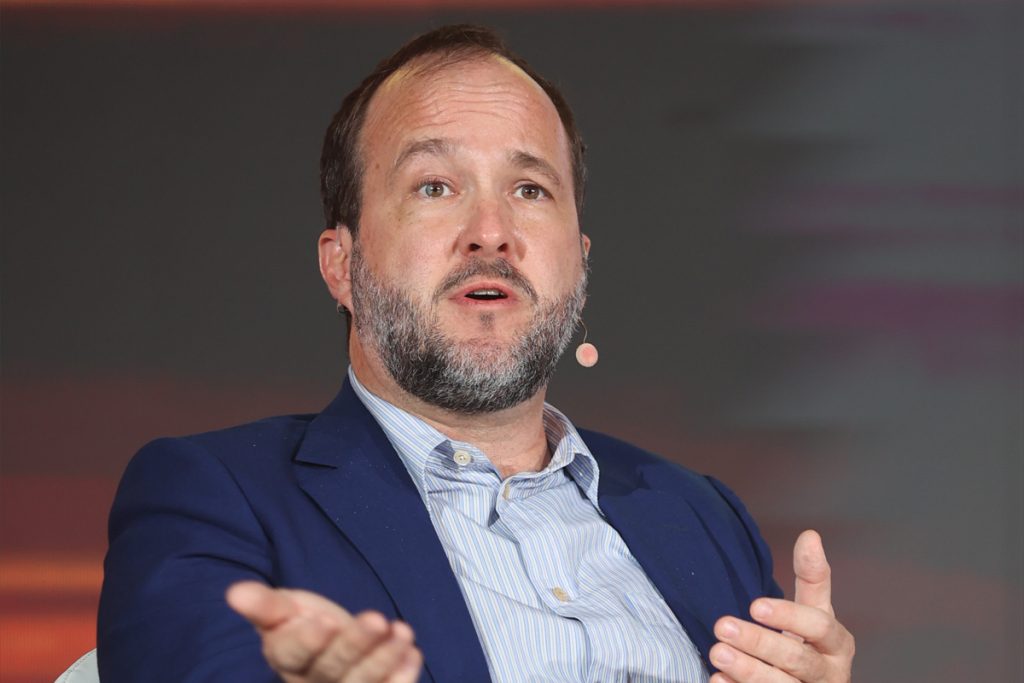
Austin Sheppard: Technology is going to help us to make sure that what’s so amazing about these places, gets exposure to travellers all round the world.
Much of the cutting edge in Trips is beginning to focus on the additional bookings that customers make on arrival to their destination, he noted. “That’s where attractions, activities, tours, really make a difference – and being able to use technology like AI to really make contextual, very relevant recommendations for things to do in staying a big opportunity.”
For Susan Spinney, Senior VP for Trips Partnerships at Expedia Group, the connected trip presents an immediate business opportunity to generate additional revenue from an existing customer, while they are in-trip, or in their words, ‘attached’ to their current journey.
Expedia has over 20 years of experience and more than 200,000 different products in its inventory, she added. “So when you’re an OTA across the connected trip, you can see a customer, where they’re staying and in which hotel – and for how long.”
“That’s a great opportunity for us to recommend the right product at the right time for those travelers,” says Spinney. “We’ve seen from 2022 to 2023, a 30% increase in attached bookings. So, it’s something we’re very serious about.”
Build extra reward into doing more
In recent years, many consumers have enjoyed the benefits offered by digital companies which, like a classic public library, reward those wanting to do more with their standard fee. In this business model, employed by Spotify, Netflix or Masterclass, we pay one fee, and can enjoy as much inventory as we like. And if we finish a season of Stranger Things in one terrifying night, that means we’re also enjoying more bang for our buck.
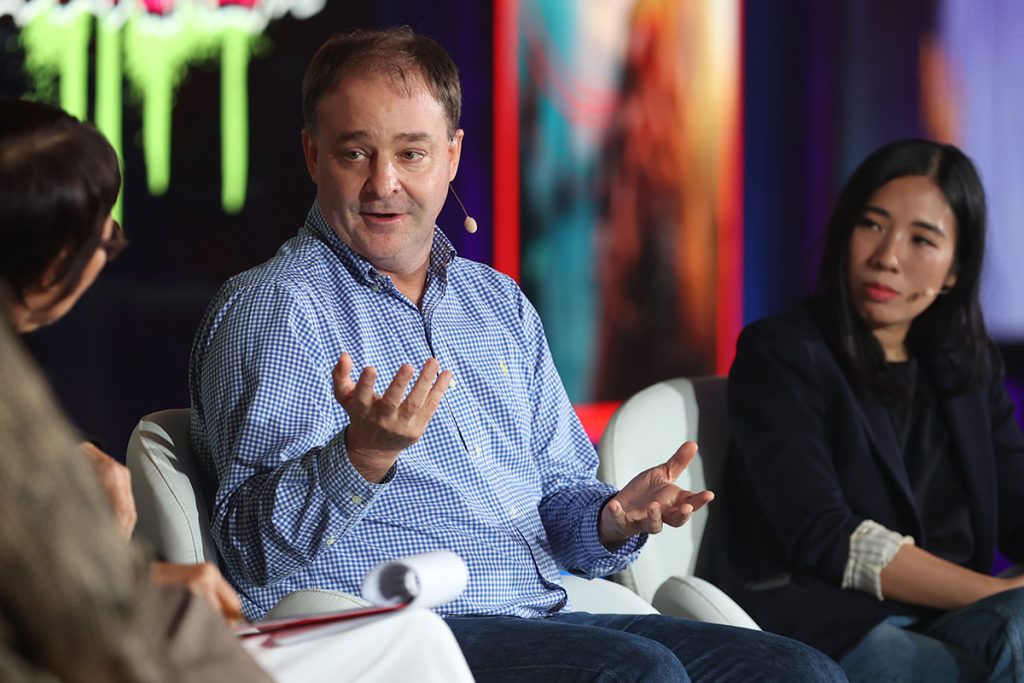
Jon Owen: It’s important that we as an industry help people uncover all of the gems that there are in a destination – rather than focusing everyone on those one or two blockbuster Instagram sites.
In travel terms, this is the business model deployed by experience specialists, Go City. As CEO Jon Owen noted that differentiation means that those who buy one of the company’s city explorer passes, have an inbuild incentive to get out and do more.
“We talk about the connected trip in a slightly different way,” says Owen. “We help our customers explore everything that there is to see in the destination. If they if they go to New York, we help them see a mix of the blockbuster sites like Times’ Square, but also off-the-beaten-track stuff, like a walking tour in Brooklyn.”
“We find our customers do more attraction visits than they would if there wasn’t a pass there. So, in that way, the attractions ecosystem is driving incremental visitation to attractions as a whole.”
Sell the experience first
Having taken the stage at the WiT Boot Camp sharing her company’s startup story, Jacinta Lim, CEO & Co-Founder of Seek Sophie, was as Siew Hoon described, “the dark horse” among the panel: and one having an impact with Next Generation travelers in Asia.
How does Seek Sophie approach things differently? For one thing, increasingly the travel experience is the key selling point, and not the destination. “We’re flipping the script,” she described. This means more customers are choosing where to go based on the experiences they seek.
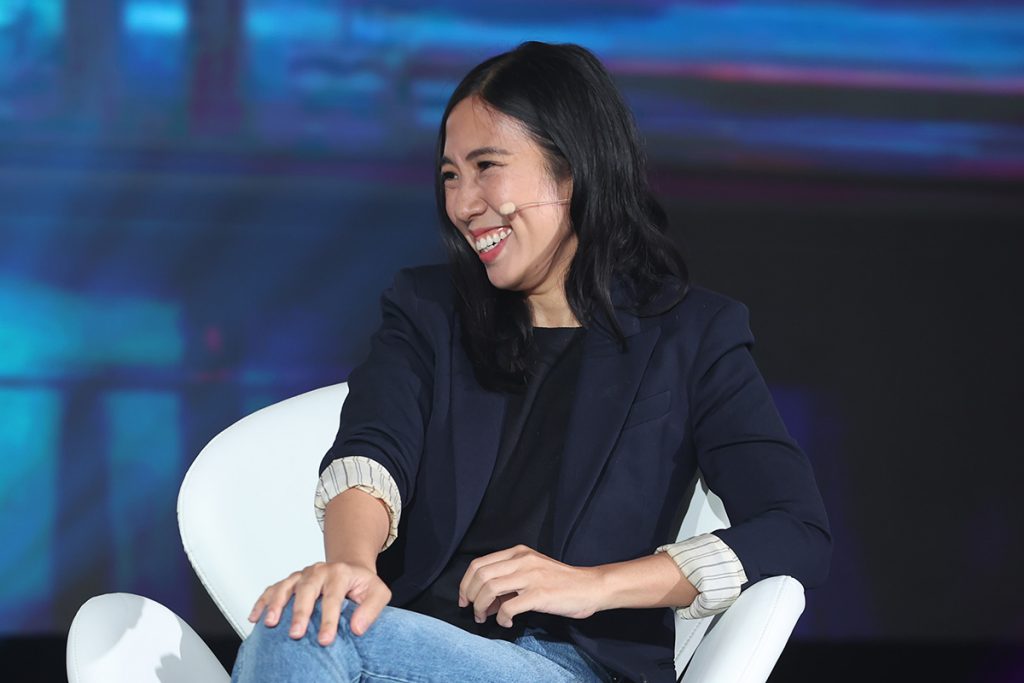
Jacinta Lim: I was previously in a very well-funded venture startup, and I saw that that sometimes the metrics were very skewed towards what was good for the investor rather than what was good for the customer.
“Say I don’t have plans to go to India, but I see this really interesting retreat in India: I’ll think, “Okay, I’m gonna build my entire trip around that,” she says. “So that’s one really interesting trend that’s different.”
Rather than seeking mass ‘greatest hits’ attractions, Seek Sophie is trying to appeal to an affluent market, in search of experience that wouldn’t involve queues or fighting for photo spots: “We sell multi-day, complex experiences that are very differentiated,” she noted. “Like a hike into a 140-million-year-old rainforest. Or a Bali firefly safari with a conservationist, before you go diving with a marine biologist.”
Growing pains: rapid or organic growth?
Unlike some startup businesses that visit Web in Travel, Seek Sophie is one business that for now, is approaching the next decade with a view to growing organically, rather than engaging venture funding.
“We did have some friends and family funding to get us off the ground. And I wouldn’t say it’s a principle per se, but I am quite wary of the venture model,” said Lim. “I was previously in a very well-funded venture startup, and I saw that that sometimes the metrics were very skewed towards what was good for the investor rather than what was good for the customer,” she added.
In a perfect world, the company would prefer to grow in a similar way to Patagonia, a billion-dollar activewear brand which has to-date remained privately-owned. “It has managed to make sure that its supply chains are sound that they protect the national parks,” she noted. “And they said that that’s not going to be possible if they were a public company, because then they have to go through reporting cycles. So, I think about that a lot.”
Yeoh asked her panel: what personal advice would they each offer to Seek Sophie?
“My advice would be to just stick to that mission,” advised Sheppard. “Don’t try and spread out too wide, too fast. Narrow in on what’s important to you and who your target customer is – and knock that one out of the park.”
As Spinney noted, a key to growing on your own terms is to carefully check who you’re partnering with along the way: “It’s really important that you know who you want to be as a brand: and if you are going to partner with somebody,” she advised. “How do you how do you do that in the most efficient way? But most important thing is, will they add value?”
Returning to the theme of disrupted destiny, Owen said that Go City has grown rapidly, care of $150 million in venture funding. This however, was not necessarily a disaster-proof strategy: “It’s a necessity for us to achieve what we want,” he noted. “But as we went through COVID, the interest gets eye-watering when you have no sales. So, there are definitely pros and cons. If you can achieve the objectives without it, that’s probably better.”
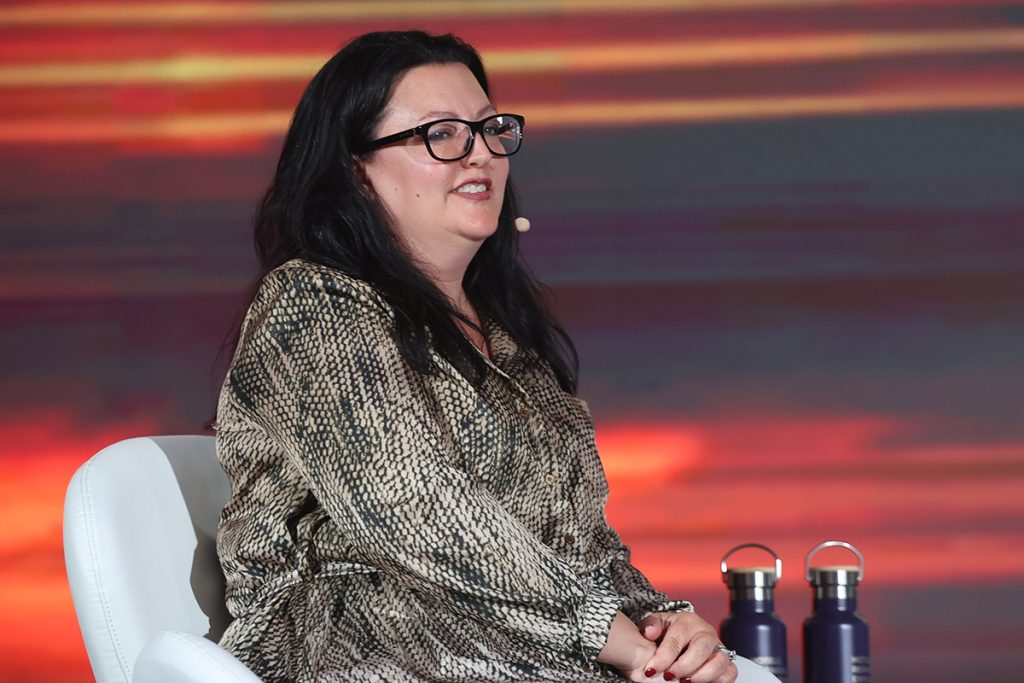
Susan Spinney: We’ve seen from 2022 to 2023, a 30% increase in attached bookings. So, it’s something we’re very serious about.
Spread the love: protect the destinations
Lim finished her part of the panel with a wish for the industry: please discuss both the beauty and the risks of travel with your customers. “What Booking.com and Expedia are doing is great,” she says. “So that when travellers think about a destination, they’re not just thinking about how cool the destination is, but also, what the impact of them being there is.” As she notes, the industry plays a key role in avoiding over-tourism.
“There’s ultimately going to be a balance between hyper-scale and sustainability. That’s why our planet is a little bit overstretched at the moment.” Sustainable thinking needed to be pushed forward: “We are inching towards it, but can we fly there faster?”
Sheppard says Booking.com now has the “tremendous reach” to potentially allow it to help mitigate the risks of over-tourism and encourage people to try new and under-crowded spots: “Technology is going to help us to make sure that what’s so amazing about these places, gets exposure to travellers all round the world.”
Owen agrees that while “big hit” attractions remain a key drawcard, they need to be sold with a dose of realism around carrying capacity. “It’s important that we as an industry help people uncover all of the gems that there are in a destination – rather than focusing everyone on those one or two blockbuster Instagram sites.”
Spinney said that Expedia is interested in using scalability’s potential to help also scale awareness: “Something we’re really excited about this year is, we’ve been partnering with North Queensland on the ‘Guardians of the Reef’ campaign,” she notes. “That allows us to educate travelers, reward them for learning about the Great Barrier Reef, and ultimately, provide great experiences,” says Spinney: “And it also goes to show that travel really can be a force for good.”
Watch full session: