When Eric Chong of Green Acres, Penang, suggested we spend a morning harvesting cloves, I jumped at the chance to detach from the wired world – if only for a little while. It wasn’t just for me, though. I was also looking for something to get two Gen Alpha kids out of their YouTube bubble and into nature, switching from screen time to green time, as it were.
“There’s one tree left to be harvested,” Eric said as he guided us up a winding track into the hills. The kids groaned dramatically at the incline, but Eric quickly kept their minds off it. Along the way, he doled out lessons in nature, explaining how bats pollinate durians, how certain plants act as natural remedies, and even letting us sample fruits straight from the trees.
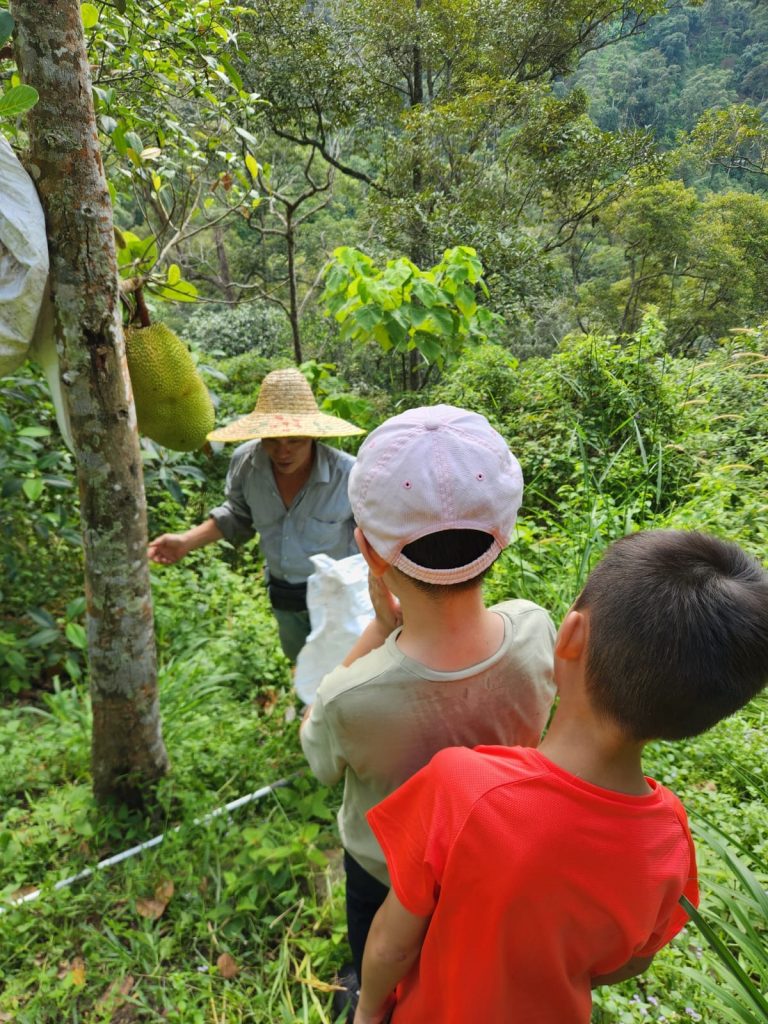
A ripe jackfruit waiting to be harvested
Admittedly, it took a while for the kids to become fully engaged with one of them lamenting, “Why is fun so boring?” But soon they got into it when the activities started. We broke open a cocoa pod and tasted its tangy fruit. We cut down an enormous jackfruit—Eric estimated it at eight kilograms—and then a couple of papayas. By the time we reached the clove tree, they had stopped complaining – ish.
At the clove tree, Eric handed out tasks. “You handle the lower branches, while I’ll take care of the higher ones,” he said, hoisting a long cutter.
“Can we try?” the kids begged, looking up at the towering branches.
“No, you’re too short,” he replied.
Our job was simple. We were taught to pluck the clove buds from the branches, discard the leaves, and drop the fragrant flowers into a basket. Meanwhile, Eric burned disused egg cartons to create smoky mosquito repellent.
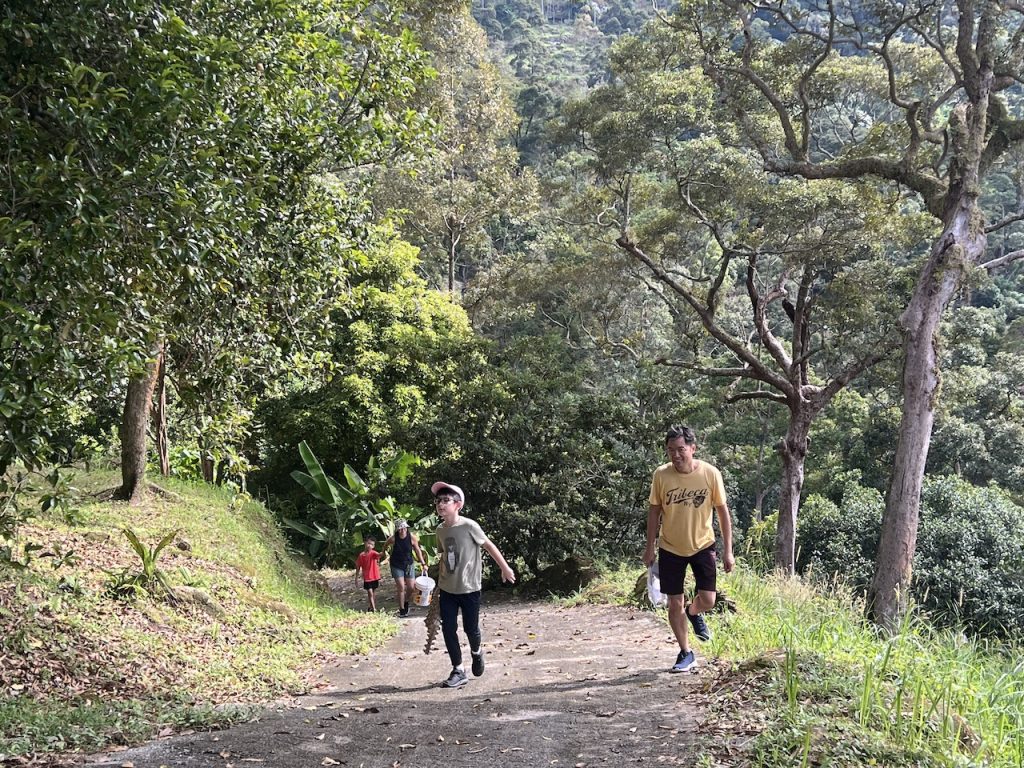
Now I know what to do with old egg cartons.
At first, the task felt mechanical: pluck, discard, drop. But as the hours stretched on, it became something else. My hands started to smell of cloves, and my mind settled into the rhythm. The kids, now fully absorbed, occasionally erupted into laughter as falling branches narrowly missed them. Conversations flowed easily – about everything and nothing – and for a moment, life felt unhurried.
That’s when it struck me: we often talk about AI taking over repetitive work, and perhaps for some tasks, that’s a good thing. But this? This wasn’t just about the work. It was about the context of the work – the connections forged in shared effort, the meditative quality of the task, and the lessons quietly absorbed in between.
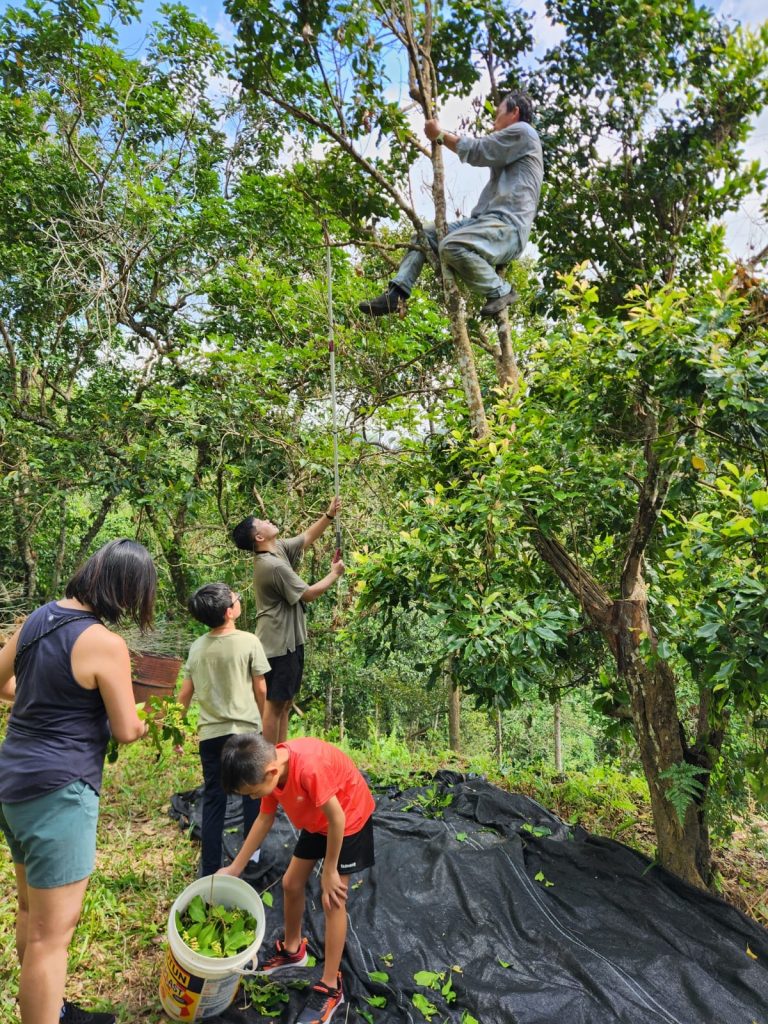
The team effort that goes into clove harvesting
The communal element
To get to the highest branches, Eric climbed the tree himself. “You’re like a monkey!” the kids shouted, to which he grinned, “Can you?”
“Nope, you’re too short,” Eric teased again, swishing at the branches and sending down fragrant cascades of clove flowers.
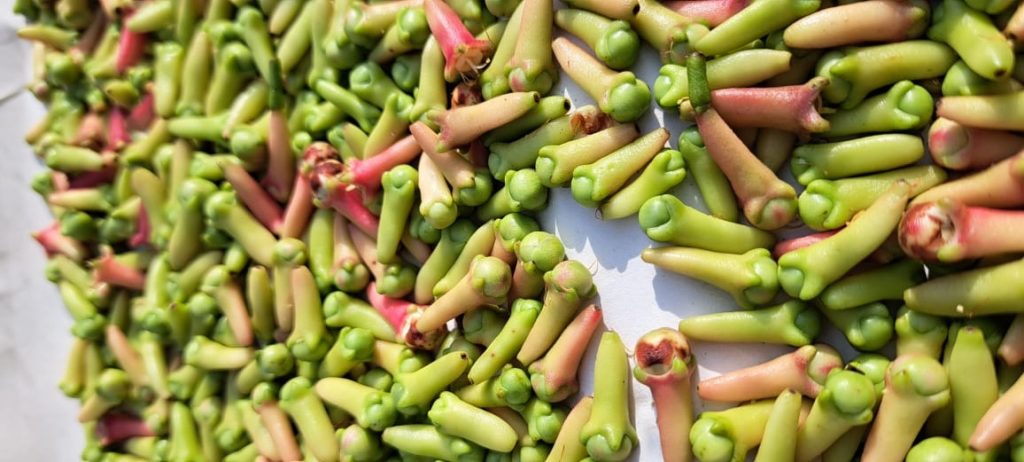
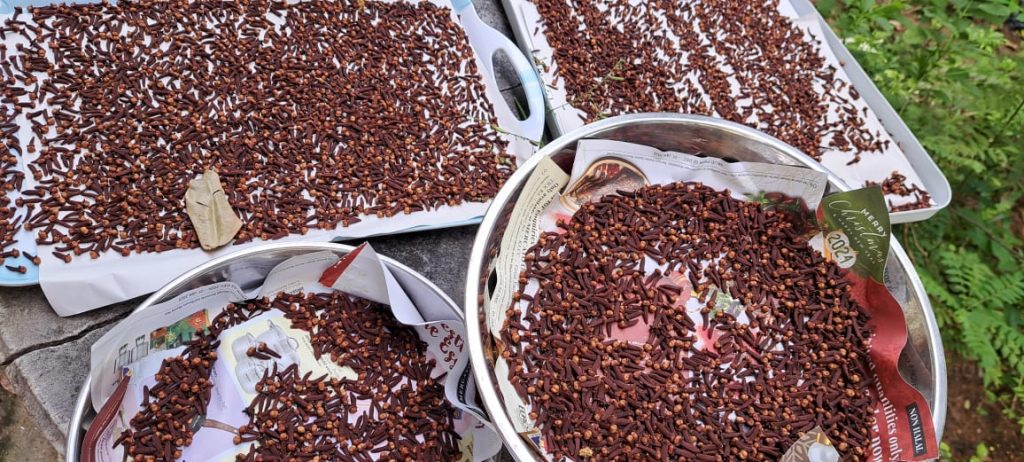
Cloves, before and after drying. By the time they are dried, they are down to one-third of the weight picked.
It’s a labour-intensive process, clove farming. And what we did that morning – plucking the flowers – was only half the work. After harvesting, the buds must be separated, one by one, and dried until they weigh just a third of what was collected. Then, Eric’s wife, Kim, carefully packs them into jars and sells them to restaurants and organic shops. For all this effort, they make barely enough to call it profitable.
Still, cloves are essential for Green Acres, an organic fruit farm that relies on biodiversity to keep its soil fertile and its ecosystem healthy. Durians, their main cash crop, depend on this careful balance. So does their farm’s appeal as a destination where city folk like me – and kids who’d rather burn egg cartons than watch TikTok – can experience a connection to nature that’s become all too rare. It’s the kind of experience that’s worth its weight in clove leaves.
“Kids love burning stuff,” Eric quipped when I told him what the two boys had enjoyed most. It wasn’t surprising to hear their list: the egg cartons, the falling clove branches, the cocoa fruit, and the tiny fish they spotted in a nearby stream. For them, the day had been an adventure. For me, it was a reminder of the unseen hands behind the cloves that flavour our curries—and the simple beauty of human effort.
Why some tasks shouldn’t be replaced by AI
There’s no denying that AI has its place in making life more efficient. But efficiency isn’t everything. Not all repetitive tasks are mind-numbing drudgery. Some, like clove harvesting, offer something no machine can replicate: a sense of grounding, connection, and shared humanity.
The repetitive motion of plucking cloves wasn’t boring – it was therapeutic. It allowed my mind to wander while my hands stayed busy, creating a space for conversation, laughter, and reflection. In that quiet rhythm, I felt more present than I had in weeks. AI can replace the task, sure, but it can’t replicate the context. It can’t capture the smell of cloves on your hands, the warmth of sunlight filtering through the trees, or the joy of watching kids rediscover the wonders of the natural world.
So next time I savour the aroma of cloves in a curry, I’ll think of Eric and Kim, of the kids laughing in the hills, and of the human hands – tired, but content – that brought them to my table.
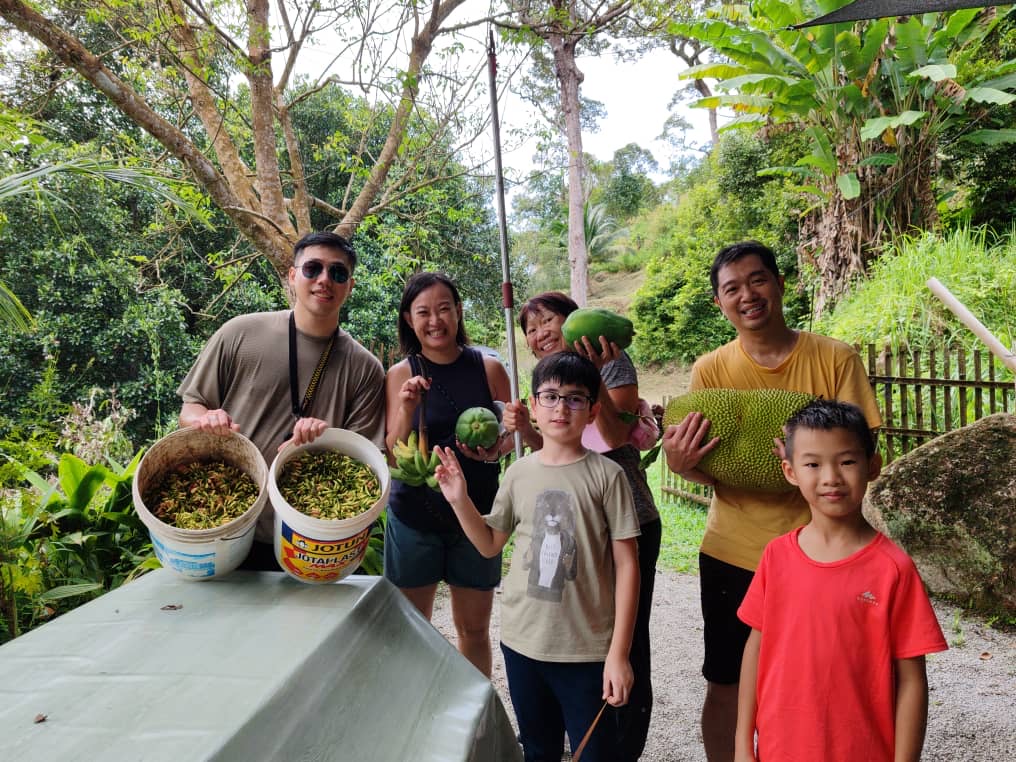
Showing off the day’s harvest