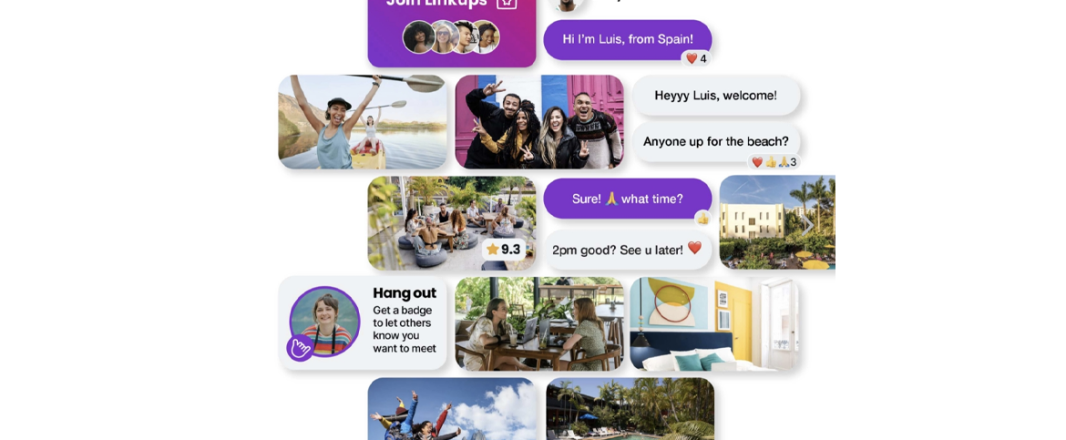
Hostelworld recently outlined its medium-term strategic growth plan at its Capital Markets Day in London, underscoring its ambitions to scale its differentiated, social travel-focused OTA platform and deliver sustained shareholder value. Following strong financial performance and the full repayment of outstanding debt, Hostelworld enters its next phase of growth with a strategy built around three pillars: strengthening its core business through AI-driven enhancements and improved monetisation; expanding its addressable market with additional budget accommodation and youth travel products; and exploring selective M&A to accelerate capabilities and returns.
Management is targeting low double-digit revenue growth in 2026 and 2027 (pre-M&A), an adjusted EBITDA margin of over 20%, and approximately 70% free cash flow conversion. Marketing investment is expected to remain within the 45–50% range of revenue.
Hostelworld also announced the reinstatement of a progressive dividend policy, committing to distribute 20–40% of adjusted profit after tax, beginning with an interim payment in H2 2025. A share buy-back programme was also introduced, subject to market conditions. Current trading remains resilient despite FX headwinds and a continued shift toward lower-cost destinations impacting booking mix and average booking value. If these trends persist, the company expects to deliver mid-single-digit revenue growth for the full year.
A social vision for travel
Hostelworld aims to support a global community of youth travellers to connect, explore, and share their experiences. The company says that its core proposition – “help travellers find people to hang out with” – remains its north star and is a powerful differentiator in a market still underserving this need.
Since launching its social network 3 years ago, Hostelworld has attracted more than 2.6 million social members across 3,000+ city networks, with over 10 million messages exchanged between travellers. Hostelworld reports that these social members are highly engaged customers who make 2.2x more bookings within 91 days of acquisition compared to non-members and are 3.2x more likely to do so through the company’s app.
This app-centric model is yielding significant dividends.
For the last 3 years, Hostelworld has recorded a 2.7x growth in app bookings versus web bookings. Social members now account for over 80% of total bookings. App usage has also helped the company maintain marketing costs at the low end of its guidance range (45-55% of net revenue), highlighting the long-term efficiency of its customer acquisition strategy.
Hostelworld’s social network is also generating a proprietary dataset rich in real-time traveller intent, interests, and behavior, that is being harnessed to power AI-driven product features, from dynamic experience recommendations to smart traveller matchmaking. Hostelworld says that these innovations form the foundation for the platform’s future personalisation, monetisation, and defensibility.
Financial strength and capital allocation
Hostelworld reports that its asset-light, highly scalable platform is translating into strong financial performance. Since 2022, Hostelworld has generated €21.4 million in adjusted free cash flow and returned to a net cash position in 2024. Its free cash flow conversion stands at 66% of adjusted EBITDA, enabling reinvestment in growth and returns to shareholders.
Key capital allocation priorities include:
- Strengthening the core hostel booking business
- Expanding into the broader youth travel market
- Reinstating a progressive dividend (starting at 20% of adjusted profit after tax)
- Launching a share buyback programme
- Pursuing targeted M&A opportunities to accelerate growth
Evolving the core platform
To grow share in the existing hostel category, Hostelworld is executing on four major initiatives:
- Expanding Hostel Inventory: Increasing presence in Latin America and Asia, simplifying onboarding, and targeting 80% market coverage by 2027.
- Marketplace Monetisation: Offering hostels smarter tools to optimise pricing and visibility, with OTA commission rates expected to grow from 15.3% in 2024 to ~16% by 2027.
- Enhancing the Social Platform: Launching pre-booking features like a global trip plan marketplace, enabling travellers to connect before committing to accommodations.
- Building the Social Media Flywheel: Leveraging user-generated content and influencer partnerships to acquire new customers at low cost.
Scaling into a larger market
While Hostelworld’s current addressable market is around €5 billion (hostel accommodation for ~20 million youth travellers), the broader youth travel segment is worth €90 billion.
Hostelworld plans to address this through:
- Budget Accommodation Integration: Piloting third-party budget properties in late 2025, expanding inventory for solo and duo travellers by up to 200% in certain markets. This will help fill gaps where hostels are unavailable, boosting conversion and retention.
- Social Monetisation: Exploring revenue models like premium subscriptions, advertising, data licensing, and eCommerce integrations. The first monetisable features are expected by year-end, with scale-up in 2026.
- M&A Strategy: Acquiring niche marketplaces that align with Hostelworld’s social network and youth travel focus, particularly those with strong network effects and unique supply.
Profitable growth ahead
Hostelworld is forecasting sustained revenue growth, higher margins, and continued cash flow generation over the next two years:
- Adjusted EBITDA margin: Targeting ~20% by FY 2026–27 (up from 24% in FY 2024)
- Adjusted free cash flow conversion: ~70%
- Marketing spend: Stabilising between 45% and 50% of net revenue
In tandem, the company plans to maintain a low net debt-to-EBITDA ratio (~1x), continue investing in product and technology, and deliver increasing shareholder returns through dividends and buybacks.
Hostelworld says that with a highly differentiated business model, proprietary data, and growing network effects, it is carving out a new niche in travel – one where social connection is the product. As CEO Gary Morrison and the leadership team emphasized, the company is no longer just a hostel booking platform. It is now a social marketplace, ready to scale across a massive, underserved global audience of 120 million youth travellers.
The next phase of growth will be driven by new products, expanded inventory, smarter monetisation, and strategic acquisitions – all backed by a scalable, cash-generative platform.