
Those on the outside looking in, sometimes assume that travel planning must be easy. They assume that once you are established, the process of managing travel products becomes easy – and that early travel success is a near-guarantee of future success.
Sadly, where this staunchly competitive industry is concerned, the opposite is true. For accommodation and destination brands in particular, those who are complacent are as at-risk as Tokyo cherry blossom in early May – given that travel volumes and profits are often here today and gone tomorrow.
Luckily however, travel reinvention is blooming. This year, WIT Singapore met three masters of the remix, each of them determined to challenge and exceed our expectations of what they have to offer.
Let the spaces speak to you
Legendary singer, composer and music producer Pharrell Williams once compared working on a song to the process of entering a new house you wish to redesign. Key to his composition process, he described, was listening carefully to what each new space tells you, then in time stretching into creating, based on what the journey makes you feel.
“For me, songs are like living spaces. When you first move in a house, you kind of figure out where the couch is supposed to be. That’s how it works,” he described. “So I’ll just think about how it feels – until I can really hear it.”
“What do we talk about in songs, right? What is the colour? What is the backdrop of all of our feelings? The chords. Derived by what? Feelings. Which come from what? Experiences.”
For those whose creative task revolves around redesigning our real living spaces, the task can at first appear more daunting. How for instance, do you go about remixing a well-known national hotel brand? Or what about two much-loved destinations?
Yet as we learned recently at WiT Singapore, the same principles apply to nailing travel’s formula for reinvention.
First, you set out to understand what the place means, and what it needs now – then you work with instinct and passion. All the while, your testing ground will focus on how you’re improving each new experience. Then right the end, just like the hit parade: you know you’ve got it right, once your customers are dancing.
Carolyn Choo inherits the legacy of a legend
When it comes to wealth creators in Singapore, Choo Chong Ngen’s story is the stuff of legend. Having dropped out of school at the age of 14 to support his family, he did what he needed to do to make money: from selling ice-cream around the neighbourhood, to becoming a fishmonger.
At the age of 15, he worked for a neighbour’s textile business, earning just $30 a month. Later, when his mother gave him $50 in business capital, he borrowed another $6 to buy supplies, and set up business at the market.
Eventually, following a foray into property development, Choo set up his first budget hotel, in Singapore’s red-light district of Geylang. Dubbed Hotel 81, the brand spread far and wide within the Lion City. By 2017, Choo was ranked Singapore’s 14th richest person, with a reported private fortune of S$2.05 billion, or around US$1.4 billion at 2017’s conversion rate.
Choo was not only legendary for his wealth creation. He also made fun of the ‘seedy reputation’ that Geylang – also famous for frog porridge and turtle soup – had in the seemingly strait-laced Lion City. As the chain’s billionaire boss told Forbes, every country had a red-light district, adding cheekily that “we only sell rooms: we don’t sell anything else.”
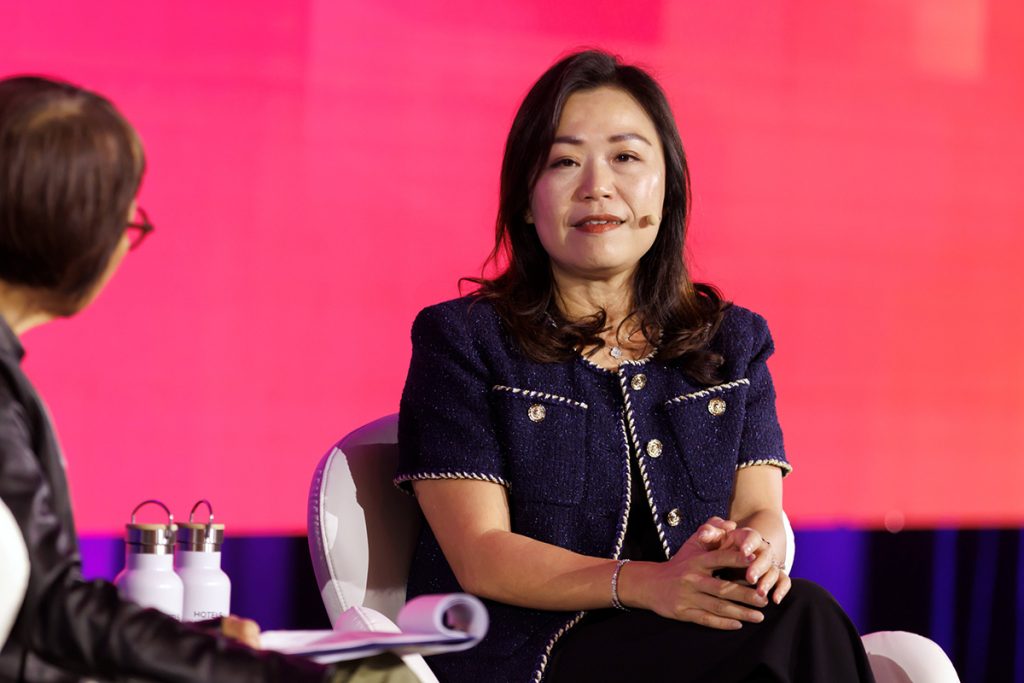
While he was building a legendary brand, Choo was also helping build a family. Then finally in 2022, when the time felt right, he made a phone call that would change his daughter’s life.
At the time a management trainee at one of Singapore’s local banks, Carolyn Choo took the call at home. “It was a Saturday morning,” she recalls. She noted immediately her father’s unusual tone: “It was very formal, and there was a very strong sense of urgency.”
“He just asked me, point blank, ‘Can you come back now?’ And without hesitation, I agreed.” The moment would prove pivotal to their relationship, and to the continuity of the company. “I’m very glad that my dad expressed his vulnerability, to ask me to join the business,” she reflects. “That has forced me to step up and take responsibility – and I became the accidental hotelier.”
In 2017, Carolyn Choo became CEO & Managing Director of Worldwide Hotels Group: and at WiT Singapore, she spoke about how the Singapore brand is evolving beyond its Hotel 81 past to launch 52 properties regionally, and lean into its “lean luxury” value concept.
First up, came the test of leading during the pandemic. Choo initially sought the reassurance of her legendary father, who gave her the confidence that his industry would fully bounce back. Then came the task of shoring up the group: as Choo and team managed to fully maintain staff and salaries for the long-term benefit of the group.
Now that business has returned, she was asked, can independent hotel owners like Worldwide Hotels Group today use technology to compete with giant scaled brands?
“Technology will be a fundamental component of any part of hospitality,” Choo agrees. “And for international groups, it’s true that they have skill and can excavate the technology, whether in that distribution channel or through their loyalty programme base.
“But I think for an independent local hotel group like us, we have a lot of flexibility and agility. And we have choice now – because technology is being democratised, especially with AI being the great equaliser.”
The group’s brand strategy, she said, was similar to a global brand playbook: “We’re focused on the mid-tier and economy sector, and each little price point defines the brand a little,” she notes. “And we have unique brand promises for each brand. We define the ‘lean luxury’ concept in Singapore. To us, it’s about luxury that truly matters.”
As she prepares to face the demands of ‘Gen Alpha’, Choo predicts a future customer that wants complete independence, only with a human touch. “They want instant gratification and frictionless travel. Yet I think they yearn for human connection where they want it. I think they will be the most conflicted guest profile,” she predicts.
Looking forward, Choo feels fortunate to lead a group that sits in a sound position: and to bring her father’s long-term vision into the next generation. “As a second-generation leader, whether in hospitality or any kind of industry, it’s important to build that alignment in terms of core values,” she says.
“We’re very focused on what we can do better,” she notes. “And if I go back to what I may do a little bit different from my father, I think I’m just more focused on the people. In the meantime, I’m striving to be a humble but confident leader.”
JTB Corp looks to a bright future for travel to Japan
As WiT’s founder Yeoh Siew Hoon welcomed Eijiro Yamakita, President and CEO of JTB Corp to the stage, the recent news that JTB had finalised its acquisition of Northstar Travel Group, the parent company of WiT, was the first piece of reinvention they discussed.
Yamakita explained that while it was at first a surprise even to him, the acquisition by Japan’s largest travel company of a global travel intelligence network like Northstar, served as a statement of intent by JTB Corp to invest in an information-driven future.
“Productivity in tourism is still low compared to other industries. We need to deploy technology to make more value-added products – and intelligence is essential for that.”
Japan welcomed 36.8 million visitors in 2024, and is targeting 60 million by 2030. As Yamakita emphasised, the examples of Spain and France show that Japan still has ample room to grow – so long as it can improve the distribution of tourists beyond favoured hubs like Tokyo, Osaka and Kyoto.
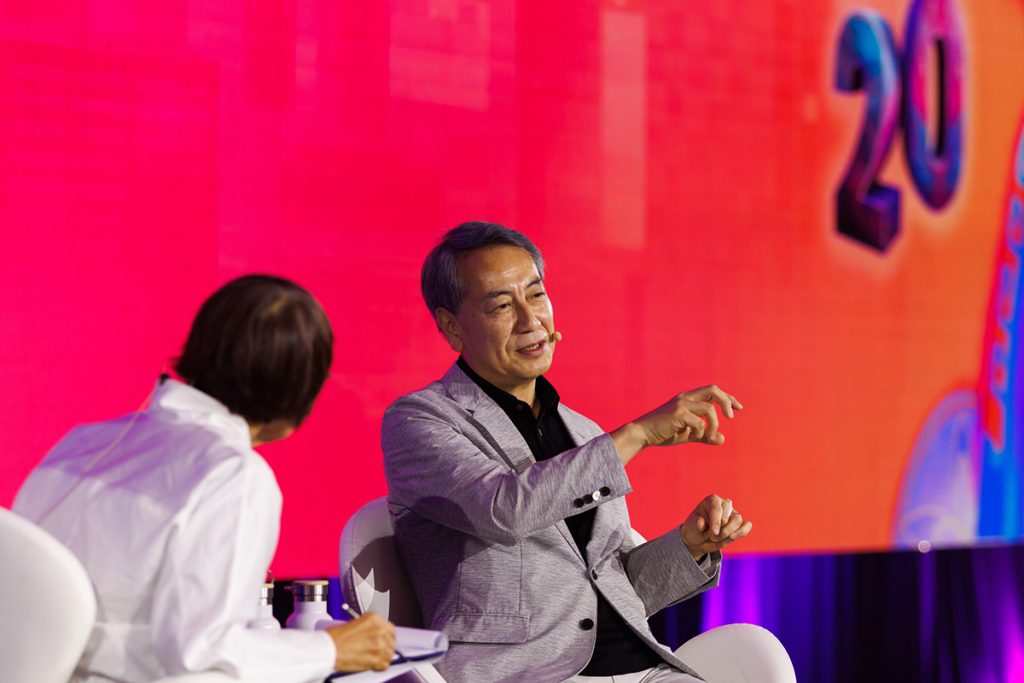
“There are a lot of things to learn from Spain and France,” he notes. “I travelled there a lot: and they create very attractive resources in the rural cities, like travelling from Bordeaux to Marseille for example. These areas are famous for wine, and famous for culture – and everything is included across this route.”
While Japan may look like a very narrow country, its 3,000-kilometre length means a wide variation in seasons and culture from north to south. “There is very different seasonality, and very contrasting cuisine. So there’s really great potential for the future, if we can help people gain confidence to visit and ensure that the mobility and infrastructure keep up.”
Yamakita has visited all 47 prefectures in Japan, including recently Kyushu’s Oita Prefecture, renowned domestically for its blowfish, or fugu. “This is a really famous place for Japanese, but not famous at all for international visitors – they’re struggling to welcome foreign visitors.”
To reach a target of his own projection of 100 million visitors by 2045, Japan would need to shine more light on these unique and remote corners, he stressed.
Japan’s shrinking and aging population mean that one in two people are now aged over 65 years old. Thankfully, many of them are becoming so-called ‘granfluencers’ such as the famous bonpon511 couple on social media, sharing their version of a hip, optimistic ‘silver cool’ with the world.
Yamakita believes that profiles such as these are part of a developing theme for the destination. “We see well-being, in the next 20 years, as being central to our image: as Japan is hosting a nice, safe, desirable lifestyle, with a focus on maintaining peace and well-being. And in addition, I want to better develop a strong spiritual affiliation for travellers with Japan as well.”
Technology Queenstown – A new technology hub in the deep south
Named as the next WiT venue to be launched in 2026, the alpine resort of Queenstown, New Zealand, is also undergoing its own process of southern reinvention.
This process comes thanks in particular to Technology Queenstown, a not-for-profit agency founded by Roger Sharp, who also chairs global travel business Web Travel Group and tech investment bank North Ridge Partners.
Technology Queenstown has taken on a bold mission to help grow its local technology sector to $1 billion in annual GDP within 20 years. Its vision is to shift technology’s share of GDP from less than 2% today, to more than 15%, and in doing so, create more high-value jobs and new economic opportunities.
In October 2025, WiT Queenstown announced its first lineup of confirmed speakers to the inaugural event, held on July 21, 2026. It confirmed a list of 15 speakers to date, includes C-suite leadership representing major travel tech platforms including Airbnb, Agoda, Booking.com, Serko, Expedia and more, alongside New Zealand’s most senior tourism industry public official.
“Launching a globally successful event like WiT is central to building out our travel tech sector,” noted Sharp. “By amplifying the talent already here, we want Queenstown to be known not only for its adventure and beauty, but for solving real-world travel problems through technology.”
The WiT Singapore stage was introduced to Sarah Russell, the new CEO of Technology Queenstown. A former banker who is originally from Christchurch, Russell recently underwent her own act of reinvention, by uprooting her life in Sydney, Australia, to move to the alpine resort.
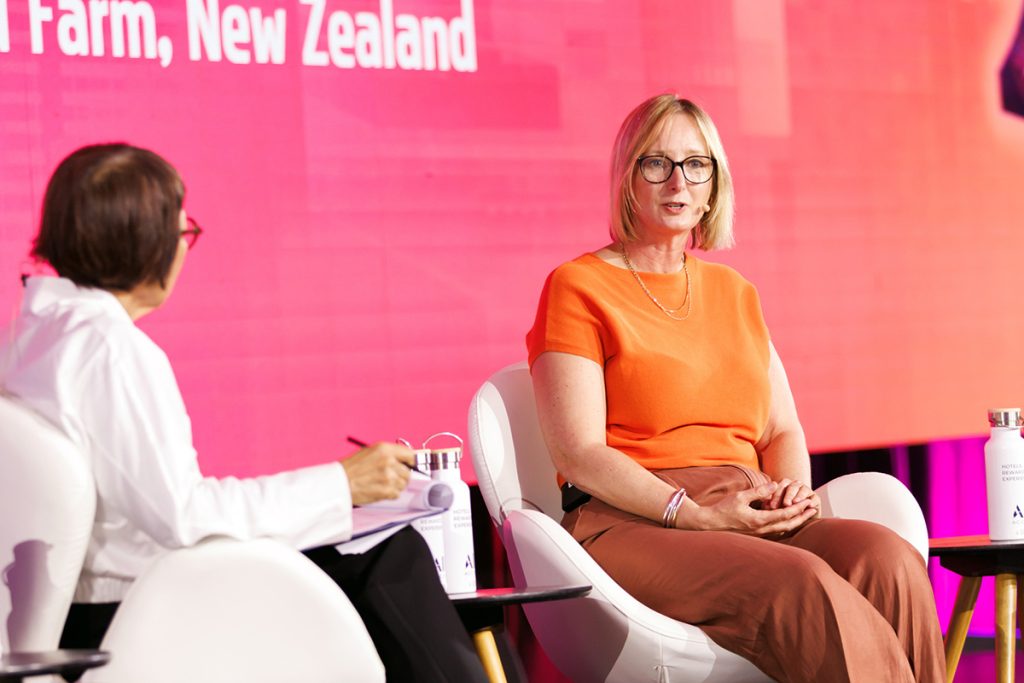
What bought on the move? “There were a few things,” she says. “I have worked in technology my whole life – but I actually never thought I’d make my way back to New Zealand to live, having worked overseas most of my adult career.”
Yet as often happens in the travel industry, a vacation encounter changed Russell’s life. “I came on holiday to Queenstown and fell in love with the place. And not too long after that, I met Roger (who was recruiting for Technology Queenstown’s CEO): and the rest is history. And I officially moved to Queenstown in January 2025.
“We’re really focused on growing out the technology sector in Queenstown and we need to prioritize our efforts and what we’re going to focus on,” she outlines. “New Zealand is quite a small country, we’ve got a total population of 5 million people. So rather than scaling tech from New Zealand, we’ve got to think internationally right from the outset,” she explained.
Adrian Currie, co-owner of Tinwald Farm in New Zealand, has had a storied technology career himself, including being CFO and MD APAC at Booking.com. From 2021, he and his wife Amanda began shaping Tinwald’s journey towards regenerative farming. In the process, he has enjoyed learning about the can-do spirit of Aotearoa’s local population.
“The thing about Kiwis, as New Zealanders describe themselves, is that they do just get on and ‘do stuff’. When you’re a well-travelled population of 5 million, you tend to think external really early as well. And interestingly, they have done really well in some sectors. For instance, you wouldn’t have thought that there’s a company called Rocket Lab, that is sending more rockets into the sky than any other country apart from the US and China – from down there in New Zealand,” said Currie. “It shows how you can scale something really quickly.
“New Zealand isn’t trying to solve all the problems all by itself, but actually it is very well connected: because Queenstown does attract a lot of people like me who have already done things on a global basis, and do spend part of their year in Queenstown, and maybe part of the year somewhere else.”
Russell said that next year’s WiT event was the perfect place to connect the dots with the international travel-tech community. “We want to build something in Queenstown where we can get international recognition and expertise in it. So WiT is an awesome opportunity for not only showcasing what we have in New Zealand – but bring this global perspective to the local community, and to tech founders as well, to make sure that we’ve got a really balanced view of what is happening in the sector.”