



Fifteen years after launching TourRadar from a scrappy flat in London, Travis Pittman is back where he started – chasing the power of user-generated content.
“We actually started as one of the first photo-sharing platforms for travel,” Pittman recalls. “In 2005, we were kind of like Instagram and Facebook before they were a thing… but there was no way to make money because social media didn’t exist back then.”
That early experiment became the seed for TourRadar, which he co-founded with his brother in 2010. After noticing that travellers’ photo journals often featured multi-day tours with brands like Contiki, G Adventures and Intrepid, Pittman saw a gap: these trips existed, but there was no way to book them online.
What followed was a decade-plus build of what he says is now the world’s largest marketplace for multi-day tours, powering 50,000 tour products from 2,500 operators.
Social Push: Incentivising content creators, wooing younger travellers
Now, as AI rewires discovery and social platforms increasingly blur content and commerce, Pittman believes TourRadar is entering its next chapter, one defined by social.
To bolster its social push, it recently launched Rise, a US$1 million creator fund that incentivises ambassadors, influencers, and everyday travellers to generate content linked directly to bookable tours.
“Three and a half thousand ambassadors have signed up in three months,” Pittman says. These creators feed into TourRadar Moments, a mobile video feed where every clip is linked directly to the product it features.
“It’s no longer just seeing something on social and going, ‘How do I do that?’ You can click directly from the video into the exact experience.”
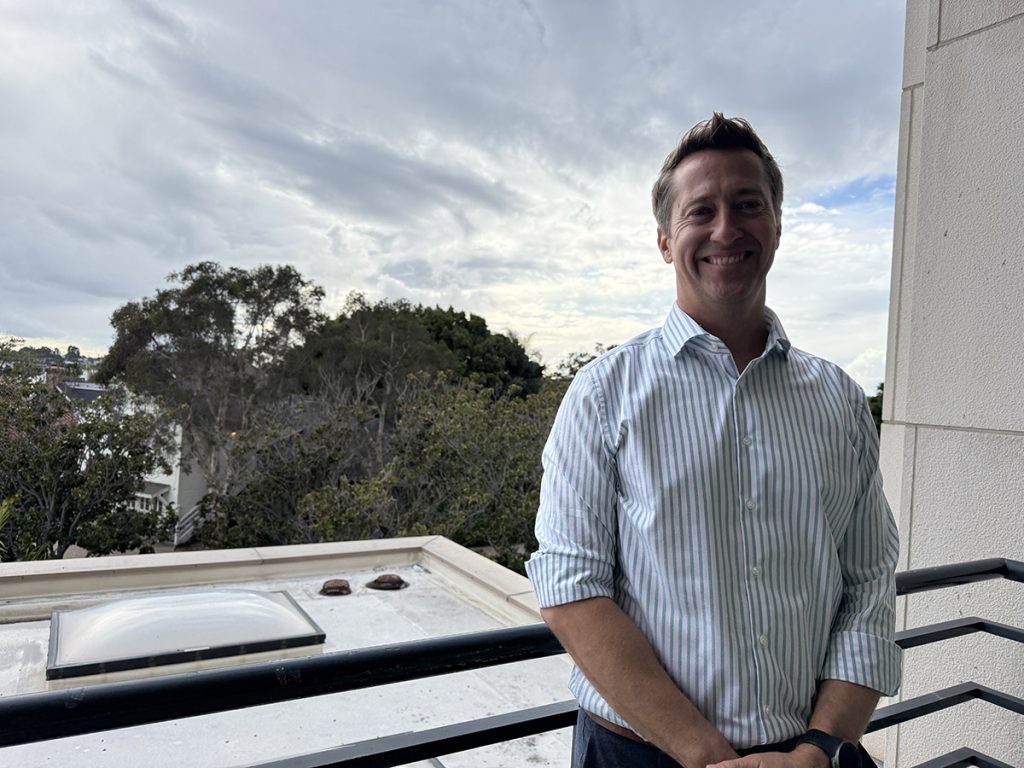
Travis Pittman: “Google and the LLMs love UGC – written or video. That’s what we’re really focusing on now.”
This, he believes, is the shortest possible path between “I want to go” and “I’ve booked it.”
This push into social is also a means to unlock a younger market – the 18-30s. “That’s where we dropped the ball,” he admits.
Today, 60% of TourRadar’s customers are over 50. Younger travellers haven’t embraced group travel in the same way but Pittman believes social content and community will change that.
“In the day and age of loneliness, people need in-life connections. This type of product helps with that,” he says.
He sees huge potential in youth-oriented operators like One Life Adventures and intro Travel, which were founded by former Contiki guides to create a more flexible, socially driven experience.
TourRadar is also diving into AI-assisted discovery. The company has built its own MCP server, is creating an app for the ChatGPT App Store, and has connected MCP to Instagram so users can DM a Reel and instantly receive three tour recommendations based on the destination in the video.
“If it’s waterfalls in Iceland, it reads the video and sends three tours that go there,” Pittman explains.
Meanwhile, a new Reddit-style community forum on TourRadar is already being indexed by Google within days – another sign that UGC is the fuel LLMs want. “Google and the LLMs love UGC – written or video,” he says. “That’s what we’re really focusing on now.”
Multi-day tours: High value, increased competition
Multi-day tours, Pittman says, are not like booking a flight or two-hour walking tour. “The average order is $3,000 and the average tour length is eight days,” he says. “It’s a big investment… conversion is much lower.”
Yet, surprisingly, 20% of these high-value bookings now happen in the TourRadar app. “We were skeptical that people would book a $3,000 product on mobile, but if the experience is good, they will,” he says.
And the multi-day space is no longer niche – other players, big and small, are going after the segment. “GetYourGuide and Klook are going into multi-day,” Pittman observes. “Our space is going to get super competitive.”
TourRadar’s moat? Supply, reviews, long-tail content and now video. “We feel we have a pretty solid moat… and social and UGC will help deepen it.”
The biggest growth is in the small groups. While coach tours of 40–50 people still exist, the sweet spot is now around 10-15 travellers.
In addition to its B2C marketplace which remains the core of its business, TourRadar during the pandemic, built a GDS-style booking layer for travel agents. Today, 30,000 agents – mostly in North America – use TourRadar to book multi-day tours without needing direct supplier contracts.
“B2B is where we see the next opportunity,” says Pittman.


