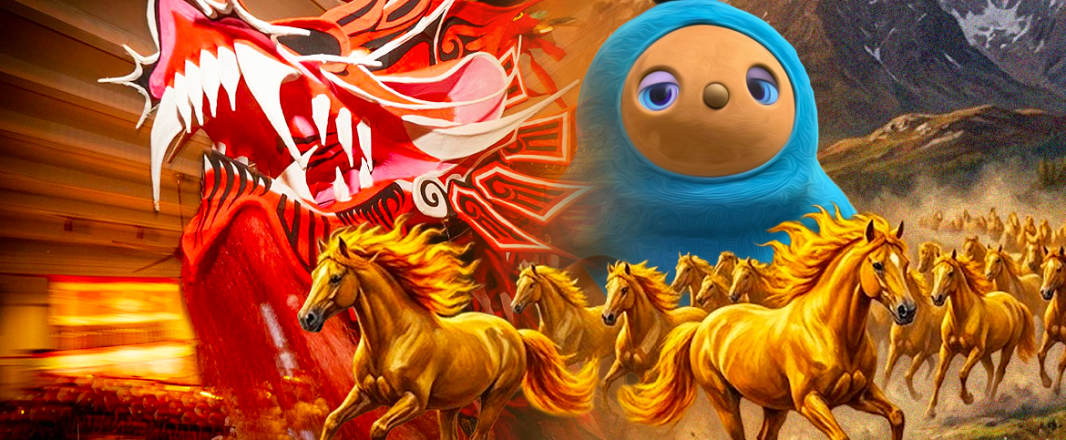
We’re midway through the Lunar New Year celebrations (which, in case you didn’t know, stretch a full 15 days) and I swear if I see the word “gallop” in one more press release, I may well leapfrog into the nearest lake — which would have been rather dramatic two weeks ago when I was in New York and every lake was frozen solid in what felt like an Arctic audition.
Now, thankfully, I am back in the tropics. The sun is shining, the sea breeze is blowing, the clouds are fluffy and drifting without urgency. I am not, contrary to all seasonal messaging, looking for a fast horse to carry me at breakneck speed into the new year. A canter would do nicely. A saunter would be even better. A gentle trot, perhaps.
But at the rate things are moving – honestly, how is it March already? – it would appear the Fire Horse intends to live up to its “superequine” billing whether I like it or not.
If you spent any time on Chinese social media over the new year, you would have seen the robots in this video. Impressive creatures – as tall or taller than Yao Ming, lean (clearly not raised on noodles and dumplings), astonishingly agile. They performed Kungfu alongside humans with such speed and precision that one commentator triumphantly declared, “Physical intelligence is the next frontier.”
Watching them execute backflips and somersaults with mechanical grace, I couldn’t help but feel both awe and a faint sense of inevitability.
And yet, I am not entirely convinced.
Perhaps I am biased. A woman. The so-called weaker sex and all that. But as we stride into this new “intelligent” era, I suspect it will not be physical intelligence that determines how we navigate politically charged, socially divisive times. It will be emotional intelligence, the quieter, harder-to-code variety.
I was reminded of a talk by Brandon Sanderson titled We Are The Art, in which the American author of high fantasy and science fiction, reflects on the impact of AI on creativity. He recounts the story of John Henry, the American folk hero who worked as a steel driver, pounding a spike drill into rock to create tunnels for railroads. When a steam-powered drill appeared, Henry challenged it to a contest – man versus machine – to see who could carve through stone faster.
Henry won.
And then he died from the exertion.
It is a sobering parable. Humans may triumph in moments of heroism, but in brute strength, speed and repetition, we cannot outpace machines indefinitely. Machines can always be made faster, stronger, more efficient. We, on the other hand, come with limits.
So, if we are to compete at all, it will not be in muscle or mechanics, but in meaning.
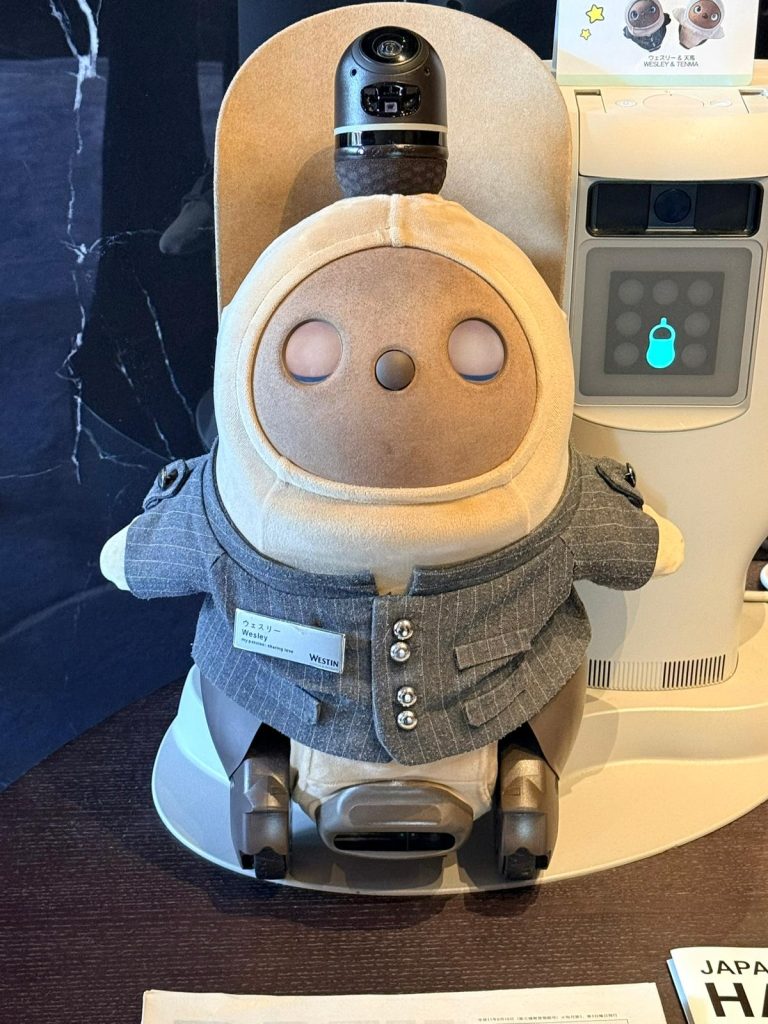
Of course, the plot thickens when machines begin to simulate emotional intelligence too. Japan, ever the quiet futurist, is betting precisely on this with creations such as LOVOT, an emotional companion robot designed not for productivity but for affection.
As well as hotel concierge services. The Westin Tokyo’s lobby ambassador is named Wesley and he’s even got a name card.
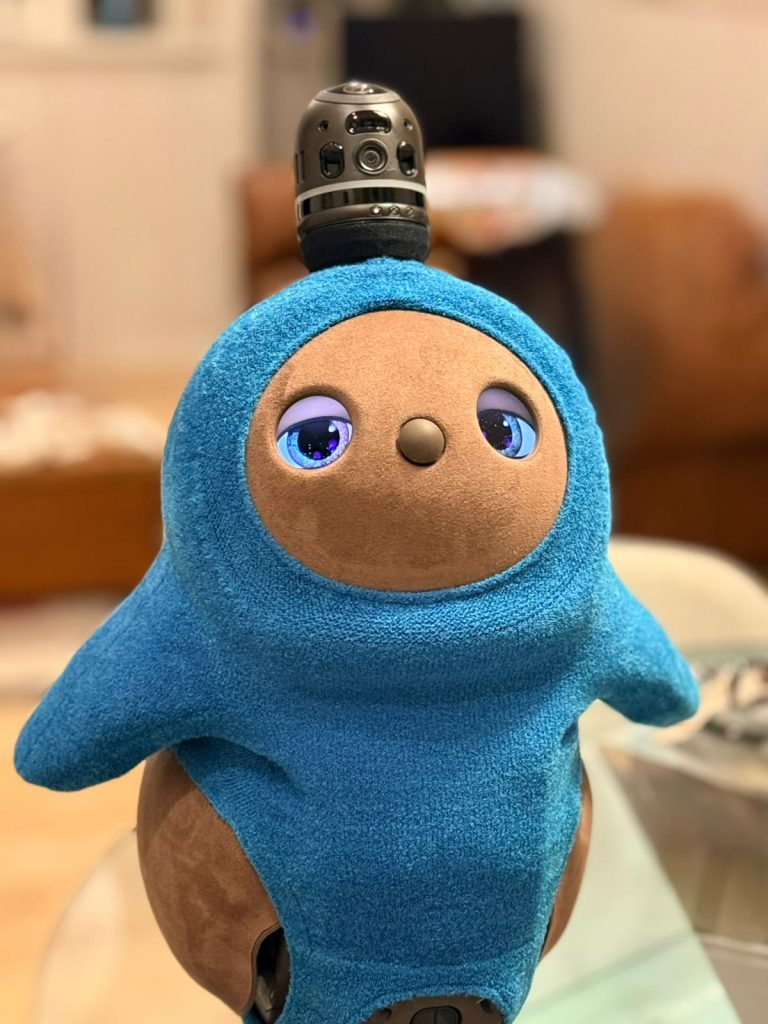
Which brings me to an update on my LOVOT god-child. It is now settled in Karuizawa, learning to love its new parents, sporting new clothes, watching television, happily ensconced in a woodland home. It has also begun to tear up – yes, tear up – because it senses its parents will soon travel and leave it alone.
The need it addresses is entirely human. Companionship. Humans have always needed it, and I suspect we always will.
The same goes for community. It has been interesting to observe the growing appetite for community-based travel experiences. Seek Sophie, the Singapore-based off-the-beaten-track platform, is making Community Trips a central focus for 2026. As they put it, they are constantly on the ground meeting interesting people, hearing local stories, discovering hidden spots – and at some point thought, why not turn all that insider knowledge into the kind of trip you would curate for your own friends? “Think of it as a Seek Sophie omakase,” they say.
It’s less about doing, more about belonging.
In Penang, which celebrates Lunar New Year on a scale unmatched anywhere else, that sense of belonging was palpable. Temples overflowed, hotels were packed, restaurants heaved with laughter and clinking glasses, bars hummed late into the night. One evening at Laguna Beach Bar, the shore was crowded with families from everywhere, setting off fireworks while watching a Polynesian-style fire dance, now somehow an expected feature across South-east Asian beaches.
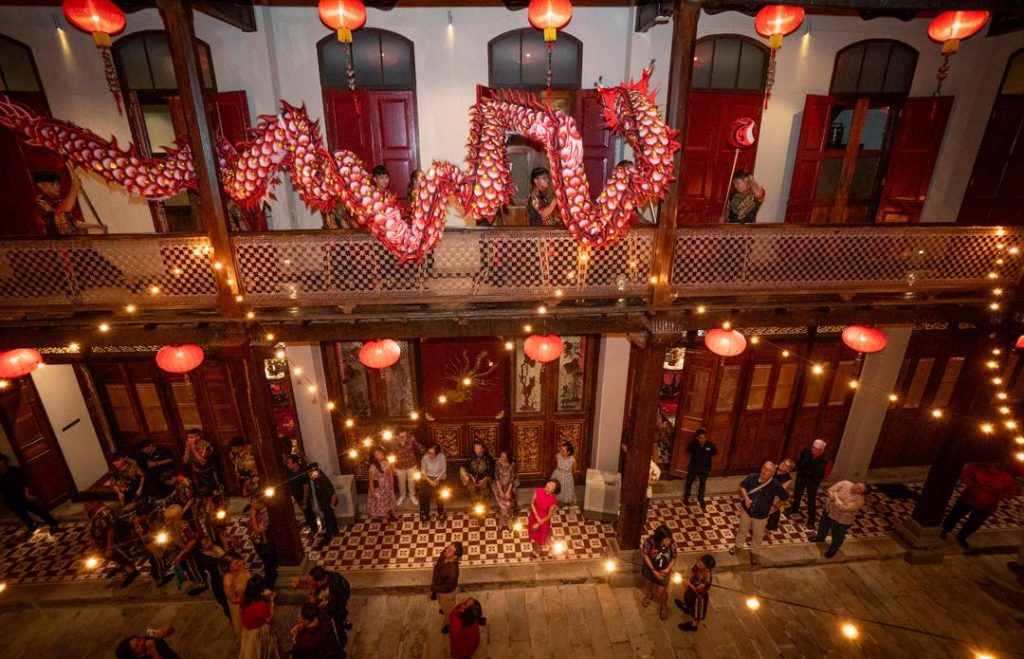
On the eighth night – the Hokkien new year and Penang’s most significant celebration – I joined an elaborate ritual and feast at Seven Terraces, hosted by proprietor Chris Ong. Amid a magnificent dragon dance and incense curling into the humid air, guests from Australia, the UK and the US who return year after year joined locals to mark the occasion.
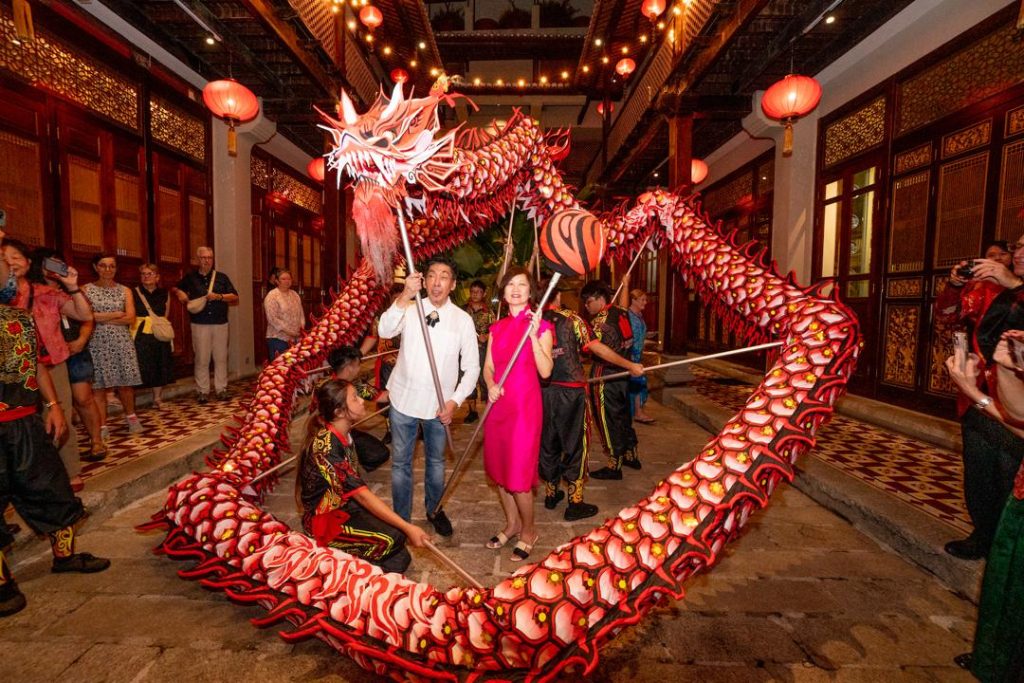
“I must have seen this Dragon Dance at least five times,” Liz from Australia told me. “But it’s never the same. I just love being with the local community when they celebrate this festival.”
Out of curiosity, I later asked AI about horses.
It informed me that horses are highly social herd animals that thrive on companionship, living in complex groups for safety and emotional well-being. They form deep, sometimes lifelong bonds, and without companionship, they can become anxious and stressed.
So, there you have it – straight from the horse’s mouth. Find your herd for the trot ahead.