


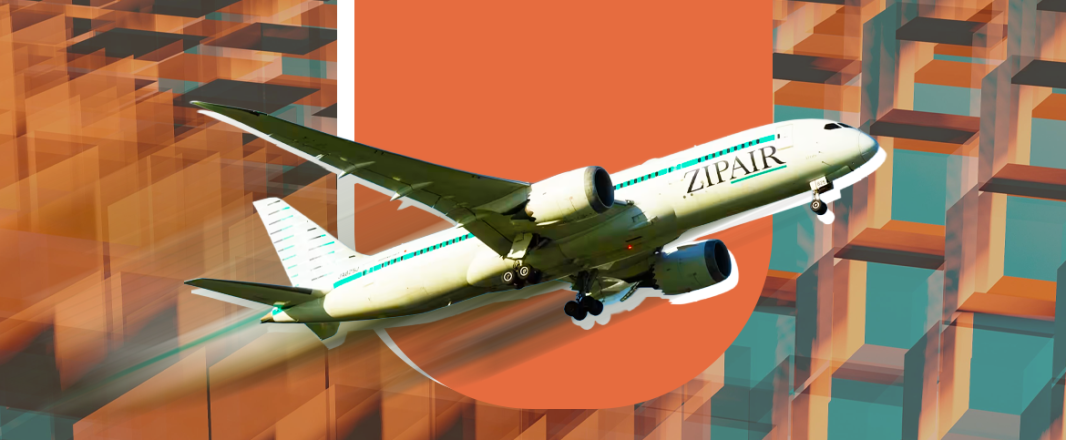
It began, as many bold travel stories do, at the worst possible time. In 2020, at the height of the pandemic, when skies were empty and demand had collapsed, a new airline quietly took off from Narita. Its first passenger flight carried just two people.
Most airlines would have been fighting for survival. ZIPAIR was designing for the future. And at the heart of that future is a simple idea: an airline is no longer just a carrier of passengers – it is a retail platform at 30,000 feet.
That was how Katsuya Seki, Vice President Marketing, told the story of ZIPAIR at the recent Aviation Festival Asia in Singapore during one of the workshops.
He called ZIPAIR a “new basic airline” – a model built digital-first from day one, reframing the airline experience around three converging ideas:
- Hardware that feels premium (seats closer to full-service standards)
- Connectivity that mirrors life on the ground (in-flight internet, personal devices)
- Commerce that behaves like e-commerce (real-time ordering, digital payments)
In Seki’s framing, the biggest gap in aviation today is not comfort – it’s continuity. “Being unable to do in the air what we can do on the ground… creates stress, especially for Gen Z,” he said.
And Gen Z, notably, makes up 27% of ZIPAIR’s customer base – a cohort that is both price-sensitive and experience-driven.
This tension between low fares and high expectations is what ZIPAIR’s marketing strategy addresses.
The real business is not the ticket
While for traditional airlines, the ticket is the product, ZIPAIR sees the ticket as the entry point. Seki reveals that around 20% of revenue already comes from ancillary services and the ambition is clearly to grow that.
It thinks about ancillary revenues not as add-ons but as a structured retail ecosystem, in three distinct categories: Air ancillaries, which are directly tied to the flight – baggage, meals, onboard amenities; travel ancillaries, third party services that extend the journey – insurance, car rentals, connectivity; and non-air ancillaries – souvenirs, lifestyle products, items not needed on the flight but because of the trip, and which are not just sold onboard, but also delivered at the destination airport or after arrival.
To the airline, this creates a commerce ecosystem tied to travel intent. Instead of confining sales to booking or inflight, they map commerce across the entire journey: Before the flight – pre-orders via website, during the flight – real-time purchases via personal devices and after arrival – pickup at airport or delivery.
Citing the example of souvenirs, he said that sometimes a single product can generate revenue equivalent to two seats on an Asian route.
If the retail model is the engine, data is the fuel. ZIPAIR tracks daily purchase behaviour, product-level performance and sales rates across flights and it acts on it in near real-time – whether to increase, replace or remove inventory.
He also said that ZIPAIR is exploring ways to sell to non-passengers, turn the airport into a retail node and extend its platform beyond the seat, leveraging assets like payments, connectivity, media, and logistics to collaborate with partners.


