
Sir Stephen Fry and History Hit’s Dan Snow among the “curiously human” tours launched
In a bid to defend itself against the AI commoditisation of audio tours, VoiceMap, founded by South African blogger-turned-entrepreneur Iain Manley 12 years ago, is taking the “curiously human” route and today announced two new partnerships with “seriously famous (my quotes) celebrities” – Sir Stephen Fry and History Hit’s founder Dan Snow.
Actor-author-comedian Stephen Fry has released two self-guided audio tours in collaboration with the QI Elves, the researchers behind the BBC show QI while History Hit, the award-winning streaming service and home to one of the UK’s biggest history podcast networks, has created four UK tours, including two in London which are narrated by founder Dan Snow.
Additional tours include Richard III’s Leicester with History Hit historian Matt Lewis, and The Rise and Fall of Roman London with Tristan Hughes, with more tours launching later this year.
Stephen Fry’s Quite Interesting Tour of Westminster begins beside Westminster Bridge, where MPs once raced against Big Ben’s noon chimes, near a pub that’s close enough “to sneak a cheeky pint.” His second tour explores the City and Bankside, around Shakespeare’s old stomping grounds.
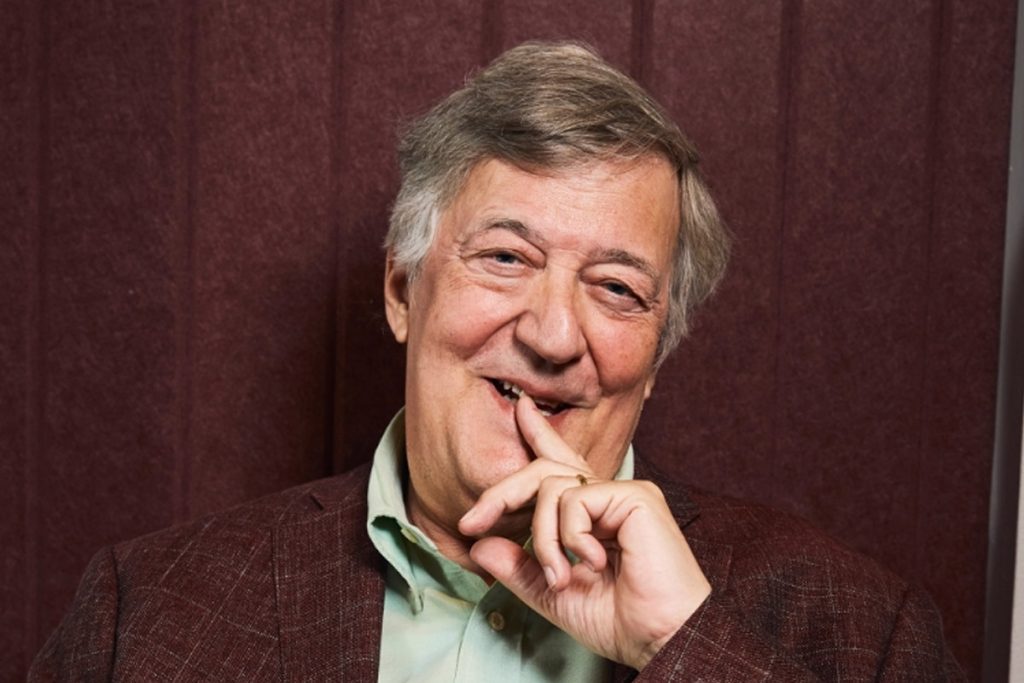
Actor-author-comedian Stephen Fry. (photo credit: Claudio Raschella)
“I am thrilled to be working with the QI Elves once again and sharing my favourite London haunts through these charming, witty and informative tours,” said Fry. “You notice things when you walk, and it stirs the imagination. London inspires the curious – and the wonderfully curious minds behind QI have created tours that will keep you wondering at the world around you.”
One of Dan Snow’s VoiceMap tours, The Great Fire of London with Dan Snow, traces the catastrophic 1666 blaze – from its starting point at a baker’s shop on Pudding Lane to where it finally burned out on Pye Corner. “Since founding History Hit, we’ve always been looking for new ways to bring people closer to the past,” said Snow.
“Working with the VoiceMap team to create these tours has been an exciting way to let listeners experience extraordinary moments in history while standing in the very places they unfolded – bringing the past to the present.”
Fry and Snow’s tours are six of over 2,000 available on VoiceMap, across more than 800 destinations.
Rebranding, new tagline a defensive move
In an interview with WiT at WiT Africa in Cape Town, Manley said the company has had to respond to the flood of AI-generated travel content competing for travellers’ attention, hence the rebranding as well as new tagline of “curiously human self-guided tours”.
“It’s defensive,” he told WiT. “We wanted to look as slick as a company that was an app built yesterday, while still having all of this human content and all of the publishers, the community of publishers. It’s about making sure we are as polished as possible while also having the kind of messiness of the human content.”
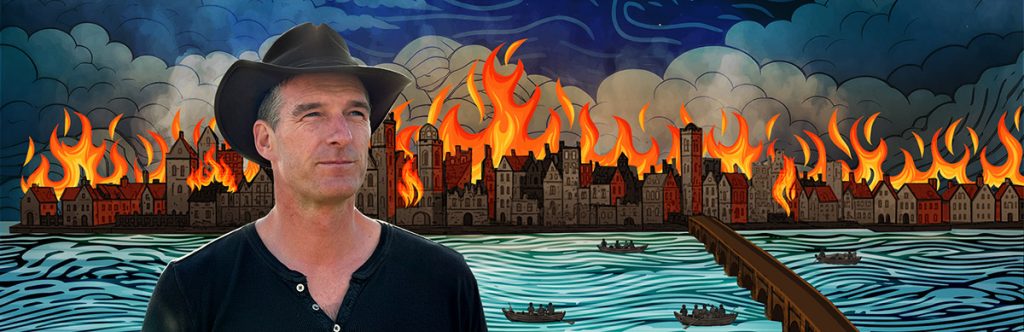
One of Dan Snow’s VoiceMap tours, The Great Fire of London with Dan Snow, traces the catastrophic 1666 blaze – from its starting point at a baker’s shop on Pudding Lane to where it finally burned out on Pye Corner.
Manley has been watching the AI-tour space with a mix of bemusement and unease. He mentions The Walk, an AI tour company founded by ex-TikTok executives based in New York, that recently raised $4 million dollars pre-revenue. “We’ve been going for 12 years,” he said. “I don’t think we could raise $4 million. People will throw money at anything that’s got AI.”
VoiceMap itself is not AI-averse. There is, Manley acknowledges, plenty of AI under the hood but the final product is not AI. The distinction matters to him. If consumers have their first audio tour experience with an AI product and it disappoints them, they may be turned off the entire category. “That’s a problem for us,” he said.
VoiceMap’s new visual identity is built around a more open, figurative logo. Out goes the old design: headphones, a pin, a world map. In comes something less literal, something Manley described to WiT as “more of a container for the emotions that people attach to the experience of doing one of the tours”.
The long tail moat
If celebrity anchors one end of VoiceMap’s defensive strategy, niche geography anchors the other.
Manley said some of VoiceMap’s most durable competitive advantages lie not in Paris or London or Rome, but in places like Tarragona, Ronda, and Penang, destinations where there simply isn’t enough tourist traffic to sustain a traditional group tour business, but where self-guided digital tours thrive.
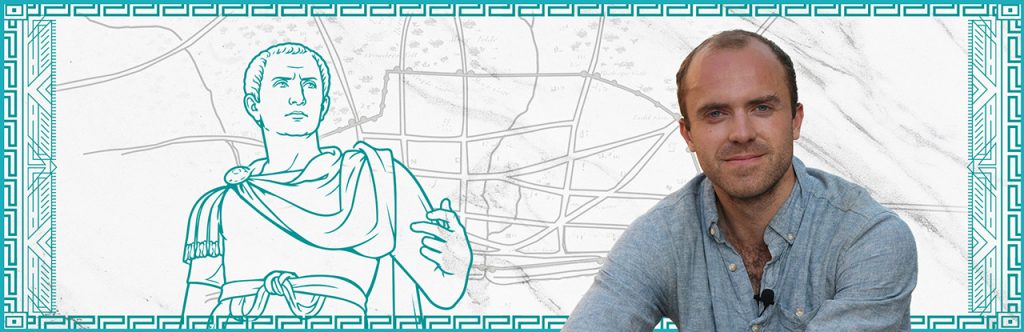
Additional tours include The Rise and Fall of Roman London with Tristan Hughes, with more tours launching later this year.
“To run a regular group tour, it requires a certain amount of scale. You need at least 10 people to show up every day at 9am,” he explained. “And there are lots of places where that just doesn’t make sense. We do surprisingly well in those markets.”
AI, he suggested, will commoditise the obvious destinations first. The deep, human-authored specificity of a tour written by someone who genuinely knows and loves a lesser-visited place is harder to replicate and harder to monetise by an AI company chasing volume.
This long-tail geography also shapes VoiceMap’s distribution strategy. Major cities such as Paris, London, Rome are sold direct. The Tarragonas of the world move through OTAs.
Writers, storytellers as competitive edge in era of AI slop
Manley also credits his community of creators as a key competitive advantage. As a writer himself, he understands that writers don’t create to get rich. They create to be heard.
“Nobody becomes a writer to get rich,” he says. “They want to reach people. They want to tell a story that changes someone, that has an impact.” VoiceMap has channelled that instinct into a supply of human-authored tours.
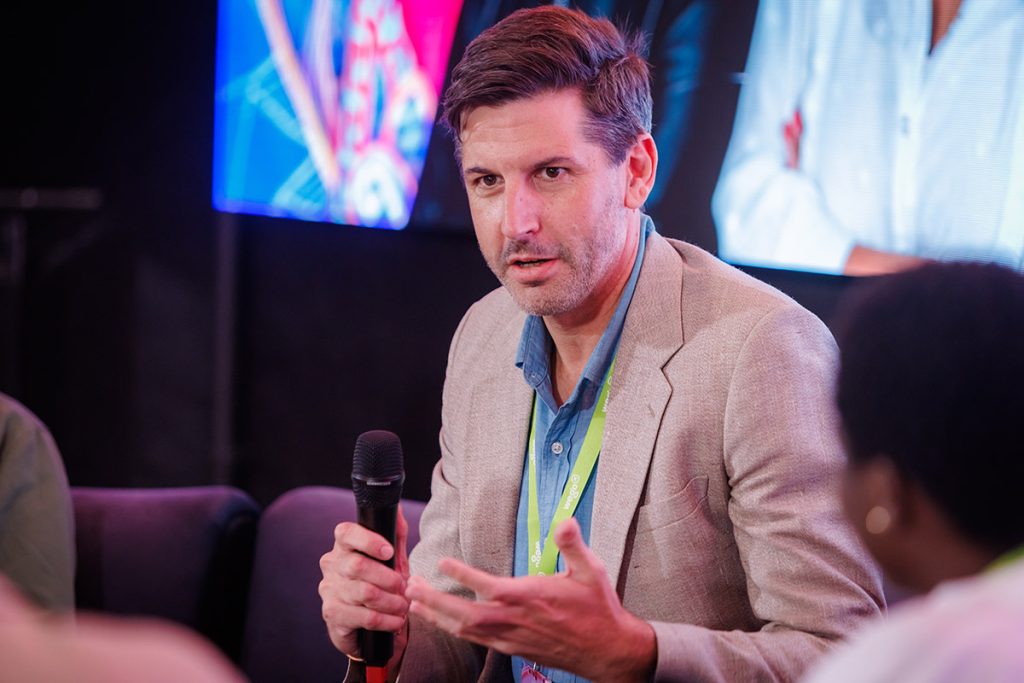
“To run a regular group tour, it requires a certain amount of scale. You need at least 10 people to show up every day at 9am,” he explained. “And there are lots of places where that just doesn’t make sense. We do surprisingly well in those markets.” ~ Iain Manley, founder of VoiceMap
The Sir Ian McKellen tour of London, created in 2017, is still one of the most popular tours on the platform.
Manley started VoiceMap 12 years ago based on the simple idea of attaching “a GPS location to an audio file, and then knitting them all together into a route. You used to need dedicated hardware for this, but by 2014 everybody who could afford one seemed to have an iPhone and I saw a way to open up this magical new medium to other storytellers,” he said.
“There are now roughly 800 of us, offering well over 2,000 tours, and there’s a new VoiceMap every day. Over the last two weeks, I’ve been travelling around Europe, doing some of them. I see them as an invitation, not just to the destination, but to travel in a way that is more engaged and meaningful – more human, you could say, in our era of AI slop.”