There are moments in life when a paper arrives not as instruction, but as interruption.
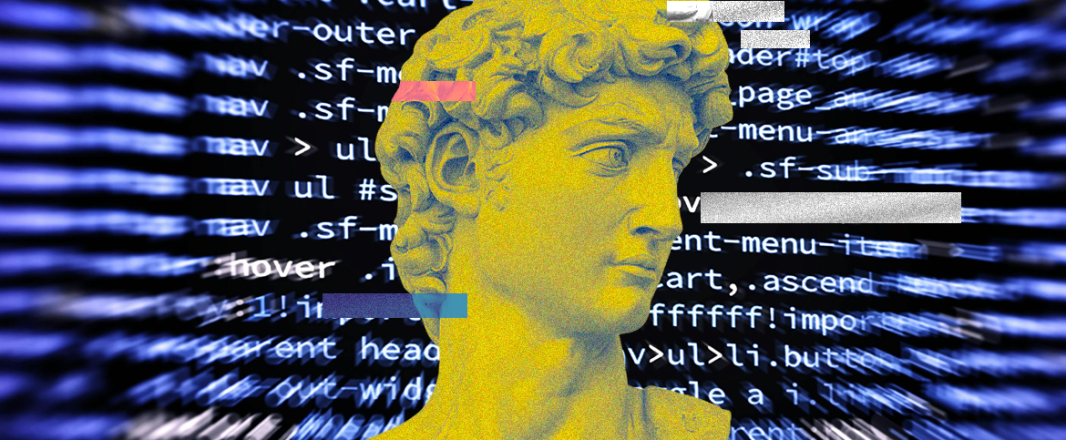
The recent ecclesiastical letter Magnifica Humanitas from Pope Leo XIV on Artificial Intelligence did not strike me as a policy paper about technology. It struck me as something much less comfortable: an examination of conscience and one’s role in technology. So, bear with me. And yes – it really does matter.
Because for many of us who work in technology and aviation, travel, etc. platforms, algorithms, and systems design, it is dangerously easy to reduce our work to abstraction. Pipelines. Models. Revenue optimization. Distribution efficiency. Consumer conversion. Personalization. Engagement.
These are words that are technically accurate. They are also words that can conceal.

Earlier in my career, I spent a goodly amount of time in the advertising agency business. A considerable amount of intellectual energy went into understanding persuasion* — not merely informing people but shaping behavior. Building campaigns, narratives, emotional associations, aspiration, urgency, identity. Sometimes to encourage people to do things they might not otherwise have done. I worked in all parts including media, where data is king.
My father worked in the cigarette business. At the time, it was considered glamorous, sophisticated, global, creative, and commercially brilliant. Cigarettes may well have been the most repeatedly consumed consumer product in modern peacetime history. Entire cultures, aesthetics, films, and social rituals were built around them. Today we understand something else more clearly: it was also one of the largest industrialized mechanisms of preventable human death ever created in peacetime.
I do not say this to position myself as morally superior. Quite the opposite. And, for the record – I have never smoked.

One of the dangers of discussions around ethics and AI is that everyone secretly casts themselves as the enlightened observer – we can easily criticize other’s excesses. The evil technologist. The unethical corporation. The reckless startup founder. The manipulative platform. You know who you are.
But deep down. Reality is usually more uncomfortable.
Most systems are not built by villains. They are built and developed incrementally by ordinary people doing competent work inside incentive structures. Yes, there are visionaries. And many of us believe and support those dreams.
Which is precisely why Pope Leo’s missive matters.
Because the deeper challenge is not whether AI itself is “good” or “bad.” The deeper challenge is whether we are willing to examine the cumulative moral effect of the systems we participate in building. There are a dwindling number of us who were around at the start of the internet age. Even less who remember things like Time Share mainframes. This age is different because we have to think about the impact.

My own professional world sits at the intersection of airlines, travel, tourism, technology, distribution systems, consumer platforms, data flows, and increasingly AI-driven advisory work. I go to court to defend or prosecute a particular clause or the whole darn lot. I can recall a meeting before online really got under way. I questioned whether anyone considered that what we were embarking on would put a whole class of people out of work. It did.
This crazy sector we inhabit is a true ecosystem, and is perhaps one of the clearest real-world examples of what the Church would describe as the “technocratic paradigm”:
- opaque algorithms determining visibility and pricing;
- asymmetries between platform knowledge and consumer understanding;
- extraction and concentration of data;
- increasing automation of human decision-making;
- indirect manipulation through recommendation systems;
- optimization models that quietly reshape behavior;
- immense platform power hidden behind interfaces that appear frictionless.
None of this is theoretical anymore. It is very very real.

The modern travel ecosystem increasingly determines what consumers see, what they pay, which suppliers survive, and which behaviors are rewarded — often through systems almost nobody fully understands.
And yes, I work inside that ecosystem.
- I advise within it.
- I help design parts of it.
- I analyze its structures.
- I help litigate in it
- I think about how AI may accelerate it.
Which leaves me with an uncomfortable but necessary question:
Am I merely a cog inside a machine that optimizes humans? Or am I helping humanize the machine itself? That distinction matters.
Because technology is never “just a job.”
Every sufficiently large system eventually carries moral consequences, whether intended or not. Not because engineers or consultants wake up wanting harm, but because scale amplifies incentives faster than conscience.
The Magnifica Humanitas does not tell me specifically which side of that line I personally stand on. Nor should it. No LLM can answer that for me.
No consultant can. No corporate ethics deck can. No government regulator can fully do it either. Many people – me included – feel a moral outrage at the behaviors of the Trump Administration and the individuals in it. Generally, we are powerless.

At some point, every individual working in technological systems – and those outside it – must undertake their own examination of conscience. Not performative ethics. Not LinkedIn virtue signaling. Not fashionable outrage.
Actual examination.
What are we building?
Who benefits?
Who becomes invisible?
What behaviors are we rewarding?
Are we actually putting people out of work?
What cultural assumptions are embedded in our systems?
What happens when efficiency becomes the highest virtue?
What happens when optimization slowly displaces humanity itself?
Those are not exclusively religious questions. They are civilizational ones.
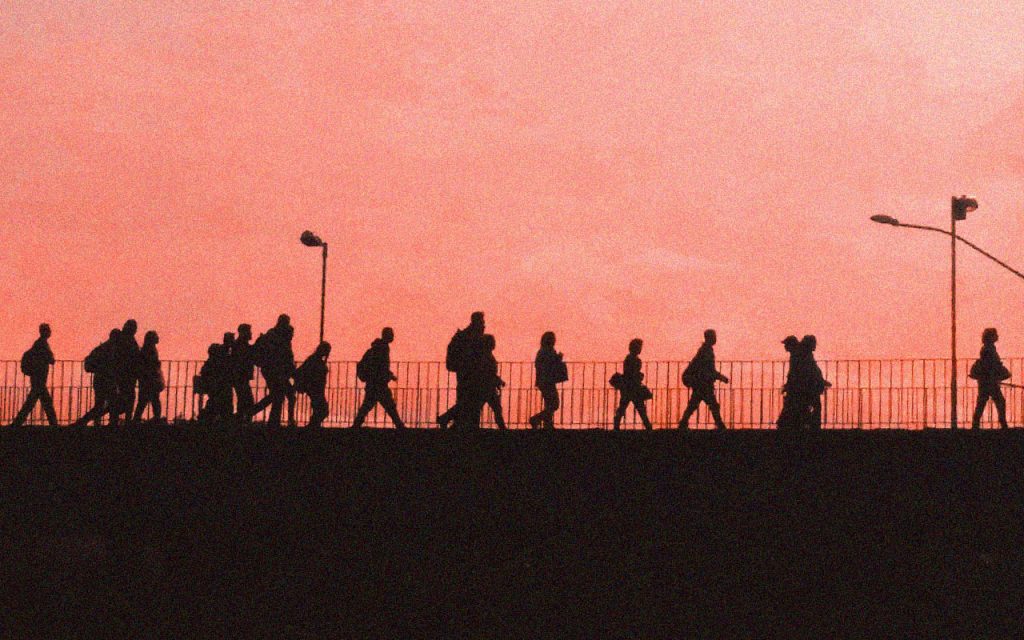
And whether one is atheist, Christian Muslim, Jewish, Hindu, Buddhist, agnostic even, or entirely secular is almost secondary to the central challenge:
Do we still possess an internal sense of right and wrong that exists independently of market efficiency, technological capability, or institutional incentives? Do we have a moral compass and are we paying attention to it.
Because history suggests that societies rarely lose their moral bearings all at once.
Usually, it happens incrementally. Quietly. Professionally. Reasonably. One optimization at a time.
Everyone should read books on advertising to frame their understanding of influence. 2 books I recommend.
400 Million Consumers: https://books.apple.com/us/book/400-million-customers/id1616308720
The Hidden Persuaders: https://www.amazon.com/Hidden-Persuaders-Vance-Packard/dp/097884310X
About the author: With over 40 years of experience in the travel and distribution technology industry, Timothy O’Neil-Dunne is the Principal at T2Impact, LLC, an analysis and consulting firm that specializes in aviation, travel, and leisure.