
JTB’s Eijiro Yamakita on reading the room, sensing the world, and why the renaissance of travel is already here.
There is a word that does not translate easily. Omotenashi, often rendered as “Japanese hospitality”, is, as Eijiro Yamakita gently reminded the audience at WiT Japan, neither a methodology nor a manual.
“It’s a spirit behind the service,” he said. “More like a philosophy. It’s about reading the person, reading the atmosphere, and adapting.”
That ability to read the room, as it turns out, is also exactly what Artificial Intelligence (AI) is very good at – reading data, reading signals, drawing inferences. Which makes the conversation between AI and omotenashi not a collision course, but potentially one of the more interesting partnerships in the future of travel.
Yamakita, leading one of the world’s oldest travel companies through one of its most ambitious reinventions, sat down for a coffee chat that ranged from robot companions to Barry Diller, from coriander detection to the two-day work week — and through it all, kept returning to the same conviction: the value in travel is not in the booking, it never was.
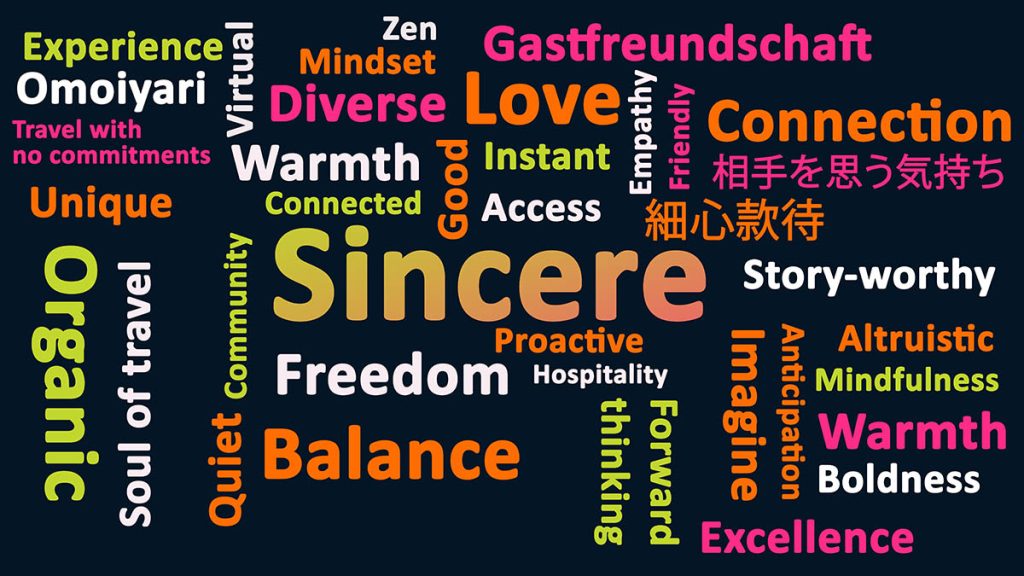
We asked the audience at WiT Japan for their one word to define “omotenashi”
The defensible position and a return to roots
One of the sharper provocations put to Yamakita was this: If AI is the biggest existential threat to OTAs because the digital front door of travel has shifted, does this mean tour operators like JTB – companies that spent over a century building physical relationships, destination infrastructure, and logistical depth – hold a more defensible position?
He nodded, without hesitation.
“The interface with the customer could be replaced by AI. But when it comes to experience – how people see the world – human services are really necessary.”
The booking process, the information layer, the front-end interface: AI handles all of that well. What AI cannot replicate is the on-the-ground, human-to-human moment at the destination. That, he argued, is where JTB’s value lives.
It is also, he acknowledged, a return to roots. Destination management companies were the industry once – before the internet, before OTAs, before aggregators. The logistics were the product. Now, the logistics have been commoditised, and what remains is the experience layer.
“I would say it’s a renaissance,” Yamakita said. “In a different way.”
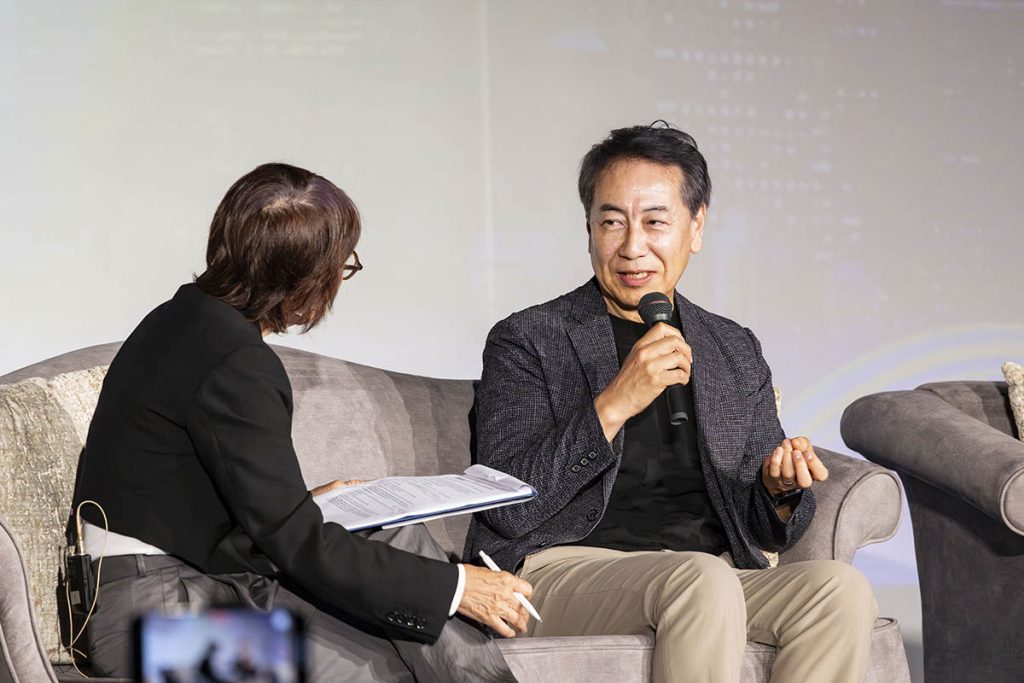
How Open Frontier 2035 will deliver the shift
JTB’s strategic vision – Open Frontier 2035 – formalises this shift. The company currently derives roughly 86% of its revenue from Japan and 24% globally. The target: a 50/50 split by 2035. That is a significant pivot for a company as deeply Japanese as JTB, and the question of how you export omotenashi – a spirit that is, by definition, contextual, personal, and un-manual-able – is not a trivial one.
Yamakita’s answer rests on three pillars. The first is destination management services, reimagined around community travel rather than traditional group tours. “AI is good at one-to-one communication. Human beings are really good at the multi” – meaning the complexity of group dynamics, the reading of different personalities in a room, the handling of what he called “very complicated, complicated” human situations.
The second pillar is MICE – meetings, incentives, conferences, events. The “perfect moment” is JTB’s keyword here: the high-stakes, high-emotion congregations where people need to be genuinely moved.
The third is content and IP – sports, entertainment, the experiential layer that makes a destination worth visiting in the first place. JTB is investing in data analytics capabilities, joint ventures in entertainment, and startup collaborations that can generate genuinely new products.
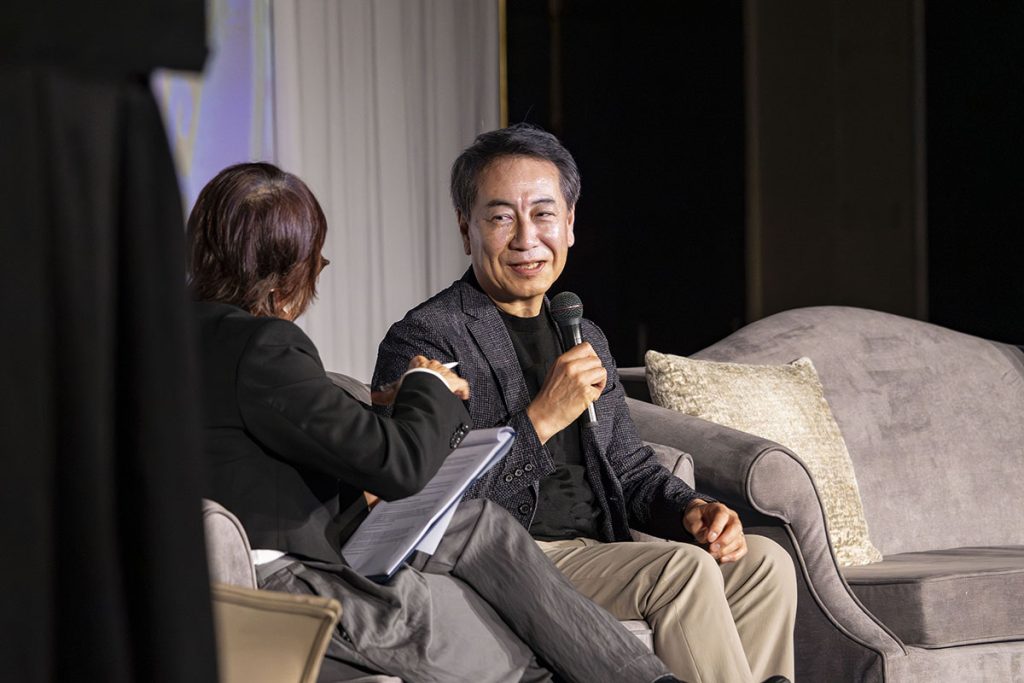
The outbound problem – and AI as a solution
Japan’s outbound tourism has been stubbornly flat. Yamakita was candid about why, and candid about JTB’s own culpability. “People are losing interest in destinations. Probably that was because of us. We didn’t provide enough information. We promoted the same old things.”
The stereotyped itinerary, the same images of beaches, the failure to communicate the living texture of a destination – these, he said, had dampened curiosity rather than igniting it. Japanese businesses and Japanese travel brands have historically been, in his words, “really poor at expressing things.”
Here, counterintuitively, he sees AI as an advantage. AI can compensate for cultural reticence, can translate the invisible into the communicable, can personalise at a scale no brochure ever could.
“I’m quite sure that people will love travelling more” once that personalised, content-rich, value-oriented promotion replaces the generic.

What LOVOT taught him
The conversation took an interesting turn when it was noted that his daughter owned a LOVOT, the Japanese-made companion robot, designed not to be functional but to be loved.
His daughter bought one with her own money, shared it with friends. His mother, elderly and living with loneliness, encountered one at a department store and, he said, looked genuinely happy for the first time in a long time.
“This was created in Japan because Japanese people have the omotenashi spirit behind them. When you create something, you want to put that spirit in, to make people happy, rather than just a technological, functional machine.”
The robot, he noted, is now used in nursing homes. It does not replace human care. But it holds space, it warms the in-between moments. The omotenashi spirit, it turns out, is portable. It can live in a robot if the people who built it put it there.
Sensing, not just seeing
When asked what travel will be about in the next age – having moved from seeing in the first era to experiencing in the current one – Yamakita reached for a word: sensing.
“We used to promote, ‘you can experience this and this and this.’ Very visible things. But now, feeling satisfied, feeling comfortable, sensing the world. That is the new experience.”
AI and omotenashi, it seems, can not only exist together, but live together in harmony.