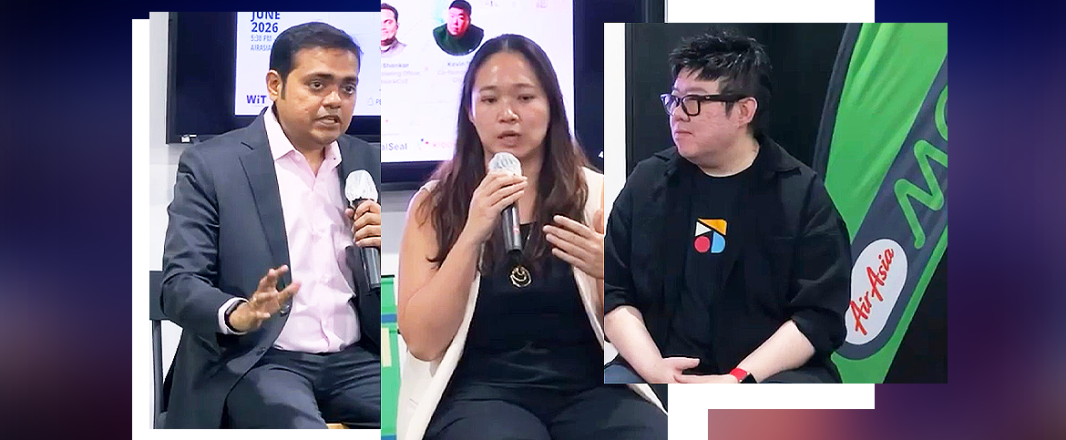
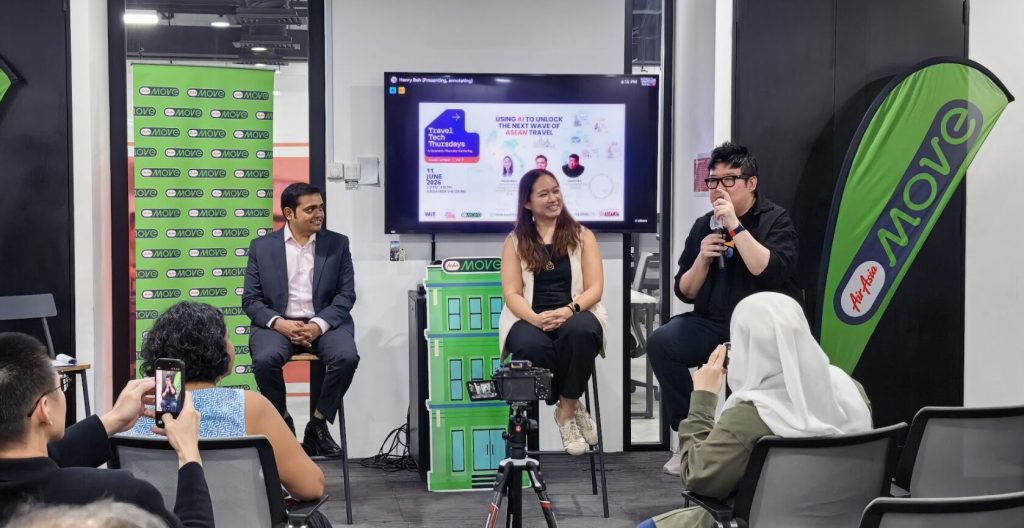
Because of the widespread nature of AI, conversations about its applications and potential can get pretty vague. We didn’t want that to be the case, so at Travel Tech Thursdays Vol 9, we had three experts on the panel who are already deep in the build – Sarah Wan, GM for Singapore, Malaysia, Indonesia, and Thailand at Klook; Ravi Shankar, CMO at AirAsia MOVE; and Kevin Teh, co-founder and COO of CloudJoi. The discussion covered big opportunities and honest complications, including the fact that 57% of web traffic is now bots, and that Klook’s first companywide AI rollout was, by Sarah’s own description, “a bit of a disaster zone.”
AI in the workflow and what’s actually being built
So, where is AI actually showing up in daily operations?
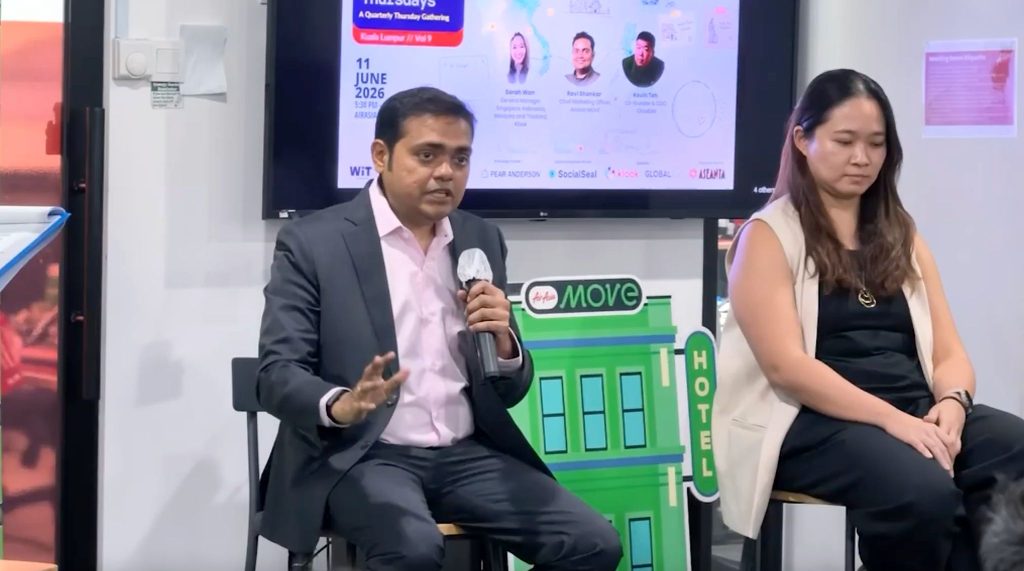
Klook is running AI on both ends of the user journey. Consumer-facing, there’s Bee, a chatbot that handles end-to-end trip planning conversationally. “The idea is that eventually this will cut across verticals. You no longer need to put your hotel separately, your cruise or tour separately. Everything can be done in one click. That is the eventual ambition,” Sarah said. On the merchant side, a backend agent called K.Ai helps small tour operators and activity owners manage listings, parse reviews, and make bulk updates, without needing to touch a back-end dashboard.
The companywide rollout was another story. “Everybody was going crazy, building dashboards, building their own workflows,” Sarah said. Klook is now in the phase of working out what actually stuck by standardising effective workflows and shutting down the duplicates.
For Ravi, AI’s impact within AirAsia MOVE’s workflows is undeniable. For some applications. AI engines were able to cut down processing and development time from 4 weeks to just 4 minutes. “The tech stack either shrinks or the behaviour of the people changes depending on how they use it,” explained Ravi. “You used to interact with SaaS applications via clicking. Now every SaaS application has their MCP on top, so you interact with the tech stack by prompting or by talking to it.” This means his marketing team can now spin up campaign landing pages just by talking to the platform.
For CloudJoi, the immediate win was shaving event setup time. Uploading an event used to take organisers 30 minutes to an hour of manual configuration. Now they upload a poster, the system reads it, and everything autofills. “It can turn that down to 30 seconds, then they just review and submit, and start selling immediately,” said Kevin. He was also direct about the internal motivation, saying “We are operating a very lean team. What we’re trying to do is not up our headcount, but increase productivity.”
Who are we actually talking about in the ‘Next Wave’?
Vertically, the fastest-growing traveller segment isn’t who most people are building for. “A lot of 50-plus, 60-plus, and 70-plus, that’s the segment that is growing more rapidly than the younger generation itself, and there are very few travel tech startups catering to this,” said Ravi. Horizontally, hotels are now AirAsia MOVE’s fastest-growing business, and MOVETix, their events-and-experiences vertical, is pulling in a new type of customer who plans travel around events. “For them, it’s the experience first. When the experience is not somewhere in the region you live, all your flight and hotel decisions revolve around it,” Ravi added, saying that inversion changes everything from targeting to copy, to persona-building.
Sarah’s guiding principle at Klook is social commerce, and she drew a clear line between what AI can and can’t do within it. “AI will decide how people discover, but social will determine what people trust.” The argument is that AI can surface genuinely underexplored ASEAN destinations, but without a creator or community voice backing it, that discovery doesn’t convert. Hence Klook’s continued investment in its Kreator network alongside its AI tooling.
Kevin’s next wave is defined by intent. “Previously we were only able to do keyword search,” said Kevin. “Now we’ve vectorized all our events and categorized them by intent, so you can search for ‘I’m having a first date, what should I do?’ and we push out a recommendation.” The goal is a platform that brings people out of the scroll and into an actual experience. “The whole point of adopting AI is because we wanted to bring people outside, beyond just the screens.”
What AI has surfaced about customers
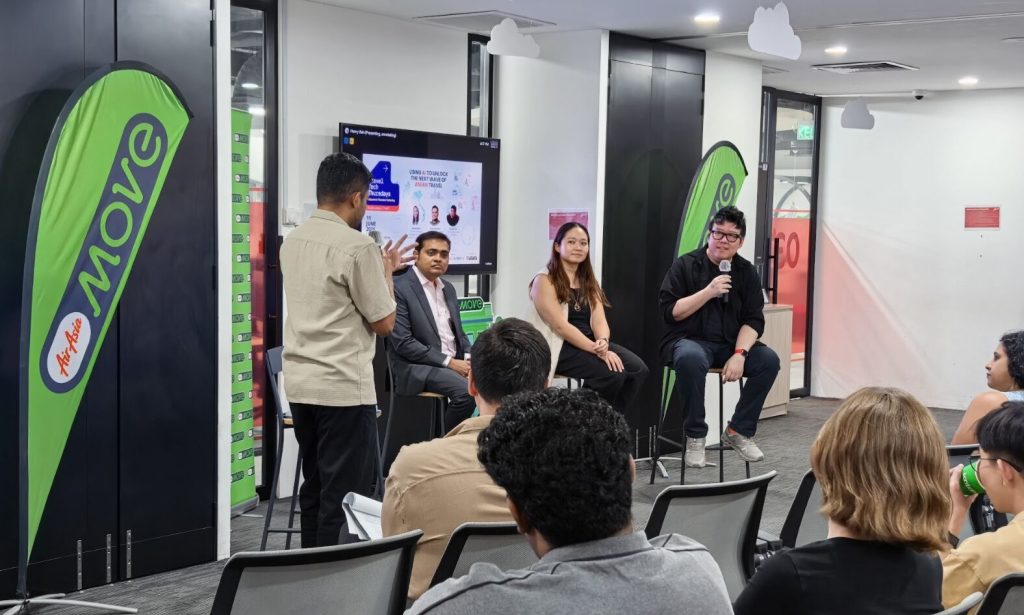
Some of the most useful nuggets of information were around what these platforms now know about their users; things that were technically there in the data, but invisible without the right tools to surface them.
Kevin said, “Maybe you like comedy, but you also might go to exhibitions. These are the things we would never have discovered until we started vectorizing the personalization part.” Cross-genre affinity signals, surfaced at scale, now inform CloudJoi’s recommendation logic.
Sarah said, “We’ve moved from demographic data into interest groups and affinities. We can tell if you’re a die-hard Disney fan who has gone to four Disney parks across the world.” The next layer is behavioural. “Are you a last-minute booker? Do you plan three months in advance? That’s where we can make even more targeted, personalised recommendations.”
Ravi added that AirAsia MOVE’s app has a community feature; when users book the same flight, they’re placed in a shared group chat, activated seven days before departure. Around a million active users engage in these flight communities by complaining, coordinating, requesting things. Before LLMs, that was practically unreadable at scale. “What generative AI gives us is the opportunity to analyse that text. Before, the only other way was to read the whole thing, which took a few years.”
What they found in that text led to a product. Users kept saying they didn’t care whether they sat in the front or back of the plane, they just wanted to sit together. “That is something we couldn’t have really understood with just looking at the data. But with that context, we launched a product called Sit Together, where they can just book and sit together.”
Music tourism, BTS, and the community conversion problem
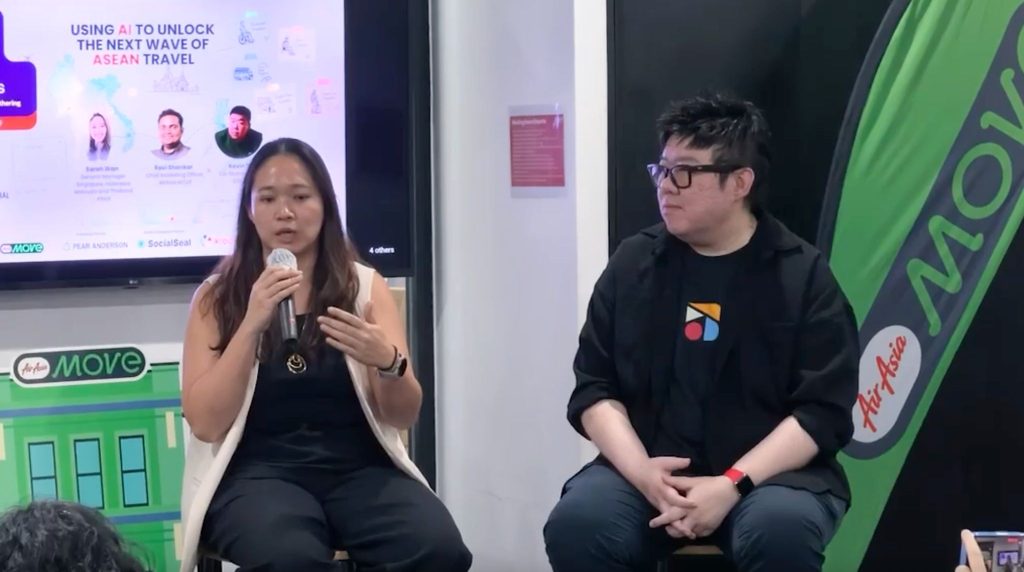
Klook’s BTS concert packages, bundled with Singapore attractions including Night Safari, sold out in under 24 hours. But what does music tourism actually convert into, and does that surge of fresh traffic translate into long-term customers?
Sarah separated the BTS case from Taylor Swift’s Eras Tour, Klook’s previous megahit campaign that sold out in record time. The Swift packages were bundled with hotels, and conversion into repeat Klook users was relatively high. “We did see quite a number of customers actually booking experiences during their actual trip.” BTS is more recent so the data isn’t in yet, but the bundling strategy was deliberately different. “We were very conscious of the price point for some of these younger fans, so we decided to go with attractions this time.”
What’s already showing up is how K-pop fans organise themselves. “In the comments, fans were saying, ‘Who wants to go to the zoo together?'” Sarah shared. Group outings are being planned inside Klook’s own content. Sarah noted the conversations are also happening elsewhere, “on random Instagram posts, or sometimes on Threads, which is the platform of choice for fans for a lot of these heavy discussions”, and expects this community behaviour to drive meaningful conversion as December approaches.
The search traffic problem
There’s no denying that the way we ‘Search’ has officially changed. And even if we opt out of AI-driven search, engines like Google have made it almost impossible to search for anything without AI’s input.
“Search definitely took a very big hit,” admitted Sarah. “With generative AI, and Gemini basically summarising everything, nobody clicks through anymore.” Klook has scaled back investment in blog content as a result, and tracking which AI platforms are actually sending traffic remains murky. “Every vendor we’ve spoken to gives us a slightly different number. Nobody can fully infiltrate ChatGPT and Claude to actually see the recommendation percentage.”
Ravi cited a recent Cloudflare finding, “57% of the open web traffic is bots and agents, so we are officially the minority on the web… we as in humans.” Bots and AI agents scraping pages don’t click ads, don’t generate revenue, and don’t convert. But block them, and you lose citation potential in tools like ChatGPT and Perplexity.
So, AirAsia MOVE’s response was to build specifically for agents. “We generated 200,000 pages in 14 different languages in two weeks. This is not meant for human content, this content we explicitly wrote for these engines.” The pages are stripped of aesthetic language, optimised for information density, and pulling citations in ChatGPT and Perplexity.
CloudJoi’s picture is different. Social still dominates their referral traffic, and AI platform traffic “is still relatively low.” But 25% of their million weekly visitors return every single week, a retention metric that matters more to them right now than channel diversification.
What AI can’t do and what shouldn’t be automated
“AI can be a really good starting point”, said Ravi. “AI can do 99% of the work, but you still need someone to do the one percent.” Internal governance is one area – persuading boards, documenting rationale for major decisions. “You have to explain to the board why we’re doing this. There’s no two ways about it. AI can’t help with that.”
Sarah’s concern was quality at scale. “The first few weeks of everybody using AI were exhausting. You got so much slop, so much wrong data.” For example, when BTS fans asked Klook’s AI agent basic questions about the concert, it kept redirecting them to Ticketmaster. The result is that every AI workflow Klook has implemented still has a human review layer. “For now, we really still cannot remove that human layer of checking.” She also flagged a more personal risk: “One of the problems I have using AI myself is that it agrees too much with me. That is a danger as a personal user.”
Kevin said, “The relationship between customers and the platform, that cannot be replaced. And the only thing that is never going to change, forever, is that relationship.” For an events business built on ties between organisers and the platform, no AI tool substitutes for those conversations.
“While there is excitement about AI, there’s a lot of dread about AI as well. A lot of customers, maybe out of fear of their jobs, fear of losing art, fear of losing culture, are drawing certain lines and boundaries. As a brand, it’s very important to straddle the middle and not go overboard trying to AI everything,” added Sarah.
Travel Tech Thursdays is a recurring networking series hosted in Kuala Lumpur by WiT and MyIndieWorld. Travel Tech Thursdays Vol 10 will be held on August 13 at AirAsia MOVE’s offices in KL Sentral. Click here for tickets and details.