
At WiT Indie, three very different hospitality models – a UNESCO heritage boutique, a globally scaled brand with its roots in serviced residence, and a 140-year-old colonial grand dame – sat on the same panel to address a key question – what does it mean to serve the independent traveller in shifting times?
What made it even more interesting was the different lens each brought to the discussion, which I highlighted in my introduction to them.
Shen Loh-Lim, managing director of The Blue Mansion, for instance, came from a digital and tech background into the family business started by his parents. Cognizant of the challenges faced by independent boutique hotels in marketing and distribution, he co-founded The Conscious Collection.
For the discussion, he was described by AI as “an operator and a growth strategist, not a romantic.” I asked if he agreed with that.
“That’s probably what I would have agreed with 10 years ago, maybe five. I spent 10 years in heritage hospitality around people like my father, my mother, people like Alison, and many of the speakers here today. Today, I’d say I’m becoming a hopeless romantic – but one who can also read a P&L. That’s probably a more dangerous combination.”
Alison Fraser, E&O’s first ever female GM in 134 years since the hotel was established by the Sarkies Brothers, was described by AI as “someone who understands both the weight of institutional legacy and the scrappiness of independent entrepreneurship – rare combination”.
Fraser said the lens she brought to the grand dame of Penang was distinctly commercial, shaped by two stints as a small-business partner before she ever ran a heritage hotel.
“I came to the hotel and looked at it as a business, because at the end of the day, I’m an employee. Having been a partner in small businesses gave me agility in how we strategise, and the ability to multitask – which I found quite lacking elsewhere, because everyone was just focused on their one thing.”
For Mondi Mecja, who has led Ascott Malaysia’s expansion since 2019, AI described “his stated leadership philosophy as centering on shared value and viewing every property as an integral part of its local community”. I asked him how that philosophy can scale from eight to 31.
“We had zero Ascott properties in Malaysia until 2022. In the past three or four years we’ve grown from zero to 15, and we’ve now opened eight different brands, just in Penang, across different markets. That takes a lot of working with local partners, local SMEs, and hiring from the community. We’ve heard from guests who book and stay with us without even realising it’s an Ascott brand – they know us because of the community we’ve built.”
Can independents win on discovery because of AI?
My next question was, can independents win on discovery because of AI. An audience poll leaned optimistic: yes, independent hotels can compete on discovery in the AI era.
Loh-Lim explained why he agreed, and how differently he now spends his time on visibility.
“AI is definitely democratising discovery. Great independent hotels do storytelling, culture and craft and sense of place particularly well, and that’s an advantage – it lets us compete at a more global scale. Five years ago I was much more focused on filling the gaps – SEO, Google, social media. Today I spend a lot less time obsessing over visibility, because we’ve actually built strong trust signals – good media, good PR, creators making content for us. It’s really about validating the decision for the traveler, pulling together multiple sources, and delivering on authenticity.”
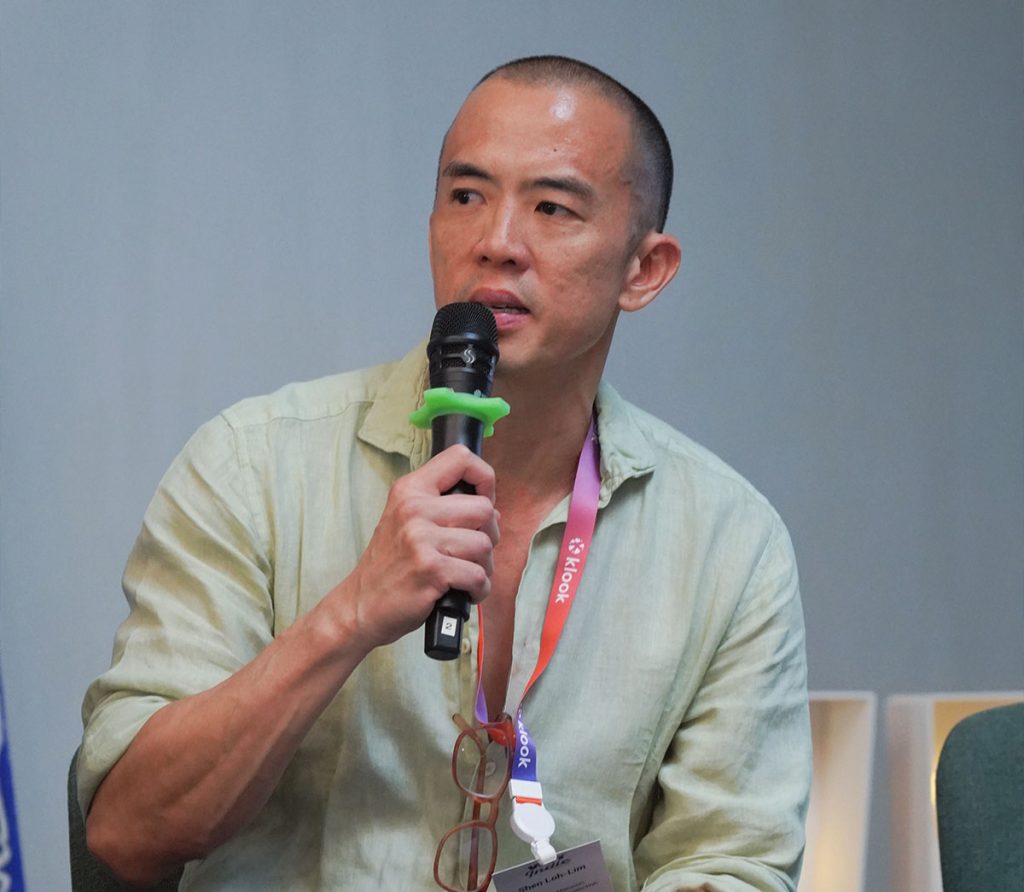
Shen Loh-Lim: AI is definitely democratising discovery. Great independent hotels do storytelling, culture and craft and sense of place particularly well, and that’s an advantage – it lets us compete at a more global scale.
With no rewards programme of her own – unlike Ascott Star Rewards, or Marriott Bonvoy, Fraser said repeat business at the E&O comes down to something harder to systematise.
“It’s down to the soft skills of staff – that’s our biggest draw card. If your staff are sincerely, passionately wanting to offer hospitality, that filters through to guests, and it makes them want to come back, because they feel safe and comfortable the minute they walk in.
“Our repeat business runs close to 55% at certain times of year. A lot of our business comes through direct distribution — guests writing in by email — and there’s a human touch on the other end of that email that helps convert. But it’s also about how you handle it when something goes wrong: if management steps in and deals with a problem properly, you can turn a complaint into a repeat guest. It’s not that everyone has a perfect stay — it’s how you handle the issues.”
Mecja described a different mechanism for the same goal at Ascott’s lyf brand — loyalty built through experience rather than points.
“We had a wedding recently – the parents stayed at E&O because they liked that feel, while the son and daughter stayed at lyf across the road because they wanted something funkier. That’s how you build loyalty for a brand like that: through experiences, not points. The goal for a loyalty member is that they’re happy with their stay without thinking about points they haven’t redeemed, or the free upgrade they got — they think about the experience. That’s the real algorithm for loyalty.”
Why The Conscious Collection exists
Speaking of The Conscious Collection, Shen traced its founding back to a gap he kept noticing across Asia’s independent heritage hotels – extraordinary properties that struggled to compete commercially, not creatively.
“There are so many unique heritage independent properties across Asia with compelling guest experiences and stories that failed to compete at a global scale, not because the product wasn’t there, but because they lacked the commercial growth-hacking skills to compete.
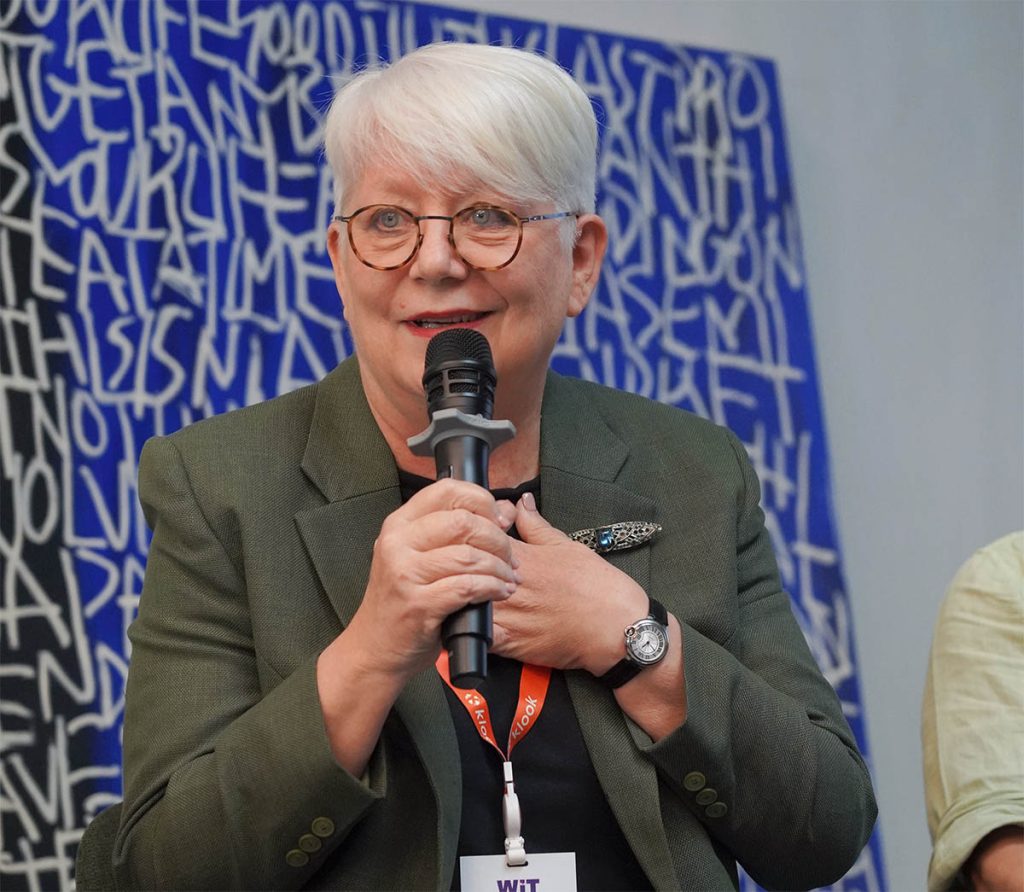
Alison Fraser: It’s down to the soft skills of staff – that’s our biggest draw card. If your staff are sincerely, passionately wanting to offer hospitality, that filters through to guests, and it makes them want to come back, because they feel safe and comfortable the minute they walk in.
“That’s where the idea was born; it’s evolved into something else entirely since. My biggest challenge now is alignment – finding the right partners, the right owners who believe in the same principles and outcomes, and investors who aren’t chasing a five-year window with a 15% IRR.”
I drew a parallel to Japan’s Yado Ryokan Alliance, whose founder, Kyohei Yamamato, had said the model works for distribution and discovery but breaks down on procurement, precisely because independent owners are too fiercely independent to align easily.
Loh-Lim agreed the appeal cuts across borders. “The same guest who wants to stay in a ryokan wants the same thing from a heritage hotel or a shophouse – they’re looking for a sense of place.”
Direct, third-party, or both?
Pressed on distribution mix, Loh-Lim put direct bookings at around 40% of his business and Fraser at 55–60%.
Asked to pick a single channel that will matter most over the next five years, the direct instinct was unanimous – with one practical caveat.
“It’s something you have to work at – you can’t lie back on your laurels. We consistently ask clients, verbally, please talk to me directly next time, which means I end up with hundreds of guests coming through me. But once a guest feels comfortable with you, they really feel the personal touch – it doesn’t get more personal than the general manager handling a booking directly.”
Mecja added, “I’d add TikTok into that mix – it depends on the market. If you want to reach the China market, it’s TikTok or WeChat, and we’re working on driving direct bookings through those channels too.”
Loh-Lim offered a contrarian view, a defence of the very intermediaries independent hotels most often blame. “OTAs get vilified a lot, but they’re one of the most powerful distribution engines ever built. If we don’t leverage them, and instead work toward converting that traffic into our own customer relationship, we’re leaving something on the table.”
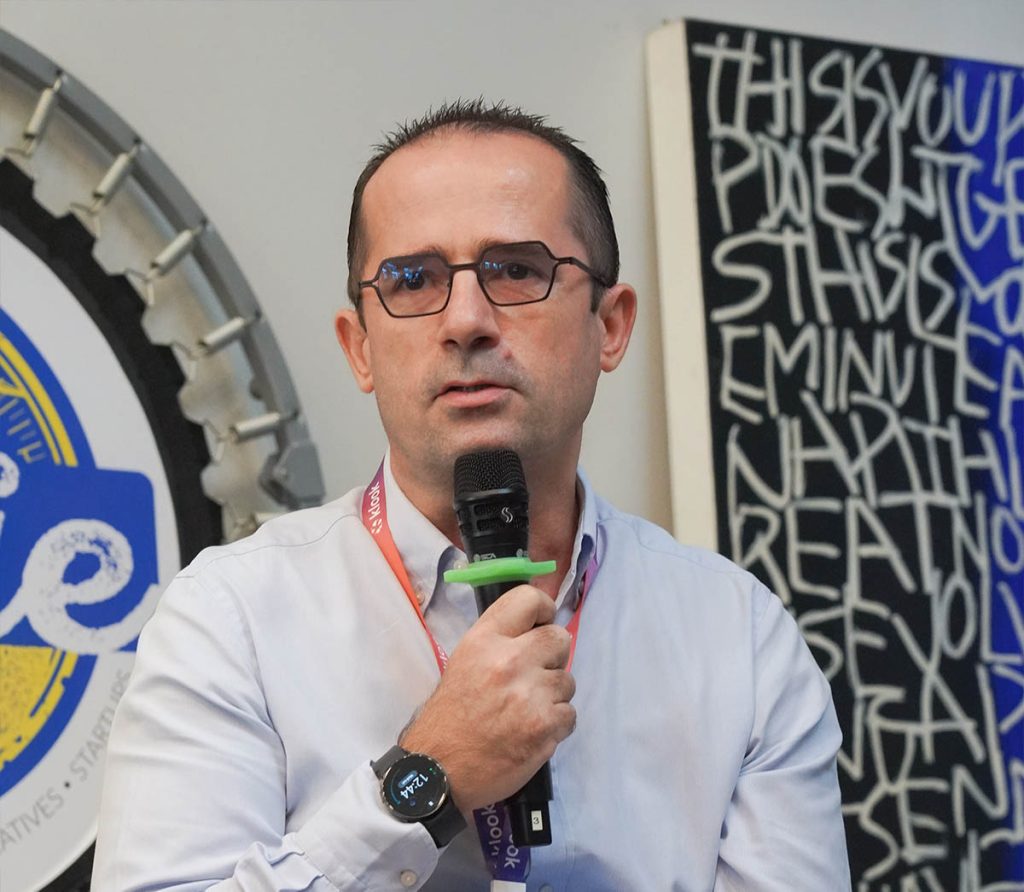
Mondi Mecja: If you want to reach the China market, it’s TikTok or WeChat, and we’re working on driving direct bookings through those channels too.
Beyond the room
Asked how each of them thinks about experience beyond the guest room itself, Loh-Lim pointed to the Blue Mansion’s newly-opened Qing Suites, and a deliberate sourcing philosophy behind them.
“By virtue of what we do, it’s already a culturally immersive experience but increasingly we’re asking how we can support the local community around it. Building the Qing Suites, we chose only local suppliers, local craftsmen and furniture makers and artists, using traditional methods. At a community level we support local artisans, creators and musicians, and try to showcase the best of local cuisine too. Going beyond our own walls is maybe the next phase.”
Fraser’s answer stayed close to the E&O’s core asset: 134 years of stories, and the staff trained to carry them. “We actively encourage our staff to learn the historical stories of the hotel. We get so many guests retracing the steps of a great-grandparent or distant relative, and it’s vital we can engage with that and make them feel comfortable.
“For a younger solo traveler, it’s about memories — we have uncurated, unique spaces around the hotel that don’t feel crowded, and people love photographing them, whether it’s a wall of famous guests who’ve stayed here, afternoon tea, or the sea wall. And our guest demographic is changing too – we’re seeing more mainland Chinese travelers, younger, with real disposable income.”
Mecja described a newer kind of hospitality job title entirely, one built specifically to manufacture that sense of occasion at lyf. “We hire what we call an Ambassador of Buzz – their job is to create events and content, make sure something is happening in the property every weekend, and even lead walking tours of the neighbourhood. Their whole job is to make noise and create buzz around the hotel.”
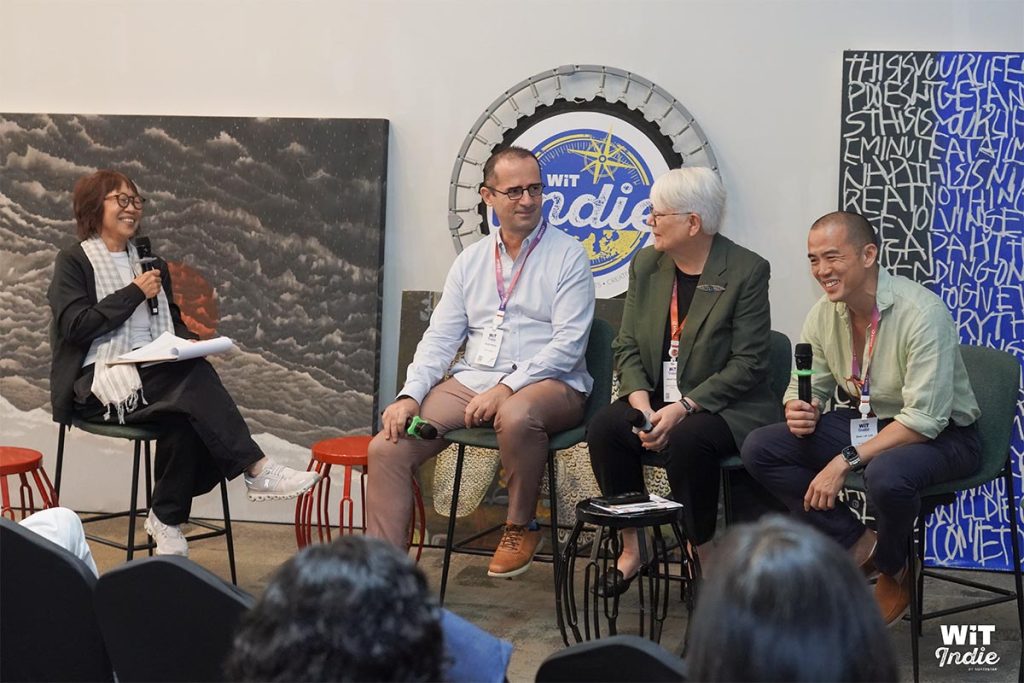
Heritage, design or social – which wins?
Asked to choose between heritage, design, or the social hotel as the format that wins the next generation, Mejca and Fraser landed on all three.
Loh-Lim picked his own lane. “I think it;s identity – a hotel with a clear position, a clear identity, that remains true to that identity.”