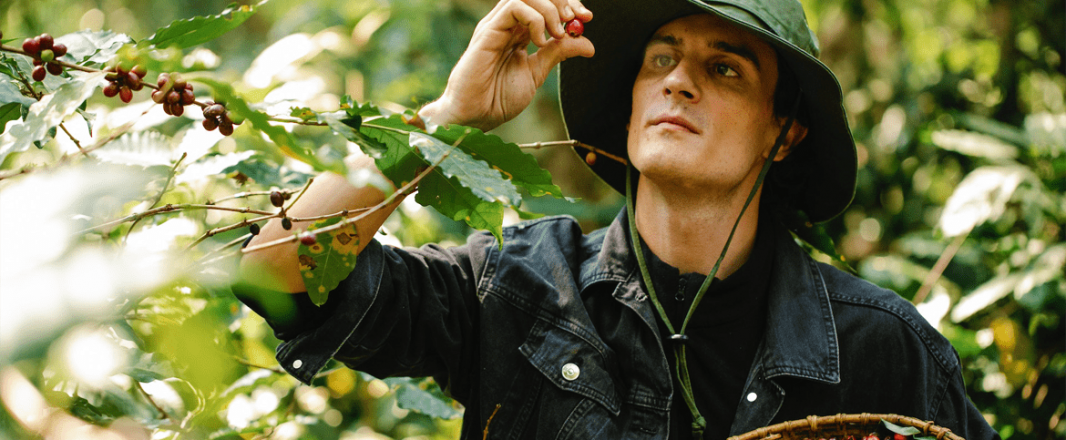
IT seems like everyone’s talking about travelling differently these days, but what does that mean exactly? From conscious decisions to picking accommodations with sustainable practices, the idea of travelling like a tourist seems to be on the decline, while seeing a new destination more authentically has become a mainstream practice.
Hari Nair (SVP, Lodging Partners, Expedia Group) is no stranger to travel. He celebrated his 20th anniversary at Expedia in June. That’s quite a milestone. In that stretch of time, he’s covered different markets – Europe, Middle East, Africa and North America, and most recently, led Expedia Group Media Solutions. Today, he oversees globally all things accommodation, including vacation rentals – clearly a hot topic for the current times – with a traveler laser-focused approach.
At WiT Singapore 2022, Hari said that he had been to 58 countries. More interestingly, he enjoys travelling with his son, a tradition the duo have shared for the last 14 years. The trips are usually thematic – the father-son team pick a destination based on a checklist of things around the world, an idea that was put in Hari’s mind during his college years by a traveller who was visiting the “temples of the world”.
The cross-generation dynamic has created some insights and lessons along the way – which makes sense, considering every demographic has different ways of experiencing travel and hospitality, along with different demands.
Travel to learn, and learn to travel
“I learned to travel. And what has been interesting travelling with my son is, he has taught me that you travel to learn. It’s very different when you flip the words around like that”, said Hari Nair during his ‘Coffee Chat’ panel at WiT Singapore 2022.
He added, “A destination is not a servant. A destination is a teacher, and the way to travel is to be an active participant. So, whether a couple of months ago we went and picked coffee beans in the coffee valley in Colombia, or spending time with the Masai Mara in Tanzania, or seeing the Silverback Gorillas in Rwanda – we are in their environment. We are not just standing around like bystanders, we are an active participant… and I think it’s just a beautiful way of experiencing travel, which is what he has taught me.”
The ability to actively get involved with the lifestyles of the locals at a destination invariably changes one’s experiences. The aquarium analogy comes to mind – you’re either standing on the outside, looking in at all the beautiful fish, or you’re diving in there to experience it for yourself. Villages, towns, cities, and countries come to life because of the people who live there, and the decision to experience a place the way locals do is a travel-style that is becoming increasingly popular with each passing year.
Inflation and staffing: The biggest pain points for hoteliers in the new world
As the conversation progressed into business and hospitality, it became clear that it’s not just the consumers that needed to find new ways to travel in an endemic environment. Hoteliers and service providers are changing the ways they see travel, too, and that process starts with identifying major pain points in the market.
Hari Nair named a few things that nudged the hospitality scene in a different direction this year.
“Staffing is a real issue. There are not enough people, and particularly people with talent. I was in Germany and speaking with the General Manager of a hotel, and she said getting people for front office and kitchen staff are the main hot areas for her. She literally had to move her hotel to a four-day work week just to get people to look at her hotel.” “I think we are losing people who are giving hospitality even a consideration.”
It’s no secret that the hospitality industry lost people in droves during the pandemic, and many are afraid to come back due to its perceived fragility. These sentiments were also echoed by Fritz Demopoulos (Founder, Melon Sci-Fi Festival/ Board Member, SETI/CEO, Queen’s Road Capital) at WiT Singapore 2022, who encouraged the industry to reconfigure the way they employed and rewarded talent in this space.
According to Hari Nair, money is still a major issue during this recovery period.
“Inflation is real. It may not be in APAC as much, but rising costs, energy costs, construction costs, renovation costs – it’s real. And I think what we’re seeing from our data is that it’s bleeding into guest experiences. People have a lot of money to spend because they haven’t travelled in the last two years. But guests are trying to tell us now – you can’t raise your ADR and give me substandard service, you can’t have it both ways.”
Understanding the cost of sustainability
We would all love to support sustainable practices, and an increasing portion of travellers are actively choosing to book accommodations and create trips that are as sustainable as possible. But understanding the cost of sustainability – how much more we’re willing to pay to be “green” and how much the industry is willing to invest in green practices, will determine how effective sustainable practices will be in the coming years.
It’s all about learning how to be sustainable, and also learning about the effect it has on budget, if any.
During the panel, Hari Nair said, “There are people who say, through research, 75% of people are willing to pay more for a sustainable service. I don’t know if that’s true. I hope that is true. What you don’t know is, whether they’re willing to pay a dollar more, or ten dollars more, right? I think it has to be the reverse. A sustainable operation needs to be cheaper for them rather than paying more.”
So how exactly does a place get badged as “sustainable”? According to Hari, “There are about 30 attributes that a hotel needs to do to be badged as sustainable. Do you use renewable energy? Do you have electric stations? Do you employ people from the local community? These are the areas that can be made transparent to the travellers on one side and allowing the partners to load it in our system is the way to make it work and we’ve started work towards that.”
We’ve uploaded WiT Singapore in its entirety on YouTube. Check out more panels here.