The next word is biological diversity, says Greenview’s Ricaurte
A leading player in hotel sustainability reporting has outlined what he sees as “the next lens” to view humanity’s mission of environmental balance and stewardship
Speaking at WiT Singapore 2023, Eric Ricaurte, CEO of Greenview, said since the Paris Agreement in 2015, the world had, for the first time, agreed to “one global KPI” set by governments. And for the first time in recent years, we have found ourselves in a position where on the whole, governments support the carbon mission.
“It’s interesting, because every single human has a contribution to that KPI. Every activity, product and service. Everything we do has a carbon footprint,” said Ricaurte. “And with that, everybody has this interconnected KPI. And because of that, it’s given it this carbon lens, which we all now see.”
Indeed, as the sustainability discussion had driven us to tangible commitments and targets around carbon emission, a new question is posed.
“The question is, what’s next?”
Centre of action
It has been quite a year for Ricaurte’s growing profile. In January this year, with numerous hotel industry players knocking on the door of Greenview in the interests of gaining certification, WiT asked him how it felt to be “the world’s most wanted man in travel right now”. He laughed the question off. “It’s not me. It’s the topic, the consequence of it.”
Having toiled with Greenview since 2008, the company now runs what it describes as “the leading platform for sustainability software, data and programs in hospitality”, powered by data from over 20,000 hotels around the world, collected via the Cornell Hotel Sustainability Benchmarking Index and using the Hotel Carbon Measurement Initiative methodology. It also employs 25 people.
Being at the centre of attention these days also means delivering a one-man speech to the WiT audience for a segment titled “The Green Revolution: The Human Factor, Part 1”. For starters, Ricaurte gave the audience a rapid-fire introduction to the evolution of the sustainability as we know it.
“I want to take this opportunity to go a little bit more broad based, because of this idea of what it means to be human in the face of AI technology. This revolution is a thought revolution – if we can change the way we think and perceive things, then the possibilities can come.”
How we got here
There was, he said, significant precedent for thought revolutions. Just 3,000 years ago, most people didn’t believe the Earth was round. Looking back 500 years, most didn’t believe that the Earth revolved around the sun.
“And 50 years ago, most people didn’t believe that what we do on Earth affects the sky. And what we do on land affects the entire ocean,” said Ricaurte. “We’re now in the middle of the sustainability thought revolution. And if we think about that, 200 years went by for the world to start accepting a new lens of science, instead of magic.”
The sustainability thought revolution, he argued, traces back for the most part to a book published in 1962 called Silent Spring by Rachel Carson. An environmental journalist, Carson in the 1950s called for global action due to the dangers of the pesticide, DDT.
“The pesticide was so good at killing all the bugs, that they were using it for agriculture: but she called out and said, ‘If we have these pesticides and don’t control them, then we’re going to kill the bugs, we’re going to kill off the birds who are not going to have anything to eat. And we’re going to have a spring that’s silent, because there’s no birds singing.”
This struck a chord, and fundamentally helped changed many things – the growing awareness saw the start of stronger environmental regulations at home and abroad.
“Back in the day, the US was actually leading these kinds of things,” said Ricaurte, born in Mexico to an Ecuadorian father and American mother, and raised in the small town of Toledo, Ohio.
As governments around the world followed suit, further regulation followed in the US, targeting clean water. “You can imagine in 1970, how much regulation people thought was coming at them,” he notes.
In 1968 came Population Bomb, a book suggesting the baby boom with the agricultural green revolution, meant we were on a course to overpopulate our world and enter a decline. In 1972, the Club of Rome released The Limits of Growth, attempting to quantify the limits our planet faced.
“From Silent Spring to now came the fundamental thought change – that humans can fundamentally change our planet through intervention, and that the planet is vulnerable.”
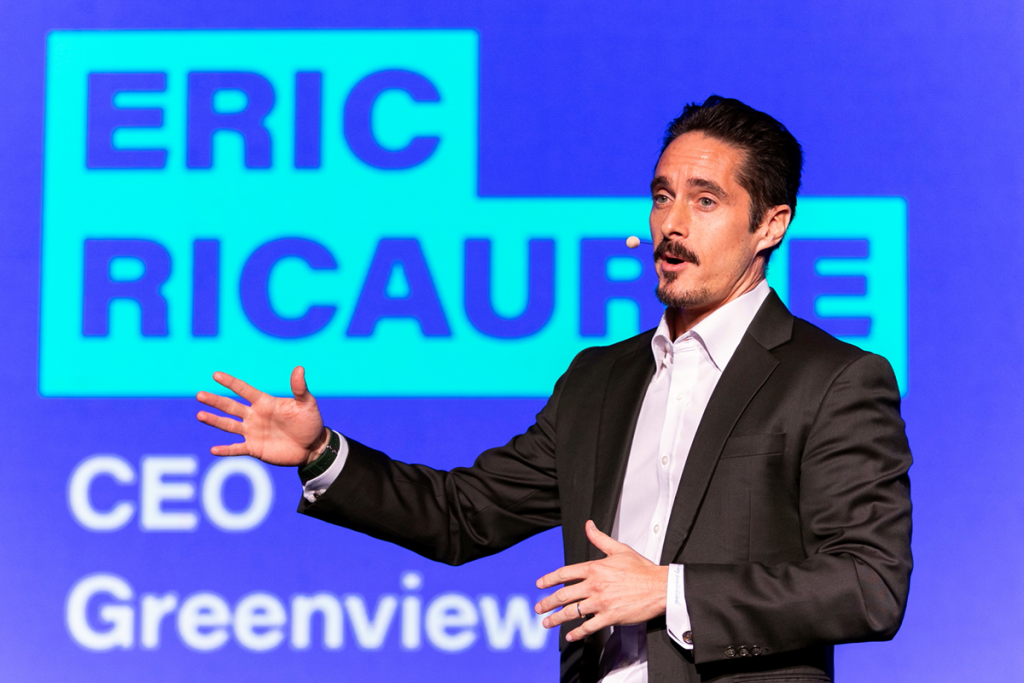
“Travel and tourism is going to be at the crosshairs because people are going to want to know: ‘How is my travel impacting ecosystems?’ And we’re going to have to get creative to create products and experiences,” said Eric Ricaurte (CEO, Greenview) at WiT Singapore 2023
An age of agreements
Soon, countries began to act in accord. The original Human Environmental Conference of 1972 in Stockholm led to a Stockholm Declaration of 26 principles, similar to sustainability principles today. It was followed by a 10-year hiatus due to oil shocks, market crashes and the Cold War.
Enter the 1980s, when “we realised we’d literally broken the sky because of hairspray”. In 1987, the Montreal Protocol was signed, with a global agreement to phase out CFCs from aerosols: “That was a success: it was the first time we got all governments to agree on a specific set of actions and implement them.”
Next, the United Nations commissioned Gro Harlem Brundtland, the former Prime Minister of Norway, for a four-year study called Our Common Future: “It was seminal study, which coined the term ‘sustainable development’ – or development that meets the needs of the present generation, without compromising the ability of future generations to meet their own needs,” Ricaurte notes. “It made it human, because it put it in the context of our children.”
Things moved forward at the Rio Conference in 1992 when governments established a framework, Agenda 21, that included three conventions to help set more global regulation. The one we all know best is the UNCCC while the two others are the Conventions on Biological Diversity and Desertification.
Meanwhile, COP 1 started in 1994 and COP 3 in 1997 in Kyoto. “The infamous Kyoto Protocol set us back a little bit, because we were mistaken to think that phasing out aerosols would be the same thing as phasing out the fossil-fuel-based energy economy.” Then finally, in 2015, the Paris Agreement was signed: with “one global KPI” linked to emissions that governments agreed to chase towards a goal of net zero.
The next sustainability lens
So where is our sustainability thought revolution taking us next?
“Our next word is biodiversity, or biological diversity,” said Ricaurte. “This is the next phase of the sustainability revolution,” he notes. “It’s the variety of all species of life, including humans.”
As the idea takes hold of a new shared lens focusing on biodiversity loss and its possible remedies, there will be several advantages for business and travel: “It’s more tangible, more physical, and much more human,” he enthuses. “It talks about plants, species and ecosystems – and the cultural heritage that’s derived from those.”
“The biodiversity lens is going to be the most impactful and most interesting so far. It’s tangible too, whereas carbon is ‘out there’. And travel and tourism is going to be at the cross-hairs, because people are going to want to know: ‘How is my travel impacting ecosystems?’ And we’re going to have to get creative to create products and experiences.”
The new phase of our sustainability thought revolution will also allow us to feel more action-centric, he explains. “In the beginning stages of sustainability evolution, it was about ‘what you can’t do’. But this next phase is about what you can do.
And what we can do as a travel industry to create experiences that address this problem.”
Watch video