



When Johannes Reck, CEO of GetYourGuide, sat down with Omri Morgenshtern, CEO of Agoda at the former’s Unlocked Asia Summit in Bangkok in late October, it wasn’t just a chat between two travel-tech leaders. It was a deep dive into what it takes to stay relevant – and relentless – in one of the most competitive industries in the world.
For Omri, who grew up in Israel’s tech-driven culture, problem-solving was second nature. “You see a lot of entrepreneurs who care about solving real problems,” he said. “I could build great software, but it’s much harder to build a business.”
Truth in leadership: Talk to people who leave
After serving in the Israeli army, Omri co-founded Qlika, a company focused on algorithmic marketing and systems at scale, with his two buddies, Idan Zalzberg and Ittai Chorev, both of whom are CTO and CPO of Agoda respectively.
It was the early days of Google AdWords and Facebook’s advertising platform, and Qlika worked with multiple travel brands – including Booking.com – without Omri realising that Agoda, KAYAK, Priceline and Booking were all part of the same group.
Then came the call that changed his trajectory. Priceline wanted to meet. “I didn’t connect the dots,” he recalled. “I thought it was just another client meeting.” What followed was one of his toughest negotiations – with his co-founders. “I was against selling. Two against one. But we did it.”
By 2013, he had moved to Bangkok to join Agoda, then a tenth of its current size – a founder-driven, pay-per-click machine. “Agoda was great, but not what I was used to. I wanted to build a Silicon Valley-style company in Asia – attract great talent, scale fast, and build a long-term culture.”
His approach to leadership was simple: talk to the people who leave. “It’s a great mirror,” he said. “Ask them what they’ll miss. If the answer is ‘the people’, that’s when you know you’re building something lasting.”
Velocity is what wins
Omri often comes back to one word: velocity.
“Great companies are built by velocity of tech and product,” he said. “Founders come and go, but that ability to move fast – to shift, change, build – that’s what wins.”
He outlined three key strategic shifts that defined Agoda’s transformation:
- Algorithmic Pricing: Moving beyond supplier-controlled rates to algorithmic, individualised pricing.
- Channel Optimisation: Expanding beyond PPC to a portfolio of diversified marketing channels.
- Localized Product Development: “You can’t take what works in Thailand and expect it to work in Japan or China. Payments, pricing, even design – everything has to feel local.”
This approach made Agoda’s tech stack less scalable “but more relevant,” he noted. “The job is to look as local as possible, even when you’re global.”
The Asian OTA arena: Holding the line is critical
Asked how he views Asia’s competitive OTA landscape, Omri credited each player’s origin story. “Trip.com’s willingness to invest comes from its Chinese DNA. Traveloka reflects Indonesia’s creative market environment. Every company here is interesting but the winners will be those who can build and adapt at speed, while holding their line for the long term.”
Holding the line, he emphasised, is as important as pivoting. “In Japan, a brand wanted to do a three-month campaign. That’s not a recipe for success. You pick a strategy, breathe, and stay the course – even when it’s hard.”
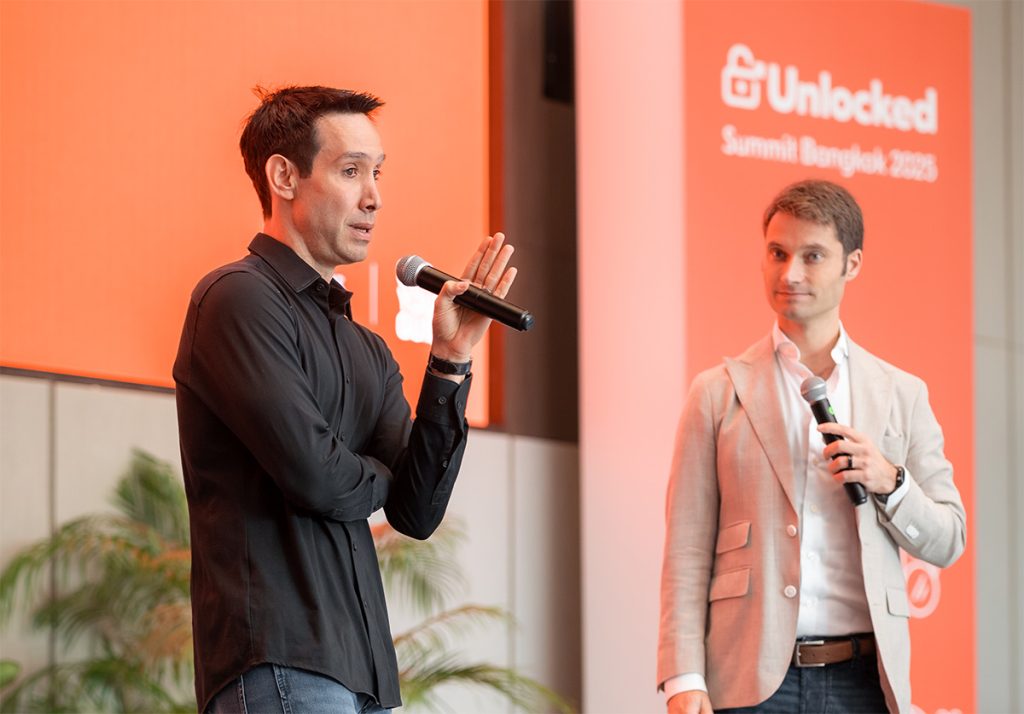
“Great companies are built by velocity of tech and product. Founders come and go, but that ability to move fast – to shift, change, build – that’s what wins,” said Agoda’s Omri Morgenshtern (Left), speaking to Johannes Reck, CEO of GetYourGuide (Right)
Experiences: The hardest product to attach
On experiences, GetYourGuide’s swimlane, Omri was pragmatic. “It’s not one product – it’s twenty or forty funnels you have to optimise,” he said. “Consumers think differently when booking a hotel versus an in-trip activity.”
While platforms like GetYourGuide have gone deep in this segment, OTAs still face challenges attaching experiences to bookings. “Pre-booking is easier. Capturing wallet share in-trip is much harder. The exception is Meituan – they cracked food delivery and travel together, and it exploded. But that’s rare.”
Agoda has succeeded in flights, he said, but experiences will take time. “We’ll get there. It’s a long-term play.” His philosophy: “Start wide, get adoption, gather data, then specialise. Start with mass, work your way up.”
The real shift will come when AI and UX merge
On AI, Omri was both excited and cautious. “AI is already improving efficiency – customer support, supplier tools, operations. But consumer-facing AI? That’s the billion-dollar question.”
He believes no travel app has yet cracked it. “Everyone added a little AI – a chat here, a filter there – but the user experience hasn’t really changed. The real breakthrough will come when AI and UX merge – when users can move from inspiration to booking in one seamless flow.”
That shift, he said, could move 10-15% of users away from traditional search and into conversational planning. “That would be a huge change. But blending AI and UX with booking engines will take four to five years.”
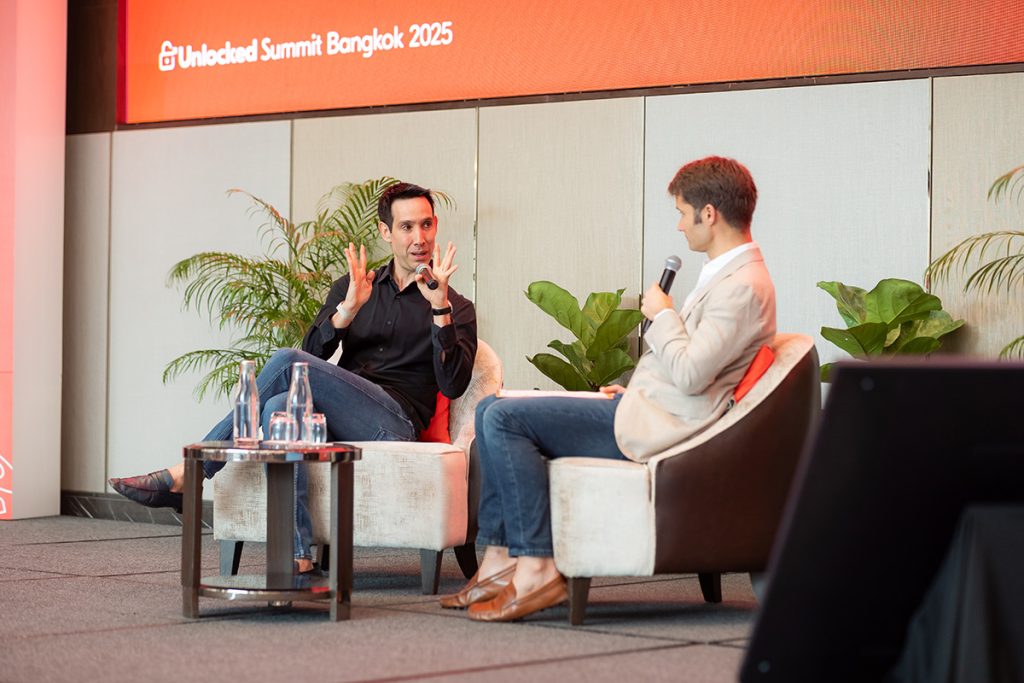
Omri Morgenshtern (Left): “AI is already improving efficiency – customer support, supplier tools, operations. But consumer-facing AI? That’s the billion-dollar question.”
The fintech convergence
When asked what he’d bet on next, Omri didn’t hesitate. “Fintech,” he said. “I truly believe OTAs will become banks.”
He sees natural convergence between travel and finance. “Travel is one of the biggest consumer expenses – people save for it. That’s a fintech opportunity. Loans, rewards, benefits – it all fits. The lines between banks and travel players are already blurring. Done right, these worlds will merge.”
His bold prediction: “In ten years, OTAs will be regulated like banks.”
The long view
As Reck wrapped the session, he asked what advice Omri would give to the “next Omri.”
“Care about solving real problems,” he said. “That’s how you unlock value. Build tech fast, build it well and don’t forget to hold your line.”


