It all started with her involvement in the rebuilding of Banda Aceh after the devastating tsunami of December 26, 2004 which killed 167,000 people and destroyed most of the Indonesian coastal city.

Mun Ching: “There was so much need that was unfulfilled – medical, educational, SME trade. Yet I felt there was so much more we could do,”
Yap Mun Ching, then holding the role of strategic planner at AirAsia, said that the airline had been asked to help out with rebuilding tourism to Banda Aceh by launching flights to the city.
“I joined AirAsia in 2004 doing route planning and schedules – we had only two international routes then – and our mission was to launch new flights. That’s when we realised how much the brand meant to people living in the region, especially in the less developed areas.
“When they asked us to launch routes to Aceh in 2006, we wondered if we could do it successfully. There were 200 NGOs based there then but everything had been destroyed.
“But we thought it was worth a try and started anyway. It became a huge success. Within three to four months of operations, the flights were heavily subscribed and we went to three times a week. It became our most profitable route.”
That experience opened Yap’s eyes to the good that an airline like AirAsia could do to help the less fortunate in Asia.
“There was so much need that was unfulfilled – medical, educational, SME trade. Yet I felt there was so much more we could do,” she said.
With that thought in her head, she took a break from work and decided to go back to school. After finishing her studies, she told AirAsia’s group CEO Tony Fernandes that she wanted to get involved with a social enterprise and that’s “when Tony said, let’s set up a foundation”.
That was five years ago. Today, the AirAsia Foundation funds 14 social enterprise projects in seven countries. These projects receive not only funding, but marketing and branding assistance, and some of their products are sold onboard AirAsia flights.
“We started with funding for social enterprises, then we realised they needed more than funding, they needed mentorship as well,” said Yap. On average, the Foundation puts in about US$30,000 per project.
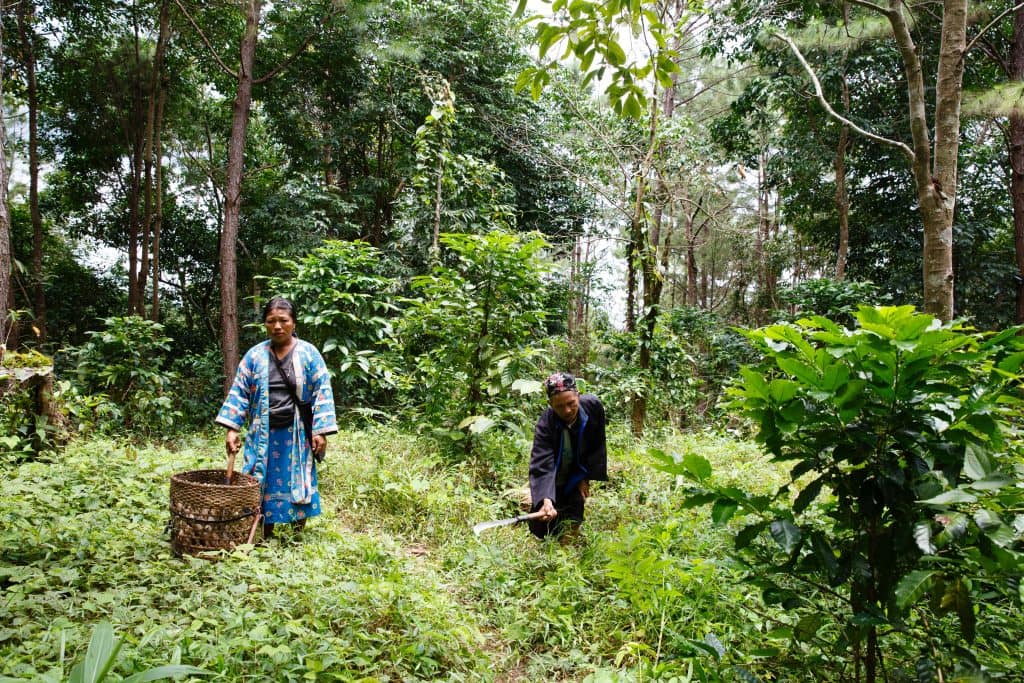
Villagers in the Muser Hill coffee forest
One example is the Muser Hill Coffee Project. Undertaken in partnership with Thai social enterprise incubator ChangeFusion, the project aims to help the Black Lahu farmers grow the more lucrative coffee crop as an alternative to corn and to sell more of their coffee.
“We came in when the project was two years old and we helped them scale up, supplying to AirAsia is their biggest contract ever,” said Yap. “We also help them with distribution at local retail level.”
Other projects it is supporting include one related to renewable energy in Sabah (East Malaysia), a conservation project in Jogjakarta (Indonesia) that offers walking tours, festivals and visits to silversmiths, and The Basikal “Know-One-Teach-One” programme in Malaysia.
“We found in social enterprise, what was missing was the in-between part – getting them to be investor-ready, Series A. What was also missing was market access,” said Yap.
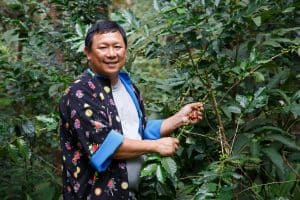
Jakkapong, head of the Muser Hill Coffee Project: “We want to talk about the social cause behind these tours.”
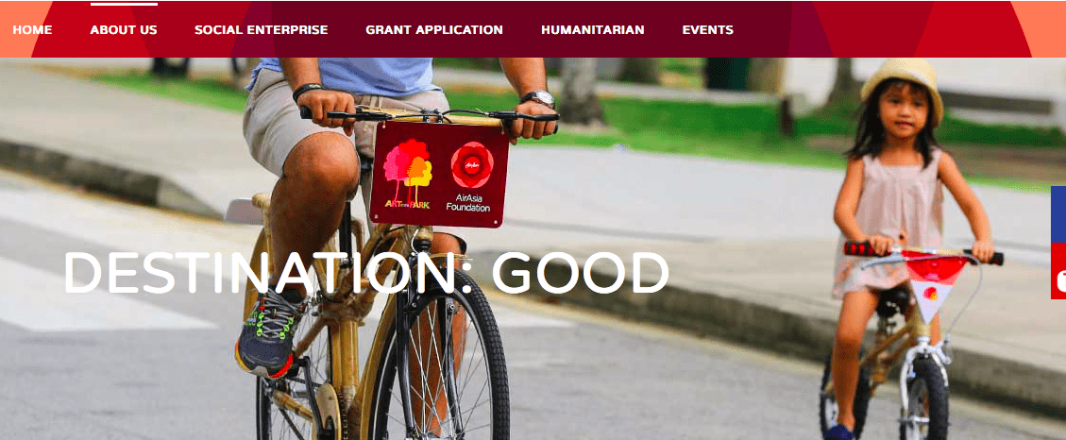
The bigger idea is to create an online marketplace called Destination Good focused on local activities around sustainable tourism – for example, bicycle tours, walking tours, silversmith tours – “and to talk about the social cause behind these tours”.
Her mission is to make the Foundation itself self-sustaining financially. Hence she’s also thinking of opening up a physical channel to sell products. “There is a limitation on inflight sales, how much product we can carry and how much money people have.”
In conjunction with the ASEAN at 50 celebrations this year, it will run Destination Good pop-up shops at KLIA airport featuring the products from its social entreprise programmes. “We don’t want it to be pity buying, we want well-designed products and stories behind the products.
“The ultimate goal is to give exposure to the social enterprises, carefully mine the database that we have and target AirAsia passengers travelling to specific destinations and telling them of the social enterprise activities they can do, and products they can buy.”
Yap said that AirAsia’s surveys showed that the biggest growth in travel was in solo, independent trips, especially among women, and China is the biggest market leading this trend.
“They want unique culture, nature experiences. The challenge is where to find them. Most is by word of mouth. Our objective is to promote sustainable travel to AirAsia guests and by so doing, we also make AirAsia’s business responsible. Business goals should not be separate from social goals.”