
As the year draws to a close, key players are mapping, based on their respective research and data, what 2023 will be like for travel, tourism, and hospitality. As such, travel-tech company, Amadeus, has released its annual trends, highlighting a few prime areas that will see significant changes in the coming year.
Amadeus has identified that, while technology is a major driver of change, and Web3 and biometrics will have a big part to play, human relationships are equally important. While it’s not surprising to see ideas like the metaverse permeate most travel trends for the coming years, Amadeus has highlighted subtler changes in consumer behaviour – such as lighter luggage and enhanced work / life implementation in travel planning – that could drive major shifts in the industry moving forward.
The desire for conscious, authentic travel is something that cannot be ignored.
That’s why all these trends are connected to personal and societal concerns, from the desire to travel with a lighter ecological footprint to the desire for more people to be free to work from anywhere.
Daniel Batchelor, Vice President, Global Corporate Marketing, Communications & Social Responsibility, Amadeus, said it best:
“The world used to predict technology’s impact on travel in an entirely physical way, visualising ever bigger and faster modes of transport. The future is now here, and it looks very different. People want to reduce their impact on the planet, while putting human relationships and wider society first. In this exciting new reality technology is enabling us to reach these goals. The metaverse, biometrics and traveler expectations from the travel industry are combining to shift the landscape rapidly. It is an incredibly exciting time for the industry.”
Let’s explore the metaverse and what it actually means for travel
For the longest time, people believed the rise of virtual platforms like the metaverse would put physical travel on the backburner. Now we know that couldn’t be further from the truth.
The job of the metaverse, according to Amadeus, is to take traveller engagement to the next level.
Yes, travellers will get to enjoy cultural experiences and attend bop their heads at virtual concerts, or appreciate virtual exhibitions, but the technology also offers enormous potential for pre-trip assistance.

Visiting historical landmarks via VR experience. Classic architecture isn’t based on any real location, but custom made up environment.
In other words, “try before you buy”. The metaverse offers the next level of immersive marketing.
Not sure if that luxury cruise holiday is worth a year’s savings? Try it online first.
Some examples include:
- Walt Disney Co. has plans to create a real-world theme park ride which incorporates a parallel 3D virtual world experience.
- Seoul is blazing a trail with its plans to go “meta” by 2023, with a platform titled “Metaverse Seoul”.
- Qatar Airways recently announced Qverse with a MetaHuman cabin crew, providing an immersive experience to tour, navigate and check-in at Hamad International Airport.
Business travel is the new “my office has a PlayStation”
As mentioned, many companies have introduced work from anywhere policies – and it seems to be a positive move overall. But, the concept isn’t without its challenges. Team bonding and collaboration, for instance, is tricky when teammates are sometimes hundreds (maybe thousands) of miles away from each other.
As a result, we are witnessing an uptick in “internal travel” plans, where teams are brought together for the express purpose of strengthening relationships.
American Express Global Business Travel even published a paper titled ‘Why Business Travel is At the Center of the New Company Culture‘. According to Amadeus, with employee experience being more important now than ever, team travel programs will increase exponentially as they are a good way to motivate teams, improve employee satisfaction, strengthen company loyalty, and unlock creativity.
Gone are the days when “business travel” meant something big, corporate, and serious. Now, it’s a means to get people in a company together, so that they can cultivate a way of working even if they’re not always in the same physical space.
Travelling light isn’t just fashionable, it’s ethical in 2023
The rise of conscious tourism is a truly remarkable thing. One way to reduce carbon footprint is to travel light by slimming down checked-in luggage. What’s interesting is that, not too long ago, multiple trolley-loads of massive suitcases were considered a status symbol for many travellers.
Well, not anymore. If anything, there’s no need to travel with so much, when so much is already available at your destination. Plus, travellers are increasingly willing to buy necessities during their travels. Buying from local suppliers is also a way to engage with and support the community.
As Amadeus points out, global brands such as Hilton are offering exercise gear and equipment, helping travelers get closer to a “suitcase free stay”. They expect this trend to grow and evolve.
Enhanced biometrics will smoothen airline payment systems
The airline ecosystem, while effective, is fragmented. While airports already use biometrics for travel document identification, the same tech isn’t used when making payments.
Hence, passengers are left using multiple devices – e-wallets, credit cards, debit cards – to facilitate things like adding an in-flight meal and seat upgrades. If a traveler is using biometrics to check-in, drop off luggage, and board the plane, then these identity checks could double-up to cover payments they could make while traveling.
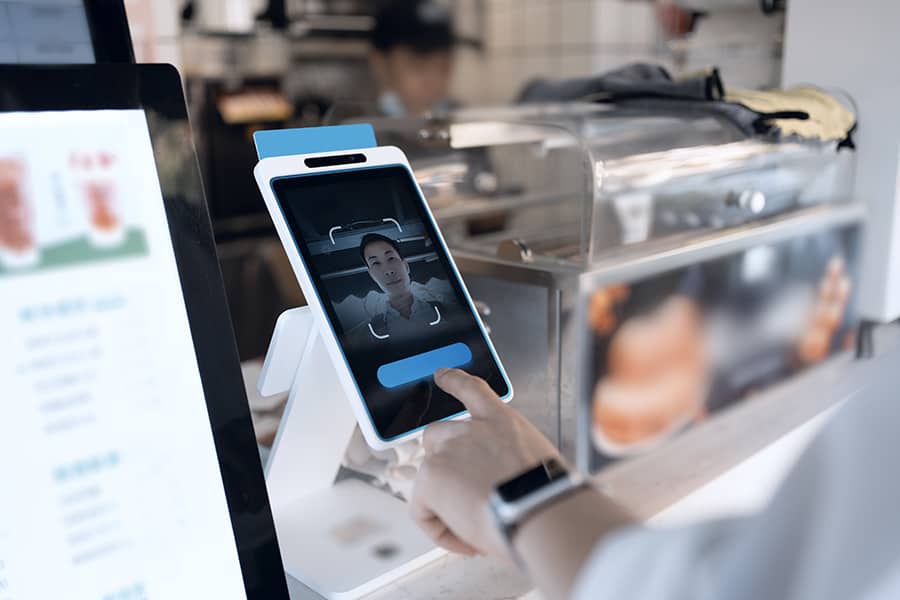
Amadeus sees airports and travel operators offering a completely contactless and convenient payment experience for passengers with the use of biometrics, at all points of the journey.
This will create a more secure, seamless travel experience for the endemic traveller, since most of their documentation will be stored and kept safe with biometrics on their phones.
Remote working will become even more flexible in 2023
While many companies have reverted to the 9-5, five-day-work-week since the start of the year, others have further enhanced their “work from anywhere” flexibility.
Let’s face it – digital nomads aren’t as rare as they used to be. Amadeus emphasises that remote workers will settle into an increasingly nomadic lifestyle, migrating to different locations. This flexibility will allow them to spend time with friends and family in their domestic market or spend extended periods of time working abroad.
From a governmental perspective, we will see the continued rise of countries encouraging digital nomads through visa schemes and incentives.
Due to a surge in “overnight” digital nomads, platforms such as Nomadlist are connecting a global community of remote workers living and traveling around the world, helping them find competitively priced locations to work from. The platform lists Bangkok and Lisbon in its top five cities for digital working.
Amadeus has seen a search increase of 165% from Sydney to Bangkok during the month of September 2022 as compared to 2019. There was also an increase of 74% in searches for flights from Sao Paulo to Lisbon during the same respective months.
Images courtesy of Amadeus