“We don’t want anything special, just to travel like anyone else” is a quote from Amadeus’ new research report on accessible travel that looks at just that – better understand the needs of people with accessibility issues and to identify a framework for action for the travel industry.
According to the study, these needs are not being fully catered for by the travel industry or the public sector, so accessible travel is far from becoming something that millions of travellers can take for granted.
An estimated 1 billion people globally or 15% of worldwide population lives with some form of disability. The number is expected to reach 1.2 billion by 2020 due to various factors that include population ageing and poor working conditions. The World Health Organisation estimates that by 2050, 21.5% of the global population will be aged over 65.
Although people with accessibility issues represent a large and fast growing minority group worldwide, the travel industry is not fully capitalising on the business opportunity this presents, or fully catering to their special needs.

People with accessibility issues wish to see their needs addressed (Image credit: chameleonseye/iStock)
The report, Voyage of discovery: Working towards inclusive and accessible travel for all, outlines the biggest barriers facing this travel segment and recommends collaboration between the private and public sectors to meet the expectations of travellers with accessibility needs.
One of the biggest barriers is inaccurate or incomplete information being available, coupled with a lack of skilled customer service. The study, which was conducted by consulting firm ILUNION, says travellers with accessibility needs increasingly expect these to be met as part of the mainstream service and at no extra cost.
These are some of the greatest barriers facing the travellers:
• General attitude: The biggest barriers are lack of staff training and awareness about accessibility needs, lack of lack of confidence for travelling, limited budget and the current cost of accessibility services.
• Searching for information: Lack/limited availability of information about accessible services, accessibility problems in the websites and/or its contents, lack of accessible features in marketing /advertising, information too technical and hard to find and lack of information about accessibility in mainstream channels.
• Airlines and airports: Travelling by plane is the preferred transportation method among 36% of respondents, and 26% overall travel spend goes on flights. Yet travellers say they face many accessibility challenges at airport. Among the biggest issues with airlines is the difficulty of checking-in online and choosing seats, problems encountered travelling as a group and customer service often only available by phone.
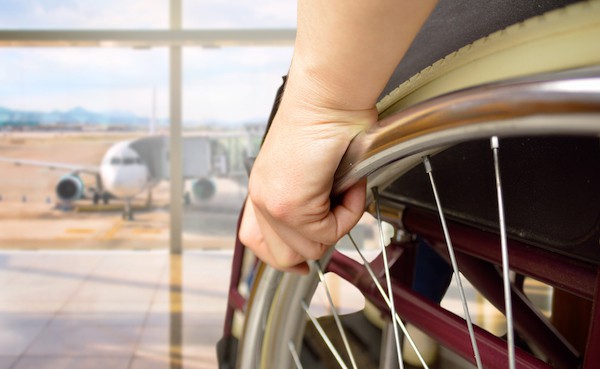
Travellers face many accessibility challenges at airports (Image credit: Manuel-F-O/iStock)
Within airports, digital information screens pose significant physical barriers, along with staff attitudes and varying levels of customer service standards. Other issues included trouble finding assistance meeting points and non-accessible check-in machines.
• Stations and trains: Trains are the second most popular method of travel after planes, yet they come short of meeting the traveller needs as the least satisfactory areas with regards to accessibility.
Barriers at railway stations include poor signage, issues with digital panels and screens in and on trains, communication problems between station of origin and destination and the need for consistency across the system, for example “wheelchair-accessible” means different things at different stations. Other problems include vending machines (with their emphasis on visual display), physical barriers to accessibility and issues with public address systems.
• Accommodation: Key accommodation issues include facilities such as toilets for people with mobility issues, mismatch between the accessibility claimed by providers and reality, accessible parking spaces, lift provision and public announcement systems.
How technology is helping to overcome challenges
The report notes that the role of technology in accessible travel is becoming more important, and the travel industry is moving forward in this area by developing mobile apps with accessible-travel search engines, boarding passes in accessible formats and collating user-generated content on accessibility (through reviews and complaints).
With the growing popularity of artificial intelligence a few companies have started incorporating AI for voice-operated travel booking.
Some hotel chains are using mobile apps to allow guests access to their rooms and other facilities, and others are using virtual reality technology to demonstrate accommodation and services.
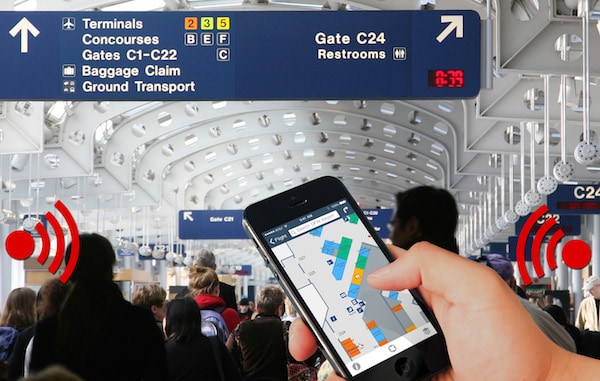
iBeacons will help travellers with disability to navigate airports (Image credit: SITA)
The increasing use of iBeacons that allows Bluetooth devices to broadcast or receive data over short distances, wearables that enables someone with visual impairment to navigate inside unaided or a deaf person to sign at a computer interface, and driverless cars will all spell an exciting future for accessible travel.
“Improving accessibility in travel means enhancing usability for all customers. Lifting barriers to travel, personalising the travel offer, using technology to further facilitate travellers’ experiences and creating more accessible infrastructure where people can navigate autonomously will benefit everybody,” said Alex Luzárraga, vice president, corporate strategy at Amadeus.
• Here’s the full report: Amadeus Voyage of Discovery report
• Featured image credit: moisseyev/iStock