The ‘FBI versus Apple Inc.’ case – wherein US Federal authorities have demanded that Apple create a ‘backdoor’ to unlock a phone tied to the San Bernardino shooting last December – is like something out of a freshman Intro to Philosophy textbook.
It poses as probably the most apt moral dilemma of our time. It combines issues such as the role of the state, the invasive nature of an increasingly digitally connected world, and of course, the protection of privacy over national security and fighting crime.
In the pro-FBI camp, many have argued that Apple needs to stop ‘messing about’ by acknowledging that they are not above Federal law and must therefore abide by their demands. Clutching at straws, the FBI cited the 1789 All Writs Act that states the company must yield to the authorities… and despite having a valid search warrant, they still need Apple’s help to use it.
On the other side, from ‘the Cloud’, Apple’s CEO Tim Cook wrote a cutting letter detailing exactly where he saw the bold line between the role of the state and the corporation’s duty to protect its customers. He argued that in granting the authorities access to such a level of personal information would not only violate privacy but worse still, may become a normalised investigative practice, giving the state vastly more power over its subjects. Whilst the FBI have argued that the ‘one-time’ request is for an exceptional case, further news that they have sought access to at least twelve other devices is disconcerting.
Sceptics could go as far to suggest that this is perhaps Apple’s greatest public relations stunt thus far, drawing attention to its undeniably prominent role in society. After reporting their lowest level of sales growth ever, would this not be an ideal opportunity to bask in the warmth of the spotlight once more? It has at least created (even if only an illusion) the feeling that maybe, just maybe, our data is actually given more of a protected status than we realised. With nude photos being leaked virtually every other minute, and Edward Snowden warning us of the surveillance of and exploitation of personal data, Apple’s bold move to resist FBI demands can be made to be seen as quite respectable.
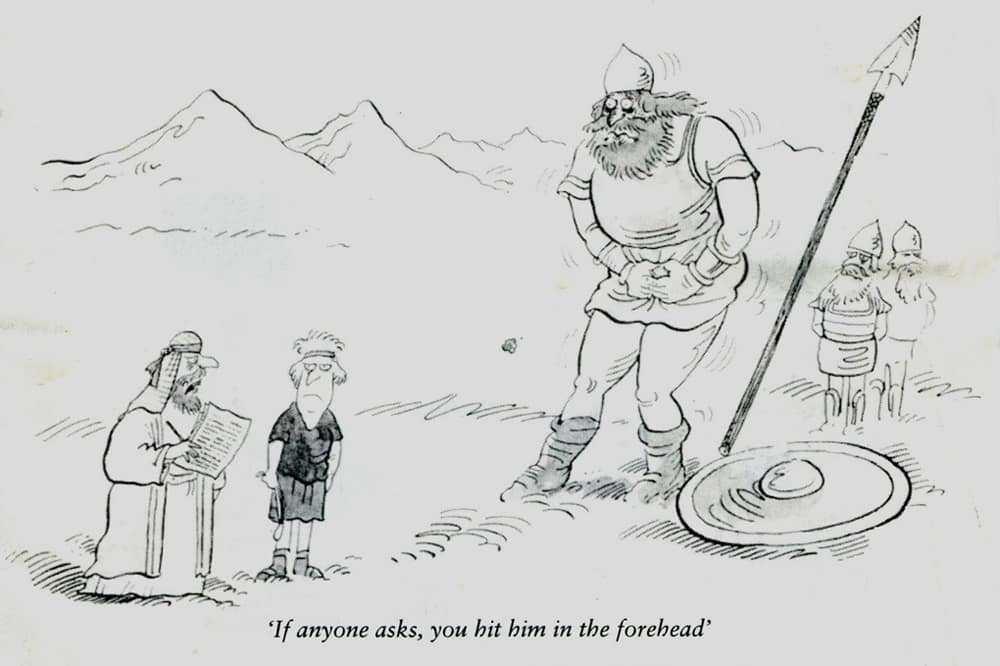
Fundamentally, we have a crisis between pursuing our moral philosophical ideals and bypassing these ideals for a pragmatic solution. It is an ideological war against actions that violates these ideas for a practical purpose. I cannot help but envision the FBI as the 21st century manifestation of the Goliath, sizing itself up against a wittier and a buffer-than-expected David (or Tim, in this case).
Every aspect of our daily lives is embedded deeper and deeper into the digital sphere. It goes far beyond syncing our e-mail to our phones or backing up our photos onto the iCloud, Google Drive or Dropbox. Our location data and search history are strategically used to pinpoint our social demographic and to constantly bombard us with reminders about that hideous shirt we briefly considered buying online. Every stupid question and moment of idle curiosity that ever entered our brains is no doubt reflected in our browser history. Even our FitBit data gets published online so that a community of other fitness-tracking fanatics can feel quietly smug as they ‘step’ over you.
Is it naïve to say that this is where we draw the line? Or should we simply resign ourselves to our seemingly inevitable fate? It is a conflicting feeling to say that from a moral standpoint, we must defend the privacy of a person responsible for the harm of so many people, for the sake of greater society. Yet, there is a double standard in that we resist privacy violations for major issues like ‘national security’, but we tacitly consent to the same information being used for more benign purposes like targeted digital advertising or even automatic alerts about upcoming flights. In that sense, Apple’s current positioning as a defender of modern society begins to look and sound a lot more like a small man behind a curtain than the Wizard of Oz we so hoped it could be.
On the other end of the spectrum, in ways it is easier to reflexively agree that we need access in specific circumstances to the phone’s data so that we might be able to prevent incidents like San Bernardino in future. However, as history so often tells us (most recently through legislation like the Patriot Act back in 2001 following September 11th, and extended by Obama in 2011), making quick decisions when tensions are high may not be the best plan or the best protector of our interests.
It is rare that philosophical debates are ever put to rest with a universally agreed upon outcome. Effectively, they are a systematic practice of digging an intellectual hole and then seeing if we can work our way out again. Perhaps in the case of Apple Inc. versus the FBI, the most urgent question we need to ask ourselves is: Are we truly more afraid of a theoretical threat from the state than an arguably more immediate, physical one?