
Tech is driving car rental evolution
A report from OAG has taken a deep look at the car rental industry which, the airline data analyst says is “undergoing its biggest transformation yet, fuelled by aviation data, advanced technology and shifting consumer preferences”.
Collaborations, greener solutions, and the rise of alternative mobility options will further impact the future of airport car rental services, OAG said.
Hertz pioneered the first airport car rental franchise at Chicago’s Midway Airport in 1932, “since then airport car rentals have become a cornerstone of the travel ecosystem”, the report notes.
It adds, “Technology continues to push airport car rental companies to innovate and collaborate to meet customer needs. Through ridesharing, partnerships, a drive for eco-friendly practices, the next evolution of the industry is taking shape.”
Among the innovations highlighted by OAG:
RIDE SHARING: Airport car rental companies are exploring new rental models, such as their own car sharing models, to remain competitive. Or, instead of going off on their own, many car rental companies are forming partnerships with ride-hailing and car-sharing services to broaden their service offerings.
PARTNERSHIPS and COMPETITION: Transportation companies are partnering up to enhance their services and cater to consumer preferences with the goal of cross-brand loyalty. For example, BMW partnered with Uber to offer Uber users the opportunity to experience new BMW models through on-demand test drives and/or ride experiences.
SUSTAINABILITY: Car rental companies are expanding their fleets to include more electric and hybrid vehicles and exploring alternative fuel options like hydrogen. As one example, Hertz is offering the largest electric vehicle (EV) rental fleets in North America with EVs comprising more than 20% of its global fleet. Customers can choose a greener way to travel with models from Polestar and Telsa.
A Wizz way to shop
Passengers flying Wizz Air have a new shopping experience before they check-in. A book from WH Smith? Underwear from Marks and Spencer? Boots from Timberland? No problem.
The Hungarian carrier – Europe’s fastest-growing airline – has launched WIZZ SHOP&FLY e-commerce store, powered by InterLnkd, the travel industry’s shopping mall partner.
Using InterLnkd’s intelligent matching engine technology, WIZZ SHOP&FLY identifies the most relevant fashion, beauty, and essential products for the customer’s upcoming holiday and showcases them via an integrated online shopping mall, as well as through bespoke emails.
Customers have access to an extensive array of products from more than 20,000 high street, luxury and premium brands including Marks & Spencer, WHSmith, Selfridges, Harvey Nichols, Sephora, Timberland, Asos, Converse, Decathlon, and LookFantastic.
Using InterLnkd’s white-label, dynamic AI solution, Wizz Air’s dedicated e-commerce store generates cost-free incremental revenue stream from its customers’ purchases.
InterLnkd recently closed a UK £1 million seed funding round and strategic partnerships with major travel brands including Thomas Cook, and LeShuttle (Eurotunnel).
Mysteries of the Antarctic revealed
Hurtigruten Exploration (HX) has employed underwater drones to uncover secrets of the Antarctic Ocean floor.
Working with ichthyologist Dr Manuel Novillo aboard HX’s hybrid-battery vessel, MS Roald Amundsen, the expedition offered a rare glimpse beyond snow, icebergs, whales and penguins.
The 16 drones, some descending to a depth of 115 metres, captured footage of rarely seen Antarctic landscapes and unearthed the “otherworldly wildlife” thriving beneath the waves.
The drones captured footage of a seabed covered with porcelain-like brittle stars in Deception Island, reminiscent of extra-terrestrial beings, and a peculiar feathery-looking crinoids, relatives of starfish, in Horseshoe Island, creatures much more abundant in the Jurassic Period and now more commonly found as fossils in limestone outcrops on land.
Hurtigruten said the successful launch of the inaugural “Exploring the Unseen” science boat marked a significant milestone, “allowing guests to actively participate in the drone deployment process and fostering a deeper appreciation for the fragile marine ecosystem of the Southern Ocean”.
Time to talk the walk
There’s a new wellness tourist out there who wants more than spa, a soft massage and a health drink.
Travel intelligence provider Mabrian has analysed 6.7 million TripAdvisor reviews on in-destination activities from 2019 to 2023, to identify key demand drivers for active well-being: physical recreation (sports), soft hiking (excursions and walks), and water sports as well as traditional wellness and relax activities (spa, hot springs), and gastro experiences.
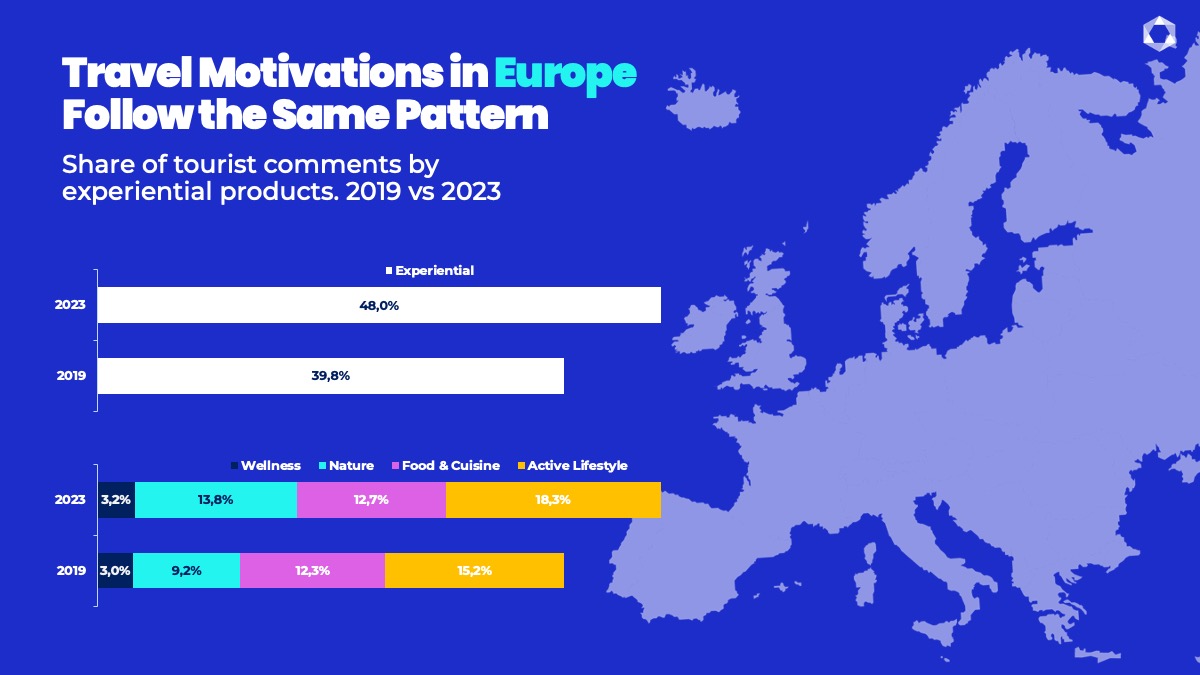
Mabrian’s insight shows that travellers are changing their relationship with destinations, as they expect to actively engage in activities that combine discovery and recreation, contributing to their pursuit of a balanced and healthier lifestyle.
Further, the analysis reflects, the wellness demand drivers showing the strongest increasing trend are soft hiking (+5.1%), physical recreation (+4,7%), and gastro experiences (3.5%).
Mabrian said this demand offers an opportunity to destinations to build easy-to-implement tourism products and ancillaries that resonate with the “proactive traveller of our time”, as well as to develop experiences and activities that combine outdoors and natural resources with global experiential hot trends, such as hiking and camping tours, biking, kayaking and canoeing, running tours and cooking classes.
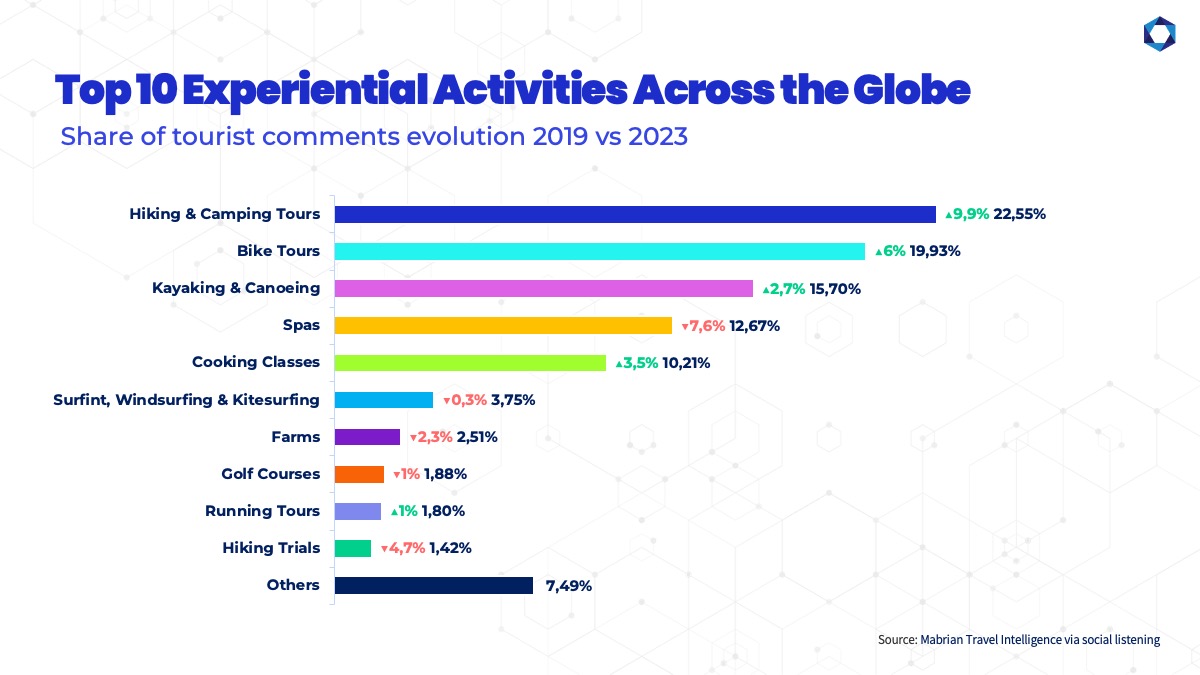
Carlos Cendra, partner and CMO at Mabrian, said, “The traditional, passive tourist is evolving into a proactive traveller, from contemplative visitor to an experiential participant in the dynamic of the destinations.
“That is why we need to redefine the wellness traveller concept, expanding it to an active well-being traveller and, under this new light, outdoor activities and the contact with nature should be at the core of our travel value proposition.”
Cendra added, “It is not about building complex products, but using the resources we have it could be as simple as walking, no equipment and no skills needed.”