
Biggest obstacle is lack of “shared data standards and open infrastructure”, says KabuK’s Sunada
In the bustling intersection of tradition and technology that defines modern Japan, a quiet but profound transformation is underway in the travel space – driven not by hype, but by the pragmatic and purposeful use of artificial intelligence. At WiT Japan & North Asia 2025, we caught a glimpse of how Japanese OTAs are leveraging AI not just as a tool, but as a strategic partner for growth.
The startup challenger: Reiwa Travel
At the forefront of this shift is Reiwa Travel, a rising star in Japan’s online travel space. Founded by Takaya Shinozuka, the company has attracted significant attention and investment from AI powerhouse PKSHA Technology, known for its deep roots in machine learning and natural language processing.
The partnership is more than financial. It’s a strategic bet on how AI can transform the way travel is searched, booked, and experienced. Reiwa’s vision is to use PKSHA’s AI capabilities to build a travel platform that anticipates user intent – one that goes beyond keyword search and reacts to nuances in consumer behaviour.
“We are building an engine that understands what Japanese travellers are truly looking for, not just what they type,” said Shinozuka. “It’s about semantic understanding, connecting context with emotion.”
PKSHA’s Takashi Maeda echoed this sentiment. “Our investment isn’t just capital; it’s code, algorithms, and a shared belief that AI must augment decision-making, not replace it.”
The incumbents push forward
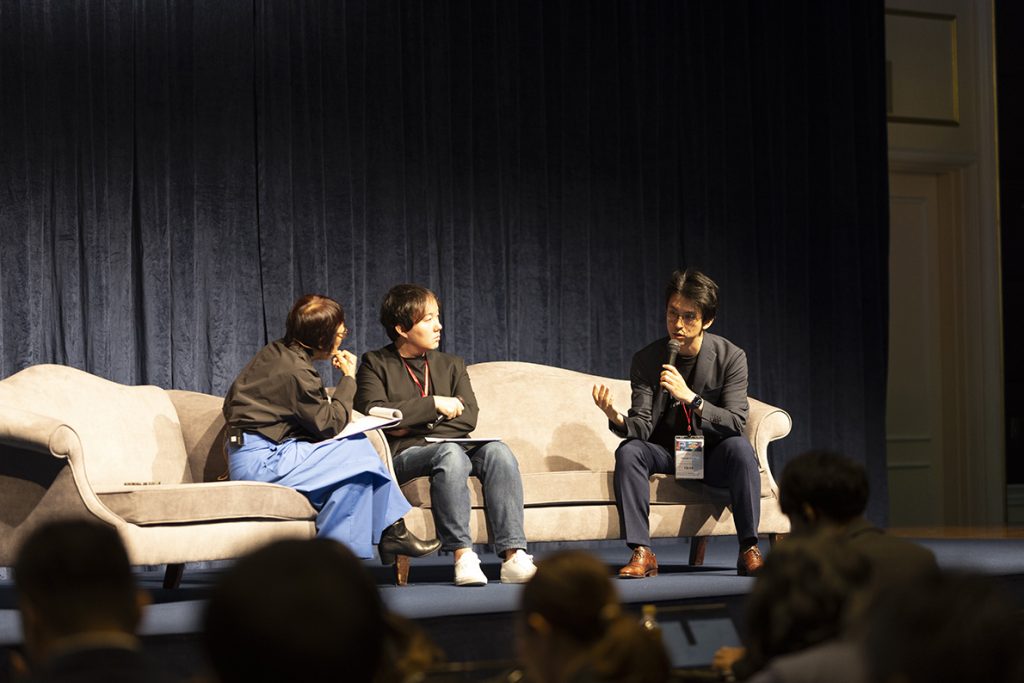
This year, four companies took the stage to share their progress: Rakuten, Recruit, JTB, and newcomer KabuK Style, operator of the travel subscription service HafH. Together, they offered a cross-section of how Japan’s travel industry is embracing AI across different functions, from internal automation to customer experience.
Recruit, operator of the OTA Jalan, introduced AI chat capabilities that assist customers in planning trips. According to Masaya Oono, Vice President, Travel Information Division, SaaS Business Management, at Recruit, “The absolute number is limited, but it has been confirmed that the conversion rate of users using AI chat services is high compared to other users.”
It’s early days but signals strong potential for AI-assisted planning.

From left: Kei Shibata (Moderator), Co-founder & CEO, Venture Republic – TRAVEL.jp & Trip101 | Naohisa Minagawa, Head of Strategy and Business Development, Travel & Mobility Business Rakuten Group, Inc. | Makoto Iwata, Head of Web Sales Business Division JTB Corp. | Masaya Oono, Vice President, Travel Information Division, SaaS Business Management Business Management Division, Recruit Co., Ltd | Kenji (KJ) Sunada, Founder & CEO KabuK Style
JTB, Japan’s travel titan, is applying AI more internally – automating pricing, accelerating marketing workflows, and reducing manual decision-making. While not yet as visible to consumers, these applications lay the groundwork for scalability and speed.
Rakuten Travel is taking a broader approach, piloting an AI concierge using proprietary technology.
According to Naohisa Minagawa, Head of Strategy and Business Development, Travel & Mobility Business, Rakuten Group, Inc, “This is a world that is completely consistent and personalized. The interface will also be completely different from the smartphone.” For him, AI is not just a feature; it’s a path to reimagining the user interface entirely.
KabuK Style: AI at the core
For Kenji Sunada, CEO of KabuK Style, AI is not an add-on – it’s foundational. Since its launch, HafH has used AI for “behavioural prediction” “price prediction” and “cancellation prediction.” Over the past year, the startup has achieved roughly 80% accuracy in mapping – a critical capability for reconciling inconsistent room data across thousands of listings.
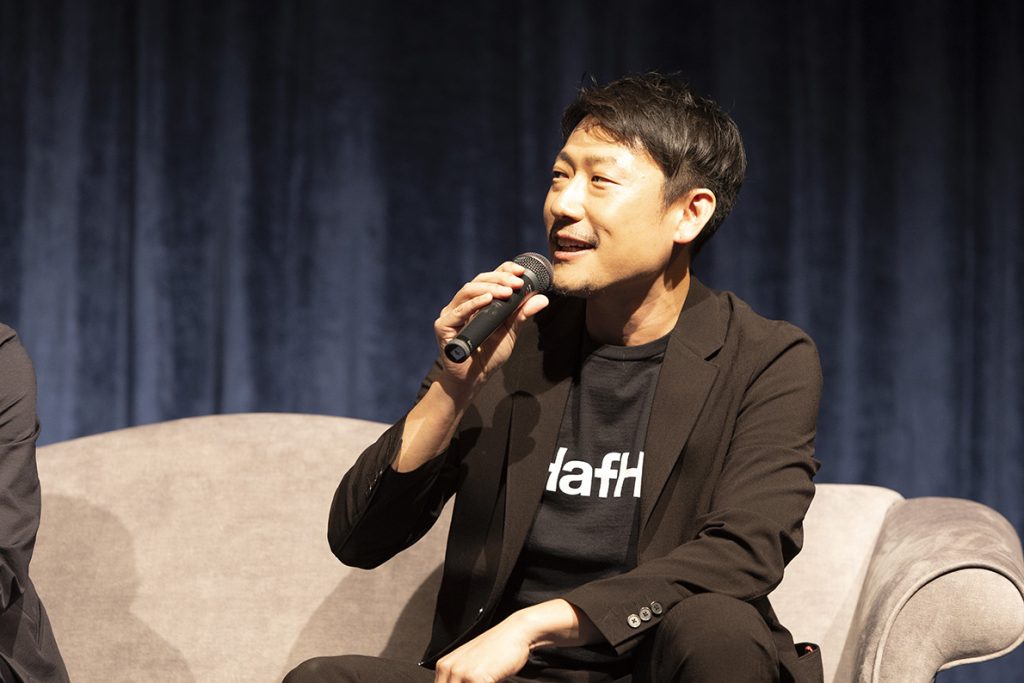
Biggest obstacle is lack of “shared data standards and open infrastructure”, says KabuK’s Kenji Sunada
Sunada noted that Japan’s fragmented accommodation descriptions – such as the nuanced differences between “mountain view double” and “ocean view double” rooms – create unique barriers to automation. “This level of variability is globally special and a real obstacle to digital transformation in the tourism sector,” he said.
A future both predictable and serendipitous
When asked about the travel experience 10 years from now, the panel split into two schools of thought. Rakuten’s Minagawa sees a hyper-personalized, AI-optimized future. Makoto Iwata, Head of Web Sales Business Division, JTB Corp, agrees with the general trend, but cautions against losing the magic of the unexpected. “I think there is a demand for accidental emotional experiences that can be encountered only because you plan and arrange by yourself without using AI,” he said.
Recruit’s Oono is betting on deeper integration. “The value of our OTAs will also increase,” he said. “By entering deeper relationships such as business management and business support, we can increase the value of existence.” He envisions OTAs evolving from booking engines to business enablers.
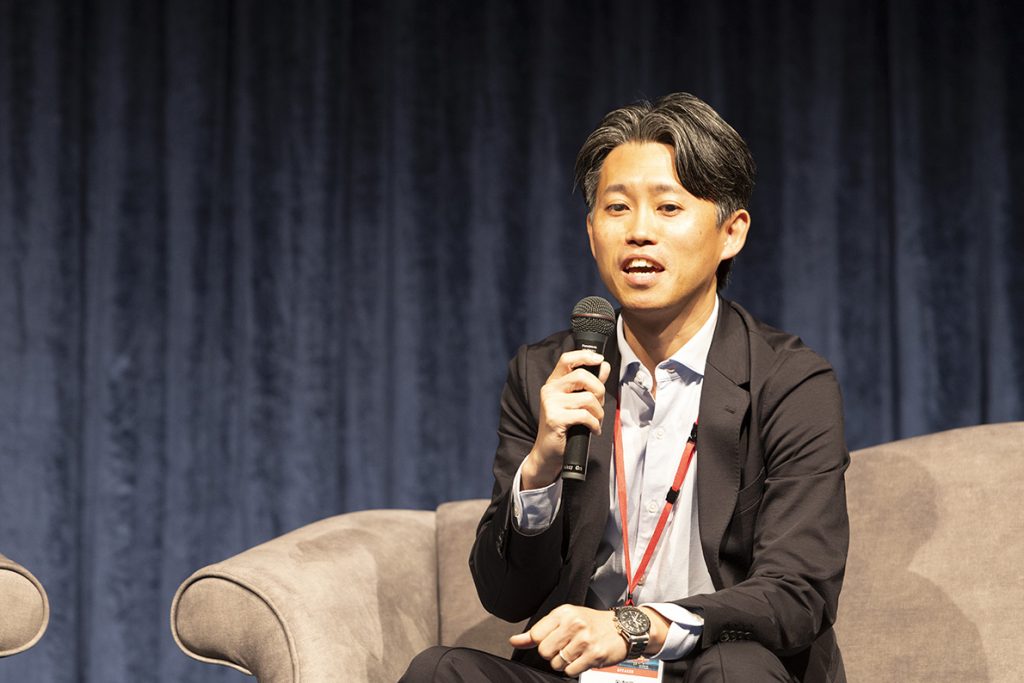
Masaya Oono, Vice President, Travel Information Division, SaaS Business Management, at Recruit, said “The absolute number is limited, but it has been confirmed that the conversion rate of users using AI chat services is high compared to other users.”
Sunada, however, sees structural limitations. “Even with technical capability, it’s difficult to expect major change without an open data environment,” he argued. Citing Spotify’s disruption of the music industry, he said, “Labels still make money but in travel, access to inventory is tightly held. Even with AI, we can’t shift the model unless there’s transparency.”
Open data: The missing piece?
Sunada’s comments may have been the most provocative of the session. He warned that without shared data standards and open infrastructure; the Japanese travel industry may continue to evolve at a fraction of its potential. AI can drive prediction and personalization – but only if it can access the data required to learn.
It was a sobering reminder that strategy, no matter how smart, still needs structure and in Japan’s case, perhaps a new operating system for travel itself.
AI is no longer just a buzzword for Japanese OTAs – it’s becoming embedded in search, service, and strategy. But as Japan’s largest and newest players illustrated on stage, the speed of progress will depend not just on technical ability, but on the willingness of the industry to open up, share, and evolve together.