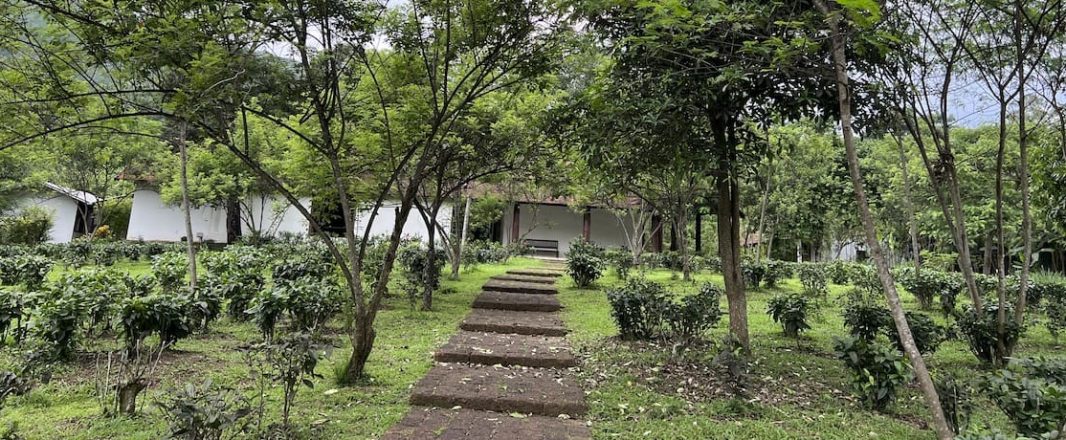
When inbound travel stopped, specialty tea making and community experiences flourished
“It’s the hardest thing I’ve ever done in my career,” said Chananya Phataraprasit as she introduced me to the 17 (soon to be 18) types of speciality teas her Araksa Tea Garden in Chiang Mai is currently producing.
For someone who’s pretty much pioneered some amazing products through the three decades she’s been involved in tourism, that’s saying something. Chananya is the builder of the Asian Oasis collection, which includes Lisu Lodge, one of the first hilltribe community lodges catering to foreign travellers 25 years ago – hence her being known as the “hill tribe lady”; Mekhala, a rice barge cruise on the Chao Phara River to Ayuthaya; Suwan Macha and Jun Bahtra sail boats in Phuket and Lanjia Lodge, set within the Golden Triangle.
And it happened by accident. Her family bought a 111-acre piece of land close to Lisu Lodge, a plot she had seen over the years while spending time in the area. “It was full of trees and plants, and it looked like a good plot with which we could do something or simply leave alone,” she said.
While doing due diligence on the purchase, she discovered it had been a tea estate in a previous life. “We found these old tea trees that we didn’t even know were there.”
From there, an idea took root – to create a Thai-inspired brand of specialty teas for the world under the Araksa name (Araksa means preserve in Thai). “Thailand’s never been known for its teas, unlike China and India. Yet we have the means to do it – the herbs, flowers, spices.”
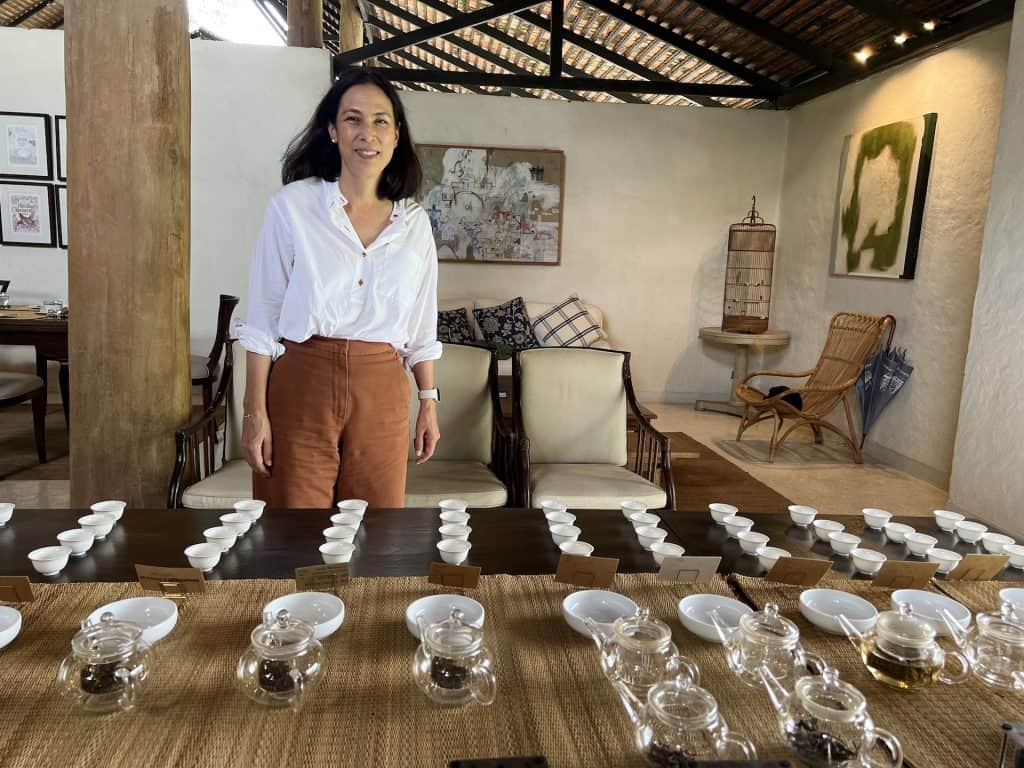
Chananya Phataraprasit: Creating a Thai-inspired brand of specialty teas for the world while creating tea-inspired experiences for travellers.
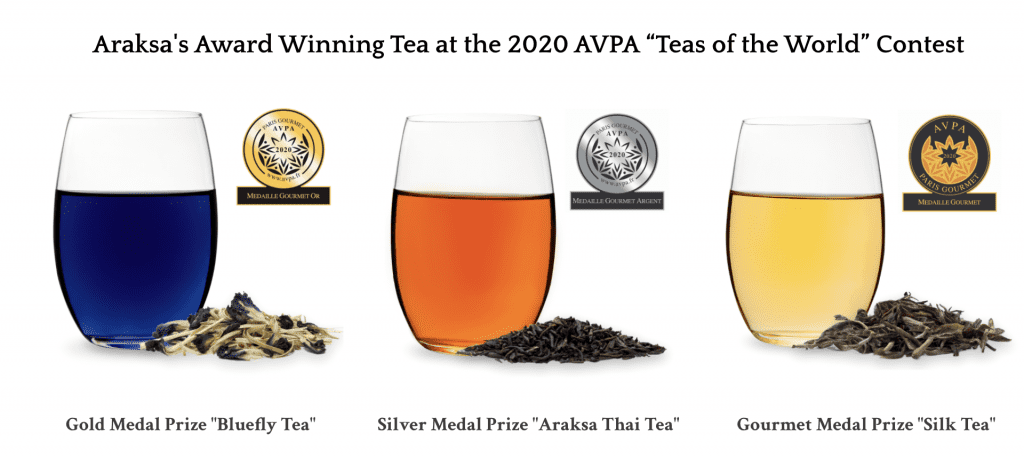
Today, she talks tea with the ease and expertise of someone who’s been doing it for years and she clearly loves it. Silk, its signature tea, captures the aroma, essence and spirit of the tea garden, she says. It’s won a Gourmet Medal, along with its Arun White Tea and Sayun White Tea. Its Thai tea won a Silver Medal while one of my favourites, Blue Fly ((lemongrass and butterfly pea), has been bestowed the Gold Medal. Another favourite of mine is Joy, which is a blend of magnolia champaca.
And because she began with sustainability in mind, her teas are USDA and EU organic certified by CERES-GMbH and she’s now got a full list of orders for her award-winning teas from specialty tea shops from around the world, including France, US, Singapore, and hotels in Thailand, looking for sustainable offerings to add to their food & beverage options.
When I first visited five years ago, Chananya’s transformation from “hill tribe lady” to “tea lady” was just beginning. She had hired Raju, a master tea maker from Darjeeling, to guide her in the business of tea making, and he remains by her side today.
She took a one-year course on tea making and plunged deep into the tea industry. “It was hard because I had to learn a new set of skills. I had to learn to use my nose, developed my senses for different blends. Thank goodness I studied biology in school – that came in handy,” she said.
While she built up her factory, she used her tourism knowledge to create an experience around tea for travellers – tea plucking, learning how tea is made, tea tasting, topped off with tea, cakes and lunch at the Araksa Tea House. Designed by Jan Glasmeier of Simple Architecture, the tea house has been found by local Thais during the pandemic – its clean, simple lines and artfully-arranged pieces of art make it ideal for Instagram posts.
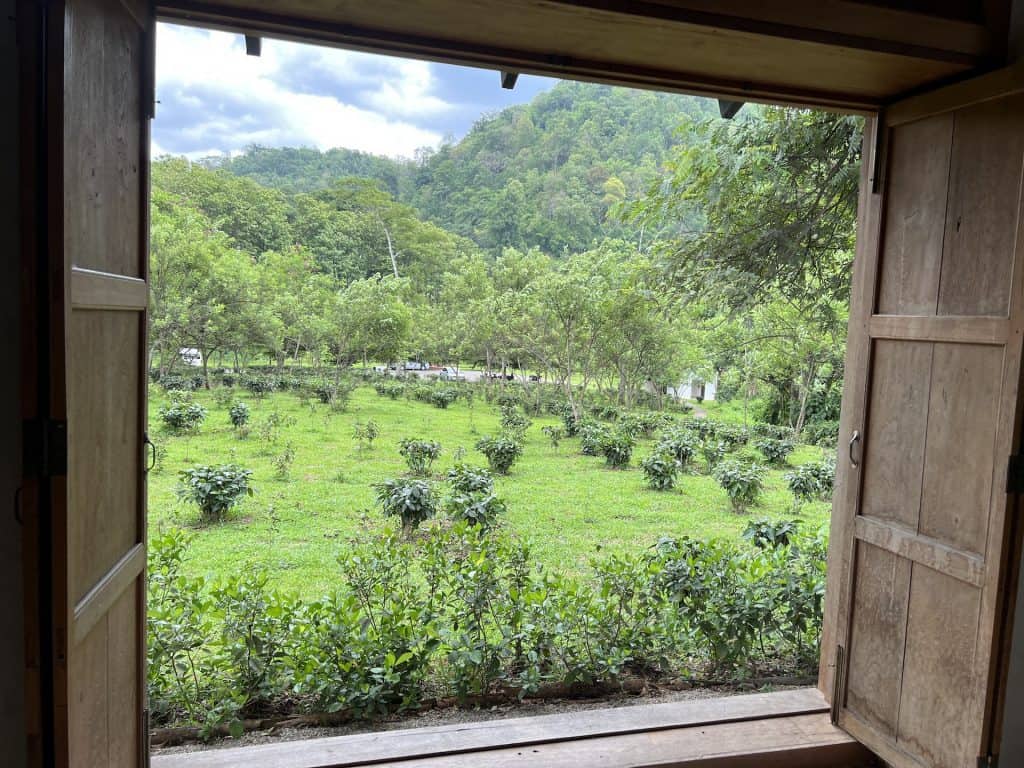
That picture window view at Araksa Tea Garden has become one of the most “Instagrammable” moments on Thai social media, enabling local Thais to discover the tea garden the past two years, when inbound travel stopped.
She has a team focused on social media to promote Araksa. “Mostly it’s word of mouth through social media,” she said. “Influencers have really helped spread the word.” True enough, while I was there, it was full of young Thai girls and families, all enjoying the teas and cakes and taking endless photos.
As with her other tourism products, she works with the local community to create a close-to-nature-and-community experience. Her menus at the café are designed by chef Yawadee Chookong, who’s behind Maadae Slow Fish Kitchen in Chiang Mai, known for her slow and sustainable style of local cuisine. (I have to say it was one of the best meals I’ve ever had anywhere.)
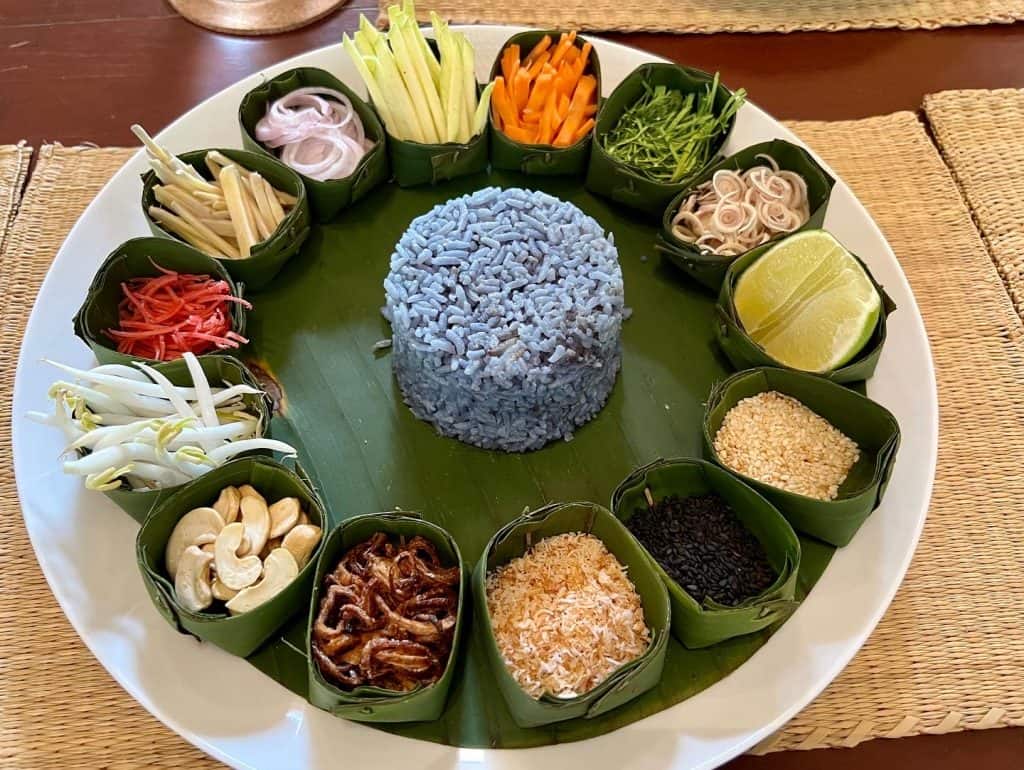
Its signature rice salad (kao yum) is part of the menu, designed by by chef Yawadee Chookong of Maadae Slow Fish Kitchen in Chiang Mai.
All her 20 staff, except for Raju, are from local communities – a mix with local Thais and hilltribes. The staff who handled our tea tasting lives just down the road, a true Lanna lady. The woman who showed us how to roast the tea leaves we plucked comes from the Aka Hill Tribe.
On a good day, the garden gets up to 80 visitors a day. During the pandemic, when international travellers disappeared, it found a new following among locals, looking for new experiences and to be in nature.
While at Araksa, local Thais also found their way to Lisu Lodge, about 30 minutes away by car. “Locals never really liked the experience – maybe it’s a bit too rustic and too close to nature,” she laughed. “But during the pandemic, they appreciated the nature, outdoors and found the hilltribe experience novel.”
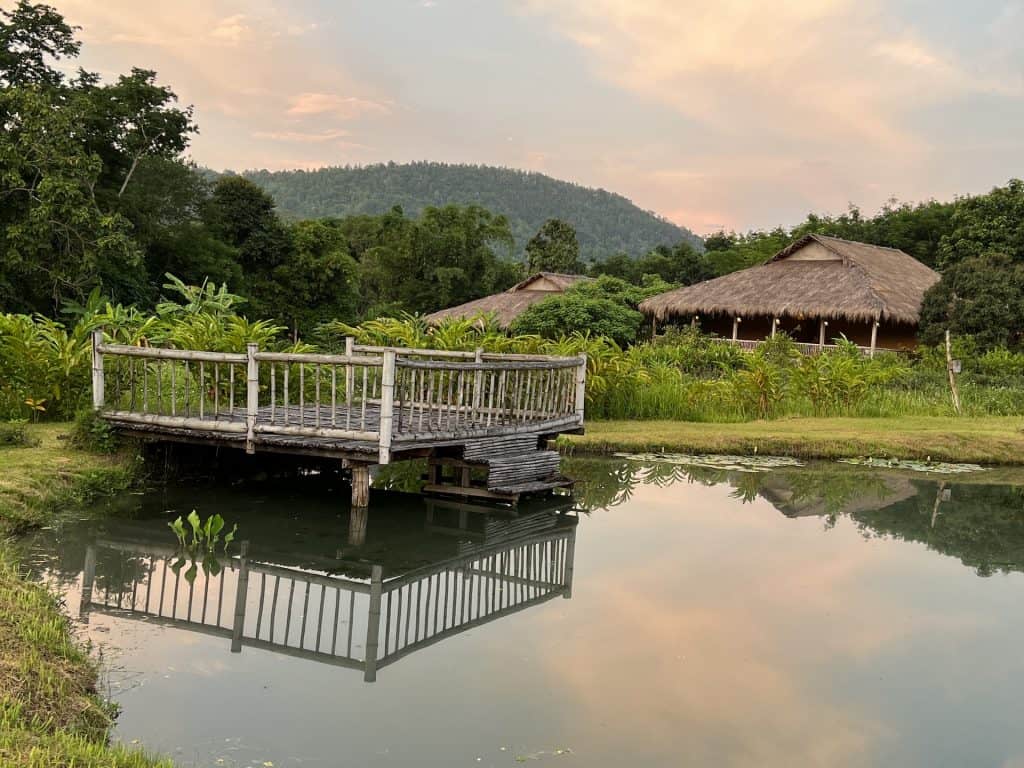
The 25-year-old Lisu Lodge found a local market during the pandemic, when Thais looked for nature, outdoors and unique experiences.
She’s had to adapt the experience somewhat. When she renovated the lodge a few years ago, she added air-conditioning in one house), made the rooms bigger and built houses that were big enough for inter-generational families. Turned out to be perfect for pandemic times, because these were the improvements that were appreciated by local travellers.
In many ways, her venture into Araksa was well-timed. For the past two years, with tourism at a standstill, she’s had time and energy to focus on building up the tea business. It’s made Asian Oasis less reliant on inbound tourism, and given her time to renovate her products. The Mekhala is being renovated into a luxury three-bedroom barge to be ready to cruise by this November. Lanjia Lodge, which has been closed, will reopen for the winter season. Suwan Macha and June Bahtra are starting to do well with the reopening of Phuket, ahead of other destinations in the country.
Meanwhile, she’s constantly dreaming up new tea blends. The blend she’s proudest of is BlueFly because she says it really captures Thainess in all senses of the word, from taste to aroma. (By the way, try the BlueFly sorbet as well.)
And what’s next, I asked, a marijuana blend, now that it’s legal in Thailand? “Possibly,” she said. “I just want to make sure we get good quality plants and ensure it meets our sustainability criteria.”
For her, Araksa Tea Garden represents “the coming together of everything I collected through the years. Now it has become a labour of love.”
As for the biggest lesson learnt from the pandemic, Chananya said it challenged everyone working in Thailand’s travel industry to “rise to the occasion”. “In Thai, it’s ขึ้นสู่โอกาส, K̄hụ̂n s̄ū̀ xokās̄.”