



When you look at Ethan Lin, CEO and co-founder of Klook, you might wonder: is he a gambler, a promoter, or a maker – the three archetypes described by Thayer Ventures’ Chris Hemmeter in this article, when describing the evolution of the travel entrepreneur over the last two decades. (See related article)
Lin seems to embody a bit of each. As his journey with Klook shows, he’s taken bold risks, mastered the art of storytelling, and dedicated himself to building something lasting. But ask Lin himself, and he’ll tell you – he’s a builder.
The Gambler Spirit: Taking Big Risks in the Early Days
For some, Lin’s journey might look like it started with a big gamble. Back in 2014, when he and co-founder Eric Gnock Fah decided to launch Klook, they put nearly $1 million of their own money into the venture. It was a significant risk – both men were leaving stable careers in investment banking for an uncertain future in the then-nascent world of online travel marketplaces. The decision was partly fueled by a personal experience. After a trip to Nepal, Lin and Gnock Fah realized they narrowly avoided being on a flight that crashed, a close call that left them reevaluating their lives and career choices.
“It could have been us,” Lin said, recalling how the experience provided the push they needed to go all-in on their vision.
That sense of risk-taking is often associated with the “gambler” archetype – the type of entrepreneur willing to stake everything on an idea. But while Lin and Gnock Fah started with a personal gamble, their journey has been much more than a high-stakes bet.
The Promoter’s Storytelling: Securing Nearly $1 Billion in Funding
As Klook grew, Lin and Gnock Fah had to evolve from gamblers to promoters. In the competitive travel tech space, securing funding requires not just a strong idea but a compelling story. While their early fundraising efforts were modest, as Klook gained traction, they successfully positioned the company as a leader in in-destination travel experiences, eventually raising over $932 million across 10 funding rounds from top investors worldwide.
“Fundraising is not just about numbers; it’s about sharing a vision that investors can believe in,” Lin says.
“It also needs to be the right timing. As a previous banker myself, one thing I always learned is leverage the opportunities when the market gives you. And then you need to spend wisely and always plan two steps ahead of that, knowing that you have 24 or above over the run rate till you can hit that probability mark.”
Their latest round, a $210 million injection in December 2023, came during a period when venture capital had largely dried up, underscoring Lin’s skill as a promoter who could inspire confidence even in difficult times. However, Lin doesn’t dwell on his success as a storyteller. He prefers to identify himself as a “builder”, someone who’s constantly focused on crafting and scaling the company.
The Maker’s Mindset: Building a Platform and Knowing When to Let Go
For Lin, the real essence of entrepreneurship is not about the initial gamble or even about promoting a vision, but about the continuous act of building. Today, he describes himself as a “builder”, a term he uses to reflect his commitment to product development, operational efficiency, and long-term growth.
“I’m more of a builder,” he explained. “I often look at the different opportunities that can be done. The most difficult thing when the company has been scaling is no longer about just building. It’s also learning how to sunset – knowing when a project has run its course and it’s time to stop doing certain things.”
This pragmatic approach is key to Lin’s leadership style. He believes that building a company is not just about adding new features or entering new markets, but also about making tough decisions on what to keep and what to cut. It’s a discipline that has helped Klook scale responsibly while staying adaptable in a rapidly changing travel market.
This pragmatism was also what led him to commission an independent study by Oxford Economics to measure Klook’s impact on APAC’s economy and the job market. “We contributed $7.2 billion to the GDP and supported over 219,000 jobs. Working with a third party to look at the economic impact is much easier and less of a compliance risk.”
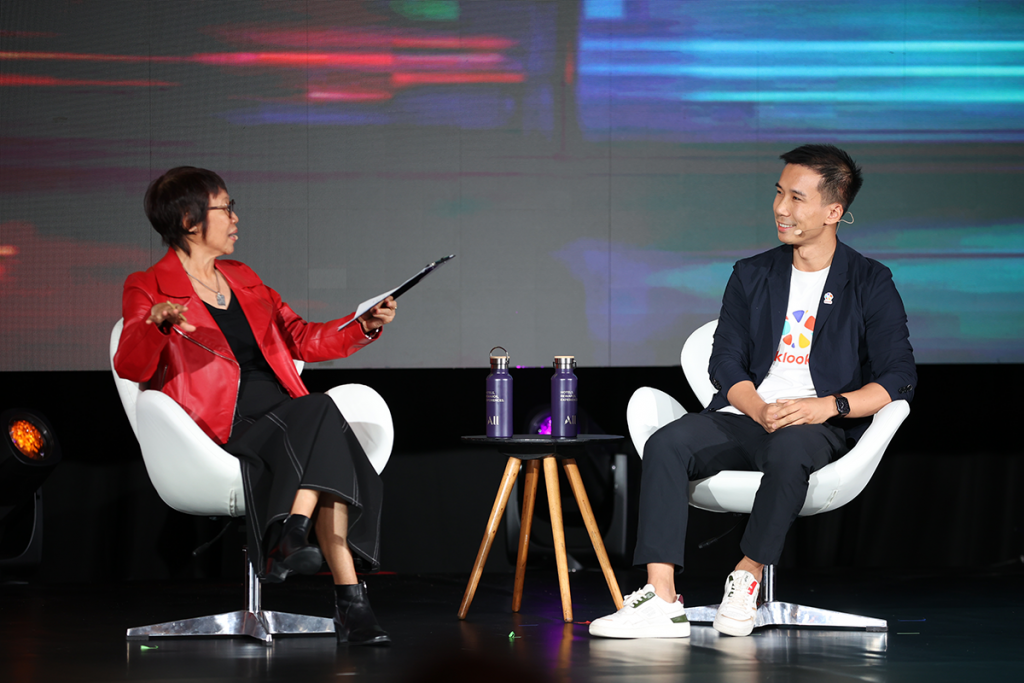
“Travel is always a global business. The bigger the network, the more parties, the more consumers to share the cost. So, the nature of travel is to go global from day one,” says Ethan Lin.
Scaling Efficiently: The Importance of Infrastructure and Team Coordination
As Klook has grown, Lin has faced the challenges that come with scaling a business. With over 20 teams spread across multiple countries, he emphasizes the importance of efficient communication and project management.
“When you have a 20-person team working with another 20-person team, if there’s no central coordination, you end up with hundreds of communication lines. It can become chaotic,” Lin points out.
To manage this complexity, Klook has built a robust infrastructure that allows it to expand efficiently into new markets. Their payment system, for example, is designed to plug into any market’s local payment gateways and wallets with ease, a setup that allows for quick adaptation to local consumer preferences.
Following the Traveller: Expanding Klook’s Reach as Asian Travellers Go Global
As travel patterns have shifted post-COVID, Lin has noticed a surge in demand from Asian travellers exploring long-haul destinations, especially in the US and Europe. Klook’s expansion strategy is to “follow the traveller”, ensuring that Asian customers are well served no matter where they go.
“In the recent six to 12 months, we’ve seen much faster growth as Asian travellers venture out to the US and Europe,” Lin says. “To grow with our consumers, we have to expand our supply coverage to make sure they are well served globally.
“Klook’s vision extends beyond Asia, aiming to build a global platform that serves travelers worldwide. Travel is always a global business. The bigger the network, the more parties, the more consumers to share the cost. So the nature of travel is to go global from day one,” he says.
Building an Ecosystem: Collaboration as a Key to Growth
Lin believes that in the travel industry, no company operates in isolation. Klook’s business model is deeply collaborative, working with over 80-90% small and medium-sized businesses to provide a wide range of activities and experiences. Lin emphasizes that supporting this ecosystem is essential for the industry’s overall growth.
“In travel, it’s all about the ecosystem – everyone helping each other,” he explains. “That’s what makes the sector so much bigger and more resilient.”
This collaborative spirit extends to Klook’s partnerships with social media platforms like TikTok, YouTube, and Instagram, which he sees as essential channels for reaching modern travellers.
Balancing Growth with Sustainability
As Klook scales, Lin is increasingly focused on the sustainability of the travel industry itself. He recognizes the potential for growth, but also the need to manage the environmental and social impact of mass tourism.
“As travel outpaces GDP growth, we’ll face capacity constraints. Addressing these sustainability issues is crucial for the future of our industry,” Lin says.
He sees the rise of travel content on social media as a double-edged sword: while it drives tourism to new destinations, it can also lead to overcrowding and environmental strain. For Lin, balancing growth with sustainable practices is not just a business priority, but a moral imperative for the sector.
“One thing about content is it makes a place even more popular than it needs to be, and so it will become overly crowded. How we resolve that as a sector together is definitely a key thing in our mind.”
The Road Ahead: Global Vision and Personal Growth
Reflecting on his journey, Lin says that his experience as a founder has made him more patient and adaptable, especially after navigating the challenges of the Covid-19 pandemic.
“I’ve become much more peaceful with myself,” he says. “Covid was a big change for many people. It taught me to focus on what I can control and let go of what I can’t.”
This perspective informs his vision for Klook as a global brand that transcends geographical labels. Lin doesn’t see Klook as an “Asian” or “Western” company but as a platform for global citizens.
“In this generation, we are all global citizens,” he says. “It’s less about where a brand comes from and more about how well it serves the needs of travellers around the world.”
The Builder’s Legacy
Ethan Lin’s journey with Klook reflects a combination of gambler, promoter, and maker. While he and his co-founder took risks and proved themselves as effective storytellers, Lin’s heart lies in building – crafting a platform that grows with its customers, supports local businesses, and promotes sustainable travel.
As he looks to the future, Lin is aiming for significant growth, setting an ambitious goal of 10x expansion over the next decade.
“I tell the team 10x, but actually if you think about it, 10x in 10 years, CAGR-wise is only 26%. That means if you’re able to consistently grow at 25% above on annual growth rate in 10 years, you are ten times bigger. I think that sounds very achievable.”
For Lin, being a builder isn’t just about growth; it’s about creating something meaningful and lasting. In an industry that’s constantly evolving, his commitment to responsible, collaborative, and sustainable growth is a testament to the power of the “maker” mindset, a vision that’s reshaping the future of travel.


