Travellers are coming whether attractions are ready or not, says Baidi Li
Baidi Li, who’s spent her travel career in the tours and activities space, was recently elevated to lead Go City’s expansion and growth in Asia Pacific as its new SVP of commercial for the region. Yeoh Siew Hoon catches up with the executive, who started her career with Intrepid Travel, before moving into the tech space to learn about how she intends to take Go City to new heights in the region as it begins its travel recovery.
Q: Congratulations on the new role of leading commercial growth in APAC. Good timing, I suppose, as travel in the region is just restarting – so the only way is up? What trends are you seeing in terms of travel pick-up?
Thank you, Siew Hoon! I’m very excited about this role, especially at such an exciting time for the company. We are still in the early days of seeing APAC’s reopening and we’re watching the signals closely, but at Go City, yes, based on what we’re seeing, we believe the only way is up.
At a high level, we’re seeing that pent up demand for travel really is starting to come to life ahead of summer. We’re seeing travelers eager to get back out there, which means they’re booking with shorter notice – one third of our customers right now are redeeming their pass purchases in the same week. We’re also seeing longer stays, particularly in regions like Singapore where restrictions are fully lifted for vaccinated travelers. This also means that people are trying to do more while they’re in their destination. We’re seeing this when it comes to sales of our 7-Choice Explorer passes, which have now surpassed sales of our ever-popular 3-Choice.
We aim to help people have their best city vacation, so seeing people want to do more while they are in their destination is a really exciting indicator for us. It means that we can continue to innovate for customers in other ways to make their vacations seamless.

Baidi Li: “Customers tend to be ahead of attractions in terms of their readiness to return to travel. For example, some might not have international rates ready, others are still struggling with staffing issues to meet demand.”
Q: It’s a big region and you have a lot on your plate. The press release says, Baidi’s initial focus will be on expanding Go City’s product footprint, building regional customer acquisition capabilities, deepening localisation efforts, and growing a best-in-class team. Specific to the product, it says, “Baidi plans to build upon the existing success of Sydney, Singapore and Bangkok products, and grow the product offering in other key destinations, including Seoul, Tokyo and Hong Kong.”
Seoul, Tokyo and Hong Kong – will they follow a similar model to your other products? Has the pandemic had any impact on product development/changes – have some attractions been more popular than others, for example? And how are you adapting these post-pandemic products to the new travel needs of today?
One of the most important items on that list is growing a world-class local team. We currently have a relatively lean team in the region, and what we’ve already been able to accomplish together is pretty remarkable. Once we expand that, specifically within tech and engineering, I have no doubt that the commercial growth will follow.
And yes, Seoul, Tokyo and Hong Kong will follow a similar model, but with a more localised approach. While we’re keeping an eye on the long-haul market, we are paying particular attention to inter-region and domestic travelers, as that’s what is currently driving the most volume.
What we’re seeing right now is that customers tend to be ahead of attractions in terms of their readiness to return to travel. For example, some might not have international rates ready, others are still struggling with staffing issues to meet demand. Travelers are coming whether attractions are ready or not, so it’s an exciting challenge for the industry right now to ensure customers are still having great experiences despite any catch-up that might be required.
This has opened up space for new attractions and experiences to emerge, and at Go City we’re working hard to ensure a wide breadth of options are available on our refreshed passes. We love that we can empower travelers to experience a different side of their destination and go off the beaten path a bit.
Q: How has customer behaviour changed in terms of booking attractions? What do merchants need to do to respond to these new behaviours?
We are seeing customers across the board growing more accustomed to reserving entry time-slots, while still demanding a high level of flexibility. They are trying to do as much as they can in their destination – and as a result they are planning more than they ever have before. Travelers are determined to get the most out of their trips, so they are booking their must-see attractions early to ensure they’ll have access once they arrive.
One of the features that differentiates Go City is how many unique attractions we offer, in addition to the top/must-see options. For example, you can go see Universal Studios Singapore, but you could also enjoy a Tea Appreciation experience to immerse yourself further in the culture. To be able to have your choice of experiences, with added flexibility and at a massive savings, there is a high product market fit in APAC both as a source market and in these key destination cities.
For merchants, we highly encourage businesses to become fully digitised and to get their API connected with distribution channels. We are rapidly expanding our product and engineering team both at HQ and in APAC to work with partners on direct connectivity. Ensuring a seamless, digital-first customer journey is the most important thing for merchants so they are prepared for summer demand.
Q: A key challenge/opportunity is localisation – she who does it best wins, particularly in a world which went largely local the past two years. You’ve worked with global brands before – what do they often miss about localisation? What will Go City do differently?
One common misconception that brands often have about localisation is that it stops at translation. But there is so much opportunity beyond just language – to adapt products, branding, messaging, marketing, operations, and more to be authentic to a local culture and ecommerce ecosystem.
One of my first priorities in this new role at Go City is to build and empower a local team that deeply understands our markets. They will be the ones who build out our GTM strategy, and we will lead commercial decision making based on what makes sense in the individual markets. We are betting big on APAC, and we are trusting a local team to get us to where we need to be.

Go City APAC team members, from left to right: Ivy Chee, VP Destination and Partner Management, APAC; Baidi Li, SVP Commercial, APAC; Komal Sidhu, People Manager APAC; Dawn Jeremiah, VP Marketing & E-Commerce, APAC; and Karl Au, Sr Customer & Partner Experience Manager, APAC.
Q: Obviously, localisation depends on local talent and the team needs ramping up in APAC too – what is current staff strength and what is desired staff count by year end? How is the current Talent Crunch impacting recruitment and retention? What are you doing differently from your competitors to make Go City more attractive as an employer?
Our team right now is relatively lean, but I’m so lucky to have inherited an incredibly talented, diverse group, who has accomplished so much already to get us to the position we’re in today. But you’re correct, our ability to grow and scale as rapidly as we’d like is dependent on us being able to attract that top talent, and building that team out is my first priority in this new role.
We hope by the end of the year to have a team of around 35 people in our focus markets in APAC. We’re hiring across all functions (supply, demand, distribution, ops and product engineering), and we encourage anyone interested in learning more to check out our careers page, here.
Go City is an incredible place to work for a lot of reasons – first and foremost, there’s no better time to be working in travel. The return of travel and the increase in demand is going to push innovation at such a rapid speed, and Go City is strongly positioned to accept that challenge.
We really seek out talent who not only have the skills to do the job well, but who are also a cultural fit. People who are entrepreneurial, not afraid to take risks, think big and can work well as part of a global team as well as independently.
People come to Go City for the team culture, flexible work policies, inclusive values and benefits, of course – but what really drives people to work here is the opportunity to join a global team, at an industry leading company that is at the forefront of changing the way people see the world. It’s an exciting proposition to be a part of that.
Q: You’ve only been with Go City 8 months but been 15 years in the industry, including Viator, Tripadvisor, Magpie Travel and Intrepid Travel. What lessons have you learnt from Go City thus far? What does it do better than anyone else?
I’ve been lucky to work at such incredible places in the travel industry. I’ve met so many impactful people at all of these companies that have helped me get to where I am – you being one of them, Siew Hoon! I remember discussing this commercial leadership role with you when it first came up, and I am so thankful for your encouragement and support.
All the companies you mentioned have very different approaches that work well for them, so I wouldn’t say any one approach is better than the others, but one thing that has stuck out to me in my time at Go City is the entrepreneurial spirit that is ingrained in all teams – it’s what’s enabled the lean team in APAC to get so much accomplished so quickly. There is a very clear sense of trust from leadership for the team to think big and execute. So even as we’ve grown into a 150+ person global team, we still operate very nimbly and can innovate quickly.
Q: You started your career with Intrepid Travel, which is really at the front line of travel, traditional travel, lots of people to people interaction. What’s the biggest lesson you learnt from Intrepid and that you think could benefit travel tech companies at this time?
One of the greatest lessons I’ve learned from across my career is the importance of customer-centricity. It’s a core value at Go City, but it’s something I believe the entire industry can benefit from embracing further. It’s no longer only relevant for customer service and sales, but should be implemented across the board by any company in the space right now.
Data is incredibly important to inform decision making, but so often it doesn’t tell you the whole story. Especially in travel, human connection and understanding what our customers need (especially in a post-COVID era) is critical. At Go City we invest a lot into listening to our customers to make sure we’re meeting them where they are, but also innovating and surprising them with new, unexpected features to maximize their vacations.
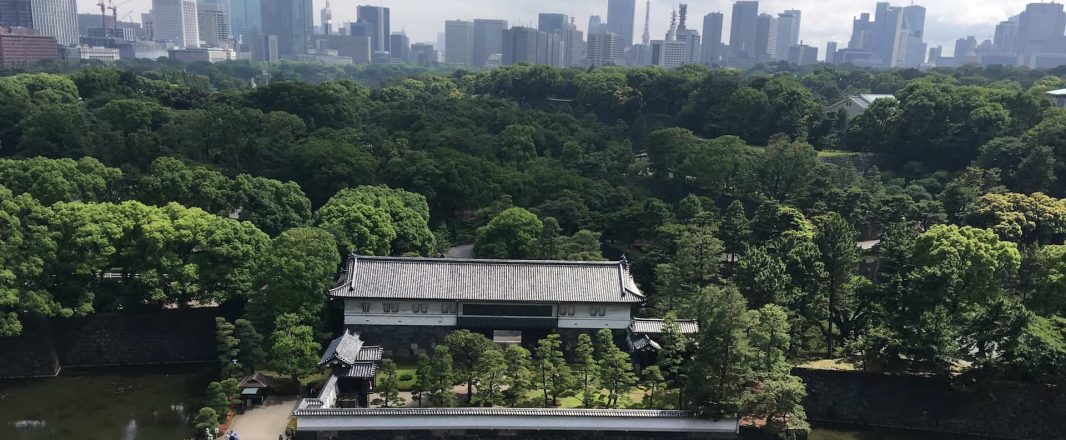
• Featured image: Tokyo, one of the three cities Go City is developing its product offering. Japan this week announced it would reopen to foreign visitors from June, starting with packaged tours.