
For Siradej, sustainability, serenity and spirituality are the three new S’s
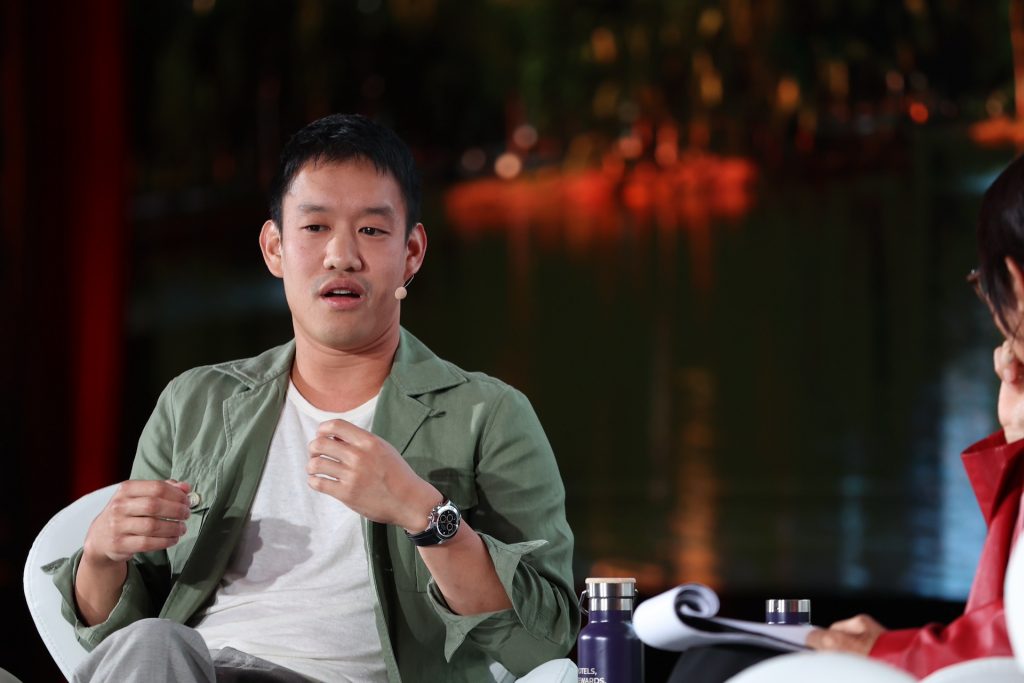
Siradej: ““At the end of the day, one of the most important things is content. Wonderfruit is all about content. We don’t own anything tangible, but what we own is the philosophy, the ethos, and the movement.”
When Siradej “Champ” Donavanik, a third-generation member of Thailand’s Dusit family, was given the opportunity to develop a plot of land in Chonburi, the path he opted for was surprising.
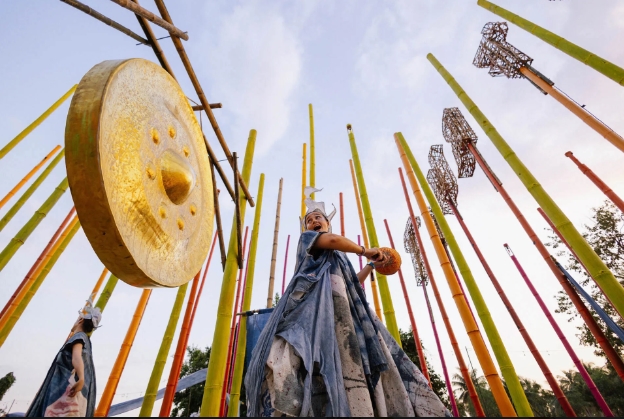
Rather than building another hotel, he and two friends, one whose family owned the land, chose to create an event, an immersive celebration of art, culture, music, and nature that would attract Millennials from across Asia and beyond. That event became Wonderfruit.
This year, Wonderfruit, which celebrates its 10th anniversary from December 12-16, is expected to draw over 30,000 attendees from 140 countries, offering 99 hours of music, art, wellness, architecture, and dining experiences designed to foster a deeper connection with nature, others and oneself.
For Champ, who still serves as director of the festival and curates some of the programmes, Wonderfruit exemplifies the kind of “community and vibe” his generation craves – a vision of hospitality that goes beyond traditional hotel stays to create experiences rich in content and meaning.
“At the end of the day, one of the most important things is content,” Champ said at WiT Singapore. “Wonderfruit is all about content. We don’t own anything tangible, but what we own is the philosophy, the ethos, and the movement. Hotels are brands and, in our industry, branding is everything.”
Early challenges: Curating content and building infrastructure
The idea of Wonderfruit came about because the three friends wanted to create a platform to express Thailand’s creativity in art, music and culture. “We had different skill sets – one came from music, one from creative and me from hospitality – and we thought why not blend our skills and passions to create an Asian festival around six pillars – culinary, art, music, family activities, wellness and thought leadership.”
Champ recalled, “The early days were tough, trying to explain to people what it was about. People said, it seems you are everything to everyone and so you are nothing to no one.”
But perseverance paid off and by the fourth year, “people got it, who we are and what we stand for. There is a niche segment of customers looking for all those six things in one place.”
Of the 25,000 people who attended last year’s event, 65% come from overseas – 144 nationalities – with the rest from Thailand. The biggest demographic, 54%, are in the 25-34 age group while 32% are between 35 and 44. Singapore is its second largest market, 14%, followed by Hong Kong at 11%.
Building up the site to become a permanent venue was also challenging, as the infrastructure – from toilets to stages to the electricity grid – had to be developed from scratch. “We wanted it to be a carbon neutral event from day one. We didn’t want portable loos but proper toilets. This is an extremely expensive undertaking.”
He said the event reached breakeven around the sixth year and is now profitable, although of course, Covid shut it down for two years. Post-pandemic, the festival is seeing record crowds.
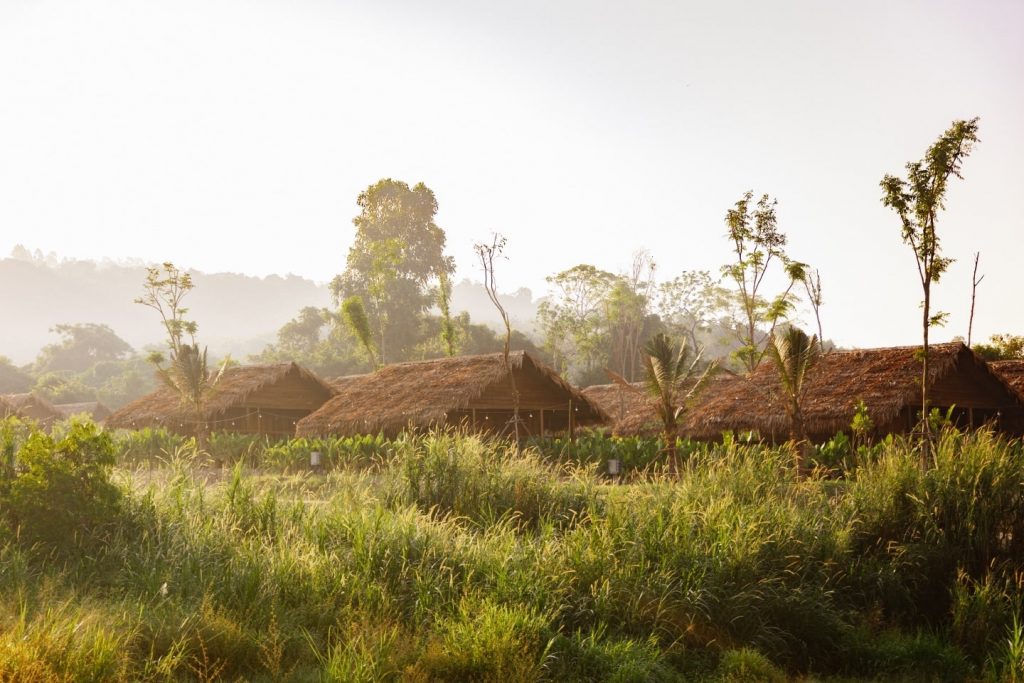
Slow Wonder cabins, by Slowness: Sold out
Why are people paying so much for tents with fans? Slow Wonder cabins a hit
Leveraging his hospitality background, Champ has also innovated on the accommodation on-site at Wonderfruit. It offers tents with fans and air beds as well as RVs and it has a partnership with experiential hospitality collective, Slowness, to offer Slow Wonder cabins – 26 private luxury cabins with 24-hour concierge service. The price for four nights is TB200,000 and the website says, “Sold Out”.
“My father came to the festival one year and when he saw the tents with fans and air beds, which we were selling for US$1,000 each, he asked his team, ‘how come they are selling these tents for so much and we spend so much on CAPEX and we are selling our rooms for $100’,” Champ laughed.
And while some might argue that developing a hotel on the site might have been easier in the long run, Champ said, “This is for a different purpose. We wanted to create a cultural phenomenon, a movement. We wanted to create a community where the focus of celebration in arts, food and music is in line with sustainability.
“It’s not about throwing a party, our ethos is so much more important than that.”
This ethos is part of the next-generation mindset that Champ, currently Vice President of Development at Dusit International, is bringing to the family business founded by his grandmother, “The Iron Butterfly” of Thailand, in 1948. His father, Chanin Donavanik, expanded the company into a global hospitality brand, and now Champ is leading it into a new era, embracing the principles of experience-driven travel and cultural resonance, seen in the Wonderfruit model.
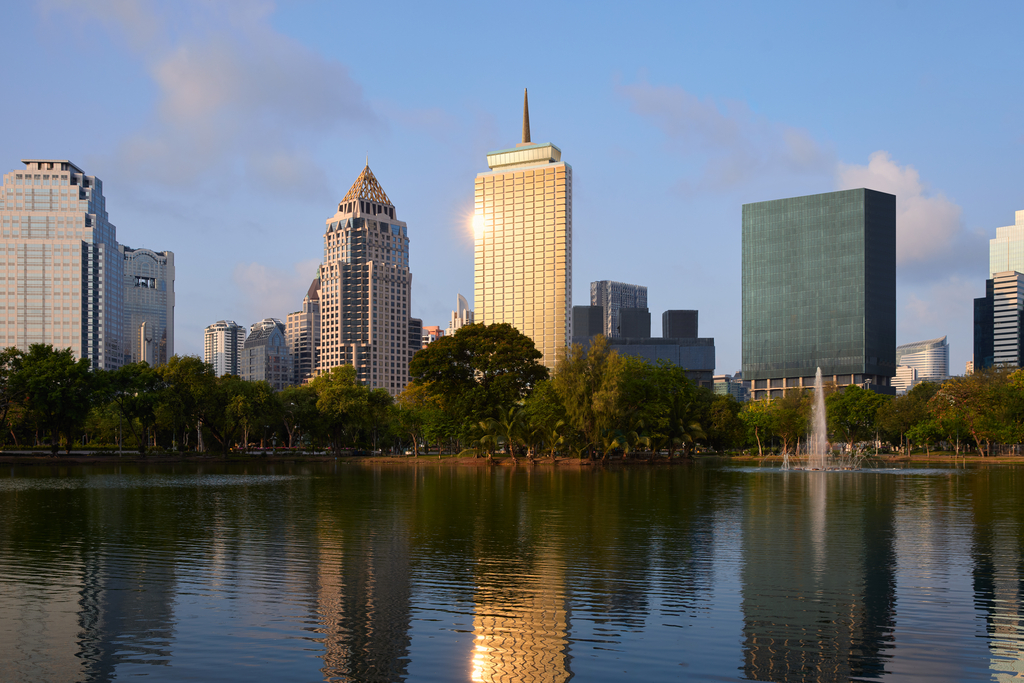
Reopening Dusit Thani Bangkok – revitalisation and transformation of the brand
The timing couldn’t be better. After five years of redevelopment, Dusit has just reopened its flagship property, Dusit Thani Bangkok, a landmark that first opened in 1970 and put the brand on the map. Reimagined as part of the THB 46 billion ($1.4 billion) Dusit Central Park, a mixed-use development featuring ultra-luxury residences, this iconic hotel now serves as the centerpiece of the family’s vision for a modern, vibrant Dusit brand.
Champ’s father Chanin, now Vice Chairman of the Board and Chairman of the Executive Committee at Dusit International, reflected on the legacy. “I wanted to complete this project before I’m too old. As the last link to my mother, it’s important to do this well for her legacy,” he told WiT.
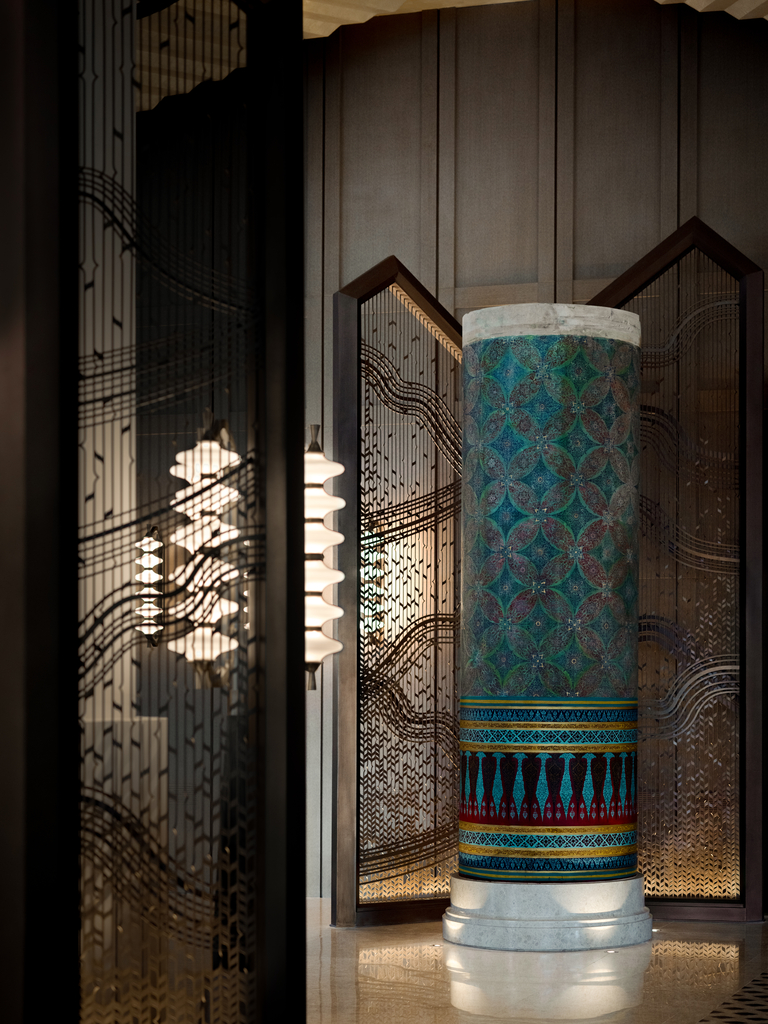
The pillars, commissioned by his grandmother, were preserved and restored, and takes pride of place in the new Dusit Thani.
For Champ, honouring that legacy meant carefully preserving elements of the past. “We kept the pillars my grandmother commissioned, moving them piece by piece across 24 floors. This hotel was Thailand’s tallest building in the 1960s and has so much heritage and artistic value, which we’ve incorporated into the new property,” he said.
He is mindful though of the double-edged sword of legacy. “If you use it correctly, it can extend your value. But if you hang on to it for too much, it’s dragging you down.”
Which is why he is quick to point out that the reopening isn’t simply a “new version” of an old hotel – it’s a revitalisation and transformation of the brand, and purpose.
He also sees the strategic importance of the reopening. “Having a flagship, a true showcase to show partners, developers, investors is important – it’s been quite difficult because we’ve always been operating at a luxury level. For us to have been missing our flagship for so long was actually quite problematic.”
Building for the Future: Diversification and Innovation
In addition to revitalizing the Dusit brand, Champ also recognises the importance of diversification.
In 2020, he launched ASAI, an affordable lifestyle hotel brand designed to appeal to modern travelers seeking cultural immersion and community. With three ASAI properties already open – two in Bangkok and one in Kyoto – and six more in the pipeline, ASAI represents a bold move into new territory for Dusit.
“I wanted to create something completely different from Dusit, so we built ASAI as its own startup, funded by Dusit but operated independently,” Champ explained. “The concept brings the fabric of each neighborhood into the hotel, offering workshops and limited service—a model that luxury travelers today increasingly appreciate.”
The pandemic disrupted Champ’s plans for ASAI. “Our first ASAI in Chinatown, Bangkok, was supposed to open beginning of 2020 but Covid came, and we had get the mother company to rescue us. We opened end of 2020, and now ASAI is one of the eight brands within Dusit.”
The pandemic also reinforced the importance of diversification. “Covid really taught us one thing: if you don’t diversify, you’re sitting ducks,” he said. Dusit has since expanded its portfolio beyond hotels, venturing into real estate, education, and even food manufacturing to create a more resilient business model.
A Global Partnership and Digital Transformation
One of Champ’s recent strategic moves was forming a partnership with Generator/Freehand Hotels, which operates hybrid accommodation models across Europe and the United States.
“This partnership allows us to leverage our resources and network to help them grow in Asia,” Champ said, adding that the collaboration reflects Dusit’s commitment to broadening its reach and adapting to the evolving demands of modern travellers.
Generator/Freehand is also partnering with Champ to manage the accommodation element at Wonderfruit.
At the same time, Dusit has invested heavily in digital transformation to enhance guest experiences and improve operational efficiency. “We created a digital lab that combines creative strategy with a tech team, integrating everything from CRM to guest profiles under one platform,” he explained.
This holistic approach to technology enables Dusit to cater to younger, tech-savvy guests while still honouring its traditional clientele.
Balancing Old and New: Lessons in Legacy and Innovation
Maintaining this balance between innovation and heritage is something Champ has learned from his father. “One thing my father taught me is never to let go of our staff. We kept everyone, even through challenging times,” he said. “That commitment to people has been a core value from my grandmother’s era, through my father’s, and now in mine.”
For Champ, Dusit’s future lies in blending the brand’s historic reputation with the values of a new generation. Whether through festivals like Wonderfruit, lifestyle hotels like ASAI, or the newly reopened Dusit Thani Bangkok, Champ is redefining hospitality for a global audience while staying rooted in his family’s legacy.
“The three S’s we focus on are sustainability, serenity, and spirituality – values we’ve also woven into Wonderfruit’s platform,” he noted.