I HAD waited more than two years for this moment and when it arrived, it was almost bitter sweet. This week, I got on a flight to Bangkok, a place I fell in love with at first sight decades ago and stayed in love with through the passage of time.
I had visualised it so hard – the moment when I would stand in front of the immigration officer at Suvarnabhumi and say “Sawasdee kha” that when it finally arrived, I of course had to fumble and mutter and she looked at me oddly, smiled and said, “Welcome back to Thailand.”
The passage to the kingdom was as smooth as silk – the Singapore Airlines flight was “100% full”, as the check-in staff had gleefully boasted when she told me I couldn’t have my customary aisle seat. The economy class meal of pork and century egg congee was served in a paper box marked “Sustainable”, an example of how this airline is rethinking its inflight offering in line with the times.
The entry was equally smooth. I showed my Go Thailand Pass (which was approved less than 24 hours after submission – vaccination certificate, recovery memo, insurance) at check-in, on arrival and at immigration – and I breezed through. Suvarnabhumi Airport felt quieter than I remember it in the BC (Before Covid) era but it was still encouragingly busy.
This one-week trip to Thailand is as much about revisiting the old as it is about discovering the new and I feel that just as I am, in my senior years, bridging the transition from young to old, Thailand too is undergoing a similar transition, from old to new – a passing of the torch as it were.
On May 25, I learnt of the passing of the first travel industry leader I met on my first visit to Thailand as a rookie reporter. Kusa Panyarachun, aged 103, set up World Travel Service in 1949, the first Thailand-based tour operator to handle incoming business. He was a man ahead of his time, and led a generation of tour operators such as East-West Siam (Peter Larsen) and Turismo Thai (Roberto Jotikasthira), pioneers who shaped the beginnings of Thai tourism.
I met him when he was president of the Association of Thai Travel Agents (ATTA) and the former military officer and diplomat was a true gentleman as he made me feel at ease – I knew so little about travel then but Kusa always made time for me.
He leaves behind an industry in transition. From all the conversations I’ve had with industry folks, of different generations, Covid has been a time of great reflection. Almost everyone I spoke to believe that Thailand must find a better way forward for its tourism, that it mustn’t go back to the bad old ways, that this is an opportunity to rise to the occasion.
The Tourism Authority of Thailand (TAT) has said that pursuing numbers is no longer its goal – the 40m arrivals in 2019 is not on its immediate radar. Yet the reality is this is an industry that is a vital part of its economy (said to be 12% of GDP) so a balance must be sought.
According to this report, there were about 340,000 foreign tourists in the fourth quarter of 2021, up from 45,000 in the previous three months, and it is expecting 5.5 million tourists in 2022. Given these numbers, it could be a long, slow recovery but no one I spoke to seems to be in a big hurry. And anyway, you can’t hurry anywhere in Bangkok because well, the traffic jams are back, which you could say is a good thing. Even in Chiang Mai, where I am writing this from, traffic is fairly heavy in the city centre.
In Bangkok, I re-visit my favourite café, Patom Organic Living which is a good example of a travel business in transition. It’s an offshoot of the Yuvaboon family business, the Rose Garden started 60 years ago, which transitioned to Suan Sampran, an organic village and resort, out of which grew Patom. And I am sure this won’t be the last iteration of its business as the third generation of its family shapes its future.
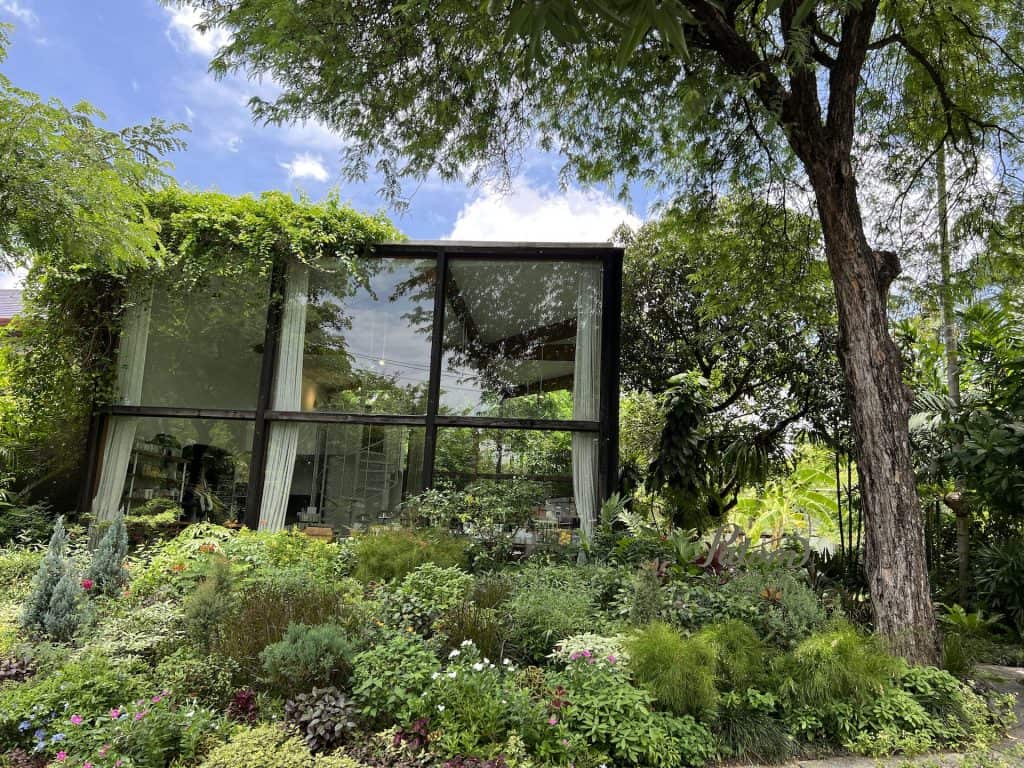
Patom Organic Living Cafe: Borne out of a 60-year-old travel business.
A younger generation of Thais now only know the family business through Patom, which includes a café and organic products.
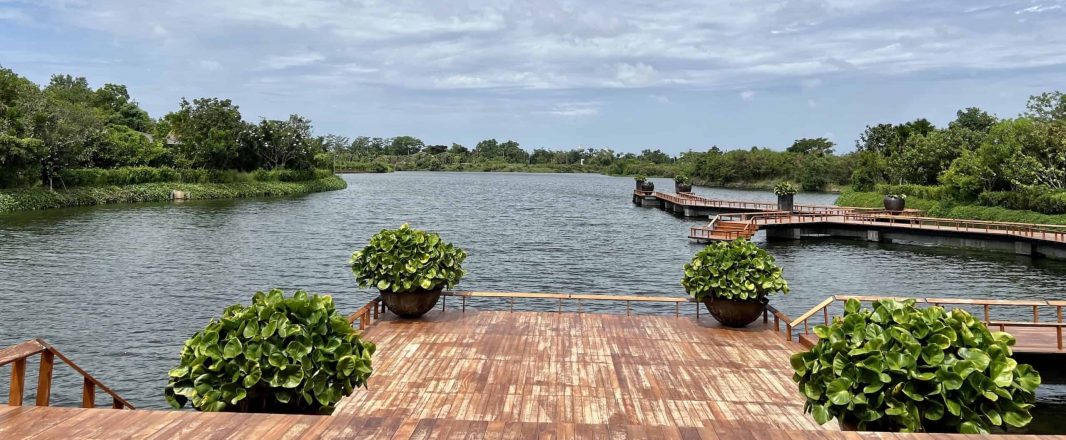
With wellness top on everyone’s minds, including mine, I also visit the RAKxa Wellness & Medical Retreat (featured image) on Bang Krachao, curious to find out what the fuss is all about. A 50/50 joint venture between MK Real Estate and VitalLife, a subsidiary of the renowned Bumrungrad Hospital, it is positioned as an oasis of fully-integrated healing located in what is known as the “Green Lung of Bangkok”. It also offers 60 villas which are managed by Minor Hotels.
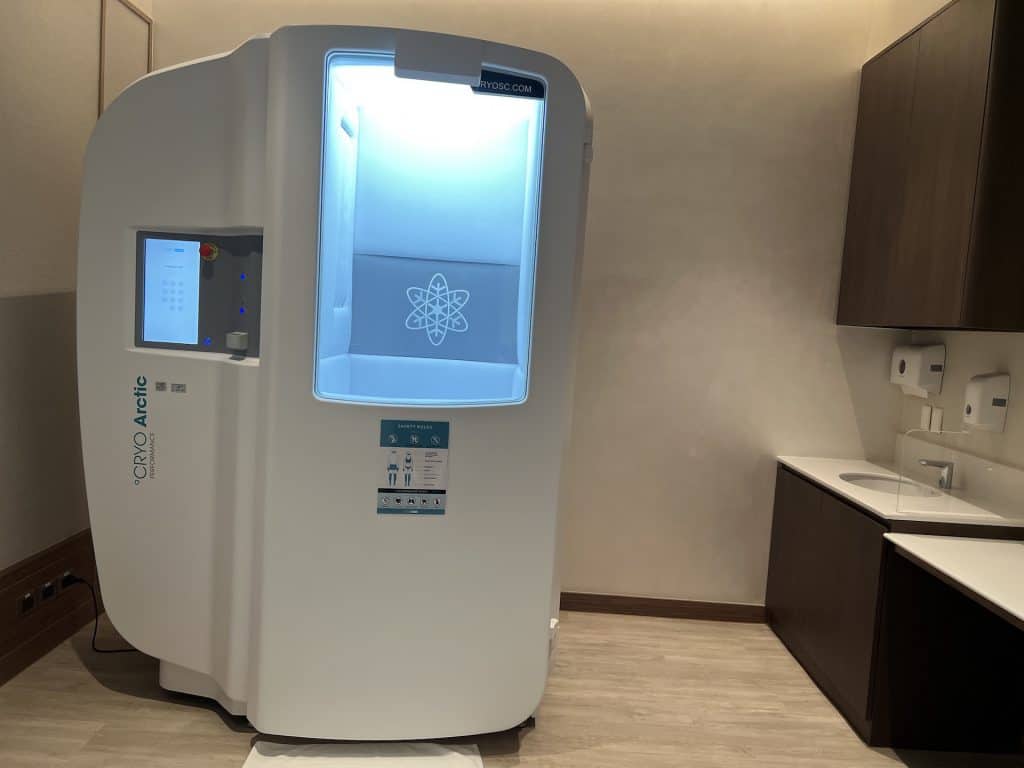
The cold chamber: Cryotherapy is the science of exposing the body to sub-zero temperatures of up to -140°C in order to stimulate multiple wellness benefits. Brrr….
The Western machines they have are impressive – I was most taken by the Cyro Arctic chamber where your body is plunged into freezing temperatures. No wonder everyone wants a dip in the Blue Lagoon of Iceland. I went to their website and found a testimonial from actor Mark Wahlberg about what good it has done him. There’s also the one-stop colon cleansing room, where you just lie down on the table and never have to get up to go. The alternative therapies on offer (Aryuvedic, Thai, Traditional Chinese Medicine and Energy) are extensive and comprehensive – the sound bath sounds the most intriguing.
I will write more about this retreat but suffice to say, I was impressed by the holistic and integrated approach to wellness. Everyone must be diagnosed first (know yourself is the mantra) first before any treatments or therapies are recommended – you can’t just show up and ask for a treatment – and to me, it represents an obvious direction forward for Thai tourism. Yes, wellness has always been a part of Thailand’s offerings – from names such as Chiva Som and Kamalaya – but this one seems to dial it up a notch and blends the lines between hospital and hospitality, Western medicine and alternative therapies.
“We feel this is what the new traveller wants, a holistic approach to wellness,” said Dusadee Tancharoen, managing director of RAKxa. “We must find a slower, more sustainable way of travel for Thailand.”
“Slower, more sustainable” appear to be the catchphrase post-Covid – from Cambodia to Thailand, to Penang and Singapore – every destination is aspiring to slow down and Thailand, ranked in the world’s top 10 destinations in terms of international visitor arrivals in 2019, has a lot at stake.
In Chiang Mai, I revisit Lisu Lodge, a hilltribe community enterprise, started 25 years ago when no one was really talking about community tourism. The pandemic was tough on the business, yet it’s created a moment for the lodge. When foreign visitors (which was 100% of its business BC) disappeared, locals found it through influencers and social media, and it enjoyed pretty healthy business for most of last year, said CEO of Asian Oasis, Chananya Phataraprasit.
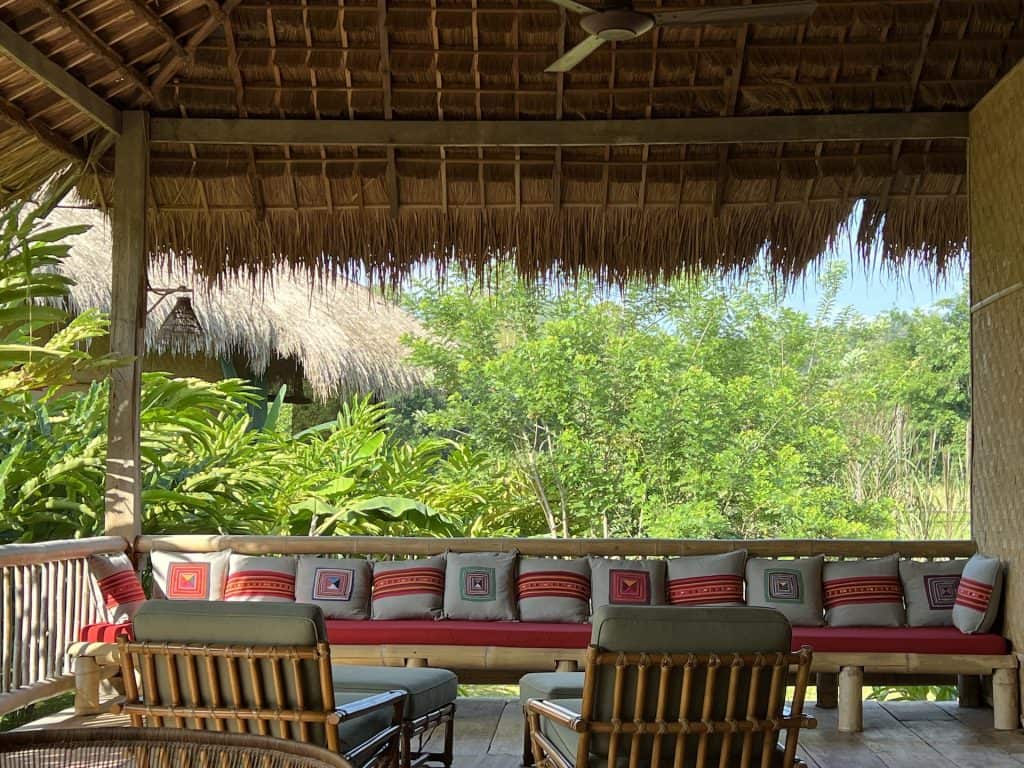
Lisu Lodge: Found local customers during the pandemic, and vice versa
Local Thais, seeking nature and outdoors, discovered something unique and special within their own backyard. Okay, they weren’t as into the hilltribe culture and treks as the foreign guests but they appreciated the experience of lodge living and the great outdoors, she said.
The Araksa Tea Garden, which is also part of the Asian Oasis collection, was a good referral of business for the lodge. The tea plantation, which makes handcrafted teas for boutique shops around the world, also had its breakout moment during Covid among a younger generation of Thais, looking for new experiences and yes, Instagrammable moments to share and boast about with their friends. On a good day, the garden receives up to 80 guests a day.
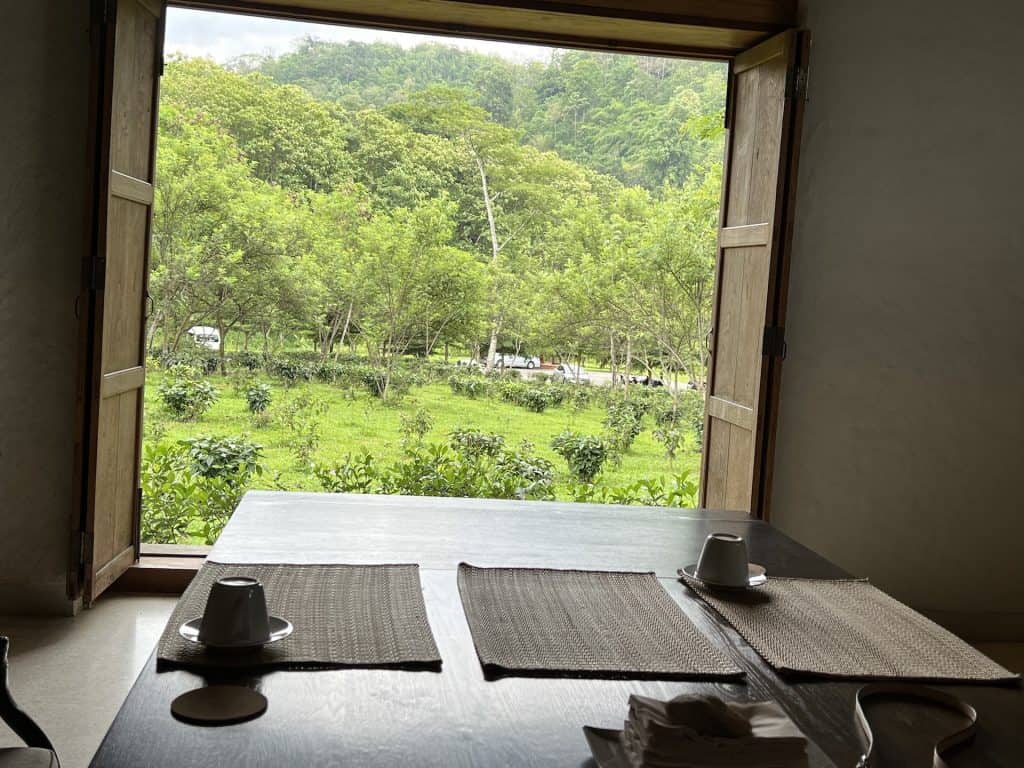
Araksa Tea House: Tea with a view
Designed by architect Jan Glasmeier of Simple Architecture, the Araksa Tea House is packed with so many photo opportunities you hardly have time for the tea tour and tea tasting, as well as enjoy the different teas and cakes on offer. But I recommend you make time – the handcrafted teas are getting rave reviews from and my favourite, Bluefly (lemongrass with butterfly pea flower), has a waiting list for orders.
This is the new generation of tourism businesses that will take Thailand into the future. I know I have barely scratched the surface of discovering what’s new and evolved in this short trip to this wide and diverse kingdom but what I’ve seen and experienced so far gives me faith for the future.
There’s a new generation of Thais who are charting the future of an industry created by pioneers like Khun Kusa. May he rest in peace.
And oh, did I mention, the food is still as good – from the clean simple tastes of Patom café food, to the healthy and fine cuisine at RAKxa, to some of the best home cooking from a kitchen in Chiang Mai. That hasn’t changed.
Here’s a picture of a dish from a home kitchen in Chiang Mai to whet your appetite for your return to Thailand.
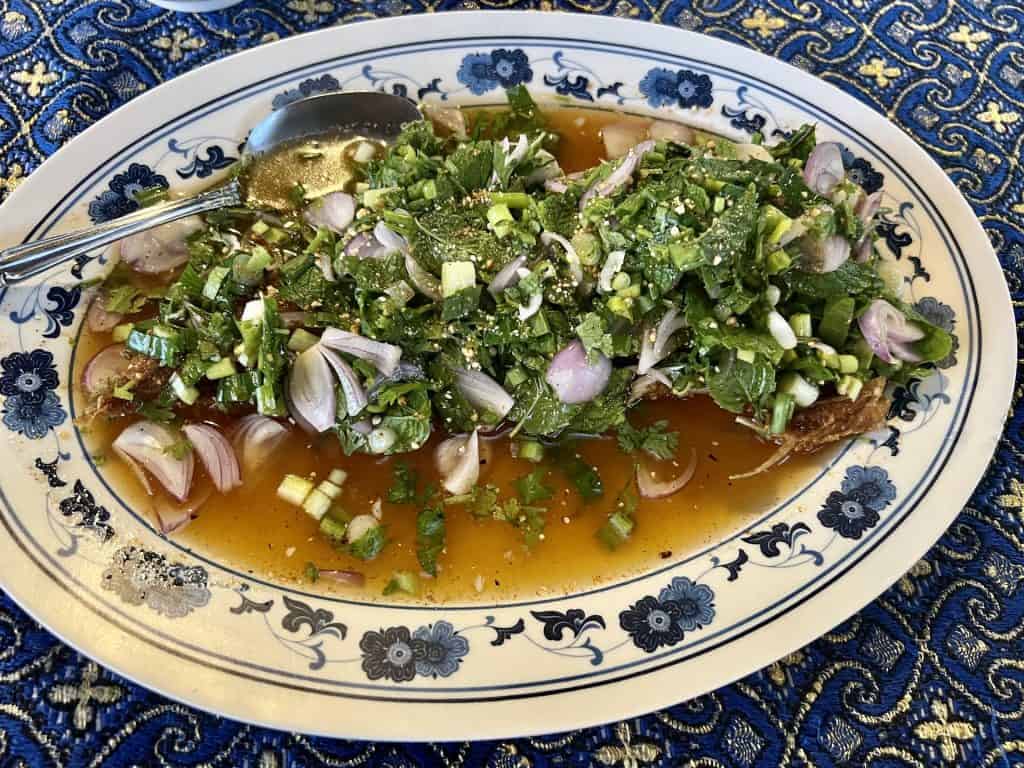
Larb pla, fish salad in Chiang Mai