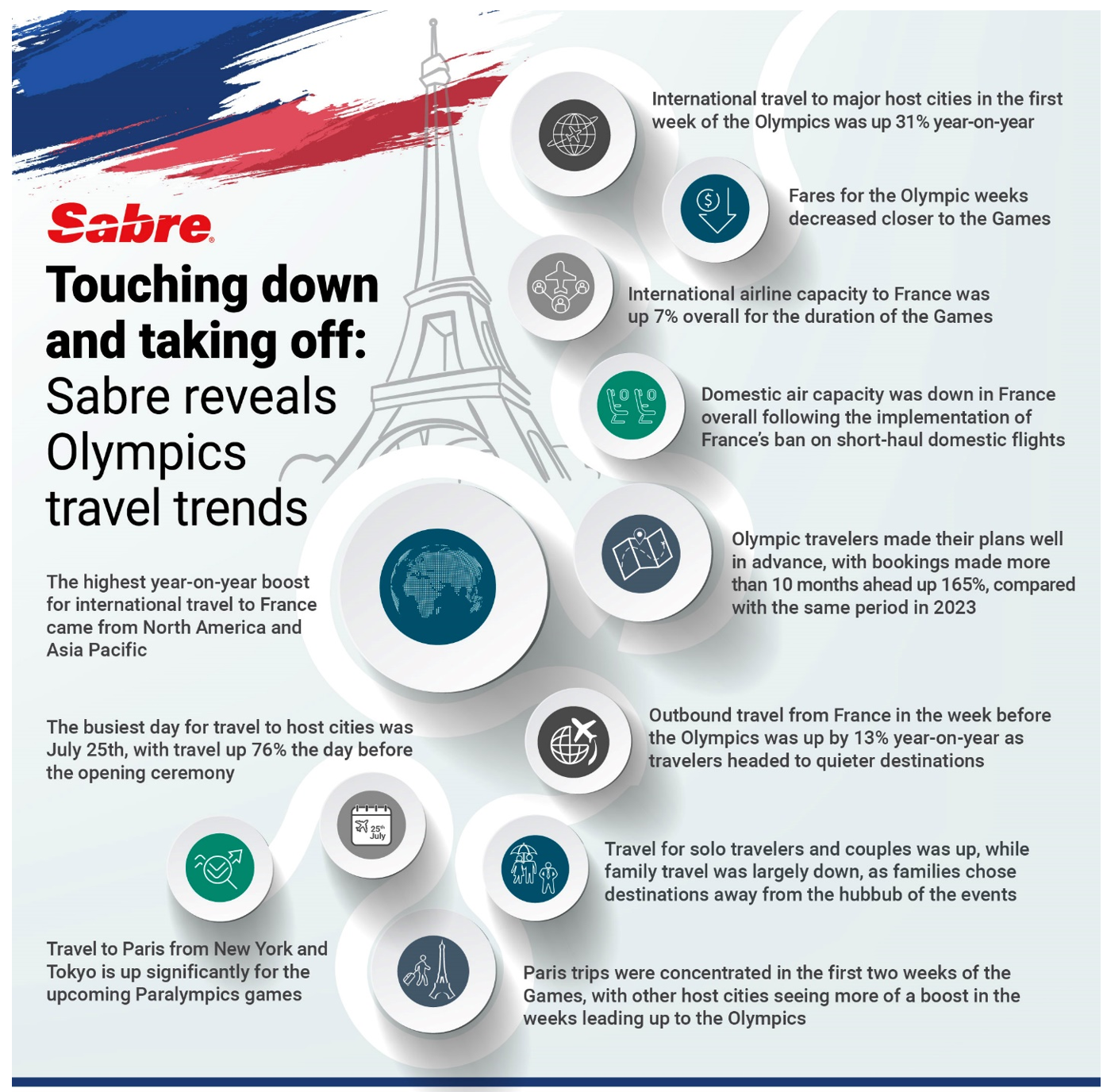
The highest year-on-year boost for international travel to France came from North America and Asia Pacific
With the Summer Games having drawn to a close, Sabre’s insights show that air travel to the main host cities during the Olympic period was up 31% compared to the previous year.
Millions of travelers flocked to France for the Olympics, as expected. However, the sporting event boosted outbound travel too, with travellers leaving host cities ahead of the Games, according to Sabre’s booking analysis.
And, while the Olympics boosted travel for solo travellers and couples, the event appeared to cause a decrease in family travel, with those with children seeking out quieter destinations away from the excitement of the Games.
Sabre has taken a deep dive into the travel impact of the Olympics, and can reveal 11 key findings:
Directions of travel
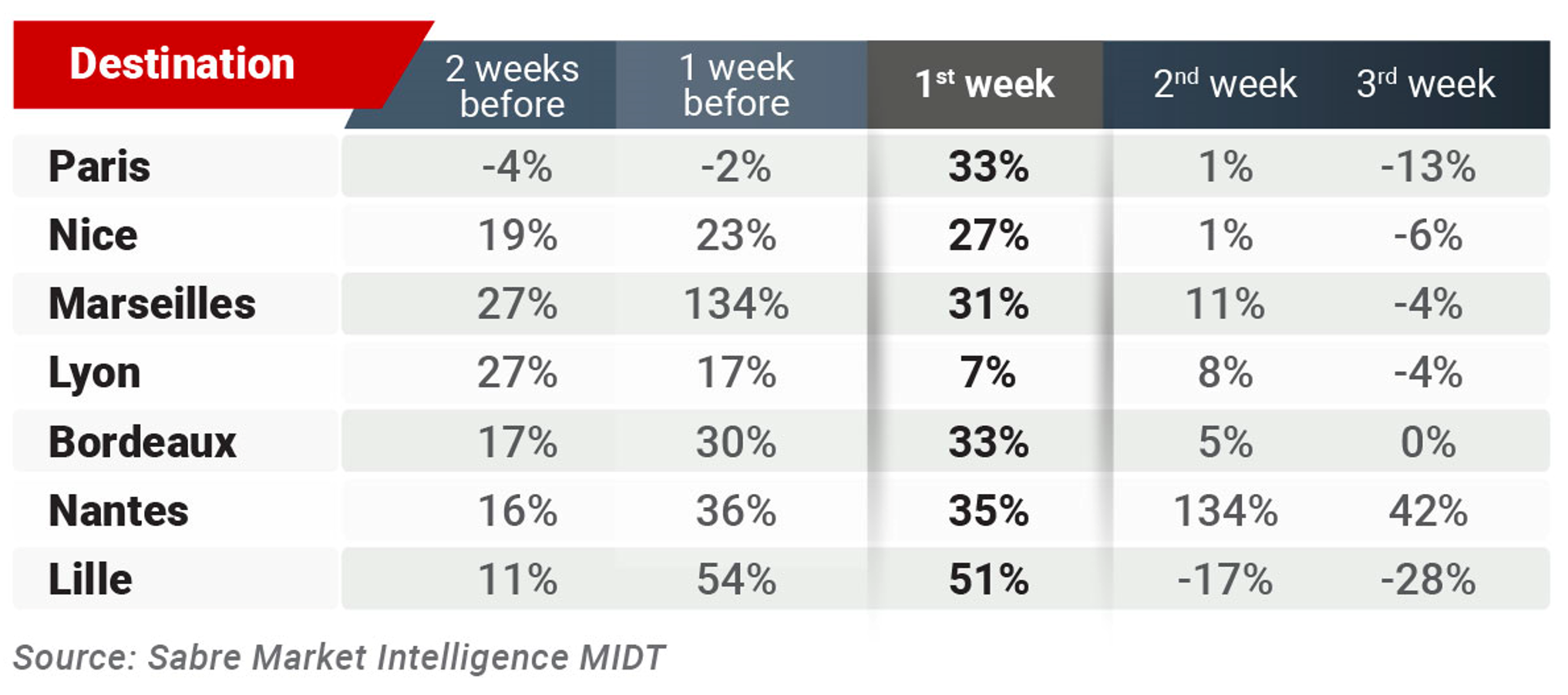
According to Sabre, Paris, where most events took place, enjoyed a big uplift in travel, with an increase of 33% in inbound international air passengers when looking at the week of the opening ceremony. Other host cities, which hosted events including football, handball and sailing, also saw the Olympic effect. Lille saw a bigger increase in travellers in percentage terms, with air travel up 51% in the first week of the Games, while Nantes had a 35% increase, and Bordeaux had a 33% lift.
Notably, Sabre’s data also shows that Paris trips were concentrated in the first two weeks of the Olympics, with opening ceremony week recording the highest increase of passengers compared to last year. However, other host cities saw a boost in the weeks leading up to the Olympics. It could be that travelers decided to take a longer vacation to explore those regions of France before heading to the Olympic events. Olympic organisers specifically encouraged travellers to explore each host city, with suggestions of non-Games-related attractions on the official Games website.
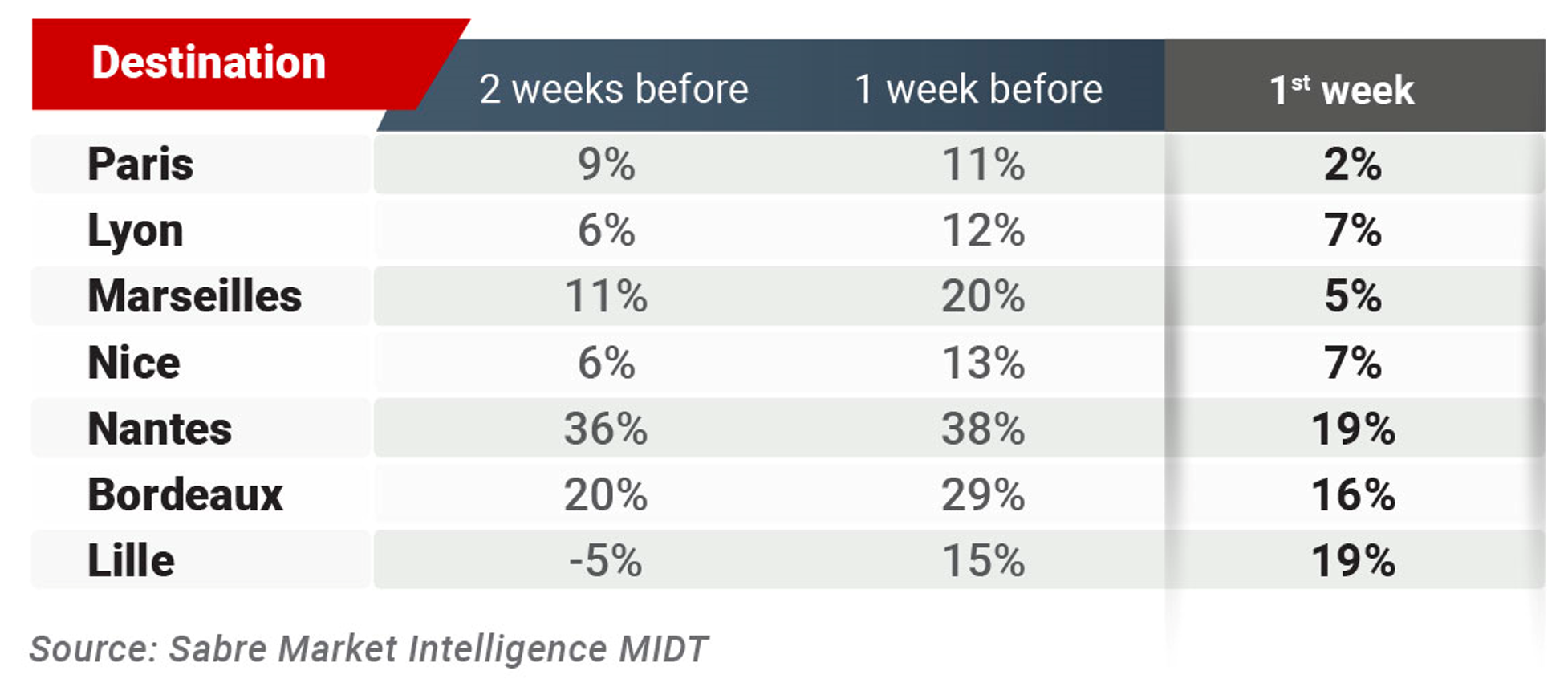
Sabre also noted that, alongside the mass influx of travelers excited to see their favorite teams and athletes, there was also an increase in outbound travel from France in the week before the Games, with outbound travel from the host cities up 13% overall in the week before opening ceremony week, compared to the same calendar week last year.
Last-minute travel but long-term planning
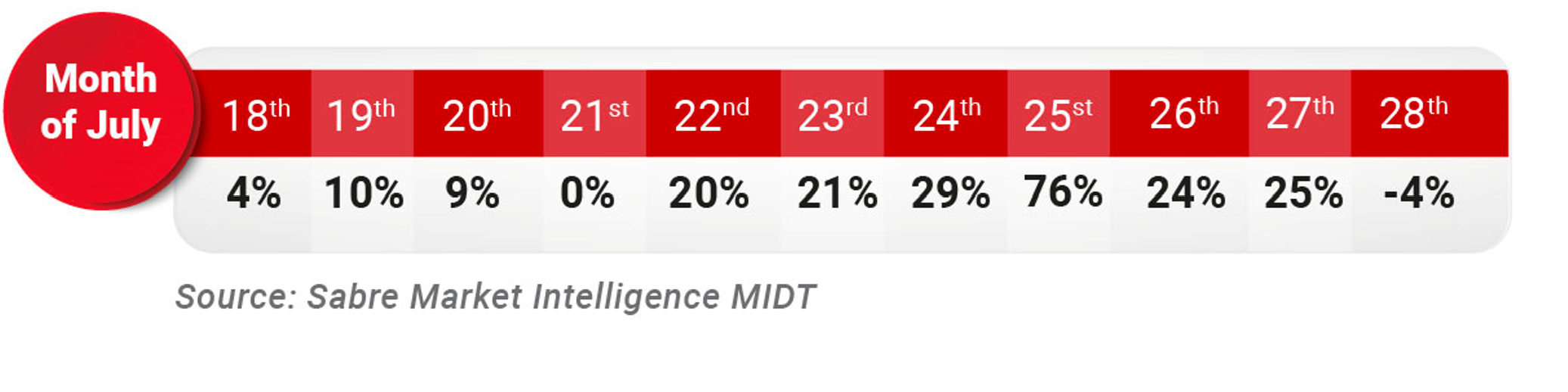
Sabre highlighted that most travellers arrived for the Games in a last-minute flurry. The company’s data revealed that the day before the opening ceremony was the busiest inbound travel day, with 76% more inbound travel on that day when compared to the same day last year. Below, you can see the year-on-year percentage increase for travel to Olympic host cities in the days leading up to, and beyond the opening ceremony. However, while they generally arrived the day before, travellers typically planned their Olympic trips well in advance.
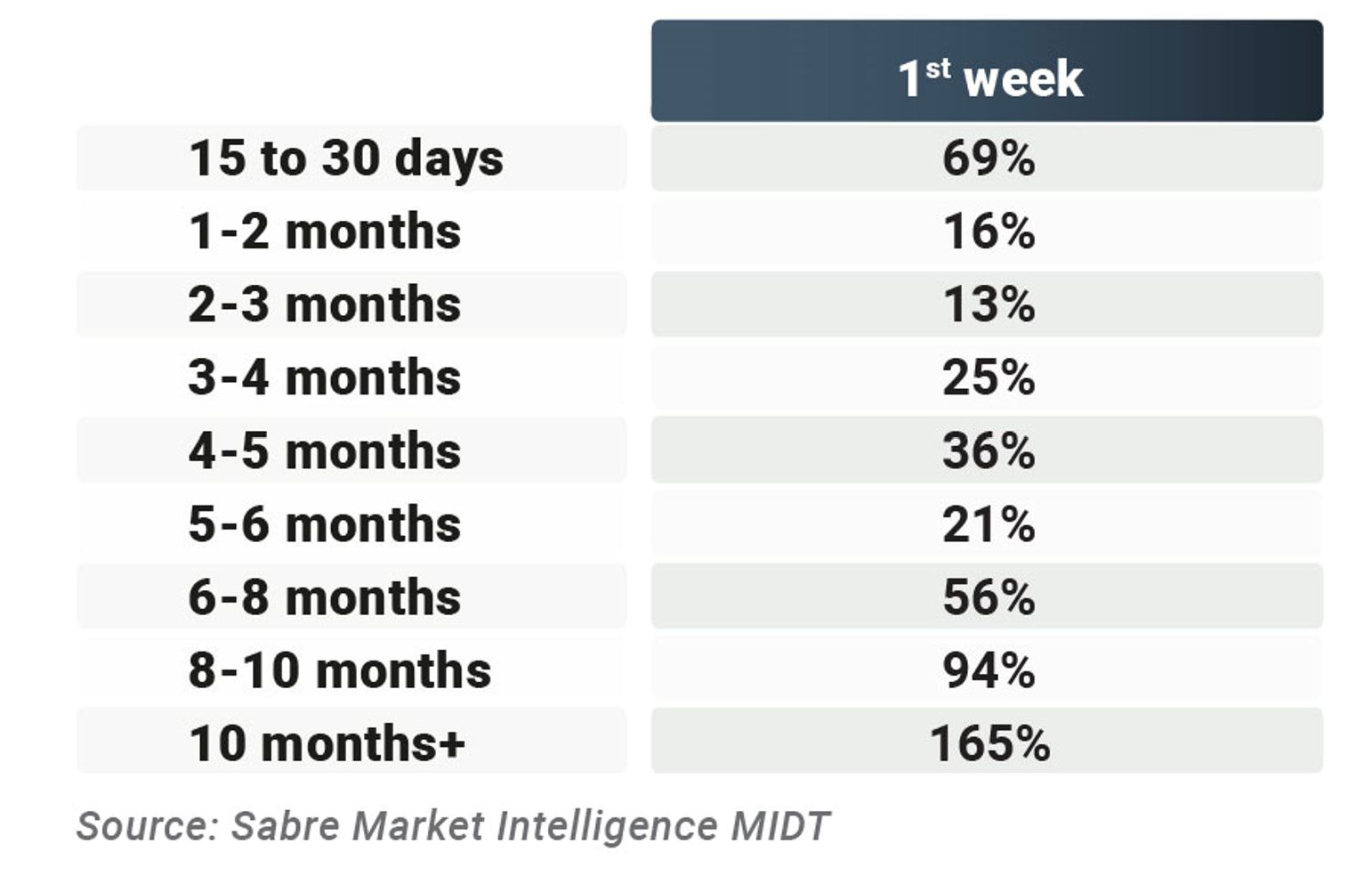
Sabre’s insights show that bookings made to host cities more than six months, eight months, and ten months in advance were significantly up year-on-year for the first week of the Olympics.
There were 165% more bookings into host cities made more than 10 months in advance for the week of the opening ceremony, compared to the same week the year before.
Fares up and down
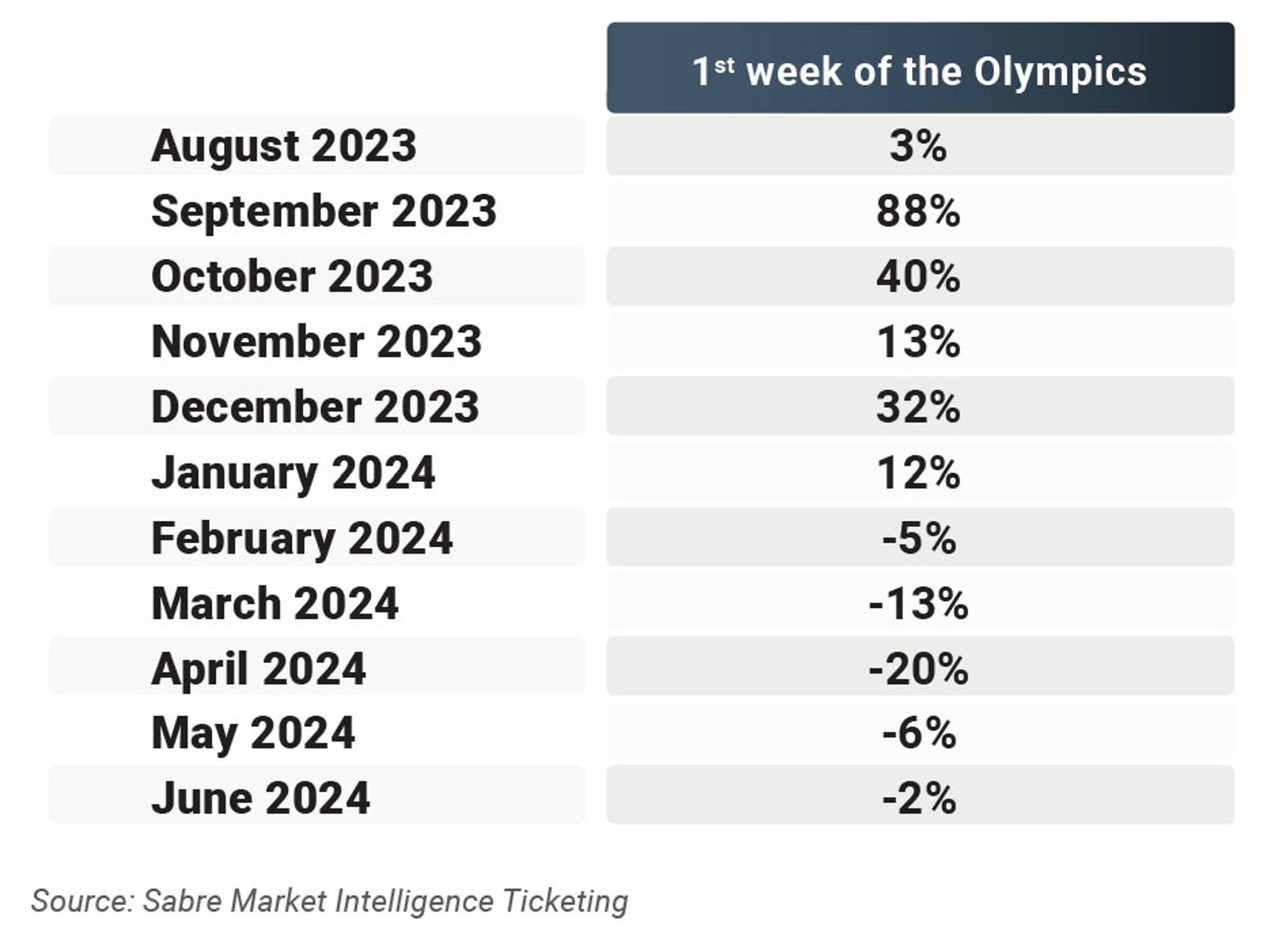
Sabre notes that while fares to host cities were generally higher year-on-year for travellers making their bookings ahead of time, fare prices then typically decreased for bookings made for Olympic dates in the first two quarters of 2024.
The highest average fare prices were 10 months before the event, matching the high demand we saw for advance bookings. Average fares for bookings made 10 months in advance were up 88% for the week before the Olympics, and then steadily reduced until they were below comparable dates for last year.
Travelling companions
Sabre’s data points out that solo and couple bookings were up to host cities during the weeks of the Olympics, versus last year, with solo travel showing a 69% increase and couples travel up by 31% overall. The company thinks that rather than traveling solo as such, groups of friends travelled to the Olympics, but made separate bookings.
However, families were much less likely to have decided to go to the Olympics than solo travelers or couples. It’s probable they opted to have their summer vacation in quieter destinations.
Airline capacity up and down
As expected, and backed by Sabre’s data, airlines increased capacity to France for the three-week duration of the Olympics (including the weeks of the opening and closing ceremonies) to meet demand for travel to the Games, recording a 7% year-on-year increase.
However, domestic capacity shows a more nuanced picture. Overall, domestic airline capacity within France actually decreased during the Olympic period, down 4% versus last year.
Sabre says that this could be partially due to the ban introduced in France last year on short flights that could instead be served by a 2.5-hour train ride. However, key routes linking Olympic cities that required a longer flight, such as Nice to Paris, and Marseilles to Paris increased capacity during the Olympics period by up to 21%.
Travelling from where?
For travel during the first week of the Olympics, Sabre saw the highest boost year-on-year from travellers from Asia Pacific, closely followed by those from North America. This increase was driven particularly by travellers from the US, Japan, and China, who saw some of the highest year-on-year increases.
According to Sabre, New York and Tokyo were the top cities flying to France during the Olympics. Travellers from Japan appear to have headed to see their national football teams in the cities away from Paris.
While travel wasn’t up overall for travel into Tahiti, where Olympic surfing events took place, there were significant uplifts from certain parts of the world into Tahiti’s international airport. For example, travel from Tokyo to Tahiti was up 1450% in the first week of the Olympics, and up 2200% from Nantes.
Looking ahead to the Paralympics
Sabre emphasises that the Paralympics are also leading to an uptick in travel. While overall travel to Paris remains slightly below last year, New York and Tokyo are once more leading the way when it comes to sporting travel. Travel from New York to Paris on August 27th, the day before the Paralympics starts, is up 79%, and from Tokyo up 71% compared to last year.