
Year of Snake heralds “the biggest travel shift” and “the biggest shift in AI”
Forget about sliding into the Lunar New Year tomorrow – the snake is leaping into the next era in Artificial Intelligence that signals the beginning of a shift in consumer behaviour as to how they book travel, as well as the beginning of a shift in the AI race for supremacy between the US and China.
In the same week that OpenAI launched Operator, an AI-powered agent tool that can interact with websites by typing, clicking and scrolling, and can search and complete purchases for things like travel, groceries, events, restaurant reservations and more, China’s DeepSeek release of a free, open-source large-language model that it says only took two months and less than $6m to build, wiped out billions from the US stock market in a day.
A CNBC report says, “The new developments have raised alarms on whether America’s global lead in artificial intelligence is shrinking and called into question big tech’s massive spend on building AI models and data centers. In a set of third-party benchmark tests, DeepSeek’s model outperformed Meta’s Llama 3.1, OpenAI’s GPT-4o and Anthropic’s Claude Sonnet 3.5 in accuracy ranging from complex problem-solving to math and coding.”
DeepSeek changes the game; Operator works with travel brands
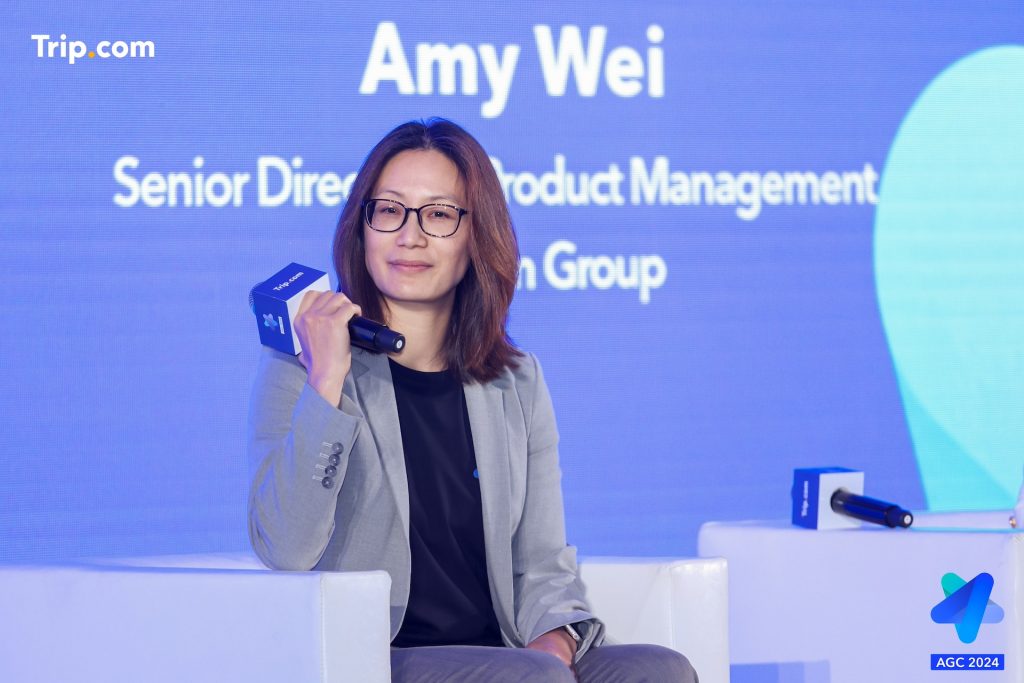
Amy Wei: “We are all very excited about the breakthrough of R1 and Janus-Pro-7B.”
In the developers’ community, DeepSeek is scoring well in reviews on Reddit, with comments such as “the game has changed, surely” and “OpenAI looked invincible once and Deepseek just one shotted. More than OpenAI Meta and Google must be panicking”.
Said Amy Wei, senior product director, China’s Trip.com Group, “Yesterday, literally less than 10 hours ago, they just released a multimodal open-source model: Janus-Pro-7B, again beating Dall-E from OpenAI and Stable Diffusion. DeepSeek is so damn cool.
“We are all very excited about the breakthrough of R1 and Janus-Pro-7B. I have been discussing this with my engineers and PMs to see how to properly use DS in our product to form beautiful travel AI products for users. It requires a lot of creativity as always.”
Back in the US, “Operator” has formed early partnerships with brands such as Tripadvisor, Booking.com, Priceline, Uber and Hipcamp, which will surely accelerate its traction in the industry.

Filip Filipov: “This is the future.”
OAG’s Filip Filipov: “The biggest travel shift”
There’s lots of debate in the ether as to whether this new agent tool will make OTAs stronger or destroy them but whichever way the cookie crumbles, this is a clear shift towards the much-anticipated agent era since the dawn of Gen AI, and the giants are the first to jump on it.
Filip Filipov, chief operating officer of OAG, called it “the biggest travel shift” since online travel began.
He told WiT, “Operator is huge. This is the future. In a year from now, we can imagine how not only your credit card will be held by OpenAI and you will trust it with finishing the transaction (right now, it requires the user input), but with memory. It will consistently take your travel history into account before making recommendations.
“It’s way bigger than the current state of Gemini and what’s crazy is – no APIs, it actually browses the internet for you.”
Ixigo’s Rajnish Kumar: OTAs facing classic innovator’s dilemma
For Group Co-CEO of ixigo, Rajnish Kumar, the release of OpenAI’s Operator feels like a full-circle moment “for those of us who have been in travel tech for a while”.

Rajnish Kumar: “It could well become the next major distribution channel in travel.”
“When we first demonstrated TARA at Phocuswright, we envisioned a future where voice interfaces would seamlessly connect with AI to handle the complexities of travel booking. What’s fascinating about Operator is how it’s made this vision scalable through a brilliantly simple approach – instead of requiring complex API integrations, it simply browses the web like a human would.
“This marks OpenAI’s second major attempt to create an App Store-like ecosystem for e-commerce platforms, and it could well become the next major distribution channel in travel.”
He remarked that OTAs now face a classic innovator’s dilemma: support this platform and potentially contribute to the creation of a powerful new intermediary, or risk missing out on what could be a transformative shift in how people book travel.
“What’s particularly interesting is the lesson we can draw from both ChatGPT and DeepSeek’s success – while the underlying AI capabilities between various players weren’t drastically different, what created massive distribution was the interface lock-in effect.
“By building an intuitive user interface on top of promising technology, these platforms have shown how to turn technical capability into market dominance. For travel companies, this suggests that the race isn’t just about having AI capabilities, but about creating interfaces that make those capabilities indispensable to users.”
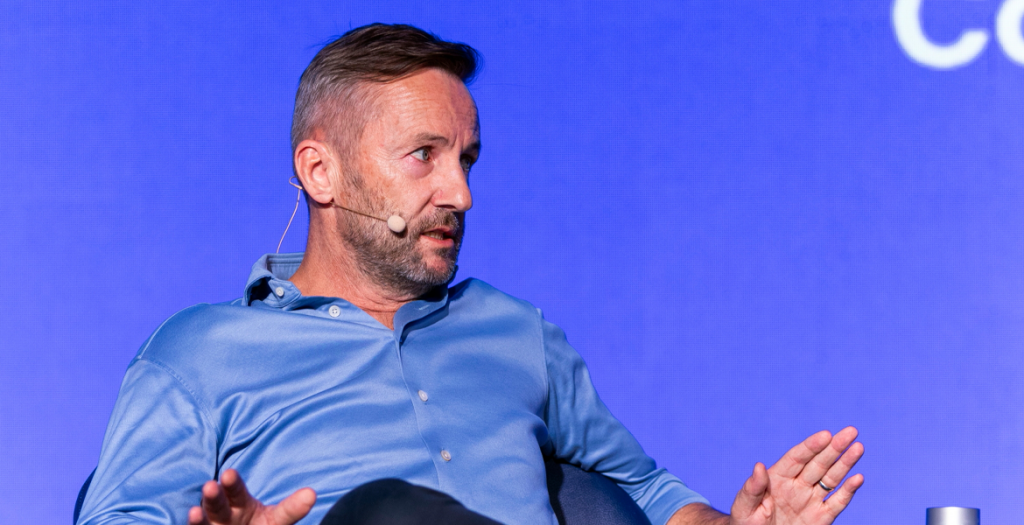
Bobby Healy: “I think there will be a hybrid approach created by disruptors that simply does a far better job at evaluating the available options and experiences.”
Meili’s Bobby Healy: “A matter of time” when people will book flights or hotels this way
Bobby Healy, co-founder of Meili, said, “I think it’s a short matter of time like about five years where this is the only way people will book flights or hotels. Does the existing duopoly have a meaningful advantage that means they could survive through this disruption? I honestly don’t think so.
“I think the aggregator advantage goes away with large language models. So who will win? I can see agents completely replacing the OS on phones. But I think it’s a generational shift to expect people to solely use their phone agents to book experiences and travel. So I think there will be a hybrid approach created by disruptors that simply does a far better job at evaluating the available options and experiences.”
The big question, he said, is monetisation. “Probably the usual affiliate relationships with the big guys or some other way. The bit that I’m unclear about is how Booking or Expedia can prevail given all they are now giant paid search arbitrage engines. Net-net, I think this is a very good thing for airlines, hotels and car rental companies.”
Dawning of the Year of The Agent
Ross Veitch, CEO and co-founder of Wego, said, “It’s still pretty slow & clunky. Agent needs user info and payment details on file to really get the job done. Current UI that mixes chat window with desktop web screengrabs from the browser running in the cloud is pretty inelegant and needs to evolve” but he admits, “It’s the worst it will ever be!”
Commenting on DeepSeek, Timothy O’Neil-Dunne of T2Impact, said, “DeepSeek does not address the problem of data quality or detritus. You still have garbage in and garbage out. In basic tests it failed to understand simple commands much less complex prompts. Tuning engines will be a challenge. I am thinking beyond the raw computing power to the business models when agents emerge. That will be very interesting.”
Said Trip.com’s Wei, “In customer service area, we have implemented more and more tasks using autonomy agents in the backend to reduce manual work. The study started last July before the Anthropic released the computer use in last October. Compared to the general solution by OpenAI, Anthropic and other Chinese players like AutoGLM, our internal solution is hybrid use of LLM understanding, function call and browser’s simulated for human operation.
“I think by 2025 there will be a lot of Agent type products. People are talking about it being the year of the agent. Frankly speaking, there are limited scenarios in daily life that you need a post-doctoral level intelligence to solve. Travel planning may be one of those scenarios and so every LLM is demonstrating their intelligence in that area. I noticed that it became a trend in 2024, so the true questions for me is, what kind of products do people need in the post-doctoral level intelligence and rest cases, that is, where people do not need post-doctoral level intelligence but still need practical and useful tools to help?”
MG’s Brett Henry to small businesses: Do nothing for now, be fast followers

Brett Henry: “Just let everybody else go and spend their money on that, and you keep doing the basics well …”
And in case you’re a small travel business and feeling overwhelmed by all the changes, coming so fast, and wondering how you will compete, the words of Brett Henry, CEO of Indonesia-based hospitality bedbank MG Group should give some relief.
“Everyone is saying how AI is going to do and disrupt everything. Of course, if there’s some commercially available tool that everybody’s using, that’s super low cost, you should adopt it. Should you have a ChatGPT account? Yes, but should the average hotel be investing in and developing AI infrastructure and capabilities in 2025?
“No, just let everybody else go and spend their money on that, and you keep doing the basics well, and wait until it becomes more known, more commercially available. Take the fast follower approach.
“My advice to people and our approach at MG is, not to do anything other than adopt simple tools that are commercial and low cost, that work in some part of our business.
“We leverage those by trying to build AI as a core part of our pricing engines or customer service and operations engines. We’re waiting and watching what’s happening, and we will be fast followers when something good and high quality comes up, and we tell hotels and agencies to do the same – do nothing, that’s the winning strategy around AI in 2025.
“Sure, if you’re Booking.com and you got the money to do this, maybe if you’re Hotelbeds, Webbeds, yes, but for the majority of companies, the right strategy is to watch and do nothing. Play the long game and wait it out.”
See related Phocuswire report