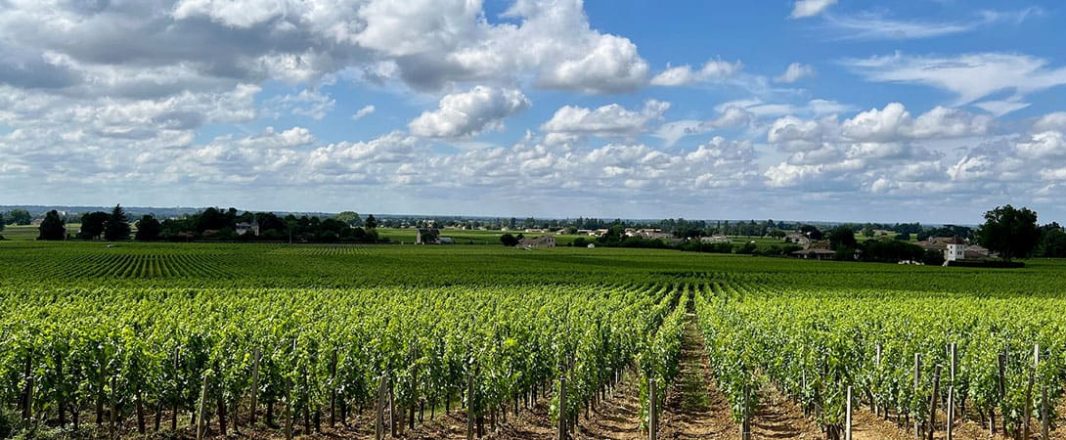
IN the ancient medieval village of Saint-Emilion in Bordeaux, France, the people who once upon a time lived there spent a lot of time underground. The unique terrain – sand, clay, limestone and a micro climate (although that is a double-edged sword these days given the storms, hail and heatwave that has hit the region of late) – made it possible.
The inhabitants of old prayed, worked, lived, presumably drank lots of wine as well as stored their wine below the ground. On a day trip to explore the village, designated a World Heritage Site by UNESCO in 1999, I did a tour of the Saint-Emilion Monolithic Church, the partly subterranean church built in the 12th century – around the same time as the Angkor temples of Siem Reap, Cambodia.
It’s quite a sight to behold from outside – the three naves that dominate the town centre – and quite a lot to explore underground with its catacombs, chambers and caves. Unfortunately, due to Covid (I like how everyone blames everything on Covid these days), they were restricting the number of tours and English-speaking tours were not exactly in demand because well, the foreign visitors aren’t really back in full force yet.
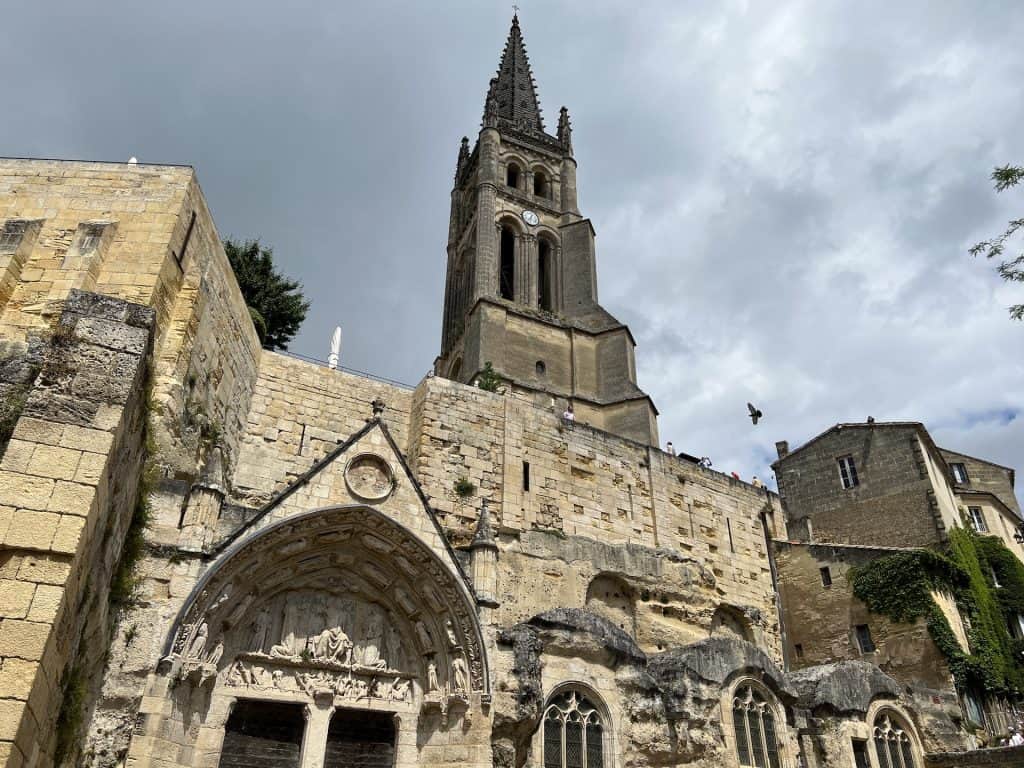
Saint-Emilion Monolithic Church: Quite a sight to behold.
So we had no choice but to join a French-speaking tour. Thankfully, there was a printed handout of the script which the guide followed to the letter so we were able to comprehend what was going on in broad strokes. For sure, it took more than broad strokes to create the largest monolithic church in Europe out of a single piece of stone and you can only imagine the gargantuan effort and endless man hours it must have taken to create this amazing piece of architecture. I guess they had a lot more time on their hands than we do now.
There was someone in our group who spoke French, and she tried to translate in hushed tones, but we kept getting disapproving looks because well, you know, there are lots of echo chambers underground. In fact, we even got hushed once – which made us blush in the dark. We were mindful that we didn’t want to be labelled as “those noisy Asian/Chinese tourists who don’t know how to behave”. We did mind the signs that no photographs are allowed underground.
This is one of those moments when I wish for some piece of tech that would livestream a direct translation of the guide’s narrative into my ears. If they can do it for “Stranger Things”, why can’t this be done?
As we walked through the catacomb with its burial chambers, rock carvings and altars, we were told this was only scratching the surface. There are reportedly 200 kilometres of underground galleries in the region, yet to be excavated and explored.
I can imagine they’d be pretty cool places to hide out in, given that climate change is upon us – so perhaps in the next century, we will have brand new cities dug out so humans can live in them. If they can store wine, they should be able to store humans too. Apparently, these underground galleries are perfect for storing wines because they keep temperatures at a constant 11-12 degree Celsius.
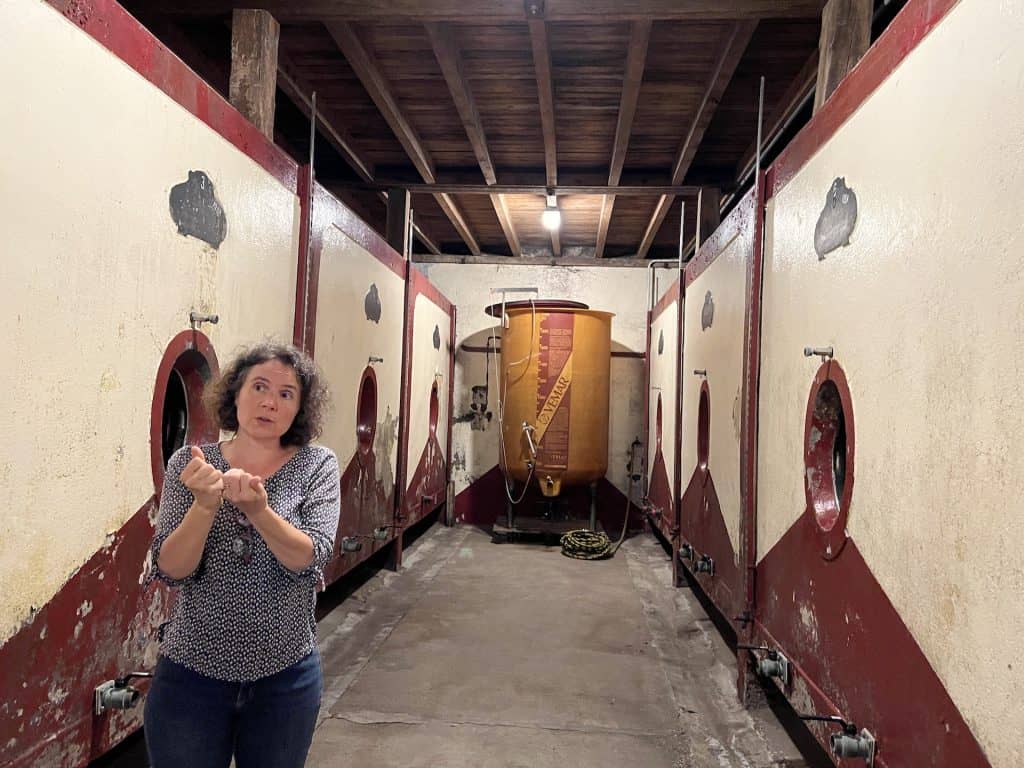
Anne, ninth-generation wine maker, explaining how her merlots are made. Chateau Lapelletrie is certified organic.
At Chateau Lapelletrie, ninth generation wine maker, Anne, took us on a tour of her wine cellar converted from a quarry by her grandfather. Used to store wines since the 1930s, it fell into disrepair until Anne returned to take up the reins of the family business in 2002. She reinvigorated the quarry as well as the vineyard, and got it certified organic after three years of hard work of “balancing nature with wine-making”. Today, her vineyard produces only merlot in its 10 hectares – about 65,000 bottles a year. Anne’s not sure her children will follow in her footsteps but for now, she’s proudly honouring her grandfather’s legacy.
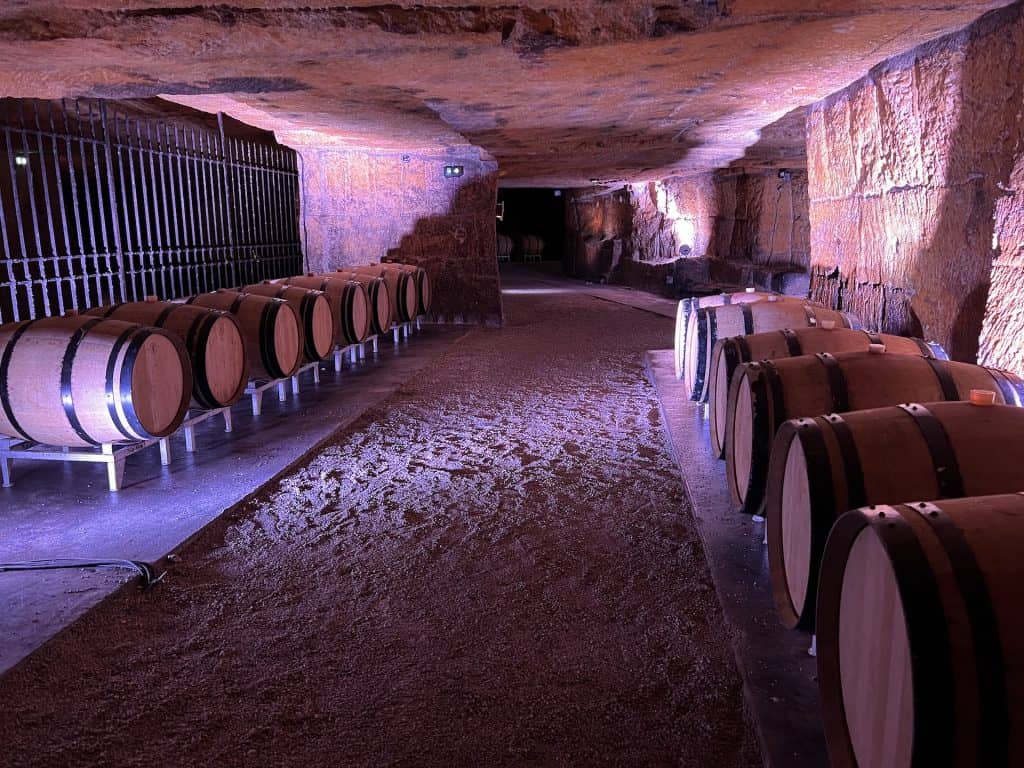
Wine cellar converted from a quarry – perennially cool throughout the year.
With almost 800 chateau in Saint-Emilion, you can tell wine growing, as rich a tradition as it has in this area, is not an easy business. Competition, changing weather conditions, tight labour market and the lack of tourism the past two years have created a tough climate for family-owned vineyards, of which there are many.
Our next stop Chateau Franc Wayne was a family business that lasted approximately seven generations before it was recently sold to private owners. Our guide tells us that wine real estate is pretty expensive in this neck of the woods – with one hectare going for about 10 million Euros.
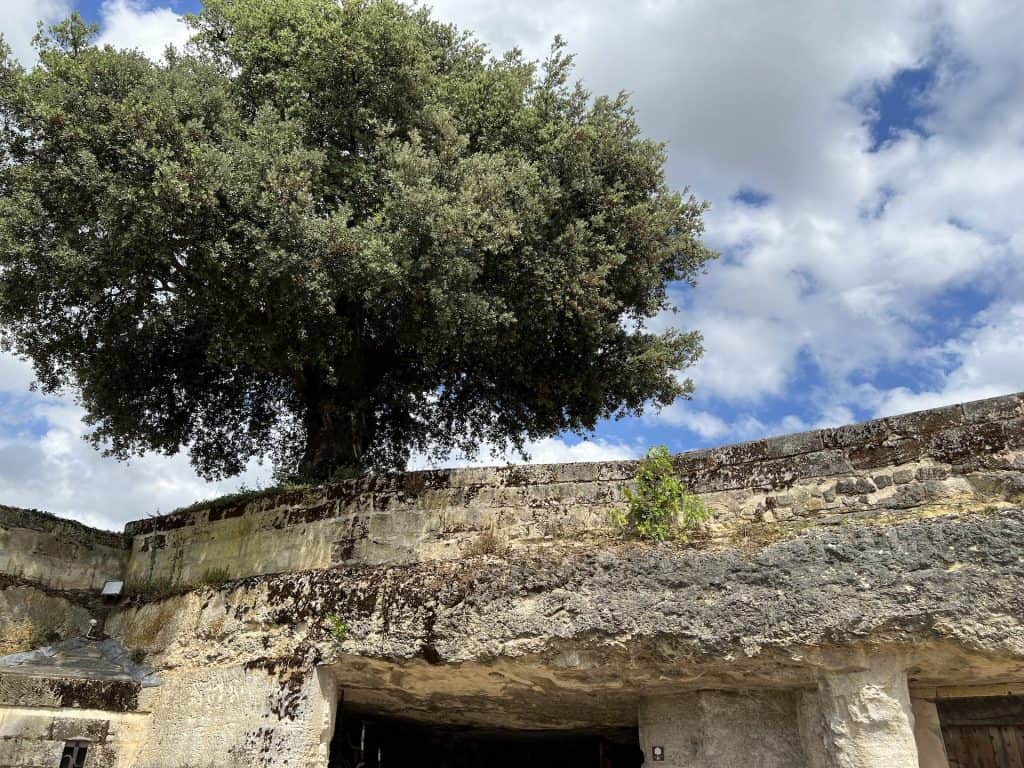
The 250-year tree that sits on a rock is one of the distinguishing features of Chateau Franc Wayne.
As this is definitely out of my price range, I settle for a few bottles of its Grand Cru which I arrange to ship to Singapore. And would you know, there’s a limit of five bottles to Singapore and it has the highest import duty of all the countries the chateau ships to. And guess what, yesterday, I got a call from DHL to say I had to pay another import duty before they could deliver it.
I am sure the wines will be worth every drop.
“We miss the Chinese,” said our guide as she swipes my credit card. I can imagine. They are way bigger spenders – some of them buy not only bottles of wines but entire vineyards and chateau. In this neck of the woods, they whisper about Jack Ma who made the headlines in 2016 when he became the latest Chinese billionaire to buy an entire chateau and vineyard – the Chateau de Sours in Bordeaux, an estate spanning 80 hectares, and, at that time, shared plans to create a mini-Versailles.
A report in 2020 said that “out of 8,000 vineyards and chateaux in Bordeaux, the Chinese have bought about 170 estates, representing about 3% of the wine region’s overall ownership, most of which are non-classified Chateaux”.
A blog from a visitor to Jack Ma’s place in December 2020 reported no wines or wine tasting offered on the tour as yet, instead they saw vast tracts of orchards and lots of animals.
Unfortunately, I did not have time to visit it on this trip – I wonder whether he built underground.