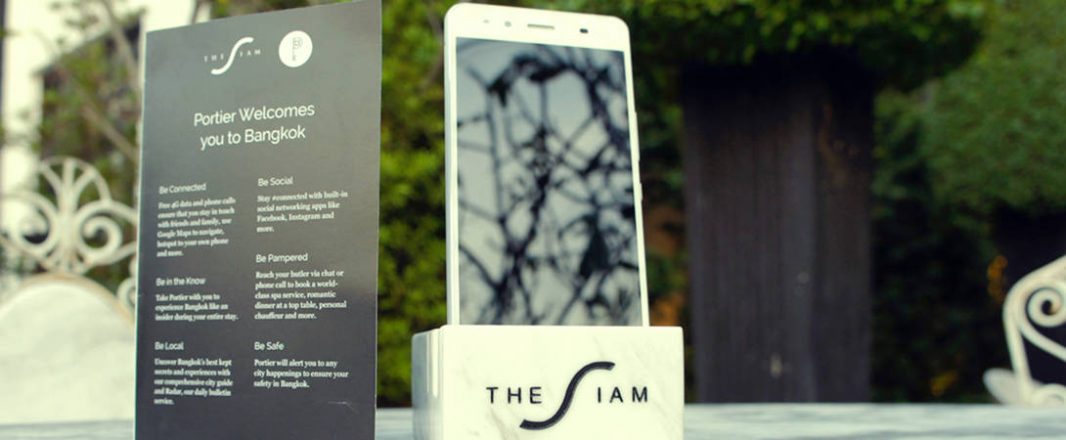
How does a small urban luxury resort of just 28 suites and 11 pool villas, already known for its personal servide and top-notch butlers, get even more personal with its customers?
Well, The Siam Bangkok has deployed an in-room technology called Go Portier which will allow guests to explore the city freely with a customised mobile phone, contact their butler anytime while arrangements are uploaded to the itinerary planner, My Stay, and be inspired by original content on things to do in the city.
A daily Radar bulletin introduces guests to cultural activities taking place during their stay, connecting them to local communities of artists, musicians, chefs and more. The content is available in English, Japanese, Simplified Chinese and Arabic.
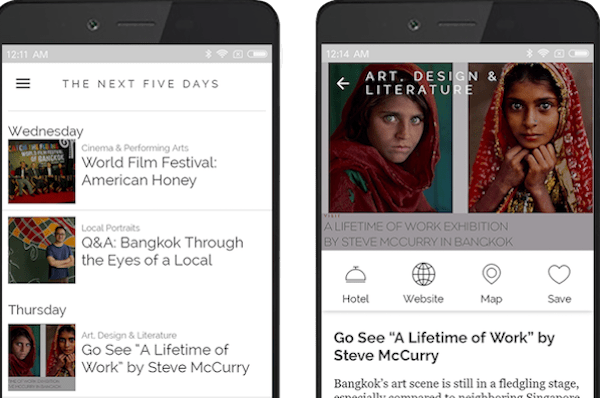
The daily Radar bulletin with content in English, Japanese, Simplified Chinese and Arabic.
“We are the first hotel they’ve launched with worldwide,” said Nick Downing, general manager of The Siam.
Asked why he chose to go with a new product, instead of Handy by Tink Labs which recently raised $125 million for a global rollout, he said, “We looked at different options, and like the idea of working with a startup. The fact that we are first means it’s a unique relationship, they have something to prove and they will tailor the product to us.

Nick Downing: Technology should enhance the human touch, not remove the human element.
‘We don’t want to be just another hotel experience, and their team is committed to finetuning their offerings to what we wanted to do. We have two fulltime writers creating and updating content for our guests.”
Downing said that when the idea was first raised among the hotel’s staff, it met some resistance. “There was concern among some staff that this would remove us from the guests but I assured them that this was more of a communications tool and that it would enrich our communication and engagement with guests.
“It is important for a hotel such as ours not to remove the human element, technology should enhance the human touch.”
Launched last month, Downing said the hotel would track usage closely to understand guest behavior and needs.
The Go Portier deployment is part of how The Siam is striving to stay relevant and differentiated with the use of technology and a sharper digital strategy.
A new website is about to go live, which will be more visual, and have clearer differentiation between the room categories. Downing said 30-35% of its online bookings are direct and a key mission is to increase that percentage.
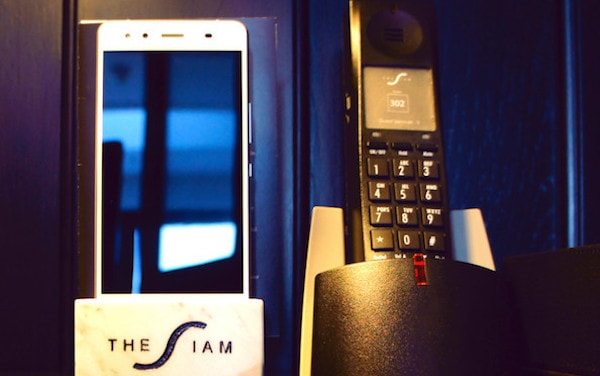
The Go Portier s helping The Siam to stay relevant.
Social media plays a huge part in spreading word of mouth. “We are a highly Instagrammable hotel and we hosts high end bloggers regularly,” he said.
He agrees that it is increasingly hard for small, independent properties to stand out in a market of consolidation and scale.
Downing, who’s managed similar properties such as the Hotel de la Paix in Siem Reap (before it became Park Hyatt) and the W in Samui, said, “It is getting harder and harder to stand out. You now have mega groups and owners are seduced by scale and distribution and who can blame them.
“It is true too that the terms “luxury”, “urban”, “boutique” are so overused these days it’s easy to get drowned out so you really have to be different to stand out.
“We don’t call ourselves boutique because that implies we don’t have full service. We are positioned as a small luxury urban resort.”
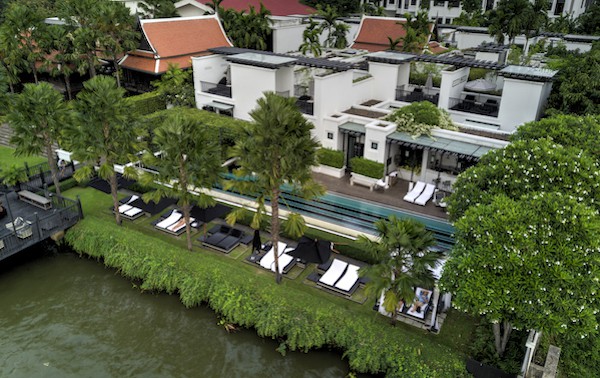
The Siam’s pool villas and main swimming pool
Designed by the famous Bangkok-based hotel designer Bill Bensley, The Siam opened five years ago and marked a statement by the Sukosol family to carve out a different market as well as reimagine their portfolio of hotels, which consists of The Sukosol in Bangkok, and Siam Bayshore and The Bayview in Pattaya.
The rooms are generous in size, minimum of 75sqm, in an era where space is a luxury.
Acknowledging the competition in the luxury market in Bangkok, he said, “The proof is in feedback that we get. We are #1 in Bangkok on TripAdvisor, and we are part of Virtuoso, as well as part of the Legends collection in Preferred. It helps to position us against the well-known brands like the Oriental.”
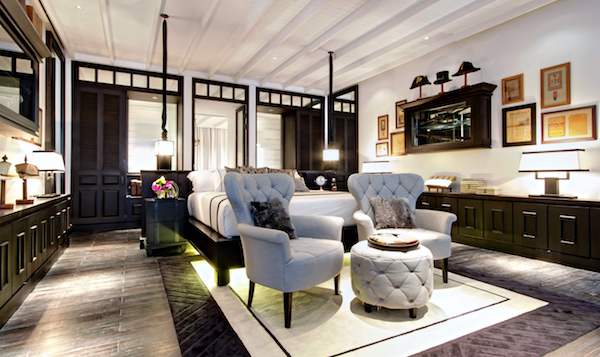
Bedroom in the Siam Suite
Its customers come from diverse markets with the US the leading market, followed by Europe and Asia. China, Japan, Korea, Hong Kong, Singapore and Australia are key markets in Asia Pacific. The ages range from young couples to empty nesters doing their Asian tour, said Downing.
Its average rate ranges from 15,000 to 20,000 baht, depending on the season.
Downing said he was drawn back to managing The Siam following a corporate stint at Minor Hotels Group “because I prefer to know my guests. I like small and intimate hotels”.
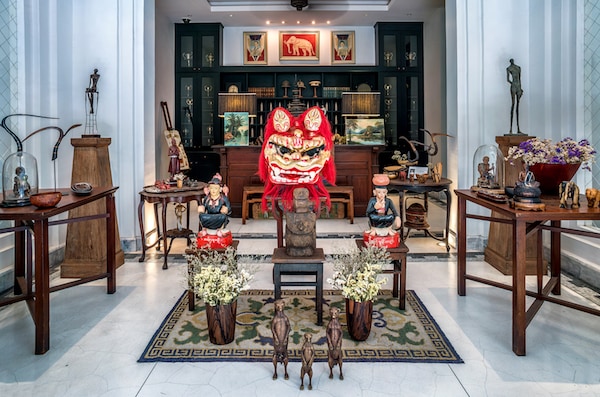
Part of the hotel’s art collection
“The physical property is stunning, I am working with a passionate owner and I always joke that the art collection in the hotel is worth more than the hotel. It’s really like the resorts I used to manage in the Maldives except this is in Bangkok.
“This is a passion project for the family, there’s a story behind every picture, every piece of furniture.”
• All images credit: The Siam