The leading leisure destination is forging ahead with a sustainability roadmap to achieve its ambitious climate goals.

SINGAPORE’S Sentosa island is a complete destination in itself, with a variety of attractions, resorts, restaurants and enriching experiences on one island, just minutes from the city. While most may associate Sentosa with thrilling adventures and relaxing getaways it does all of the above and more – with its island charm, rich nature, and heritage – while remaining committed to the environment and sustainability.
Sentosa Development Corporation (SDC) and its partners have rolled out a variety of initiatives under the refreshed Sustainable Sentosa strategic roadmap, which will propel Sentosa towards the island’s collective goal of carbon neutrality by 2030 and becoming a globally recognised, certified sustainable tourism destination. Under the roadmap launched in September 2021, Sentosa will be doing its part to build a sustainable Singapore and safeguard a greener world for future generations of Singaporeans and global visitors.
Among the diverse initiatives over the next 10-15 years guests can look forward to the electrification of all Sentosa transportation, the utilisation and implementation of renewable energy solutions such as solar, tidal and waste-to-energy generation, as well as the development of low energy buildings and more options for sustainability-focused events.
While Sentosa prepares to roll out these initiatives guests can already experience the island’s natural sights and immerse themselves in its many eco-offerings, such as its nature trails and golden sandy beaches, which will help guests better understand the importance of sustainable practices and conservation.
1. Sentosa’s award-winning experiences

Sustainability has long been a key principle in Sentosa’s development over the years. It is therefore no surprise to see Sentosa garnering accolades for its sustainability efforts.
In 2021, Sentosa became the first destination from Singapore to make the list of Green Destinations’ Top 100 Destinations Sustainability Stories in the world. The island’s integrated resort, Resorts World Sentosa, has also been certified by the Global Sustainable Tourism Council (GSTC) for its sustainable hotel offerings. In addition, the resort was conferred the Special Award for Sustainability at the 2021 Singapore Tourism Awards.
Elsewhere on the island, the award-winning Sentosa Golf Club has been named the World’s Best Eco-Friendly Golf Facility at both the 2020 and 2021 World Golf Awards for its sustainable practices. The Club’s various initiatives include banning single use plastics; incorporating reservoir water features within the courses to allow them to be self-irrigating; replacing its golf carts with rechargeable and more energy efficient lithium batteries; and introducing bee colonies around the golf course to boost the global bee population. Sentosa Golf Club has also pledged to become the world’s first carbon neutral golf club by 2022, in line with the wider Sustainable Sentosa Strategic Roadmap.
2. Sentosa’s rich biodiversity and heritage

Sentosa is home to 26 carefully preserved heritage trees and over 30 conserved buildings. The island’s coastal areas and rainforests are also home to diverse habitats like coastal rainforests, rocky seashores and wetlands, as well as wildlife like peafowls, marine animals, migratory birds, swiftlets, insect-eating plants, and butterflies. Smooth-coated otters can also sometimes be spotted frolicking on the beaches, while endangered Hawksbill turtles often return to Sentosa’s beaches to lay their eggs.
A visit to the island thus allows guests to experience nature and heritage amid its popular destination experiences – for example, guests can stroll along the Imbiah and Coastal Trails to connect with nature, before exploring Singapore’s only preserved coastal fort at Fort Siloso, and then head to the nearby golden beaches.
Guests are advised to heed Sentosa’s Nature Area Guidelines when visiting these areas. Only guests on SDC-approved guided tours are permitted into certain areas to protect the fragile biodiversity at the sites, and for guest safety due to the uneven terrain.
Such guided tours include Sentosa’s new SentoSights tours, which give guests deeper perspectives into the importance of sustainability and conservation, through the exploration of Sentosa’s natural and heritage sights. More tours will be launched in 2022.
3. Saying no to plastic

Several Sentosa establishments have eliminated single-use plastics, including Resorts World Sentosa, Sentosa Golf Club, and others. Additionally, dotted around Sentosa are Reverse Vending Machines – at Beach Station, Resorts World Sentosa and Sentosa Cove Village – where guests can drop off empty plastic drink bottles and aluminium drink cans for recycling. In return, guests will receive a small token of appreciation such as Sentosa Fun Pass tokens, which can be redeemed for leisure experiences on the island.
4. Green Transport

Sentosa has ambitious targets in greening the island’s transport network. Come 2025, 100% of Sentosa’s on-island public transportation will be electric, with electric buses to be progressively deployed in Sentosa from 2022. All SDC-owned carparks will also be electric vehicle (EV) charging-enabled by 2030.
As Sentosa progresses towards its sustainability goals, green transport options are already available to guests. Sentosa’s fleet of beach shuttles have been fully-electric since 2020, while the Sentosa Express and the cable car network have been electric since their inception. Designated cycling trails also provide a clean and convenient mode of transport. As a bonus, the vertical green walls along the tracks of the Sentosa Express reduce urban heat and blend in seamlessly with Sentosa’s lush greenery.
5. Eco-friendly Infrastructure

Energy conservation features have been implemented at various buildings in Sentosa. For example, Universal Studios Singapore (USS) and Adventure Cove Waterpark have rooftop solar panels that can generate about 650,000kWh of electrical energy, which is sufficient to power about 140 four-room Housing Development Board (HDB) flats for a year. USS’s central lagoon also has the capacity of about 13 Olympic-sized swimming pools, in which rainwater and condensation from air conditioning systems are stored and used for landscape maintenance and water features. Moreover, all new SDC-owned buildings will be constructed to attain the Green Mark Platinum Super Low Energy (SLE) certification.
6. Exploring the rustic Southern Islands

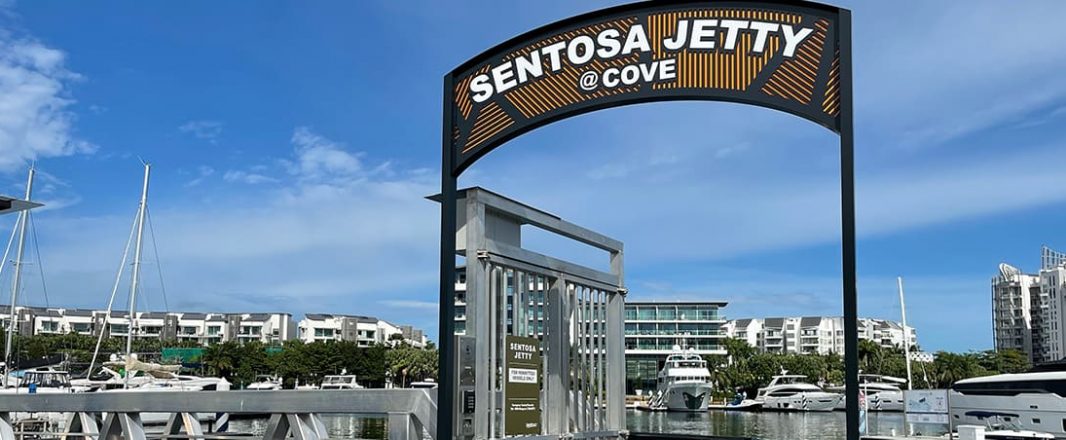
For those looking to broaden the sustainable leisure experience, Lazarus Island and the connecting St. John’s Island are now only 15 minutes away from Sentosa by way of a new ferry service at Sentosa Cove Village, allowing guests to extend their Sentosa getaway.
Very soon, guests can also look forward to new low-carbon leisure experiences on the islands, including traversing St John’s and Lazarus Islands on rented bicycles, glamping amidst nature, and experiencing off-grid accommodation options – all away from the hustle and bustle of the city.
Guests can look forward to even more sustainable offerings in Sentosa in the years to come, be they the island’s leisure offerings, infrastructure or sustainable practices.
The next time you visit Sentosa, do take some time to appreciate its hidden natural gems, and the various ways in which the island is taking a stand towards a more sustainable future.