The fourth edition of Tern Travel Careers – an event designed to build awareness of the range of career opportunities available in travel and connect industry figures with future talent – featured a cast of speakers spanning hospitality, online travel agencies, corporate travel, tours and activities and more.
Here are the key takeaways:
Think beyond traditional travel. Every vertical is evolving with technology.
Across the audience, many asked – “I’m studying engineering but I love travel, is this event relevant to me?” It reflected how awareness of the diversity of careers in travel is still limited to fairly traditional roles, like working in hotel management or as a tour guide.
In the event’s opening session, figures representing different travel sectors – specifically, F&B, hospitality, tours and activities, online travel, luxury, and corporate travel – highlighted how jobs were evolving in each respective space, to demonstrate just how much has changed in the last few years.
Lucas Peng (CEO, Peak Hospitality Solutions) remarked on how traditional hospitality jobs experience high turnover (46% in Singapore, the highest in APAC), which is naturally increasing the pressure on the industry to “redesign jobs for the future.”
Louise Daley (deputy CEO, Accor APAC) shared how the food and beverage industry is triple the value of travel, with a projected worth of $3.8 trillion in 2019, as it goes digital through the rise of food-tech companies like reservation and delivery apps.
Beatriz Ruiperez-Fresno (Vice President, Operations, BeMyGuest) talked about how the thrill and promise of the third largest travel segment – tours and activities – is making tech giants stand up and pay attention, with its valuation of $183 billion by 2020.
Graham Hills (Head of Asia, Luxury Escapes) discussed how the pursuit of unique experiences and the power of social media is changing how luxury travel brands market themselves to an online generation.
And Bertrand Saillet (Managing Director Asia, FCM Travel Solutions) explained how corporate travel companies are focused on providing technological solutions that make the business travel experience seamless.
Critical thinking, empathy and stamina will always be essential
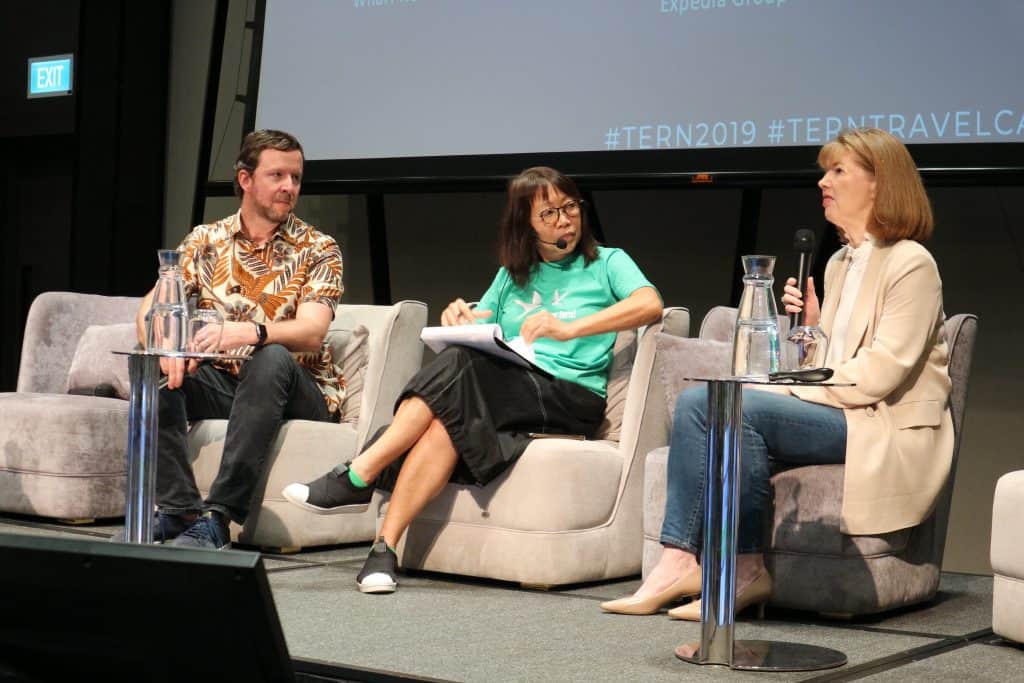
Despite their diverse backgrounds, Greg Schulze (Senior Vice President of Commercial Strategy and Services, Expedia Group) and Jennifer Cronin (President, Wharf Hotels, Hong Kong) agreed that these three skills were (and still are) fundamental to their success in travel.
However, don’t expect all of these skills to come at once. Schulze, with a background in engineering, explained that his analytical and problem solving skills were strong from the start, but he developed his interpersonal skills as her grew into more leadership positions farther down the line. Cronin, on the other hand, was the direct opposite.
Cronin stressed the importance of sustaining a “forever learning” attitude – the constant pursuit of developing new understanding and skills and the world changes around you. It has the power to change your mindset throughout your career.
No matter how high you climb, you’re never done learning.
Don’t choose between love and money. Find out how to make money, doing what you love.
Isabella Crocker (Head of Early Talent – APAC, Expedia Group) put it best when she said, “you are the CEO of your own career”. Finding your groove in travel will take time, effort and a fair bit of trial and error, but you must use your values and ambitions to shape your own career.
“Only you can know what your passion is. Think of yourself as a company, think about what your personal vision is and incorporate your values… create your personal brand statement,” Crocker advised.
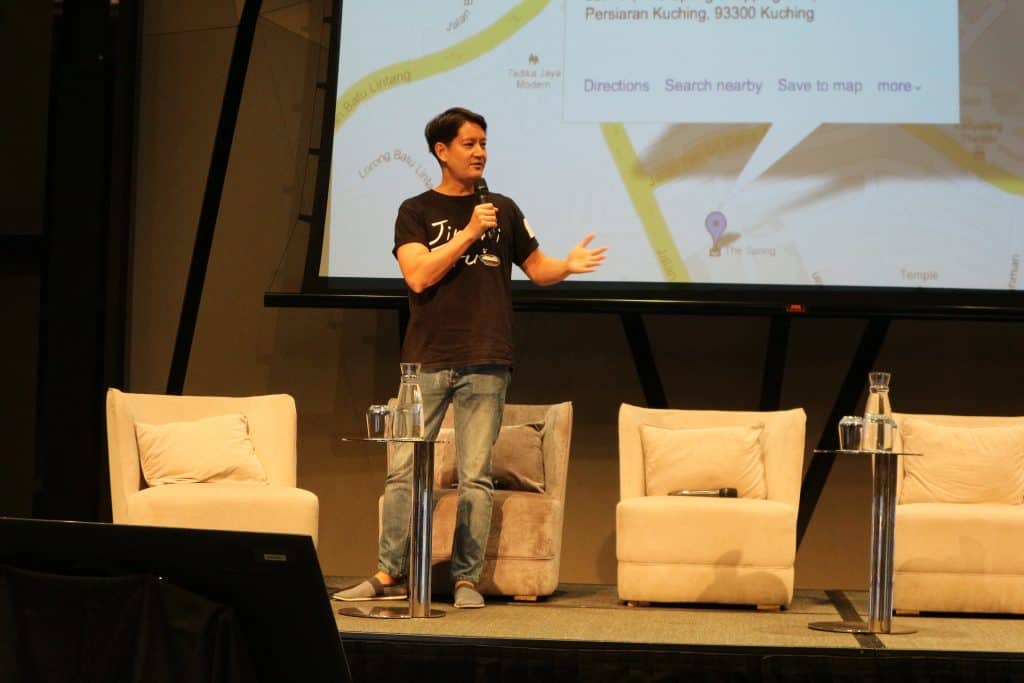
Jason Chan and Christian Lee (founders, BananaMana Films) shared the sentiment, as they faced a winding journey on their way to becoming filmmakers, producing hits like Perfect Girl and Jimami Tofu. While they knew they could be successful in a well-paid corporate field, it didn’t align with their values, passions or real ambitions.
“When you have some money, you start to limit yourself…but [without] money, you have so much more creative freedom,” said Chan and Lee. “Money can always sway your choices” but it may not necessarily be the path to fulfilling work.
When trying to find what motivate you, ask yourself, “Would you do it for free? Would you pay to do it?”
Whether you work for an MNC or a startup, you must find a sense of belonging and ownership over what you do
Any career experiences an inevitable mix of hits and misses, and finding where you fit in will take a bit of experimentation. A recent survey showed that while the number of graduates looking to work in tech is increasing; only 27% said they would consider working for a startup.
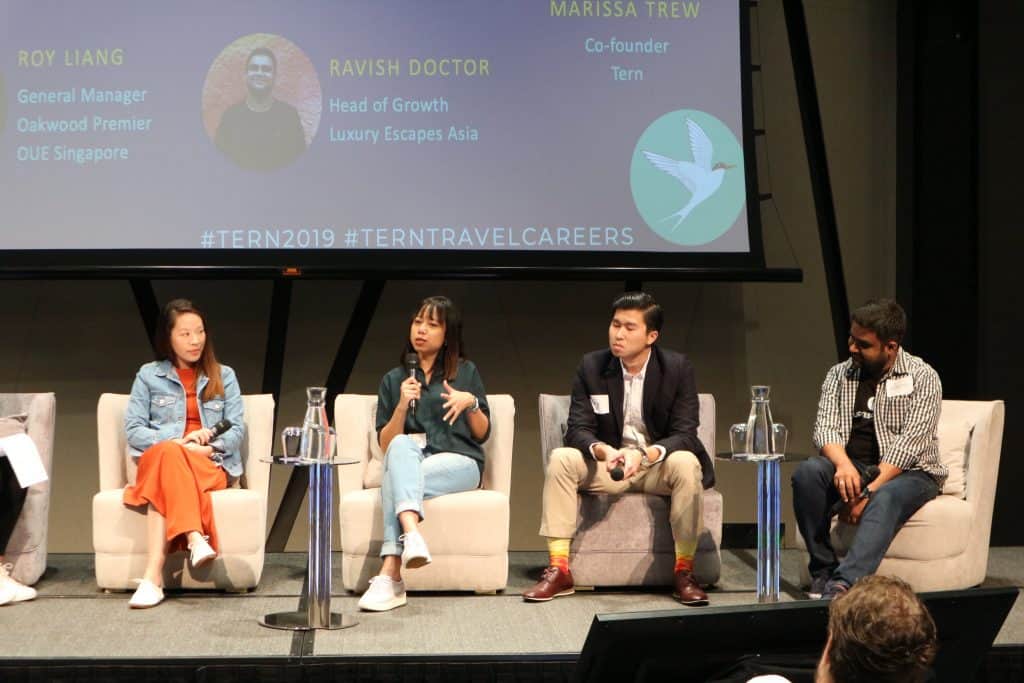
Syaz Haniff (Business Development & Sales Director APAC, Travelsify) said she only understood where she fit in after experiencing both the startup and corporate world.
“When I was in university, I thought I would join an MNC and climb the corporate ladder like everyone else… after working in a startup environment, I realised when I went into corporate, I felt really out of place.”
Similarly, Ravish Doctor (Head of Growth, Luxury Escapes Asia) found that after having worked for large MNCs, he gravitated towards smaller and leaner organisations. “I personally feel that the opportunity to see change and have an impact is much greater.”
They both agreed that when in a startup, you feel you belong in that space as everything you do contributes to the growth of the business. However, that is not to say that corporate companies cannot grant employees the same level of ownership over their work as startups.
Melissa Lin (Business Analyst, Expedia Group) said, “I’ve been in a corporate world all of my life, and Expedia has had the best culture so far in its closeness to a startup… everyone has the opportunity to speak their mind. They don’t discriminate based on the level of your employment.”
“You can’t work for a startup without believing the business… everyone has to be fighting for that same goal. When one person drops out, the holes start to show,” said Haniff.
Leadership comes from within
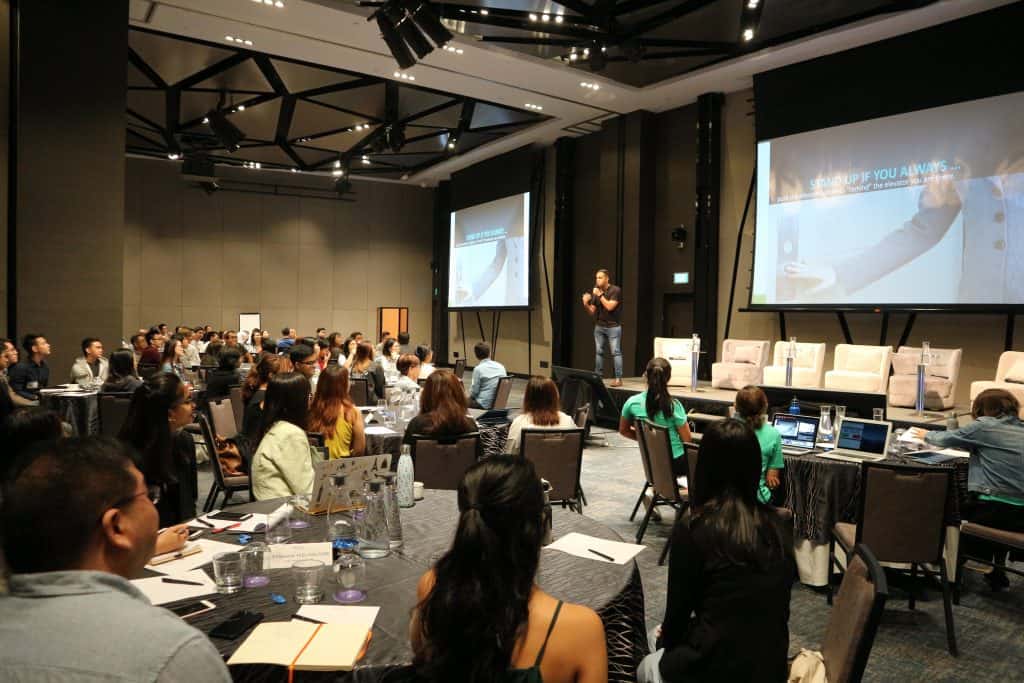
Michael Vaz (Vice President, Learning & Development, Accor APAC) offered seven “leadership life hacks” to help anyone transform into a successful leader in today’s world.
Though leadership is often regarded as having influence and command over others, Vaz said it must first come from within. Vaz explained that focusing on the self is critical to being able to project leadership qualities and take command of your career.
Using introspection to evaluate your preferences, decisions and behaviours, will guide how you interact with the world. Asking key questions about yourself can help you recognise where your strengths lie, the kind of environment you might thrive in, and the types of opportunities you should look out for.
For example, Vaz said that emotion cannot be underestimated when assessing our choices. “We experience 27 emotions per day… we’re making critical decisions based on how we’re feeling.
“Check your BS – belief systems – every time you walk into a meeting,” Vaz advised. Be aware of how your values and opinions guide your decisions and behaviours every day, to get a deeper understanding of how it might influence you and the others around you.
When it comes to figuring out where you fit in professionally, Vaz said there is power in boldly asking questions to understand a situation better. He addressed how most of us would typically rely on the internet to yield our answers, arguing, “Google can’t always give you the absolute truth… find people that are in the job you want and ask them [about it].”
You’ll learn most skills in the real world, not in the pages of a book
While an academic degree undoubtedly has value, you will learn the most important lessons in the real world, both before and after you toss your graduation cap.
In his final year of university, Rayner Loi, co-founder and CEO, GoodforFood said his degree hasn’t helped him a single bit when it came to building his business.
“Accounting and law has been the only help… the system doesn’t really allow us to try things. There is stigma behind failure and it’s stopping us from breaking into the narrative of what success is really like,” said Loi.
In hospitality, Roy Liang (General Manager, Oakwood Premier OUE) said, “when you start working, you realised the world isn’t like that… it’s like a jungle. You go to university to give you the technical skillsets, but there are things it cannot teach you. You need to become creative, resourceful, goal driven.”
This learning must start young. Mei Yi Yeap (Founder and Organised, PechaKucha Petaling Jaya), who is beginning a new education venture, is focusing on cultivating curiosity and talent amongst 10-13 year olds. “This age is a time when negativity has not yet affected their mindset in the long run.”
Looking at his own children, Calvin Soh (Founder, One Kind House) argued that “schools need to teach [students] the whole cycle from building products to selling and marketing.” It will be key to fostering an entrepreneurial mindset in the generation to come.
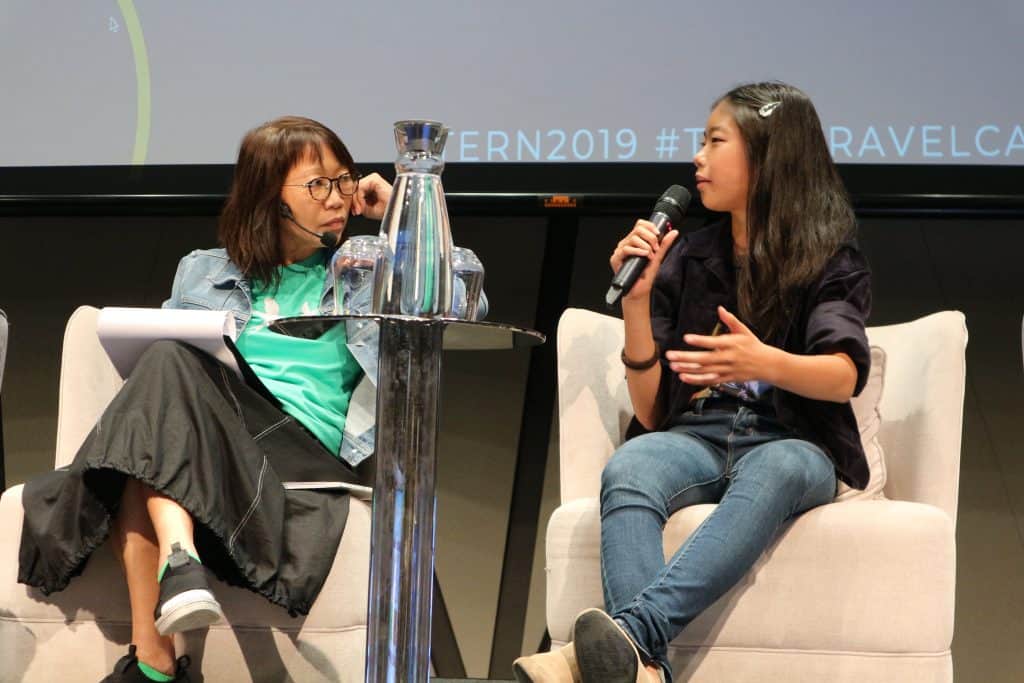
For example, Soh’s daughter Ava, 14, is currently designing a jewellery line to empower young women, off the back of her already successful career as a national figure skater for Singapore.
Startups can be an exciting place to develop skills, but timing is important
With all the talk about the new tech, investments and IPOs in travel, startups are undoubtedly an alluring career move. However, timing is critical. Different stages of company development will yield different types of working experience.
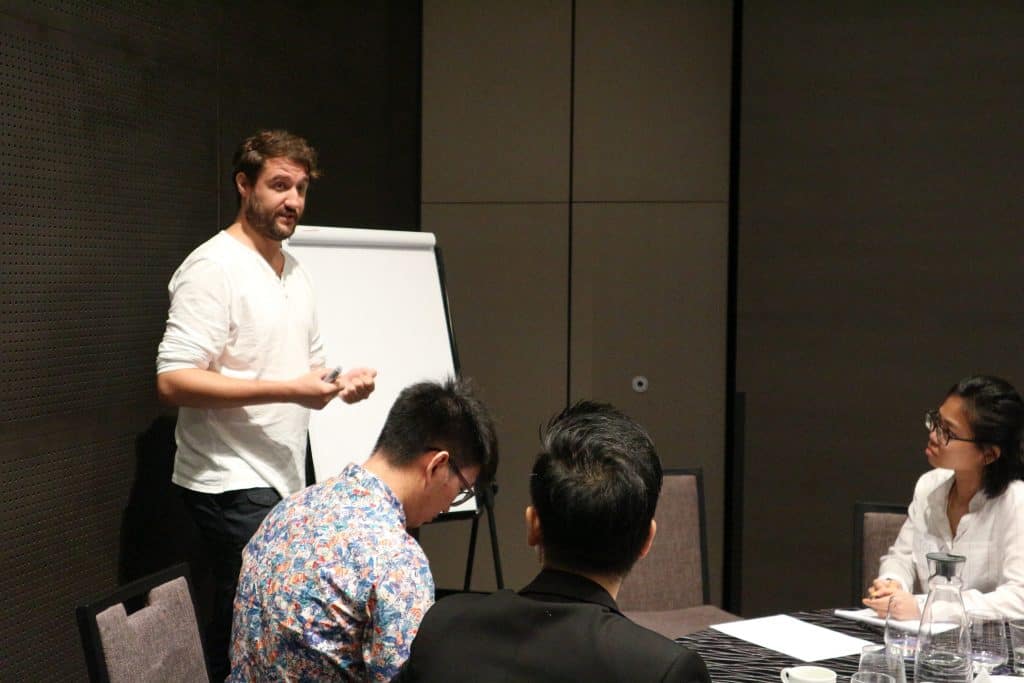
According to Ollie Wood (Head of Talent, Golden Gate Ventures), assessing which phase of startup growth is ideal for you will depend on what type of work experience you are looking to get from your time there. He identified three key phases – core team, structuring, and scaling – each bearing different levels of risk and reward.
For example, the early core team building stage would not suit someone seeking stability and substantial pay, but would be perfect for those looking to get hands-on experience across multiple roles. In contrast, companies at the scaling phase would be better able to offer focused roles and structure, as the startup graduates into a full-fledged business. Meanwhile, the middle phase – structuring – would offer a bit of both worlds… the thrill of working for a new company, with the security of a proven and backed product.
Arguably more important than development phase is being able to spot a strong culture and working environment, which will help you evaluate whether joining a particular startup is worth taking the leap for.
“Ask [employees] why did they join? Why are they still there? … Find out how staff work together and what their challenges are – how do they deal with these problems?” It will teach you how the company operates in times of stress – whether the team bands together, or falls apart.
And don’t forget to assess the company’s leadership. When meeting the founder, use your instincts. “If you don’t believe in the founder, you’re going to have a really tough time farther down the line… really be choosy about the founder you work for.”
Future proofing your career means knowing when to stick around and when to move on
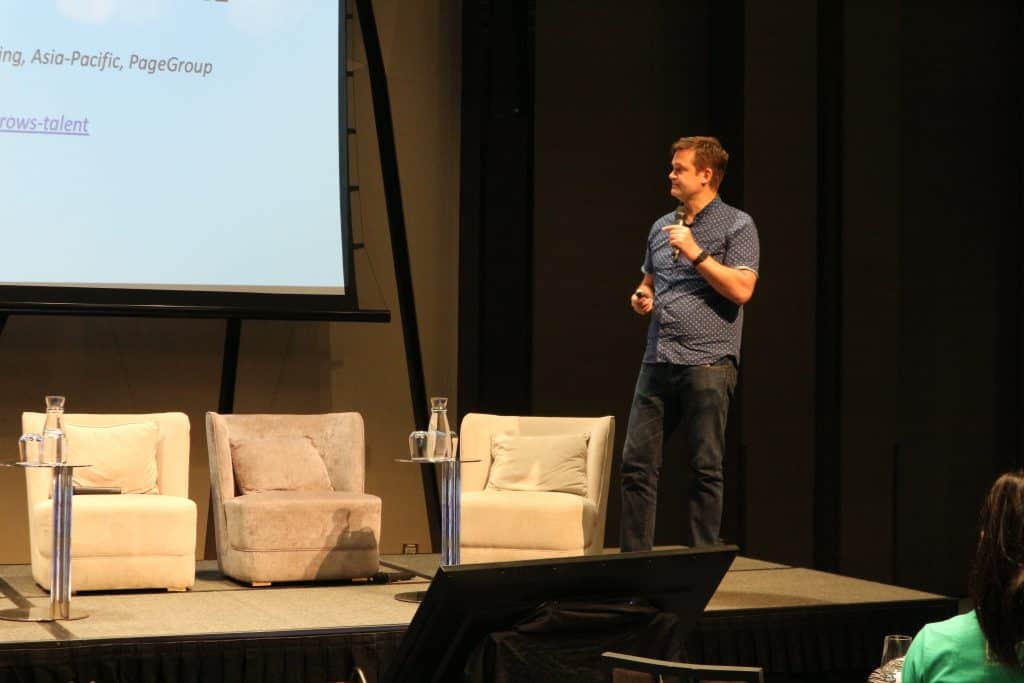
According to Luke Clark (Senior Content Manager – APAC, PageGroup), there are at least five actions anyone can do, to assess their current role and where they stand in their career and industry.
List what you want to learn in your role – identify multiple development goals that you can use as a benchmark for your performance in every job you take on. “We’re all in a hurry when we start, but respect the process and take on the tasks that push you further.”
Stay on top of consumer trends – “Consumer trends are invaluable. Learn data points that speak the loudest.” It will help you to identify growth areas and skills you may need to develop as the demands of your job evolves.
Seek out champions – look for people that truly value your work and the contribution you make. “The right people will judge you as a risk, and be most open to offering you the chance to prove yourself,” said Clark. Seek mentors to learn how to make an impact and let them be your guide to get you to where you want to be professionally.
Say yes and work out how to do it later – opportunities for advancement will always come in the form of taking a risk to really see what you can do. Clark advised a strategy of “managed risk taking”. Build the challenge into a mission. If you fail, brush yourself, recalibrate, and start again.
Be open, honest and fair with feedback – politics never yield the best outcomes. If you see opportunity for change or improvement within a company, you should feel empowered to share your thoughts with a leader. “The right manager forms a passionate team with a shared mission… you’ll learn how much integrity matters.”