


From “Free The Bears” to designing zoos in Cairo, China and India, Singapore’s Zoo Man talks to Yeoh Siew Hoon about the principles of zoo design, the challenges of keeping the animal-human balance and the future for zoos. And guess which is his personal favourite?
You may take the man out of the zoo, but you cannot take the zoo out of the man. That would be true of Bernard Harrison, best known for putting the Singapore Zoo and Night Safari on the world map during his tenure as executive director from 1981 to 2002 – for this zoologist, his heart is always with the animals and he remains active in zoo design that puts animal welfare at its heart.
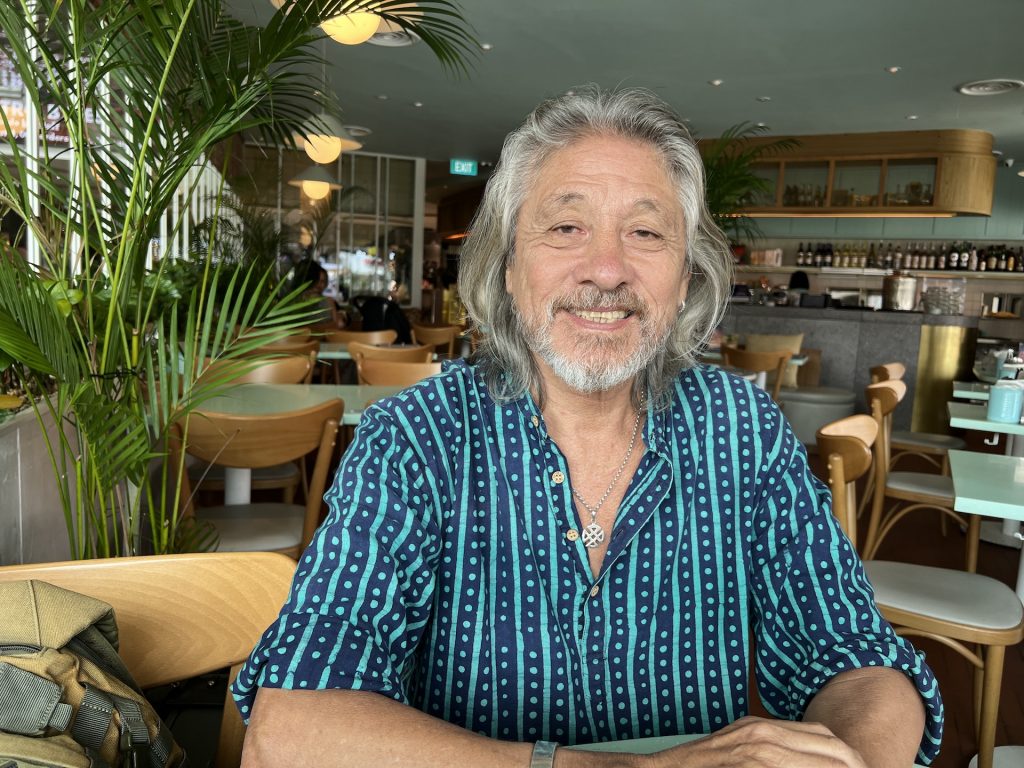
Bernard Harrison: “There’s a new school of thought that maybe we should look at where the animals live in the world and duplicate that as close as possible. That means bringing in real plants, soil, rocks and that creates a whole dimension of complexity to the zoo designer and animal keepers.”
When I met him for a coffee recently, he had just returned from a pro bono project in Luang Prabang, Laos. He had been invited to visit the “Free The Bears” project, to see the work being done by the Australian charitable wildlife-protection organisation in rescuing bears from poachers, as well as bear bile farms. According to Free The Bears, even though bear bile farming is illegal in Vietnam, Laos and Cambodia, they still exist and because the trade is down, thousands of bears are now abandoned and homeless.
“Most of their sanctuaries are closed to the public but the one in Luang Prabang is open. They get 300,000 visitors a year and they want to make it look better,” said Harrison. “In China, it is estimated there are still 10,000 bears in the bile trade. If a farm has 500 bears, and the government says you’re not allowed to milk the bears, then the owner will ask, what will I do with these bears?
“And these are broken bears – they are mentally and physically broken, put out to pasture, and they have pretty long life spans.”
Together with his son, Sean, who’s a documentary film maker, Harrison is considering making a short movie about the plight of the bears, to raise awareness for “Free The Bears”. “I suppose I’ve always had a soft spot for animals,” he said.
From a “healthy disrespect” for zoos, to building a life around them
He also grew up with a “healthy disrespect” for zoos. Born in Malaysia and raised in Singapore, Harrison would go on field trips with his father who was also a zoologist, and was exposed to wild animals from an early age. “I come from a background that wasn’t pro-zoo.”
However, something changed when he visited the Singapore Zoo, before he went for the job interview, and thought, “I could do something with this.”
Which he did and went on to set the benchmark for zoo design globally. For the past 20 years, with his wife and partner Tina, Bernard Harrison and Friends has been working on zoo design projects around the world. Currently, they’re working on the redevelopment of the Giza Zoo in Cairo. “This was set up in the 1860s by King Farouk. It was his personal collection for a long time. It’s run down and the governments wants to renovate it.”
They’ve just finished a project in Dhaka, Bangladesh, and are working on one in Chengdu, China. India is a big market. “It’s a real mess there, some of them were stinkholes and the government took over all the 500 zoos, set up a central zoo authority, closed down a lot of them and are remastering a lot of them.” His company is working on five zoos alone in Nagpur, Maharashtra.
The challenges of “naturalist” design – more work for the humans
Zoo design has evolved in the past two decades. Harrison comes from the “naturalist” school of thought, and early inspiration came from David Hancock of the Woodland Park Zoo in Seattle, who put together the first zoo plan ever prepared by landscape architects, rather than by architects, in 1975.
“The early principle was to use nature as a benchmark for design. Designers would go towards symbolic representation of nature. For example, for orang utans or gibbons, instead of replicating real trees, which is problematic, they used symbolic trees, two poles and cane – so it’s a functional representation of nature.
“There’s a new school of thought that maybe we should look at where the animals live in the world and duplicate that as close as possible. That means bringing in real plants, soil, rocks and that creates a whole dimension of complexity to the zoo designer and animal keepers. Animals smash things up and they have to re-create it every day.
“In Disney’s Animal Kingdom in Florida, they have a gorilla enclosure and a nursery dedicated to supporting the landscape – hectares of banana trees – and they replace the trees everyday. The point is, you can take it to the most incredible extreme – if you have natural enclosures, you have to make sure it looks like this everyday.”
Harrison added, “As with anything, you get designers who miss the plot. Often, zoo designers create the naturalistic environment but because animals are going to mess it up, they do things to prevent it, like electrifying it, thus depriving them of the space.
“If the siamang (gibbon) is in a beautiful enclosure which is electrified, then it may be worse off than a monkey in a concrete cage because it’s a lot more utilisable space – so the monkey may have the better life. But visitors may perceive the siamang to be happier because it’s in a beautiful, natural space.
“So people can lose the plot because they want to make it more convenient for humans. The key is to get the buy-in of animal keepers and staff because their workload increases – you have to educate them on why they need to enrich the animal’s life. I believe it’s generational – the new Gen Z will get this.”
Zoos remain integral to urban planning, but have to be mindful of ethics
As to whether the new Gen Z will continue to visit zoos the way their parents and grandparents did, Harrison is more optimistic. “The animals rights people, that’s two percent of the population but they are very vocal. When a city planner plans a township, the fundamentals are still there – park, botanic gardens, museums, zoos – they are still an integral part of town planning.
“The problem with zoos is, they are not evolving in the right direction. There are 10,000 zoos in the world, a lot are not mainstream. The key principles of zoos should be conservation, education and recreation – animal welfare must be central, whatever you do has to have the welfare of animals at heart. But probably only 1,000 zoos have that mission.”
Then of course there’s the ethics about animals-as-entertainment with OTAs such as Tripadvisor, Expedia and others removing them from their listings. Said Harrison, “We must stop the elephant rides, for sure. Elephants, polar bears, dolphins, killer whales, whale sharks – don’t do those, they create too much controversy.”
Harrison’s personal favourite zoo is the Bronx Zoo in New York, followed by Zurich and Munich. “They are more matured zoos, tending towards naturalistic and more intellectual in concept. In China, they look at zoo design and say, it’s not very exciting – can we do something more exciting, something that’s never been done before, animals we’ve never had before? In India, it’s the reverse – they tend towards more traditional thinking and ideas. But remember it took Singapore a long time to get to where the Singapore Zoo is at today.”
Harrison is currently taking a PHD in communications in Penang, and shuttles between the Malaysian island and Bali where he and his family moved to more than 10 years ago.
“I was quite bored during the pandemic and wanted to learn something new. When you think about it, zoos are all about communications – how you communicate with visitors, they create huge emotions in people, when you see a siamang in trees versus monkeys in concrete cages.”
I asked if he had studied communications first before zoo design, would he have approached the latter differently? “I don’t think so, it’s merely reinforcing what I had instinctively thought.”


