
Traditionally, customer loyalty could be gained by a simple reward structure, trading in loyalty points for free nights like a kid trading in his arcade game tokens for the large teddy bear from the kiosk.
Now, with digital players like OTAs and meta-searches commoditising hotel rates, hoteliers need to offer something that money simply can’t buy.
Many major hotel groups possess various forms of loyalty schemes, like points, free room upgrades and promotion packages, conveying the more mechanistic ways in which customers are incentivised to return to a particular hotel.
Others deliberately abstain from similar schemes, feeling that it is not the best or most sustainable way to build a strong customer relationship, as customer loyalty would inevitably disappear if either the benefits stopped or they found an even better deal elsewhere.
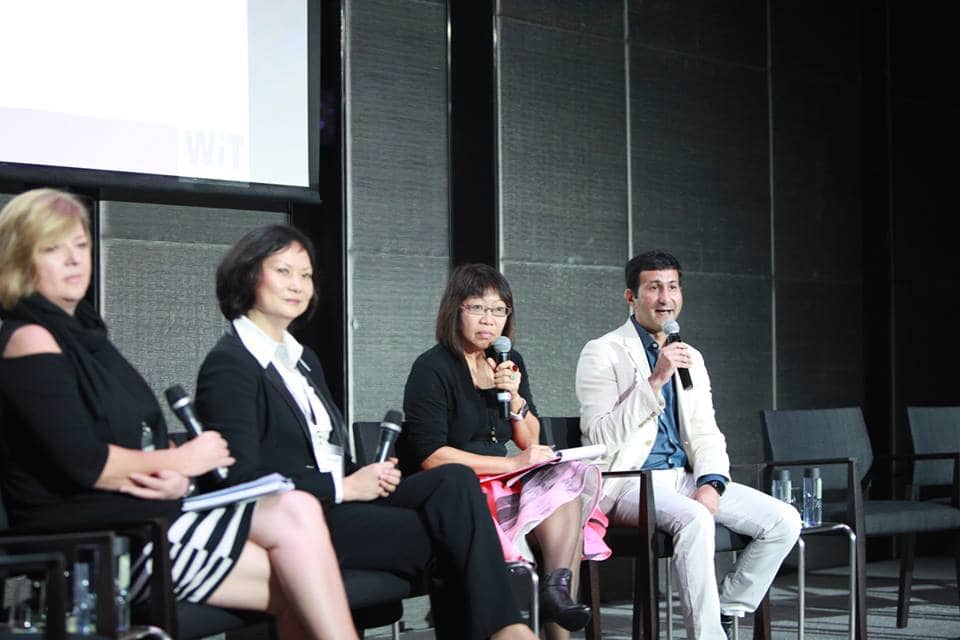
Puneet Mahindroo, Four Seasons Hotels & Resorts
Thus, attention is turned to customer service, wherein the “micro-moments are what helps [hotels] win”, according to Puneet Mahindroo (Corporate Director of Revenue Management, APAC, Four Seasons Hotels & Resorts) at the WIT Hospitality conference in Hong Kong.
Winning these ‘micro-moments’ are fundamental to establishing a basic relationship foundation with each and every guest. Puneet recalled an anecdote of a guest who once remarked on his love of a particular lamp in his room. Taking note of this, the hotel staff then proceeded to move the same lamp to his room every time he came to stay, despite the guest not actually being aware of this small but significant effort until much later.
Similarly, my father, a frequent guest at the Mandarin Oriental in Jakarta, once remarked merely in passing, on the fact the hotel bar did not stock his favourite single malt whisky. On his next trip, a large bottle of Macallan 18 Years greeted him on his room desk, and has done ever since. In the bathroom, a plush hotel bathrobe dons his monogrammed name in gold embroidery too, as another personal touch.
If asked to switch hotels, even with an added incentive of loyalty points and highly competitive rates, my father would refuse. When asked what it would take for him to reconsider staying somewhere else, he simply replied, “a lot, given how well they treat me”.

Essentially, what the Mandarin Oriental has successfully managed to do is develop a very organic type of loyalty. Moreover, they have done it in a way that makes their guests feel unique, as if their special relationship with the hotel is one-of-a-kind, unshared by anyone else.
When attracting customers to begin with, in a way, hotel companies need to possess a similar skill set to a modern-day Casanova. They need to be able to seduce multiple people at once… but most importantly, when juggling these early relationships, they need to be able to tell them apart and treat them accordingly.
However, the charm offensive will only take the relationship so far. Gone are the days where loyalty came from scaling membership tiers and racking up reward points. Promising guests “nice things” simply won’t cut it anymore. Hotels need to take the relationship to the next level, to make it official, to confess their eternal devotion by proving to their guests that they are their true love.
There needs to be an understanding what each individual guest values the most and more importantly, a willingness to go above and beyond to ensure they get that experience. While there is an implicit understanding that the relationship between a hotel and a loyal guest is by no means “exclusive” – as there are surely plenty of others also sleeping comfortably in the other beds on the club suite floor – every relationship must receive its fair share of care, respect and consideration.
The tricky part is figuring out whether the necessary talents can actually be trained, and whether these taught skills are perceived as authentic and genuine to the guest. Guests are no fools by any stretch of the imagination. There is a sharp distinction between appreciating great service and the ‘extra step’ it takes to truly connect with a guest to eventually earn their trust.
Hotels that understand that some of these skills simply cannot be taught actively seek to hire individuals who show signs of having this ‘personal touch’, and above all, a relatable personality that guests feel comfortable opening up to.
In that respect, I do not believe customer loyalty can simply be ‘won’ by subjecting guests to a manipulative game designed to keep them wanting.
If hotel companies really want to find true commitment, they’ll have to wear their hearts on their sleeves and relate to customers on a much deeper, personal and even an emotional level.