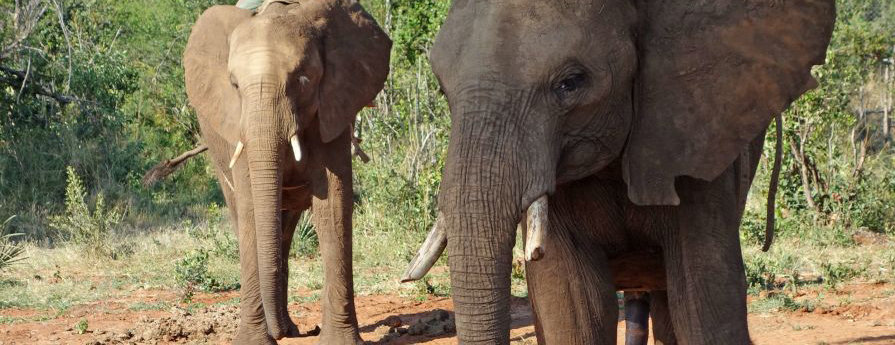
The World Animal Protection organisation is on a mission to get online travel companies behind its “Wildlife, not entertainers” campaign, specifically the battle to stop elephant rides for tourists around the world.
Its website currently carries a petition, saying “TripAdvisor Inc. profits from cruelty to wild animals. As owner of the world’s largest travel site they could help end wildlife suffering, but contribute to it instead. Demand they stop promoting and selling tickets to cruel wildlife tourist attractions today.”
About 250,000 people have signed the petition.

The petition has gathered 250,000 signatures
For the past five years, it’s worked on the traditional travel sector and has had success with more than 100 travel companies having made the pledge not to sell elephant tours.
Brands such as Contiki, TUI, Intrepid, Travelcorp, Thomas Cook are among these companies. “Travelcorp has agreed to take all wildlife entertainment including dolphin shows, and anything that involves direct contact between tourists and wildlife, off their brochures,” said Audrey Meelia, corporate engagement manager, who attended Phocuswright Europe in Dublin this month. “A lot of of wildlife attractions are actually cruel, our campaign is aimed at making travel companies and travellers aware of that.”
Now with the growth of online travel and tours and activities sites such as TripAdvisor, Viator and GetYourGuide, the NGO realises it has get these brands onboard and wants to start conversations with them.
“We have just started engaging with online travel companies – more and more individuals are booking online. We need to work with TripAdvisor to raise awareness and for them to stop promoting and selling tickets. We are not rabid activists or banner wavers, we just want to have a conversation.”
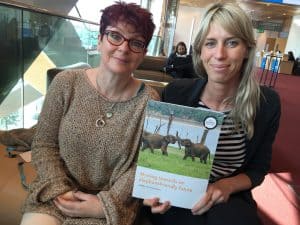
Audrey Mealia (left) and colleague Julie Middelhoop, head of the “Wildlife, Not Entertainers” campaign

Rod Cuthbert: “Embarrassing for someone like me …”
One online travel industry leader who’s actively supporting World Animal Protection is Rod Cuthbert, founder and former CEO of Viator, now owned by TripAdvisor. Said Cuthbert, “Reading what a young elephant endures to prepare them for work in these attractions is both heart-breaking and embarrassing for someone like me, who has sold tens of thousands of tickets to such places.”
Since the latest campaign, one online travel company that has joined the movement to stop selling tickets to sightseeing activities and venues that feature cruelty to animals, including some of the world’s cruellest wildlife tourist attractions, is City Discovery whose CEO Emmanuel Issaurant said said the online tours and activities sector had to show leadership on this important issue.
“For too long we have hidden behind the argument that it’s not up to us to make ethical judgements on behalf of our customers. That’s a very weak argument; we should have our own standards and ethics, and naturally, they should be high. If we can do something to help these defenceless elephants, lions, tigers and dolphins, we must do it. Our only regret today is that we did not move earlier.” (City Discovery, which has around 8,000 tours and activities in over 700 locations and has over 1 million annual customers, was acquired by Veltra, the global online tour and activity booking service based in Tokyo.
Research carried out by the University of Oxford’s Wildlife Conservation Research Unit (WildCRU), commissioned by World Animal Protection, has uncovered global suffering caused to up to 550,000 wild animals by irresponsible tourist attractions.
They compared expert scientific reviews of wildlife tourism venues with more than 50,000 tourist reviews on TripAdvisor. This revealed that 80% of people left positive reviews for venues that are treating wild animals cruelly. This, they said, is due to a lack of awareness by tourists. “We know that when people are told about the cruelty behind such activities most decide not to go.”
World Animal Protection, which is present in 15 countries, has also stepped up its outreach in Asia where elephant rides for tourists are popular in destinations such as Thailand and Sri Lanka. It is also working with zoos to stop the “interaction possibilities” between animals and tourists.
This weekend’s news that a gorilla had to be shot in Cincinnati Zoo because a child got into its enclosure has raised another social media outcry over the cruelty to animals kept in captivity.
One of the world’s top zoo attractions, the Singapore Zoo, which unveiled its new orang utan ambassador early this year (granddaughter Ishta has taken over from Ah Meng whose “breakfast with Ah Meng” was legendary”), has also stopped the practice of allowing visitors to be “up close to the new Ah Meng or even touch her”, according to this report.
However, visitors can see her four times a week at the zoo’s “Jungle Breakfast with Wildlife”, playing with other apes in a small forest habitat next to the Ah Meng restaurant.
The zoo says this change is for the benefit of the animals, to show them in a more natural setting. “People now are really more educated, and this gives us the opportunity to talk more about these critically endangered great apes,” said Kumaran Sesshe, head keeper for great apes at the zoo. “You know, so, by them coming down for breakfast, we can actually tell visitors the plight these orang utans are facing in the wild, and also why we stopped human and primate contact.”
“The travel industry has been very reasonable and forthcoming. Most of the people in the industry are just not ware of what’s going on,” said Mealia.
While hunting is not covered in the latest campaign, because it is not considered mainstream tourism, the organisation was one of those that raised the issue of “Cecil The Lion” which resulted in a public outcry over trophy hunting in Africa.