“Hospitality is about innovation, creating a product ahead of its time”
“My job is going to be replaced soon,” laughs second generation Thai hotelier Kittisak (Kitt) Pattamasaevi when we were discussing generative AI and its impact on both our jobs during a breakfast catch-up at Trisara, Phuket, owned and operated by Montara Hospitality Group, the company founded by his father in 2005.
“The way it can churn out reports and charts is amazing,” he said, “but the way we want to use it is to empower our people to have even more meaningful human relationships with our guests.
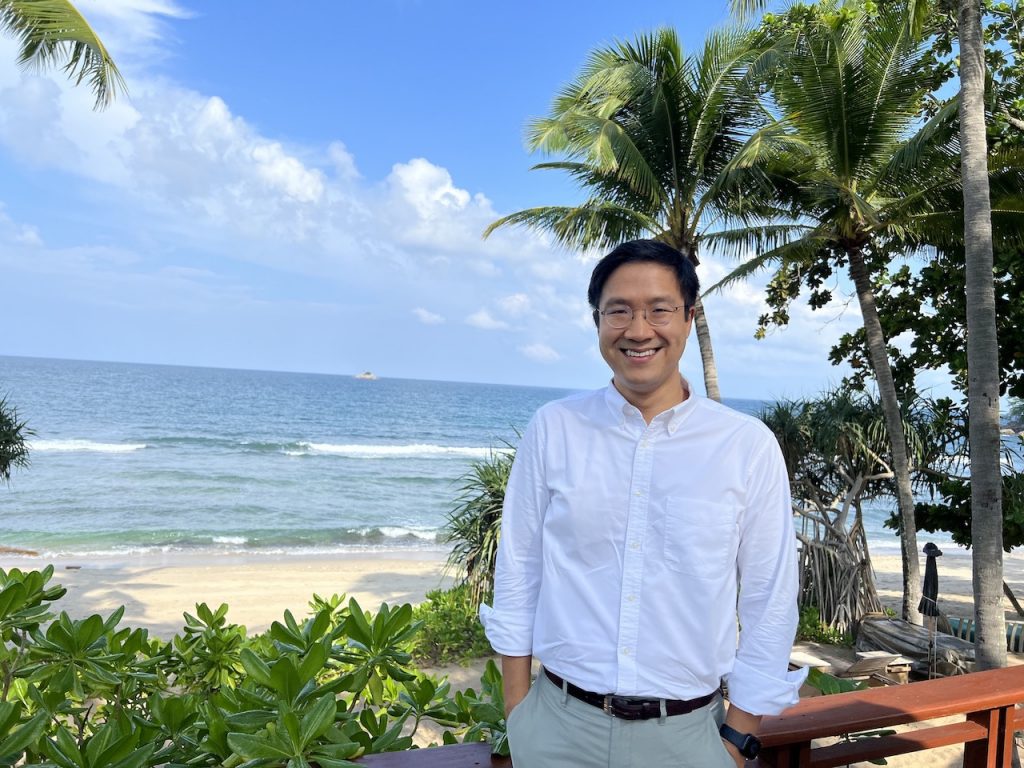
Kittisak at Trisara: “The way we want to use it is to empower our people to have even more meaningful human relationships with our guests.”
“For example, they can spend less time crunching numbers and more on getting insights and stories with AI and use that information to delight guests, or they can use AI to give top 10 recommendations and we can spend more time on conversations.
“It can also help with the launching of a new restaurant which is always a risk. What if instead of taking a month to render a new idea, you could ask ChatGPT to write the brief and create visualisations of the idea with Midjourney. Maybe the process can be quicker in terms of innovation, and we could involve more people and generate more ideas using these tools.”
But even as he is personally excited by it as a CEO, he’s concerned as a father of two young children, one who’s five and the other, two. “What kind of world will they grow up in, how will they know what’s real or not?”
What’s real for now is that after the pandemic years, business to the hotel group, which also includes the Praya Palazzo, a river mansion boutique property and the movie-house-turn hotel Prince Theatre Heritage Stay in Bangrak, has returned steadily.
At Trisara, it is building back to former staffing levels. During the pandemic, it shed a third of its 350 staff and currently it has close to 300. “It’s actually a pleasant surprise we can get so many,” said Kitt. “It’s really difficult to find staff these days.”
Kitt has the additional challenge of preparing for the opening of the Tri Vananda Wellness Retreat, which has been delayed till 2025, but early sales of its residential villas in this nature-inspired compound, have been healthy, given the robust real estate market in Phuket these days. Only 15% of the 273 acres of land will be developed, in line with the similar philosophy that created Trisara – where nature comes first.
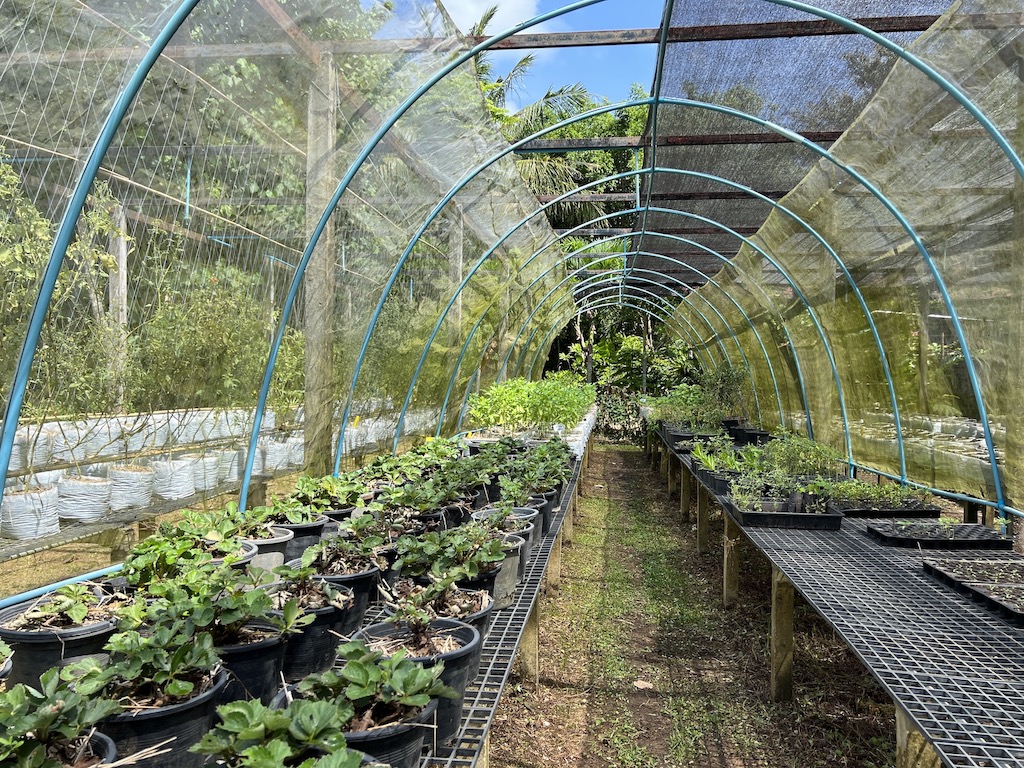
The perma-culture farm at Tri Vananda, which supplies produce for the group’s dining needs.
Within the retreat is a perma-culture farm which provides most of the herbs and vegetables for Jampa Restaurant, located within its premises, and which has gained quite a reputation for its sustainable, zero waste approach, and farm-to-fork cuisine. The farm also supplies produce to Trisara’s Michelin-star rated Pru restaurant.
“It’s been amazing to see the payoffs of our decisions made during Covid. We didn’t close down any of the properties and we continued work on Tri Vananda, which helped us maintain the momentum in the wellness area. If we had had to restart all the engines, we would have found that more challenging. Running lean the whole time allowed us to jumpstart quickly.”
And as new team members join the group, Kitt is determined to ensure that the Montara work and service culture is maintained. For him, “culture is the strategy” and everything else, including profit, follows.
It’s a culture he inherited from his father, Narong Pattamasaevi, who remains chairman of the company. Kitt was in college when his father started work on Trisara. “I came home in 2005 and suddenly, there’s a resort. He had the vision and conviction to build on prime real estate 39 hotel and residential villas, each with their own swimming pool, and not a 300 multi-tower hotel.”
Like his father, Kitt also studied finance. “I wanted to become an investment banker in New York, like all my friends.”
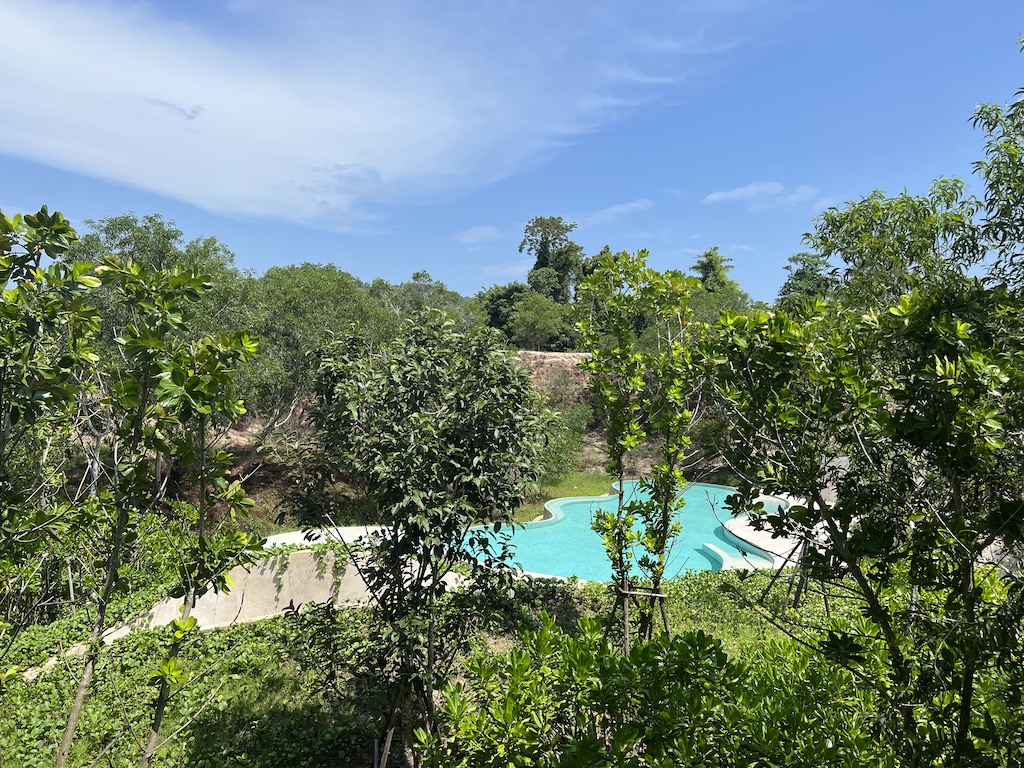
Only 15% of the 237 acres at Tri Vananda is being developed, to ensure residents are immersed in nature, similar to what the family group has created with Trisara.
He worked in finance for a couple of years and after he was laid off while working for Hongkong and Shanghai Bank in Singapore during the sub-prime crisis, returned to Thailand to learn more about the family business. “Trisara was doing well and we were thinking of expanding.”
Kitt was involved in the first deal which saw the family take over the former Boathouse hotel in Phuket. “I crunched the numbers – that was the most rewarding excel modelling experience I ever had. I’ve seen several crises – the “hamburger” (sub-prime) crisis, the “tom yum kung” crisis (1997) and the tsunami of 2005.
“Covid was the biggest lesson ever. We had to part ways with a lot of people. I felt I needed to come to Phuket to stabilise the team and make quick decisions.”
By being on-site, Kitt was able to observe first-hand staff-guest interactions. “It’s different from looking at it from a commercial, marketing perspective. I learnt from our own people the importance of our environment at Trisara – the trees and gardens. It’s a living property and how do we use the actual living environment to create guest experiences?”
With business now stronger than before, Kitt is looking forward to the coming low season to think about strategy rather than the constant firefighting he’s had to do the last couple of years. It’s also taking the down time to transform Pru, its Michelin-star rated restaurant, into something bold and new by October.
“The most important thing is, the old and new staff share the same understanding of where we want to go in the next two years. We still maintain our “people first” vision and we want our brand to inspire both guests and staff towards positive change. We want to run a purpose-led business, it’s not just about maximizing profit. Our purpose is about conservation of heritage, nature and wellness and we want our customers just to be happy, improve their health or learn about local heritage.”
With business set to grow four times with the opening of Tri Vananda, Kitt acknowledges the daunting task ahead of him.
But he sees technology as a tool that can help Montara achieve its purpose. Digitally-savvy, Kitt was among the first to use social media and data analytics effectively in e-commerce. He recruited Morris Sim, CEO and co-founder of Circos Brand Karma, the hospitality social media analytics startup, as an advisor 13 years ago, and who remains onboard.
“The hospitality business is about innovation – you are creating a product ahead of its time, whether it be in accommodation or food,” said Kitt.